
Word association Writing Worksheets for Ages 4-7
6 filtered results
Difficulty Level
Grade
Age
-
From - To
Subject
Activity
Standards
Discover our engaging Word Association Writing Worksheets designed specifically for children ages 4-7! These fun and interactive worksheets help young learners enhance their vocabulary, improve their writing skills, and foster creativity. By connecting words, children develop critical thinking and comprehension abilities, making learning both enjoyable and effective. Our collection features colorful and age-appropriate activities that encourage kids to explore language through playful exercises. Perfect for home or classroom use, these worksheets are an excellent resource for teachers and parents looking to support early literacy development. Explore our assortment today and watch your child's language skills flourish!
Favorites
With answer key
Interactive
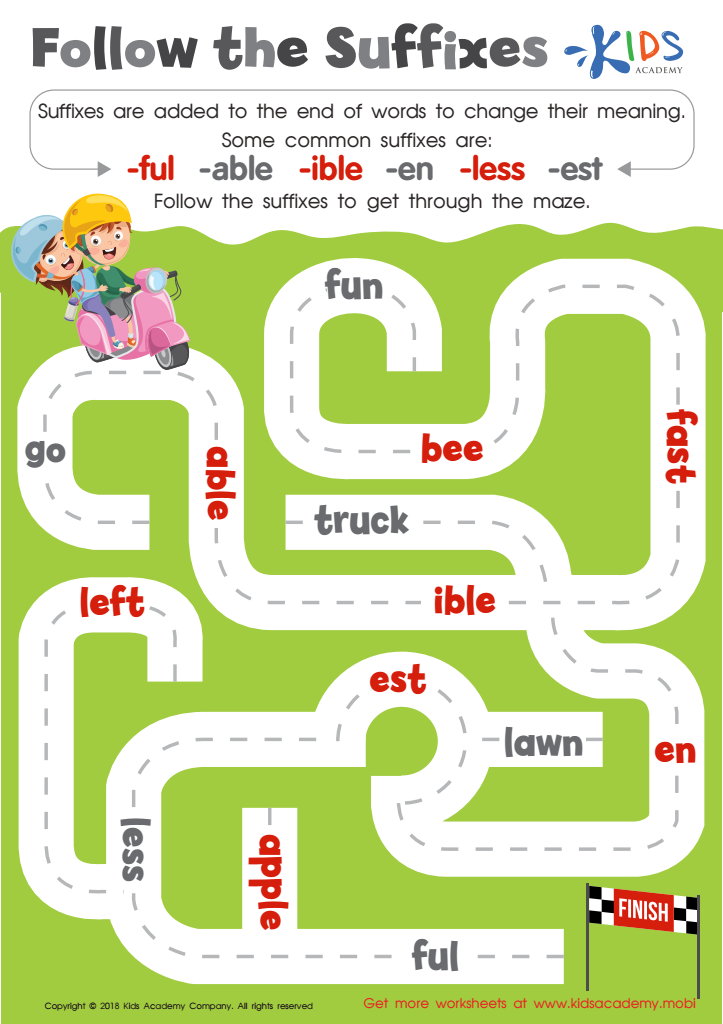
Reading: Follow the Suffixes Worksheet
Students use suffixes to find the right way through a maze in this enjoyable activity! Understanding suffixes helps kids decode and comprehend more words, leading to better reading fluency. A great addition to your reading classes, keep this printable close!
 Assign to My Students
Reading: Follow the Suffixes Worksheet
Worksheet
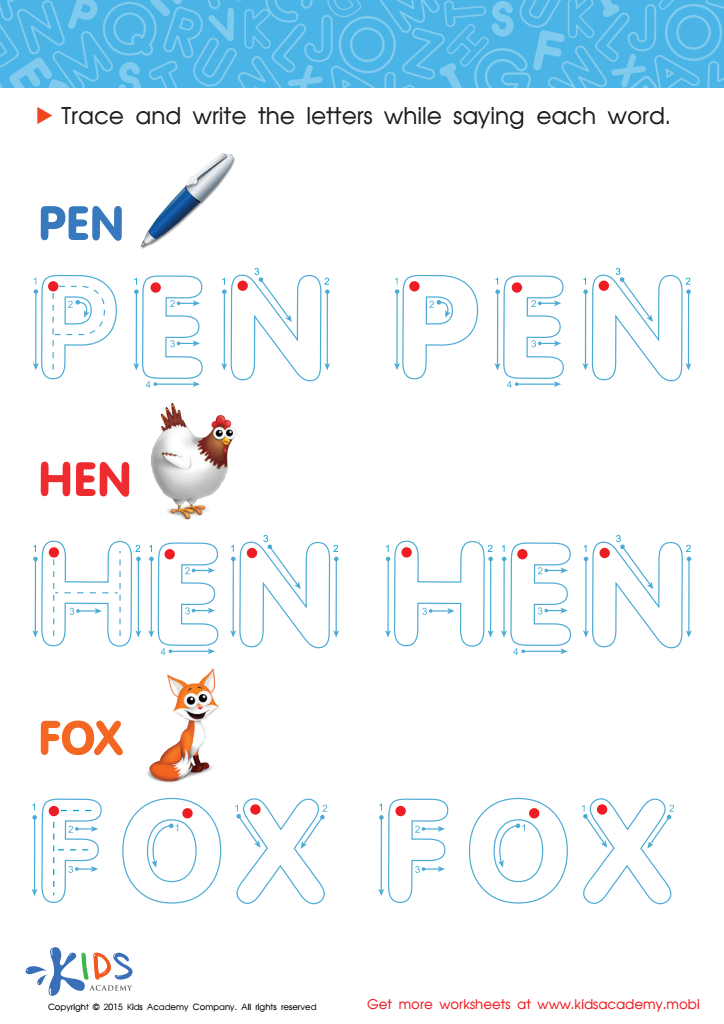
A Pen, a Hen and a Fox Spelling Worksheet
Practice spelling with this free worksheet: three lines, three new words. Say them, trace them, write them correctly. Keep learning with Kids Academy for more printable worksheets and more fun! (80 words)
A Pen, a Hen and a Fox Spelling Worksheet
Worksheet
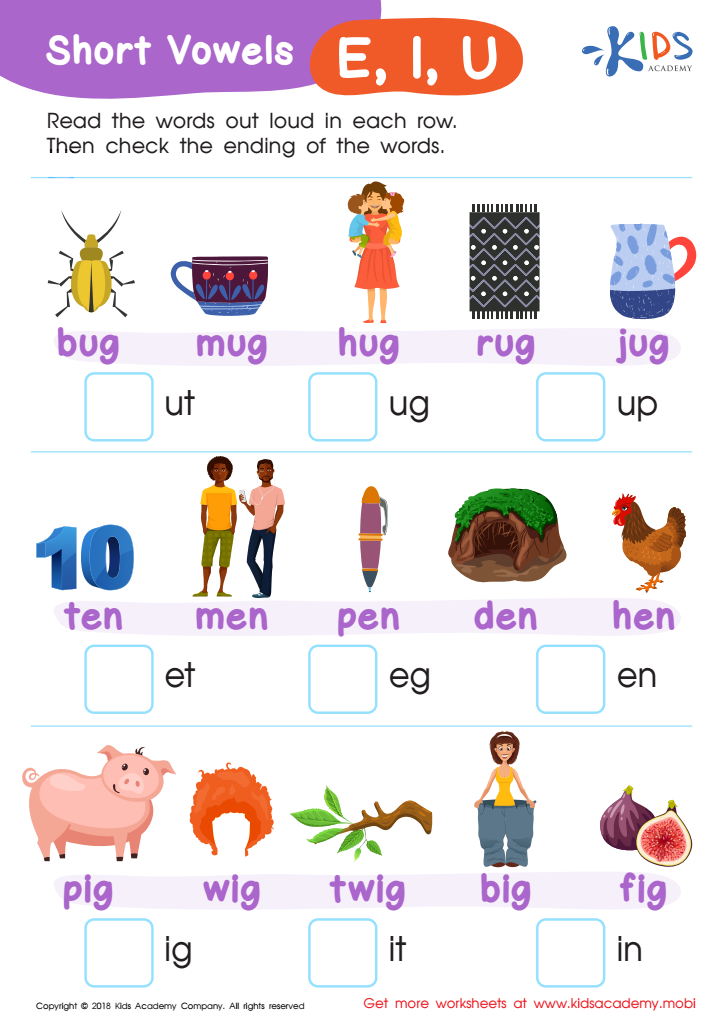
Short Vowels /e/, /i/, and /u/ Worksheet
Your emergent reader can have fun while practicing their short vowel sounds with this free, brightly colored worksheet. They'll identify one-syllable words by their pictures, then match the correct ending for each. They'll gain an understanding of how short vowel sounds vary in closed syllables with different endings, without even realizing it!
Short Vowels /e/, /i/, and /u/ Worksheet
Worksheet
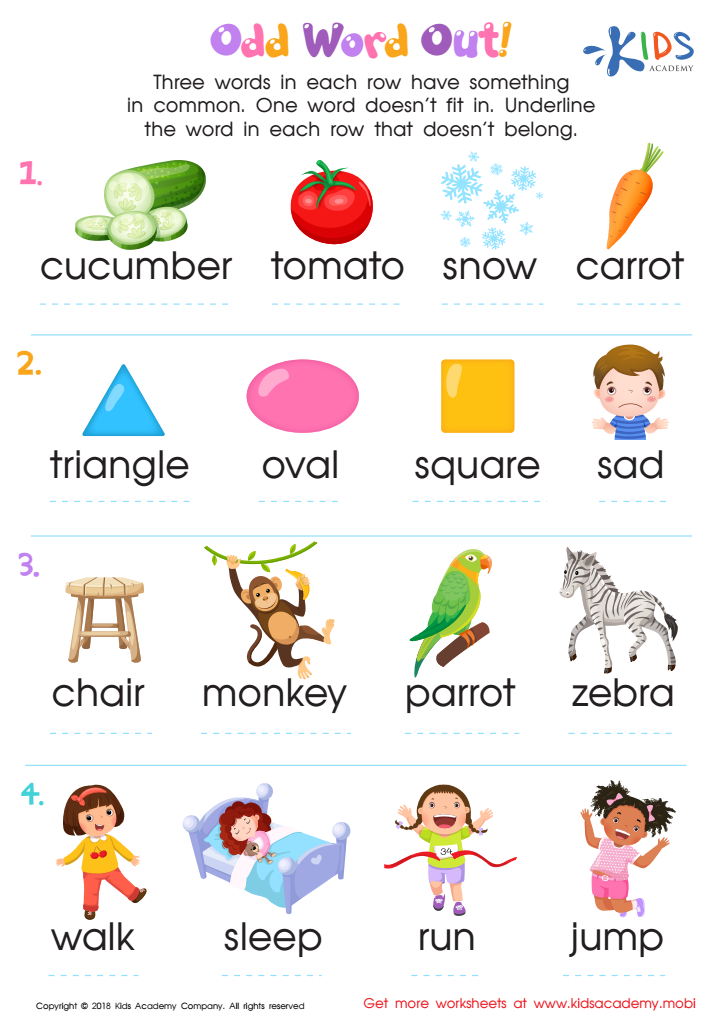
Odd Word Out Worksheet
Ask your child to name all pictures in each row and see if there's something they share. Then, have them identify the odd one out and underline it. Repeat for all words in the rows to help them understand how to identify words.
Odd Word Out Worksheet
Worksheet
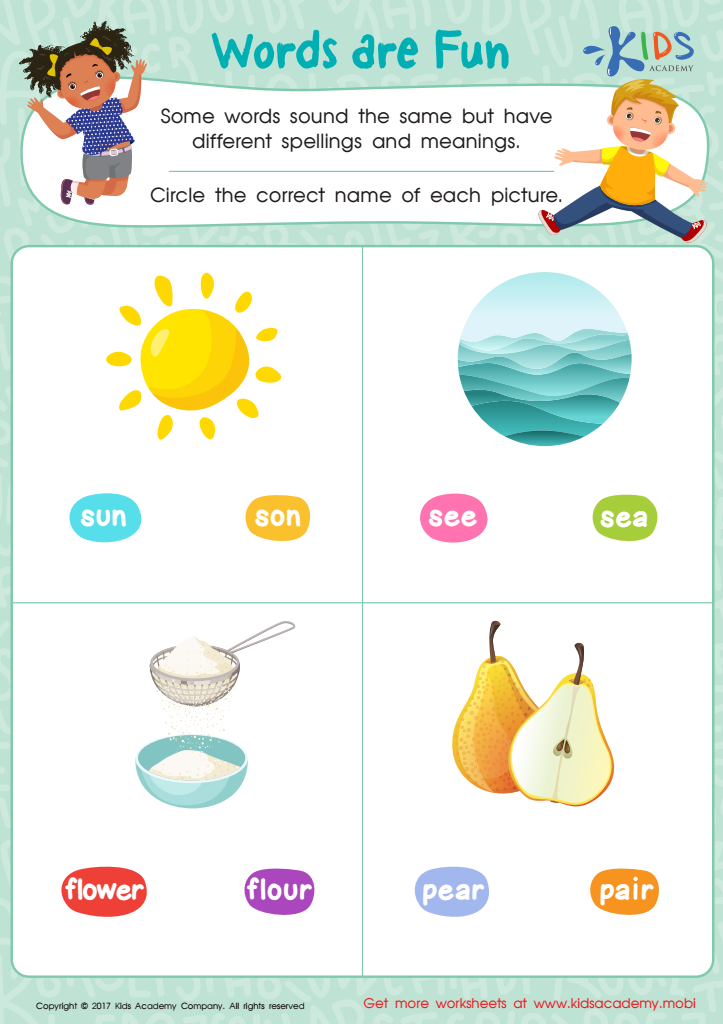
Words Are Fun Worksheet
Homonyms are words that sound the same but have different meaning and spelling. Young authors may get confused. This PDF worksheet helps them practice by matching the homonyms to pictures. They'll also build fine motor skills, important for legible writing.
Words Are Fun Worksheet
Worksheet
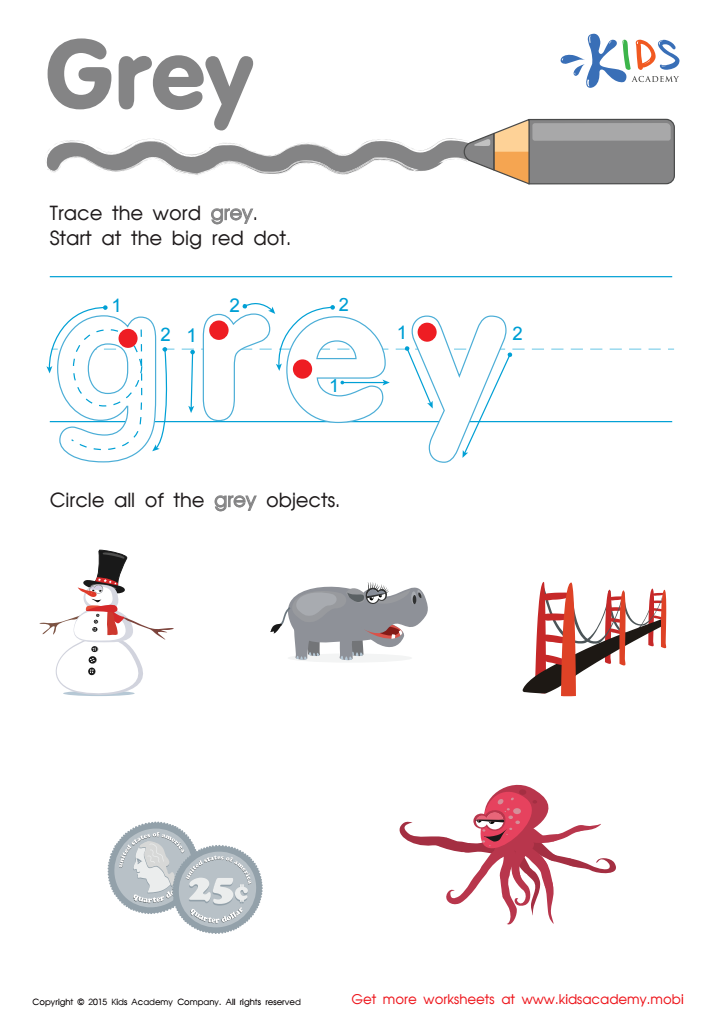
Grey Tracing Color Words Worksheet
Help your kindergartener boost their writing skills with this free printable handwriting worksheet! They can trace the sight word "grey" with a grey crayon, starting at the big red dots. Sounding out and tracing the letters can help strengthen their handwriting. Ask them to name and circle all the grey objects to give extra practice. Get more free worksheets here!
Grey Tracing Color Words Worksheet
Worksheet
Join Kids Academy for Free
Who is primarily going to use this learning content?







Word association writing is a valuable tool for children aged 4-7, as it supports various aspects of their cognitive, linguistic, and social development. At this age, children are rapidly expanding their vocabulary and beginning to understand the connections between words, which enhances their language skills. Engaging in word association activities encourages creativity by allowing children to explore relationships between words, ultimately fostering critical thinking and imaginative play.
For parents and teachers, facilitating word association writing promotes literacy by helping children gain confidence in their writing abilities. By associating words with personal experiences or emotions, children are more likely to invest themselves in their writing, making it more meaningful and enjoyable. This interactive process also aids comprehension, encouraging young learners to build stories and communicate ideas effectively.
Furthermore, word association activities promote social skills. Collaborative writing exercises can nurture teamwork and communication as children share their associations, fostering an inclusive classroom or family environment. Parents and teachers should undoubtedly care about word association writing as it lays the foundation for language development, nurtures cognitive growth, and supports emotional expression—all essential components for raising confident, engaged, and well-rounded learners.








