Sound recognition Consonants Worksheets for Ages 4-8
5 filtered results
-
From - To
Explore our engaging "Sound Recognition Consonants Worksheets for Ages 4-8"! Designed to make learning fun and efficient, these printable resources help young learners confidently identify and distinguish consonant sounds. Through a variety of interactive activities, children enhance their phonemic awareness and vocabulary skills in an entertaining way. Perfect for use at home or in the classroom, our worksheets cater to diverse learning styles, ensuring every child can progress at their own pace. Support your child's early literacy journey with our expertly crafted sound recognition consonant worksheets, and watch their confidence and knowledge grow!
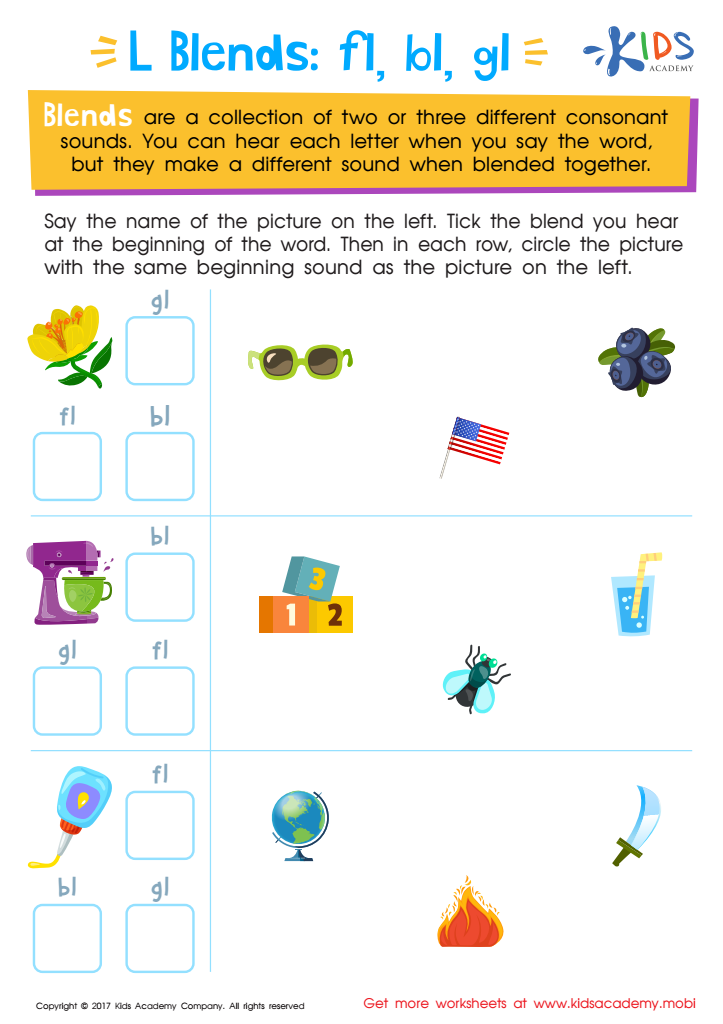
Blending Consonants: "Fl", "Bl" and "Gl" Printable
 Assign to My Students
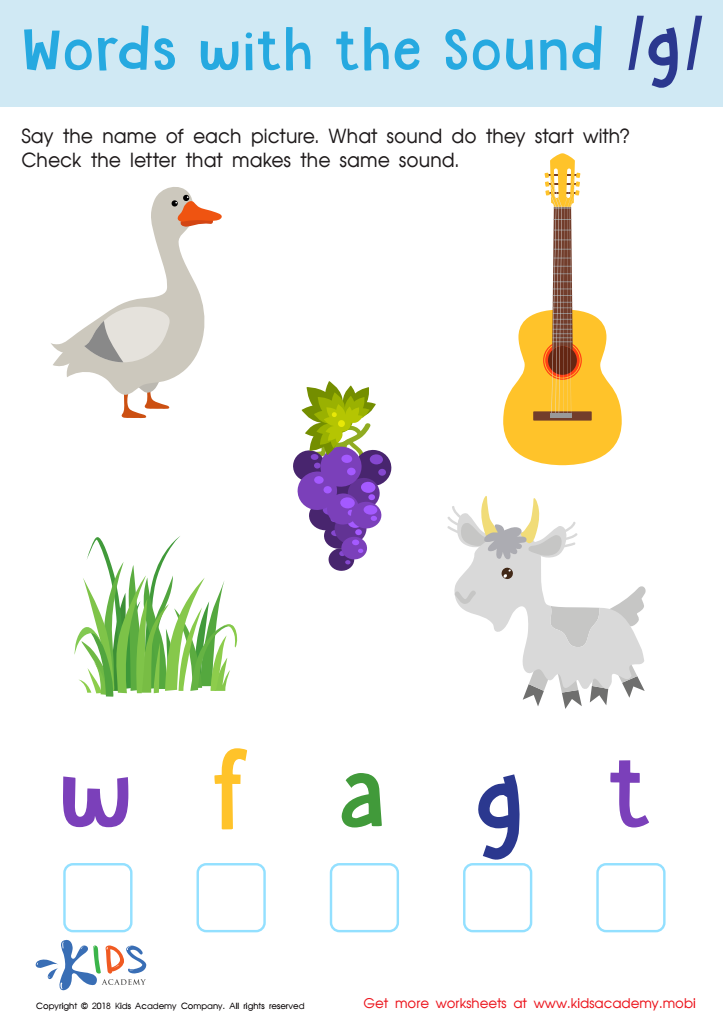
Words with sound g Reading Worksheet
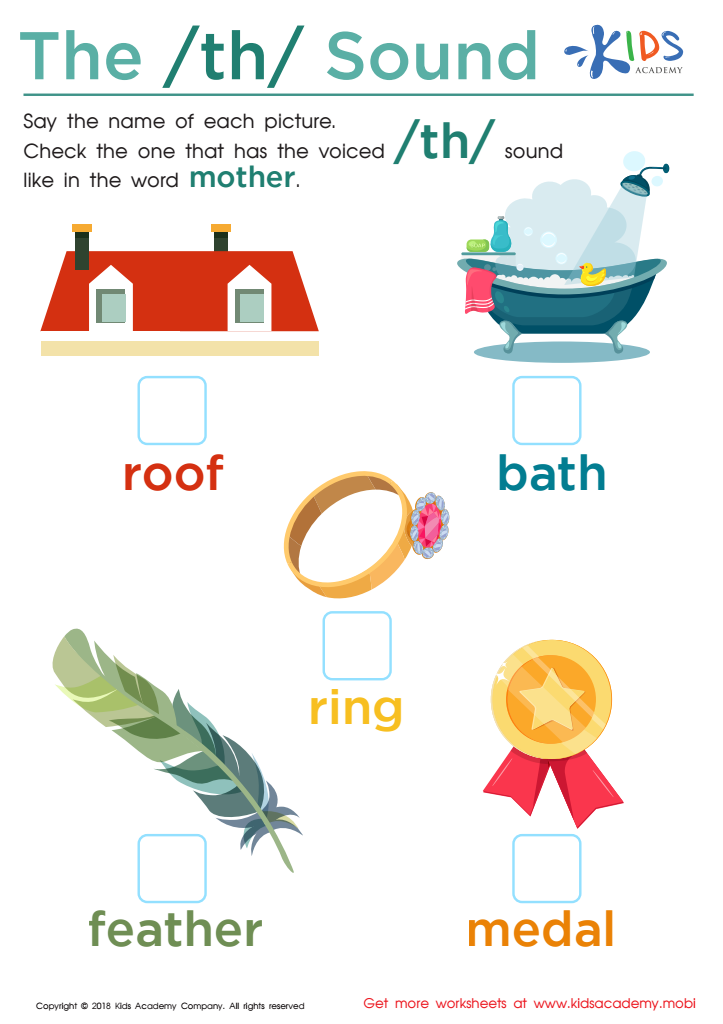
The /th/ Sound Worksheet
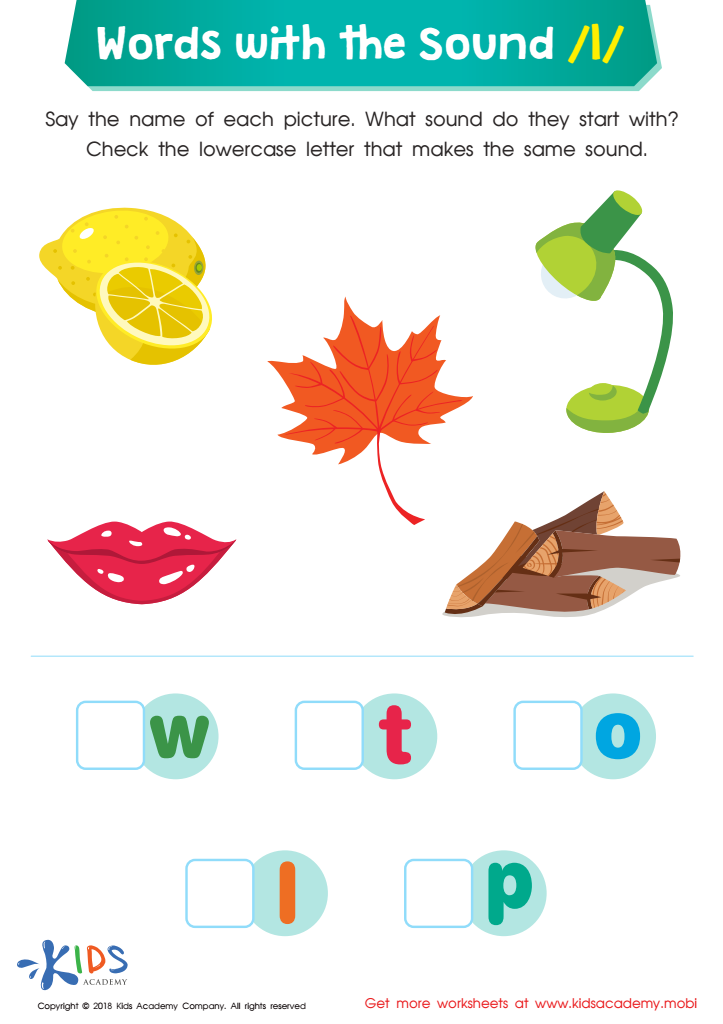
Words with Sound L Reading Worksheet
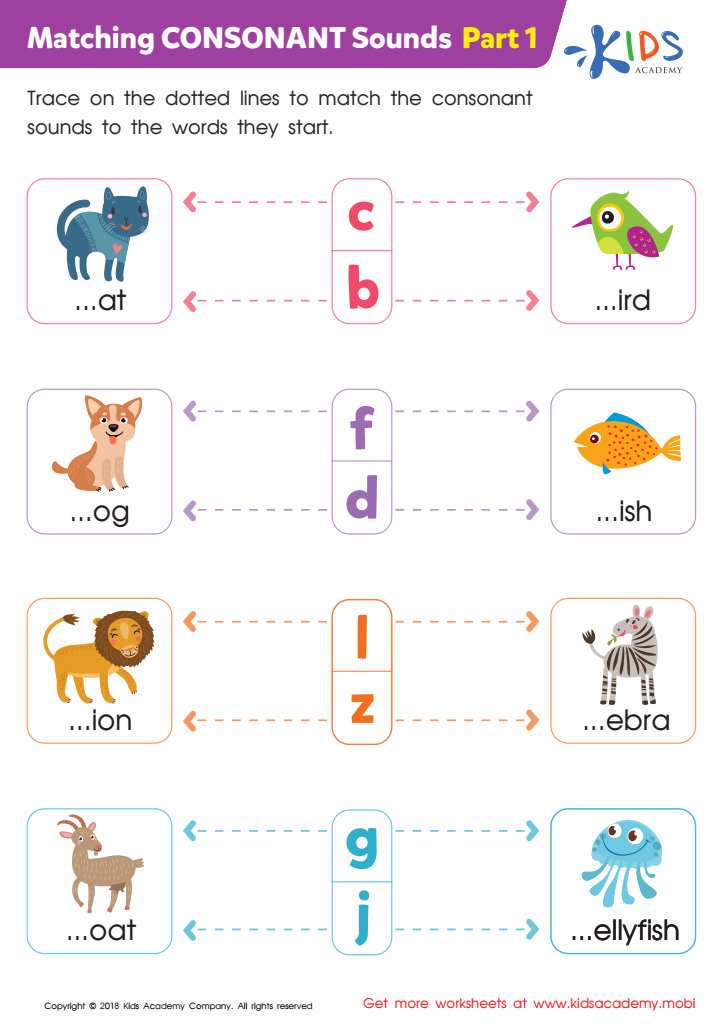
Matching Consonant Sounds: Part 1 Worksheet



Sound recognition of consonants is a crucial milestone in the early literacy development of children aged 4-8. During these formative years, children learn to correlate sounds with letters, forming the foundational blocks of reading and writing. Engaging with consonant sounds enhances phonemic awareness, which is the ability to hear, identify, and manipulate the individual sounds in words. This skill is essential for decoding unfamiliar words while reading, which directly impacts reading fluency and comprehension.
When children can accurately recognize and produce consonant sounds, they are better equipped to differentiate between similar-sounding words, reducing confusion and improving their spelling abilities. This leads to greater confidence and enthusiasm for reading—a predictor of future academic success.
At this age, brains are naturally attuned to language acquisition. Introducing consonant sounds during this critical window takes advantage of their neural plasticity, making learning faster and more effective. Interactive and engaging activities such as songs, games, and storytelling can make this learning process enjoyable, fostering a lifelong love for reading.
Teachers and parents play a pivotal role by providing supportive and enriching environments where children can explore and practice these sounds. Their involvement ensures that children are on the right path to becoming proficient readers and writers, laying a solid groundwork for all future learning.







