
Listening skills Elementary Phonics Worksheets for Ages 4-8
4 filtered results
Difficulty Level
Grade
Age
-
From - To
Subject
Activity
Standards
Enhance your child's early learning with our Listening Skills Elementary Phonics Worksheets designed for ages 4-8. These engaging worksheets focus on developing essential listening skills while promoting reading readiness through phonics. Each activity is crafted to help young learners recognize sounds, letters, and word patterns when spoken, crucial for their literacy journey. The interactive nature of these worksheets makes learning enjoyable, ensuring kids remain captivated while honing their auditory skills. Perfect for at-home practice or classroom settings, our resources strive to empower young readers by fostering confidence in their listening abilities. Explore our collection and nurture your child's passion for learning today!
Favorites
With answer key
Interactive
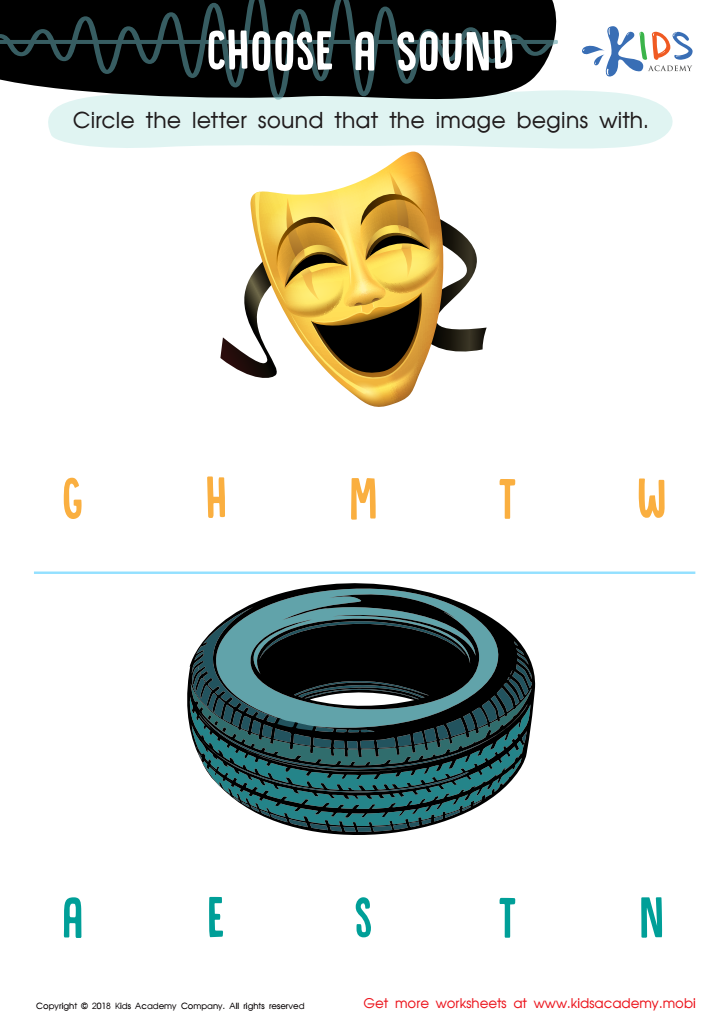
Choose a Sound Worksheet
Help your child hone pre-reading skills with this colorful worksheet! They'll practice tracing letter sounds, develop phoneme awareness, and gain confidence. Plus, it's a fun way to work on their fine motor skills.
 Assign to My Students
Choose a Sound Worksheet
Worksheet
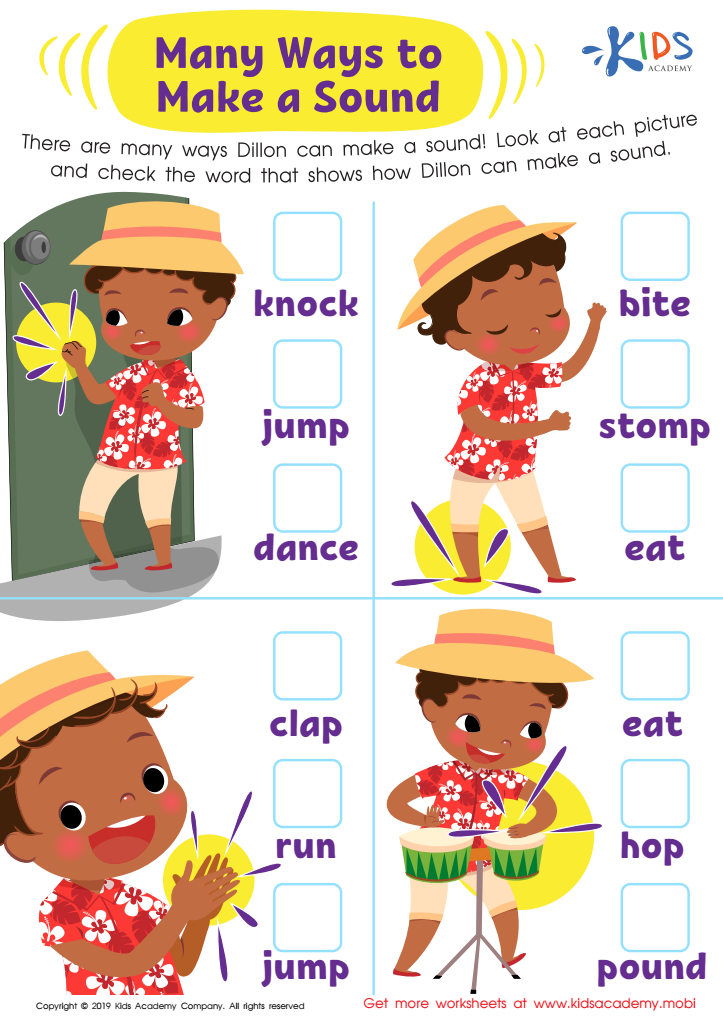
Many Ways to Make a Sound Worksheet
This interactive worksheet encourages creativity and imagination as kids use picture clues to match sound words. It helps them identify the sound methodology and build fine motor skills. Plus, with learning through play, they'll develop stronger vocabularies without even knowing it!
Many Ways to Make a Sound Worksheet
Worksheet
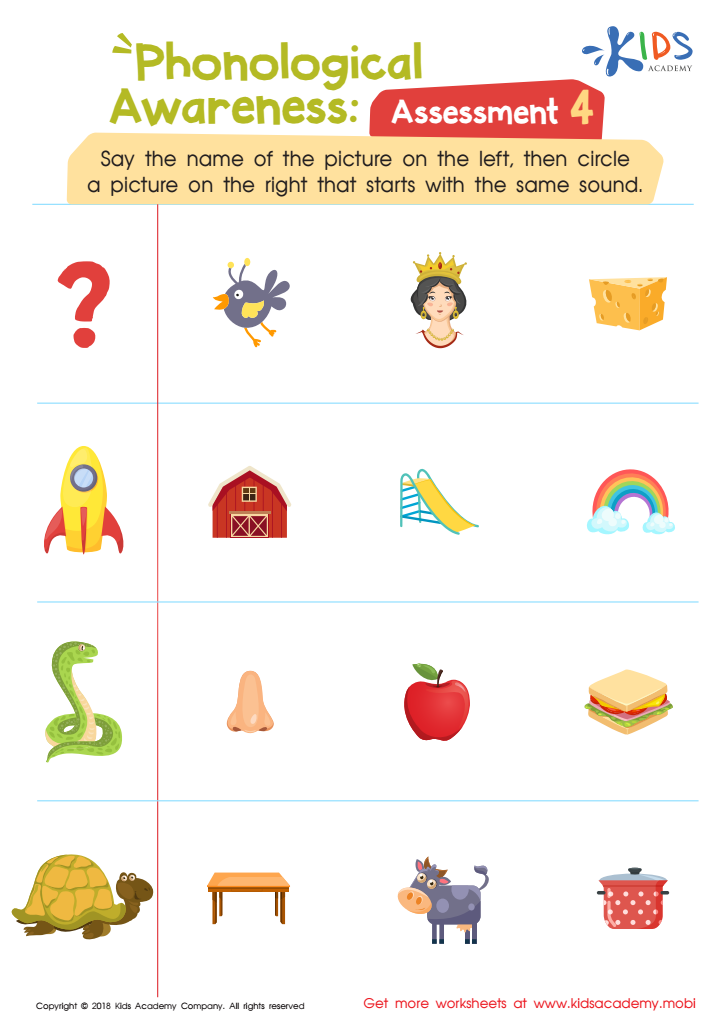
Phonological Awareness: Assessment 4 Worksheet
It can be tricky for young readers to differentiate between sounds in words. Make it fun with this downloadable worksheet! Ask your child to name each picture on the left and match the starting sound with an image on the right. This helps assess their phonics skills and make learning enjoyable.
Phonological Awareness: Assessment 4 Worksheet
Worksheet
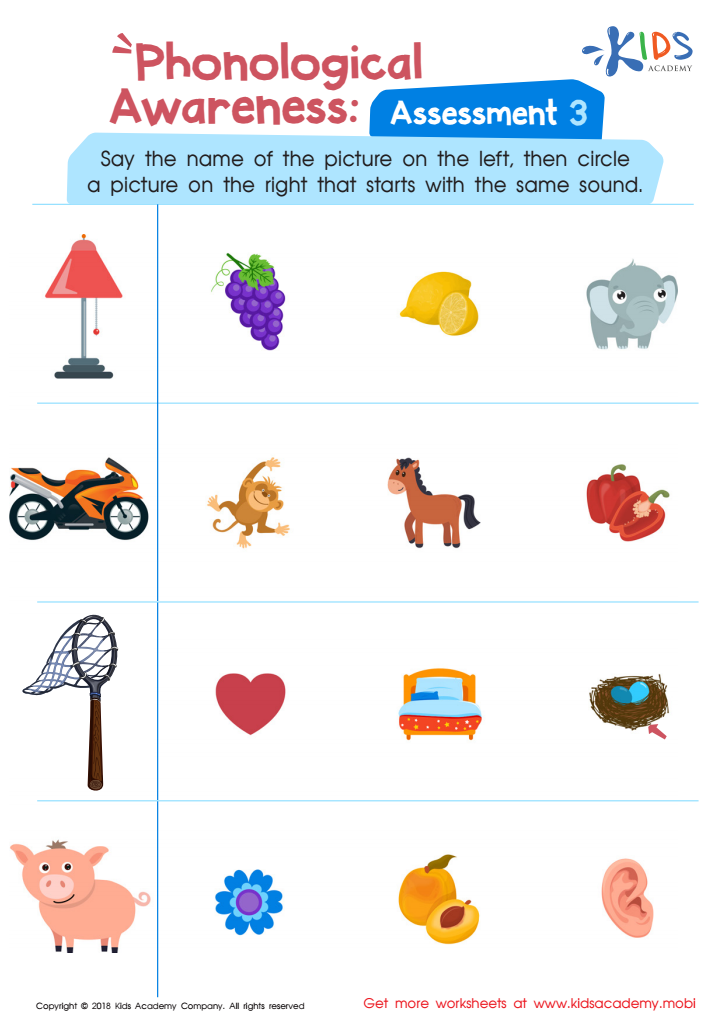
Phonological Awareness: Assessment 3 Worksheet
Test kids' reading readiness with a phonological awareness worksheet! With this PDF exercise, encourage children to name each picture aloud and match left to right. Help them learn to recognize word sounds at the start, middle and end of words. They'll be sure to remember that lamp doesn't sound like elephant!
Phonological Awareness: Assessment 3 Worksheet
Worksheet
Join Kids Academy for Free
Who is primarily going to use this learning content?




Listening skills are foundational for children, particularly in the context of elementary phonics for ages 4-8. At this crucial developmental stage, children's ability to perceive, interpret, and respond to sounds plays a vital role in their literacy journey. Effective listening contributes to phonemic awareness, which is the understanding that words are composed of distinct sounds. This foundational skill is essential for decoding and spelling.
Parents and teachers should prioritize listening skills because they directly impact a child's confidence and success in reading and writing. Engaging in active listening practices helps children distinguish between similar sounds, essential for recognizing and pronouncing words accurately. Additionally, strong listening skills enhance verbal communication and comprehension abilities, promoting better classroom participation and collaboration with peers.
Encouraging a child's listening development through phonics can lead to improved vocabulary and language structures, supporting overall academic performance. Furthermore, good listening skills foster attentive and respectful behavior, laying the groundwork for positive social interactions. By investing in listening skills, parents and teachers not only advance literacy but also nurture well-rounded individuals ready to navigate an increasingly complex world. Long-term success in education stems from early attention to these foundational skills, making it an essential focus for caregivers and educators.







