Understanding syllables Elementary Phonics Worksheets for Ages 4-8
3 filtered results
Difficulty Level
Grade
Age
-
From - To
Subject
Activity
Standards
Enhance your child's reading skills with our "Understanding Syllables" worksheets designed for ages 4-8. These engaging resources help young learners grasp the concept of syllables, an essential building block of phonics. Through fun exercises and colorful illustrations, children will practice identifying and counting syllables in words, promoting better pronunciation and reading fluency. Our worksheets are ideal for parents, teachers, and homeschoolers aiming to foster a love for reading while developing essential language skills. Whether used in the classroom or at home, these materials provide a playful, hands-on approach to mastering syllables. Start your phonics journey today!
Favorites
With answer key
Interactive
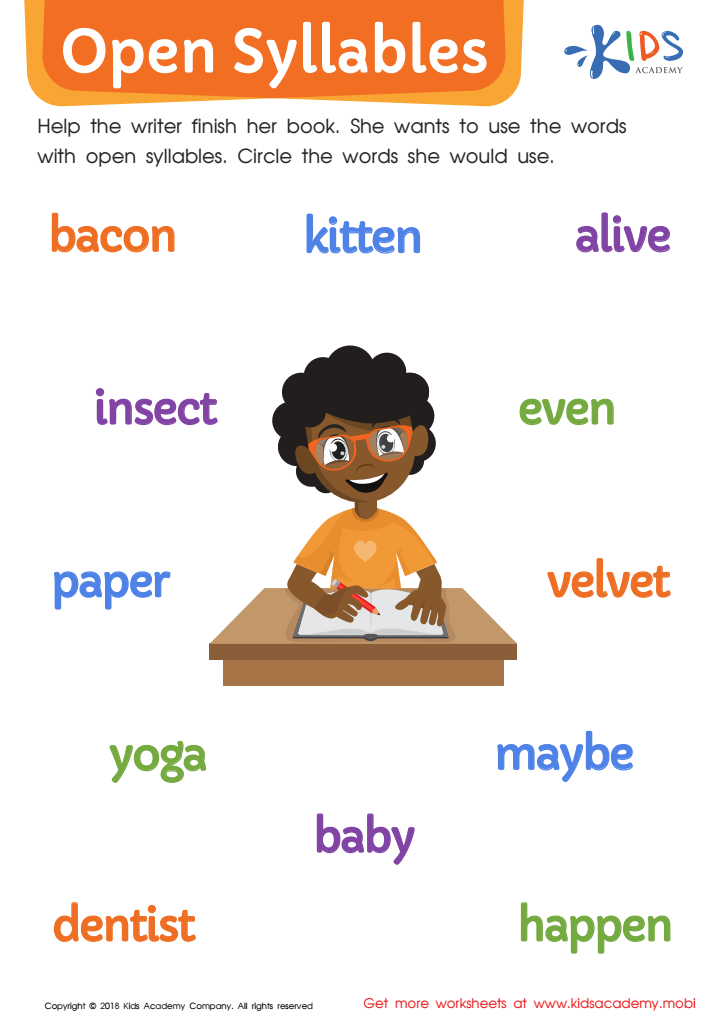
Open Syllables Worksheet
Before beginning this worksheet, make sure your child knows what open syllables are. If not, take time to teach them with examples. Then, help the writer finish her book by circling words with open syllables. She needs your child's help!
 Assign to My Students
Open Syllables Worksheet
Worksheet
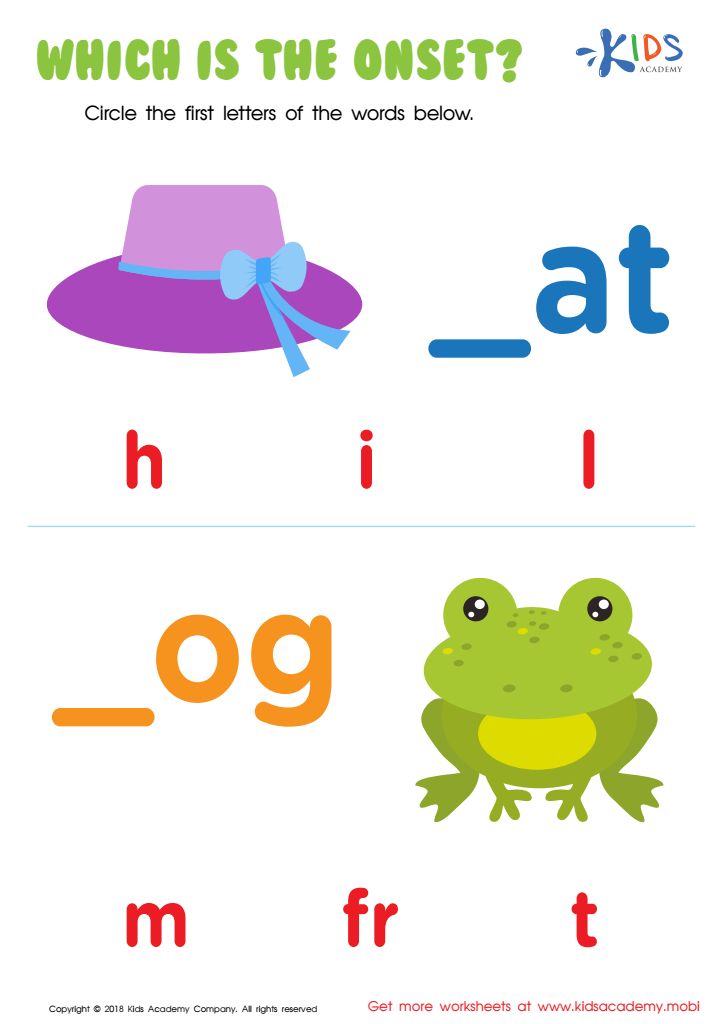
Which Is the Onset? Worksheet
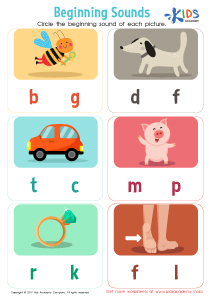
Help your children learn to spell with this bright, fun worksheet. Struggling with spelling small words can make reading and writing sentences difficult. Encourage them to look at the pictures, say the names aloud and circle the correct first letter from the options. They will soon overcome any reluctance to spell.
Which Is the Onset? Worksheet
Worksheet
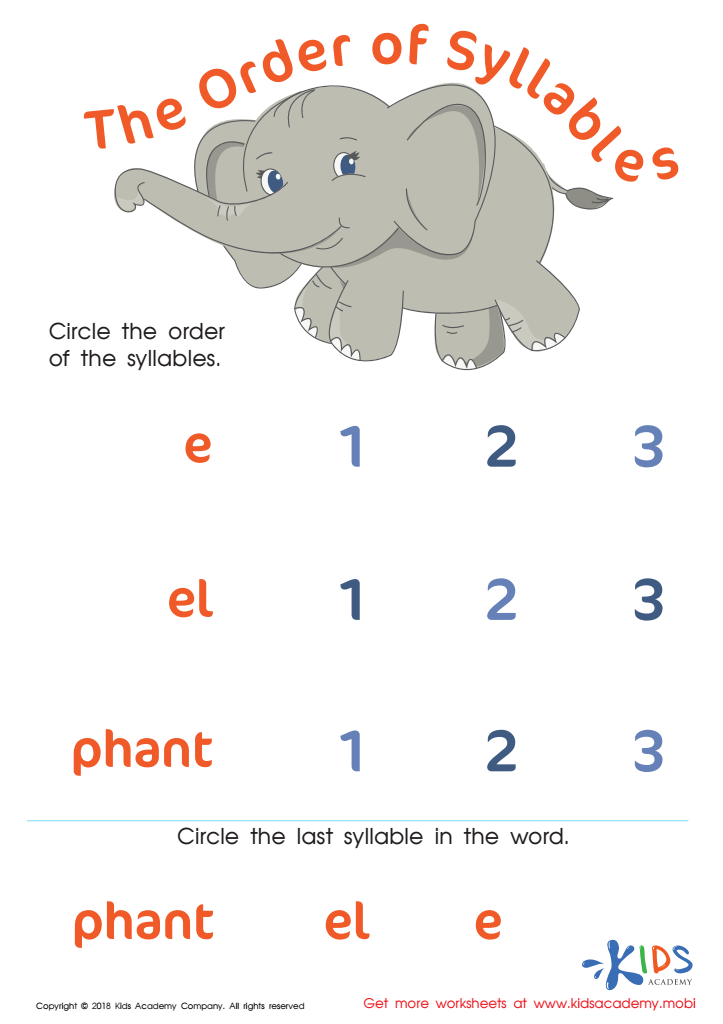
The Order of Syllables Worksheet
Syllabication is vital for prereading and decoding words. Download this fun, free worksheet to help your reader practice breaking words into syllables and arranging them for reading. It also strengthens fine motor skills as they trace the numbers for each syllable, guided by a cheerful elephant!
The Order of Syllables Worksheet
Worksheet
Join Kids Academy for Free
Who is primarily going to use this learning content?




Understanding syllables is a crucial aspect of phonics for young learners aged 4-8, and parents and teachers should prioritize its mastery for several reasons. Firstly, syllable awareness enhances children’s reading skills by breaking words into manageable parts, making it easier for them to decode and recognize larger words. This foundational skill supports early literacy and sets the stage for fluency in reading.
Furthermore, knowing syllables aids in spelling by helping children visualize the structure of words. When children understand how syllables function, they can apply this knowledge to break apart unfamiliar words, boosting their confidence and independence in learning.
Additionally, from a linguistic perspective, syllable awareness fosters better pronunciation and enhances vocabulary development. Understanding syllable patterns can aid in the organization of language, making communication more effective.
For teachers and parents, teaching syllables cultivates positive learning experiences and promotes engagement. Fun activities around syllables can facilitate long-lasting enthusiasm for reading and language arts.
Ultimately, grasping syllables lays the groundwork for lifelong literacy skills. By emphasizing this component of phonics in early education, caregivers help shape skilled, confident readers who can tackle ever more complex texts as they progress.