Vocabulary development Elementary Phonics Worksheets for Ages 4-8
4 filtered results
-
From - To
Boost vocabulary development with our Elementary Phonics Worksheets for Ages 4-8. Tailored for young learners, these fun and engaging worksheets offer a variety of activities that enhance reading and phonics skills. From identifying letter sounds and recognizing word patterns to expanding vocabulary knowledge, our materials foster a strong foundation in early literacy. Ideal for classroom or home use, these worksheets support children on their journey to becoming confident readers. Designed by educational experts, each worksheet is crafted to make learning enjoyable and effective. Explore our collection and watch your child’s vocabulary flourish!
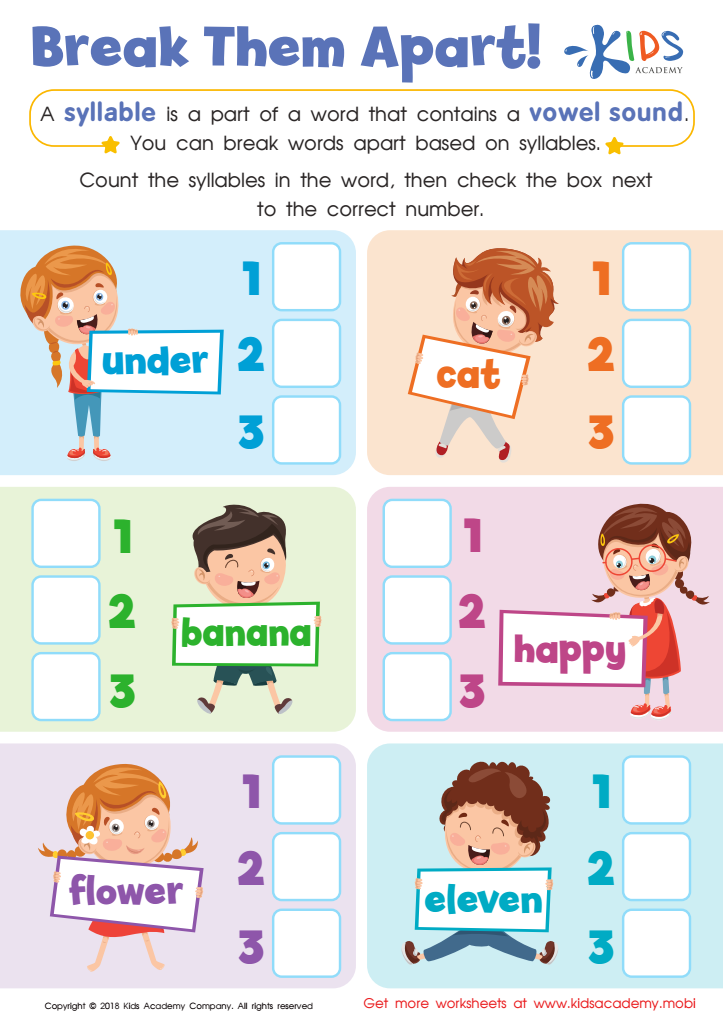
Reading: Break Them Apart Worksheet
 Assign to My Students
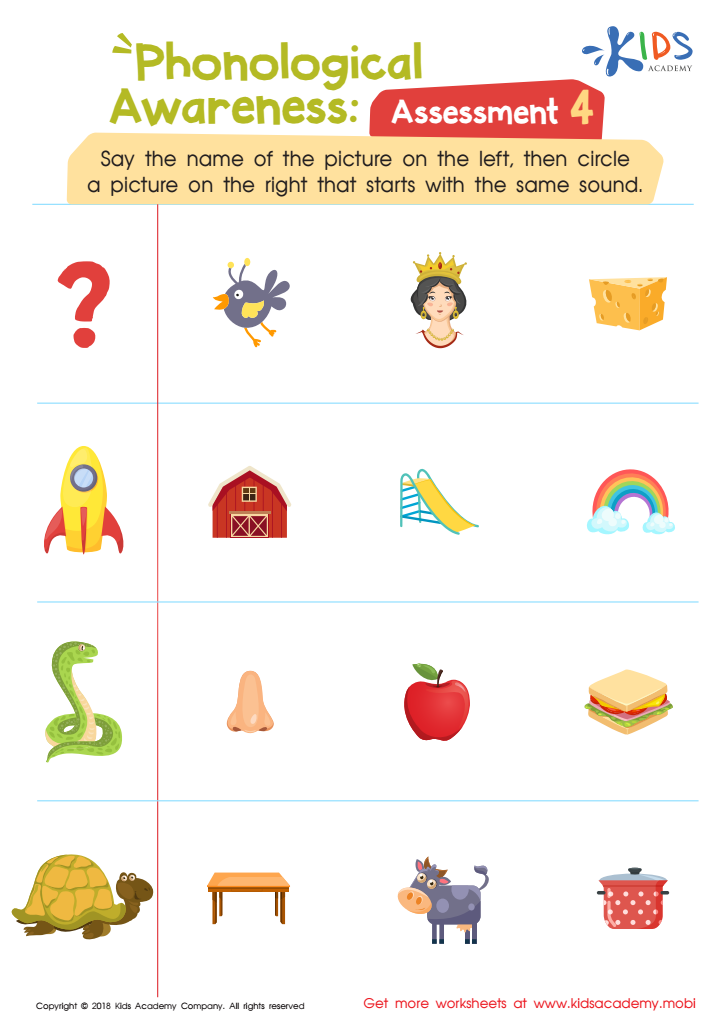
Phonological Awareness: Assessment 4 Worksheet
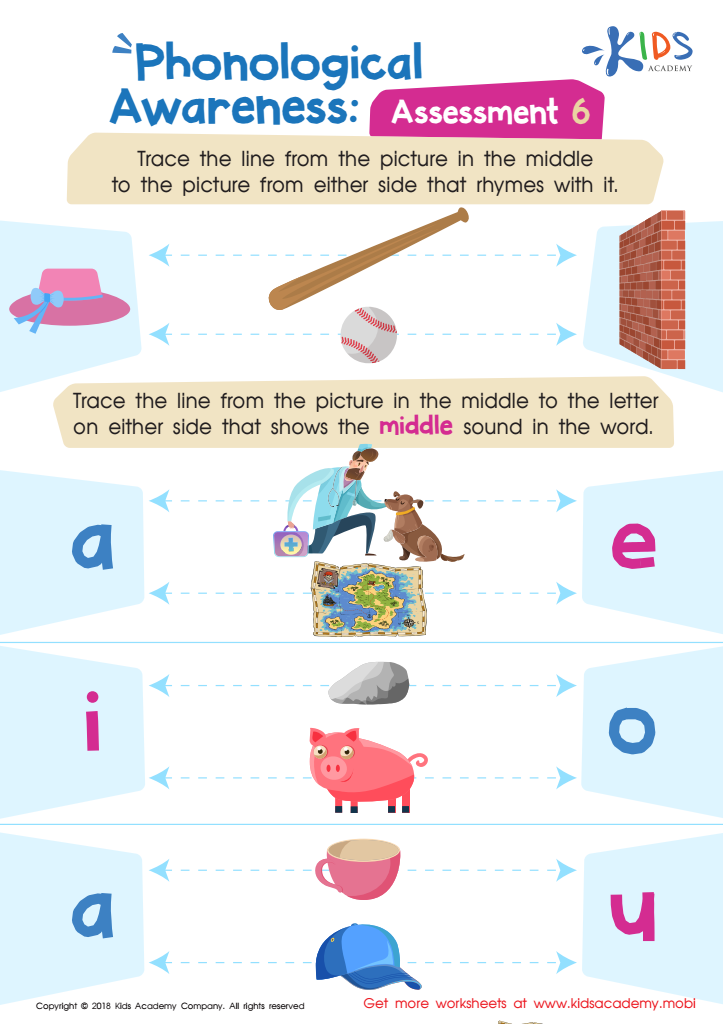
Phonological Awareness: Assessment 6 Worksheet
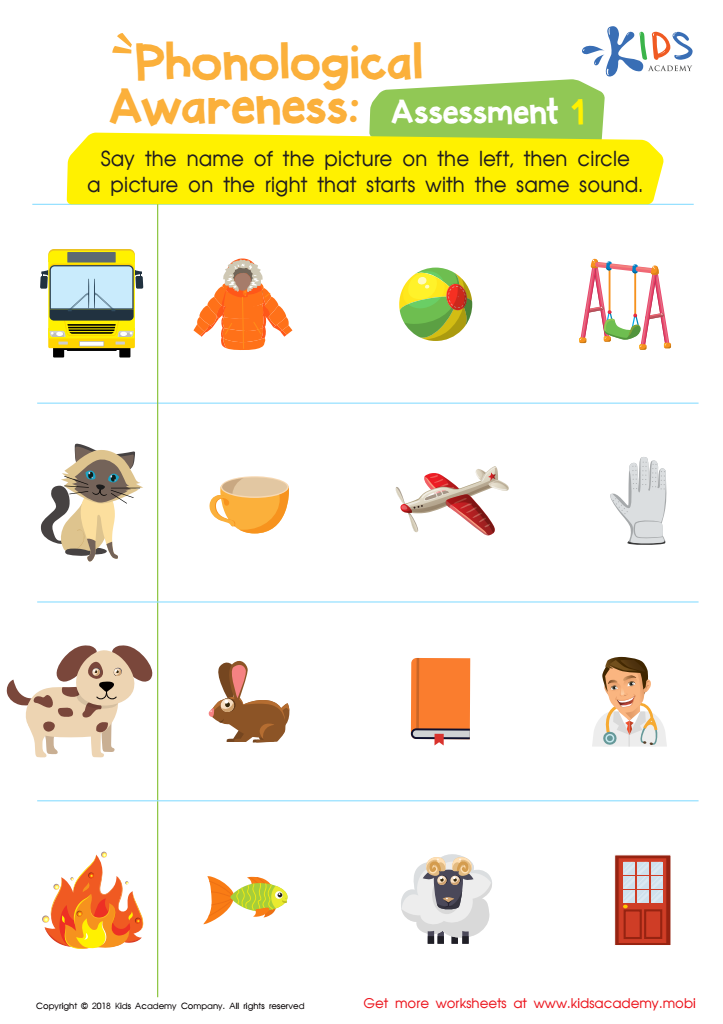
Phonological Awareness: Assessment 1 Worksheet




Vocabulary development and elementary phonics are critical components of early childhood education for ages 4-8, laying the groundwork for lifelong learning and success.
First, a strong vocabulary helps with reading comprehension. Children who understand more words can grasp the meaning of texts more easily, which is vital as they progress through more complex reading materials in higher grades. Comprehending what they read enables children to perform better across all subjects, as reading is foundational to learning.
Elementary phonics instruction further supports reading skills by teaching children the relationship between letters and sounds. Phonics helps children decode new words, giving them strategies to read unfamiliar texts independently. When children can sound out words effectively, their confidence and proficiency in reading increase, fostering a love for reading.
For parents and teachers, nurturing vocabulary and phonics skills at a young age is essential because early literacy is closely linked to later academic achievement. Investing time and resources in vocabulary and phonics education helps prevent reading difficulties that can have long-term consequences. Moreover, children with a robust foundation in these areas are better prepared to become engaged, informed, and capable learners, equipped for success both in school and in life. Therefore, focusing on vocabulary development and elementary phonics ensures children obtain the critical skills they need to thrive.







