Letter identification Alphabet Worksheets for Ages 4-8
4 filtered results
-
From - To
Welcome to our engaging "Letter Identification Alphabet Worksheets for Ages 4-8"! Designed to ignite young learners' curiosity, these worksheets provide a fun and interactive way for children to recognize and identify letters of the alphabet. With colorful graphics and diverse activities, kids will improve their letter recognition skills while enjoying stimulating exercises such as tracing, matching, and coloring. Perfect for preschool and early elementary educators and parents, our worksheets nurture essential foundational skills in literacy. Explore our collection now and support your child's journey to reading success through playful learning and creative exploration! Ideal for both classroom and home use.
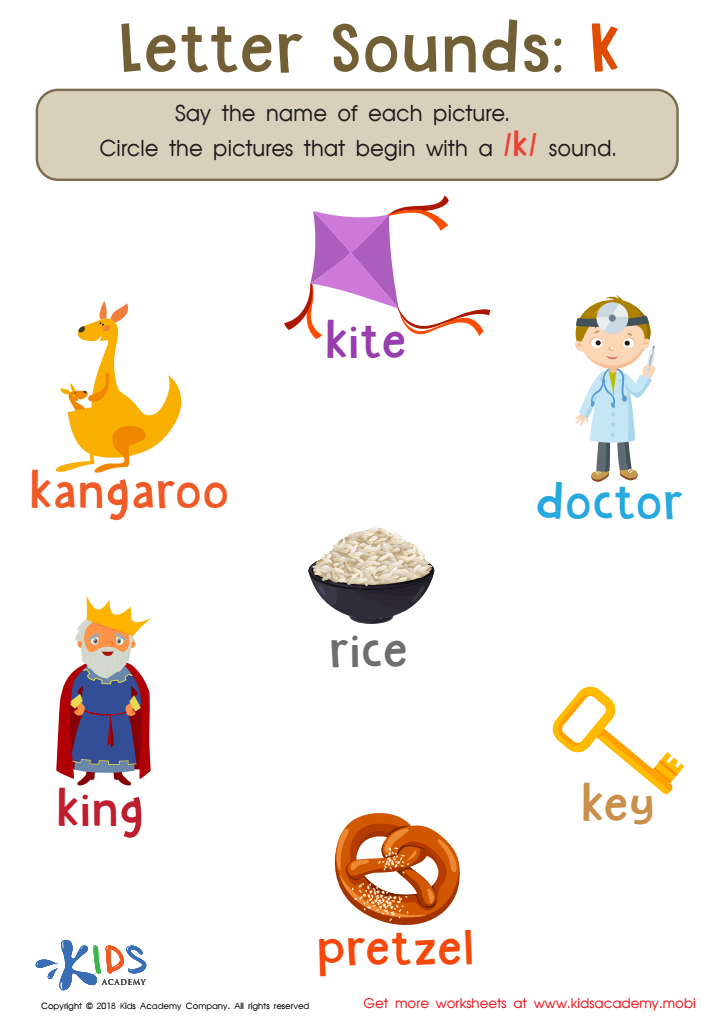
Letter K Sounds Worksheet
 Assign to My Students
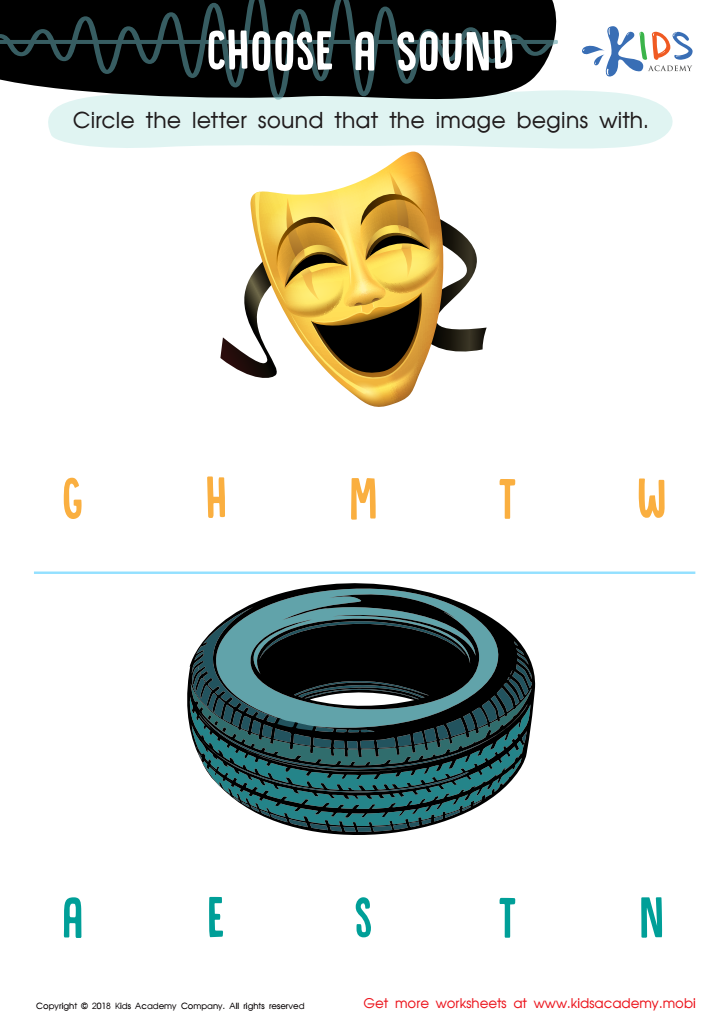
Choose a Sound Worksheet
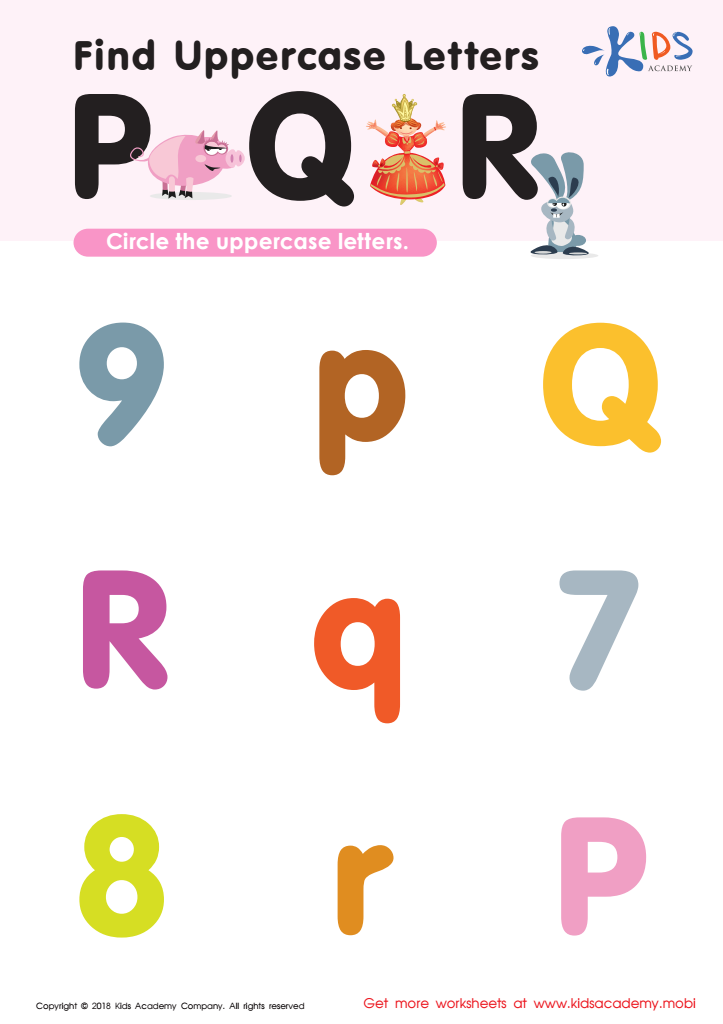
Find Uppercase Letters P, Q, and R Worksheet
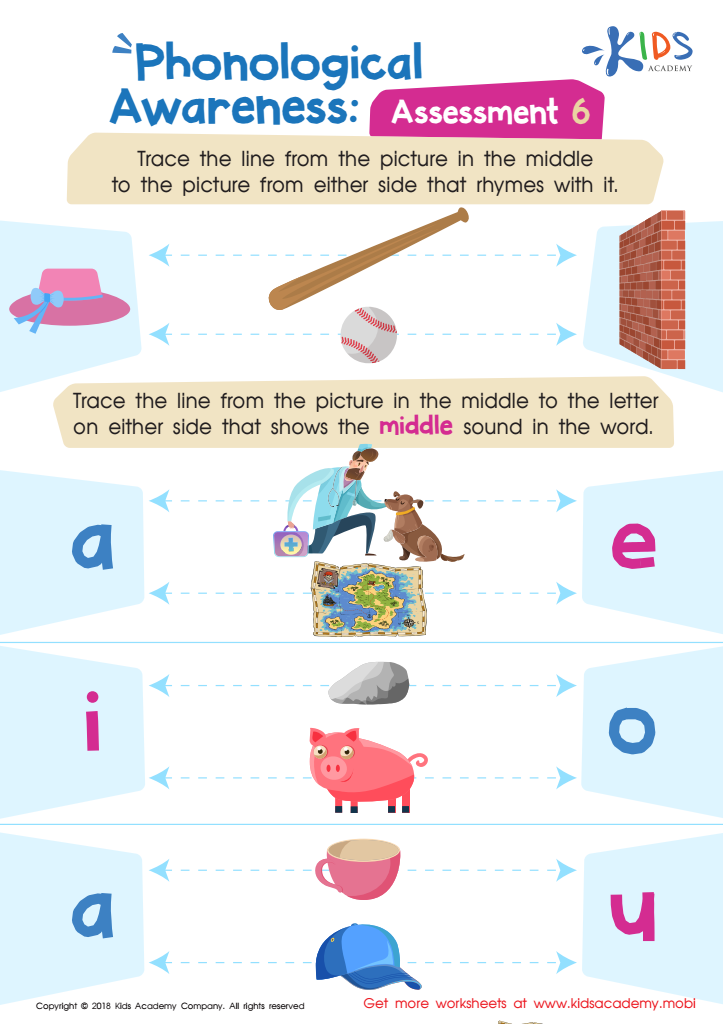
Phonological Awareness: Assessment 6 Worksheet




.jpg)



Letter identification is a fundamental building block in early literacy development for children aged 4-8. Learning to recognize both uppercase and lowercase letters serves as a gateway to reading and writing skills. When parents and teachers prioritize letter identification, they help children grasp the foundational structures of words, enabling them to decode and spell effectively. This skill is crucial, as it underpins phonemic awareness, the ability to hear, identify, and manipulate sounds in words.
Furthermore, fostering letter identification boosts children's confidence and enjoyment in literacy activities. Early exposure to letters—through games, books, and interactive learning—instills a love for reading that can last a lifetime. Additionally, strong letter identification skills are associated with better academic performance in later years, setting children up for success in both literacy and other subjects.
Moreover, as educators and caregivers, promoting letter identification helps catch any potential learning gaps early, ensuring timely interventions and support. Engaging with children on this fundamental skill not only enhances their educational journey but also builds essential cognitive and social skills, making it a vital focus for parents and teachers alike. Therefore, emphasizing letter identification is essential for creating a strong foundation for literacy and overall academic achievement.







