
Reading enhancement Alphabet Worksheets for Ages 4-8
6 filtered results
Difficulty Level
Grade
Age
-
From - To
Subject
Activity
Standards
Discover our "Reading Enhancement Alphabet Worksheets for Ages 4-8"! Our expertly designed worksheets will boost your child's reading skills while making learning fun. Each worksheet features engaging activities that focus on letter recognition, phonetic sounds, and early reading comprehension. Tailored for young learners, these printables include colorful illustrations and exciting games to keep children motivated and captivated. Perfect for preschool to 2nd graders, our reading enhancement worksheets provide a solid foundation for literacy and a love of reading. Help your child embark on a joyful and educational journey with our comprehensive alphabet resources. Join us today!
Favorites
With answer key
Interactive
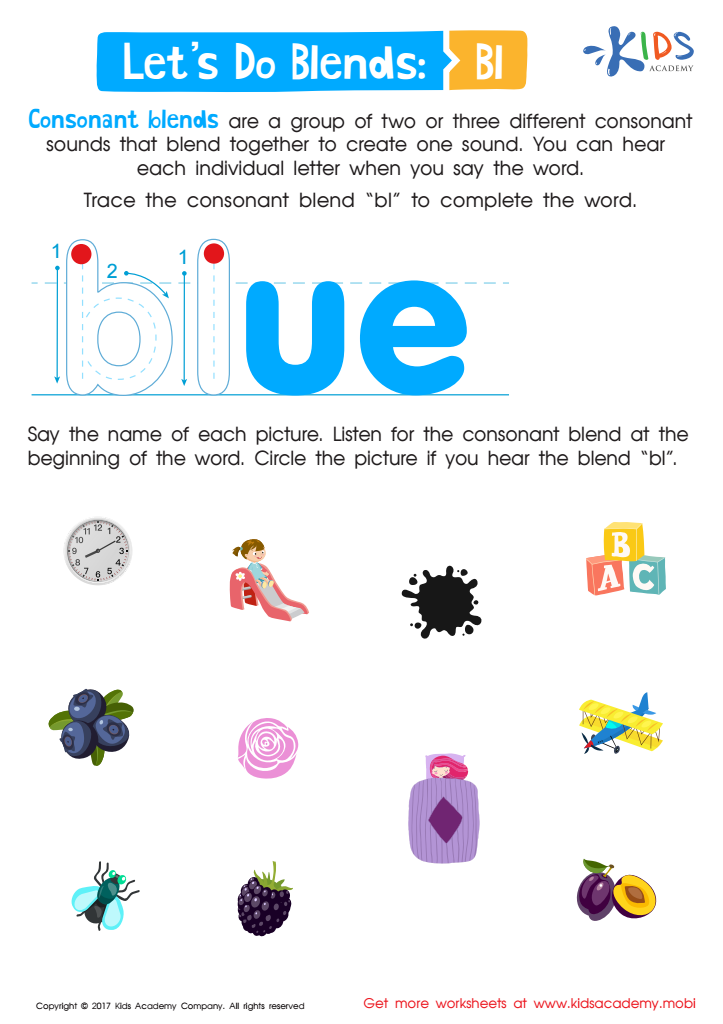
Beginning Blends: "Bl" Words Worksheet
Help your child master their phonics skills with this fun, focused consonant blend worksheet! They'll practice spelling, reading, and sounding out the words, which will help their speech and other skills. The worksheet focuses on "Bl" but extend your child's learning by finding other blends on the page. After completion, they'll be closer to phonics mastery!
 Assign to My Students
Beginning Blends: "Bl" Words Worksheet
Worksheet
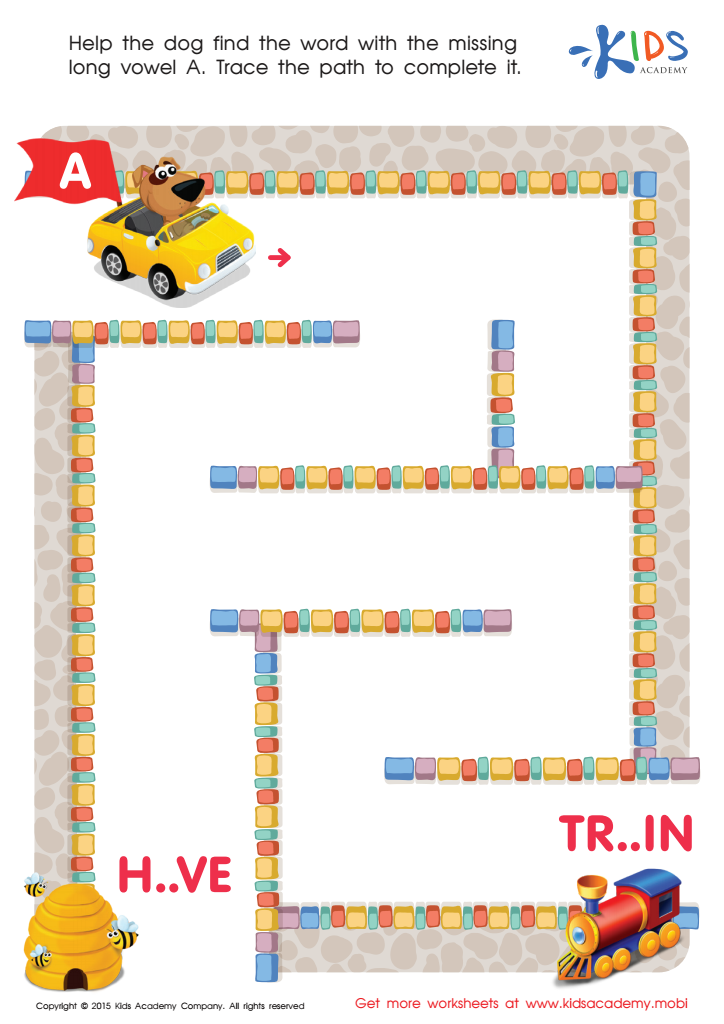
Long Vowel Sound A Worksheet
Teach your young learner about the long vowel A with this colorful free printable phonics worksheet. The long vowel A says its name while the short vowel A does not. Complete the worksheet by tracing the root to the toy train and helping the dog by filling in the missing letter A. Have them practice writing and spelling with phonics while having fun!
Long Vowel Sound A Worksheet
Worksheet
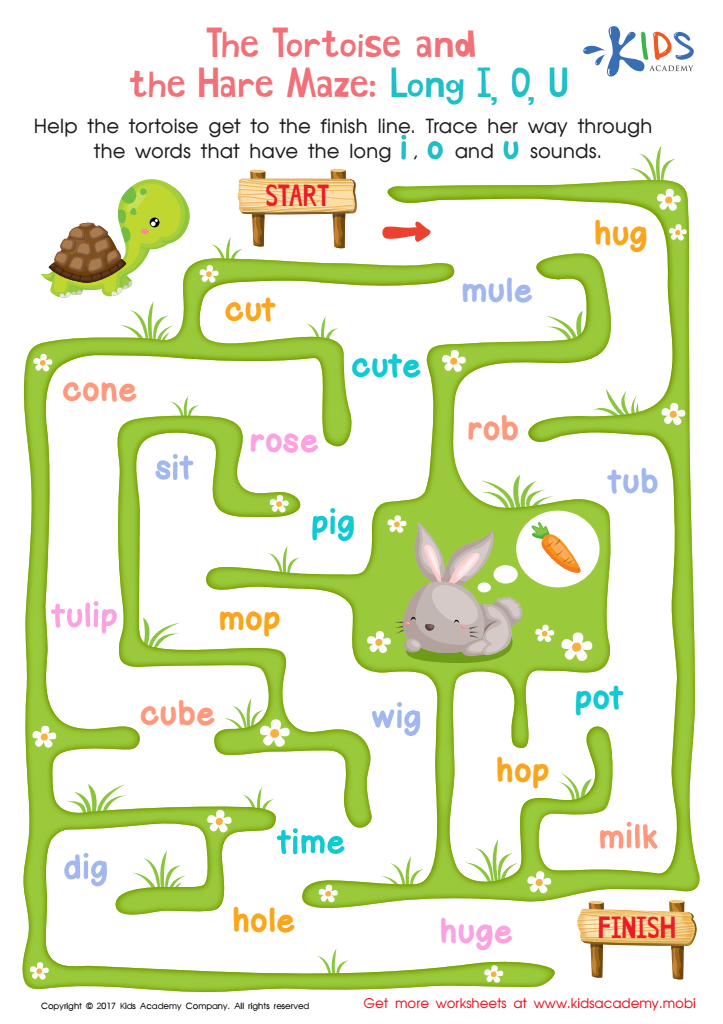
Long I, O, U Words Worksheet
This fun phonics worksheet has your child race the tortoise and hare to the finish line. Find all the long vowel sounds to win! It'll help your child's recognition of long I, O, and U words without him realizing it!
Long I, O, U Words Worksheet
Worksheet
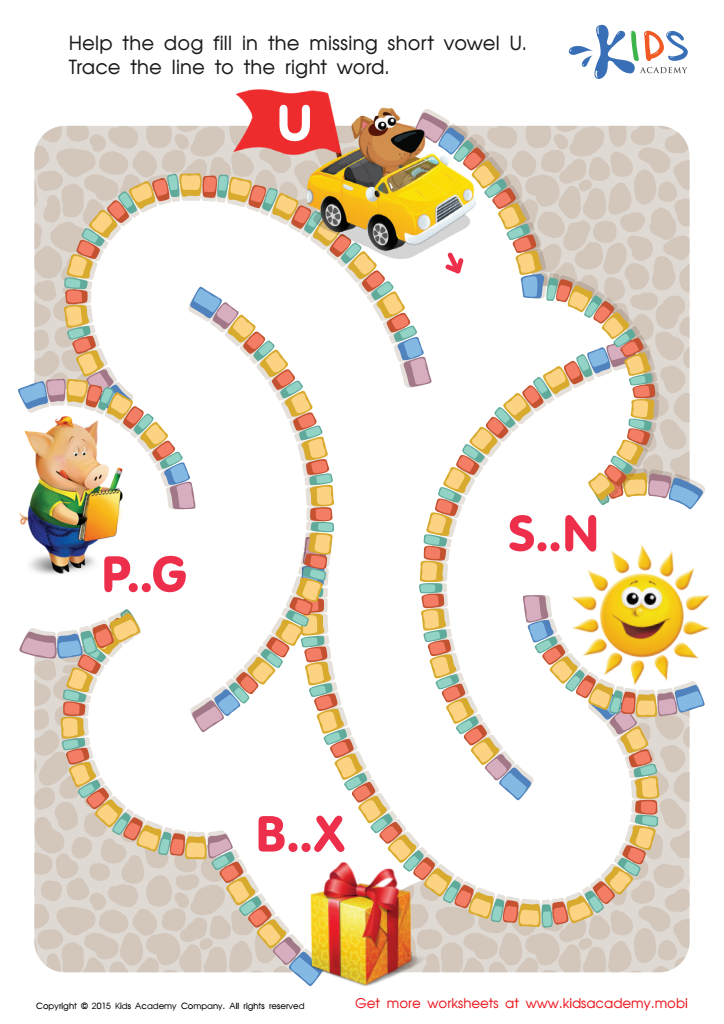
Short Vowel Sound U Worksheet
Practice abc phonics to help young learners link sounds to letters. This free printable phonics worksheet helps your kid learn the short vowel sound U. Guide them through the maze to help the dog complete the word "sun". Make sure they say the word out loud to emphasize the short U sound. Check out more phonics worksheets with mazes here.
Short Vowel Sound U Worksheet
Worksheet
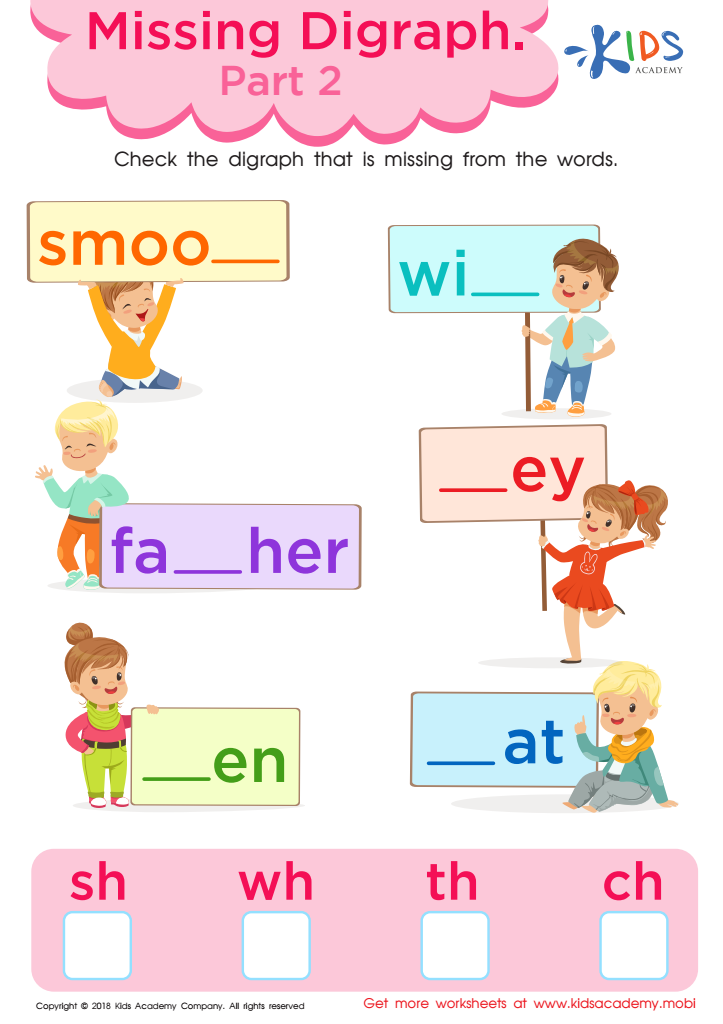
Missing Digraph: Part 2 Worksheet
Practice the "th" digraph with this fun worksheet from Kids Academy! See how it appears at the beginning, middle, or end of words and help learners fill in the blanks. Check if they got it right by finding the th digraph at the bottom!
Missing Digraph: Part 2 Worksheet
Worksheet
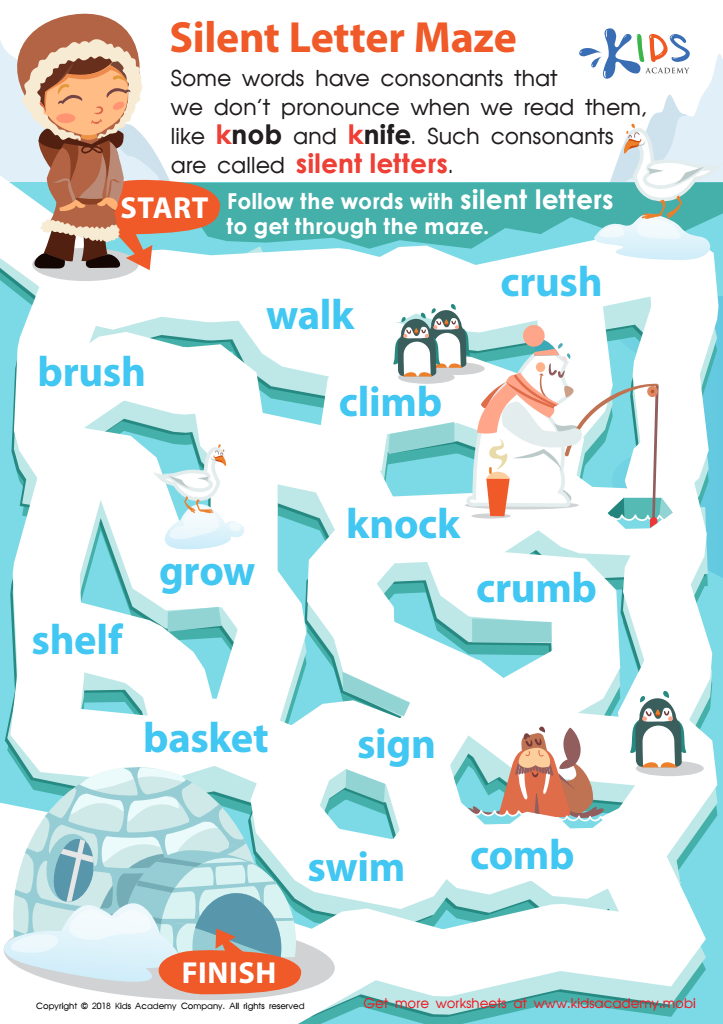
Silent Letter Maze Worksheet
Learning to read can be tricky, especially with words with irregular pronunciations. Explain to your child that some words have consonants we do not pronounce when reading. Ask them for examples like 'knife' and 'knob'. These consonants are called silent letters. Download this pdf to practice words with silent letters and complete the maze.
Silent Letter Maze Worksheet
Worksheet
Join Kids Academy for Free
Who is primarily going to use this learning content?







Reading Enhancement Alphabets (REA) cater to the developmental needs of young learners, typically aged 4-8, who are at a crucial stage of acquiring foundational literacy skills. For parents and teachers, incorporating REA into early education is vital for various compelling reasons.
Firstly, REAs facilitate phonemic awareness, which is the understanding that words are composed of individual sounds. This skill is paramount for young readers, as phonemic awareness is a strong predictor of future reading success. REAs use clear, distinct symbols or enhancements to emphasize the phonetic components of words, aligning closely with how children naturally learn to decode and encode spoken language into written form.
Secondly, REAs can significantly enhance kids’ confidence and motivation. By simplifying the complexity of traditional alphabets and providing visual cues, children experience fewer frustrations and ‘lightbulb moments’ more quickly. These moments of success build self-esteem and a love for reading, critical motivators that sustain long-term literacy development.
Lastly, Reading Enhancement Alphabets foster inclusivity. Children with learning difficulties, such as dyslexia, benefit greatly from extra visual aids and structured approaches to letter and sound recognition. As a result, REAs make early reading more accessible and enjoyable for all students, ensuring no child is left behind as they embark on their educational journey.
In summary, integrating Reading Enhancement Alphabets is a strategic and empathetic approach to foster foundational reading skills for young learners, offering significant benefits in phonemic awareness, confidence building, and inclusivity.







