Rhyme recognition Alphabet Worksheets for Ages 4-8
5 filtered results
-
From - To
Introducing our Rhyme Recognition Alphabet Worksheets designed for kids aged 4-8! These engaging, educational worksheets focus on helping young learners recognize and boost their rhyming skills while mastering the alphabet. Each fun and interactive sheet features delightful illustrations and simple activities to strengthen phonemic awareness and enhance early literacy. Whether comparing rhyming words or identifying different sounds, children will build a strong foundation for reading and writing. Perfect for parents, teachers, and caregivers, these printable resources make learning enjoyable at home or in the classroom. Start exploring the joy of rhymes with our expertly crafted worksheets today!
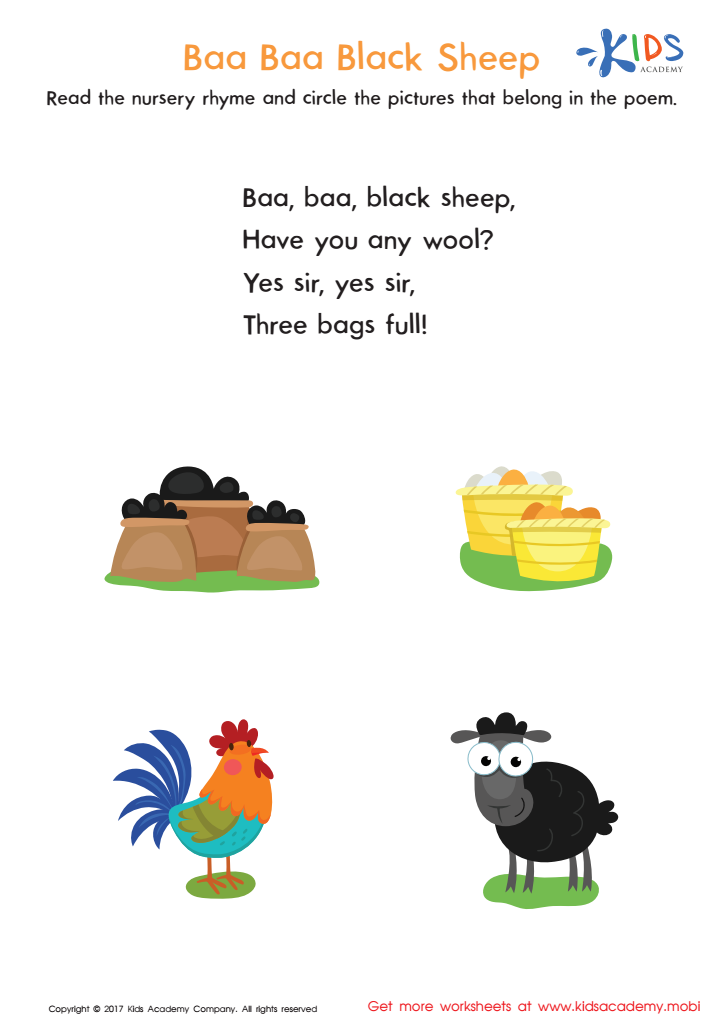
Baa Baa Black Sheep Printable
 Assign to My Students
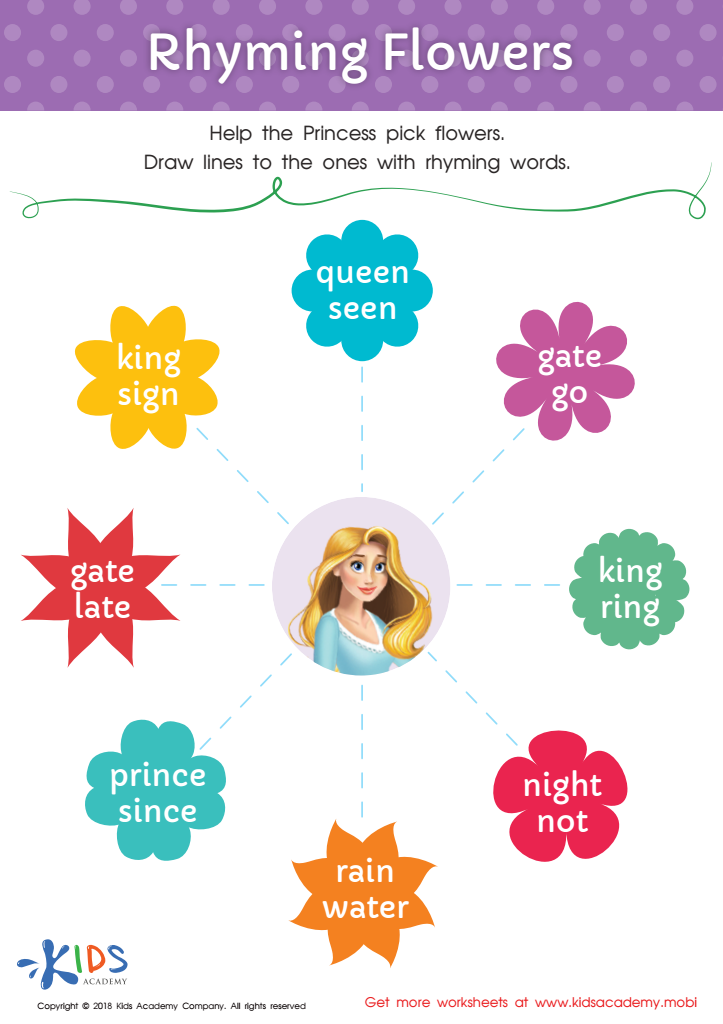
Rhyming Flowers Worksheet
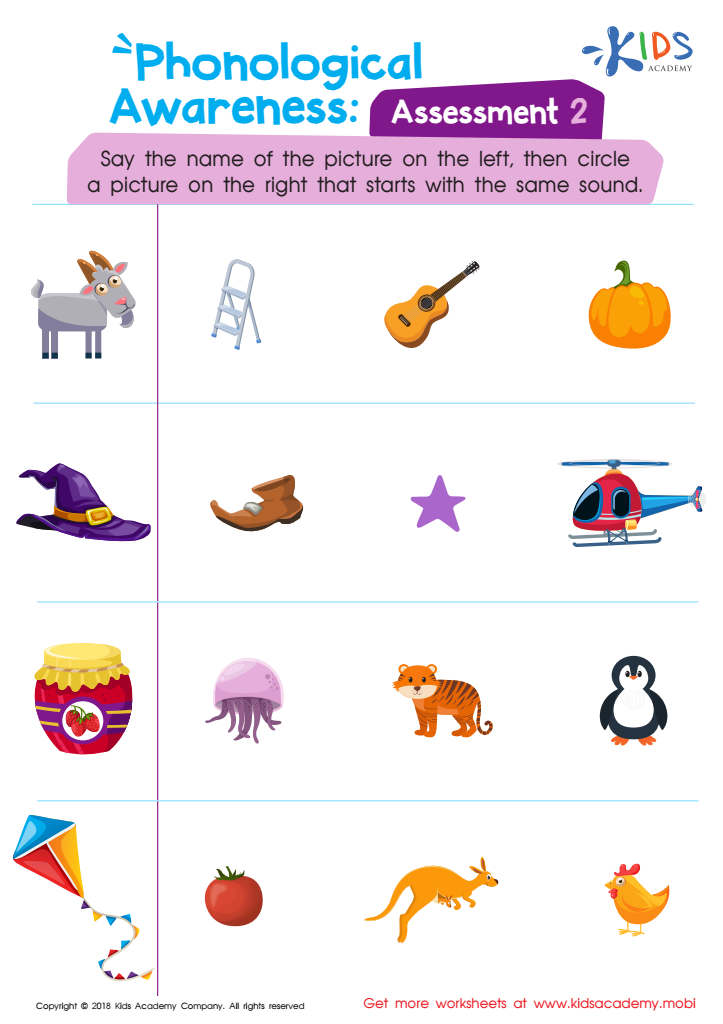
Phonological Awareness: Assessment 2 Worksheet
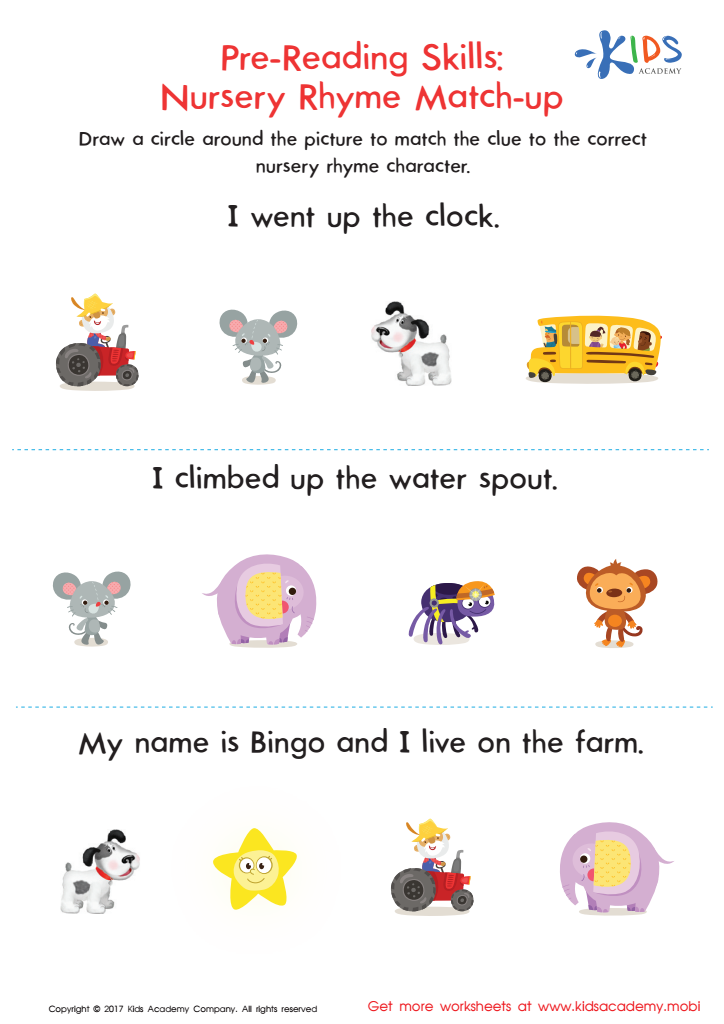
Nursery Rhyme Match–Up Worksheet
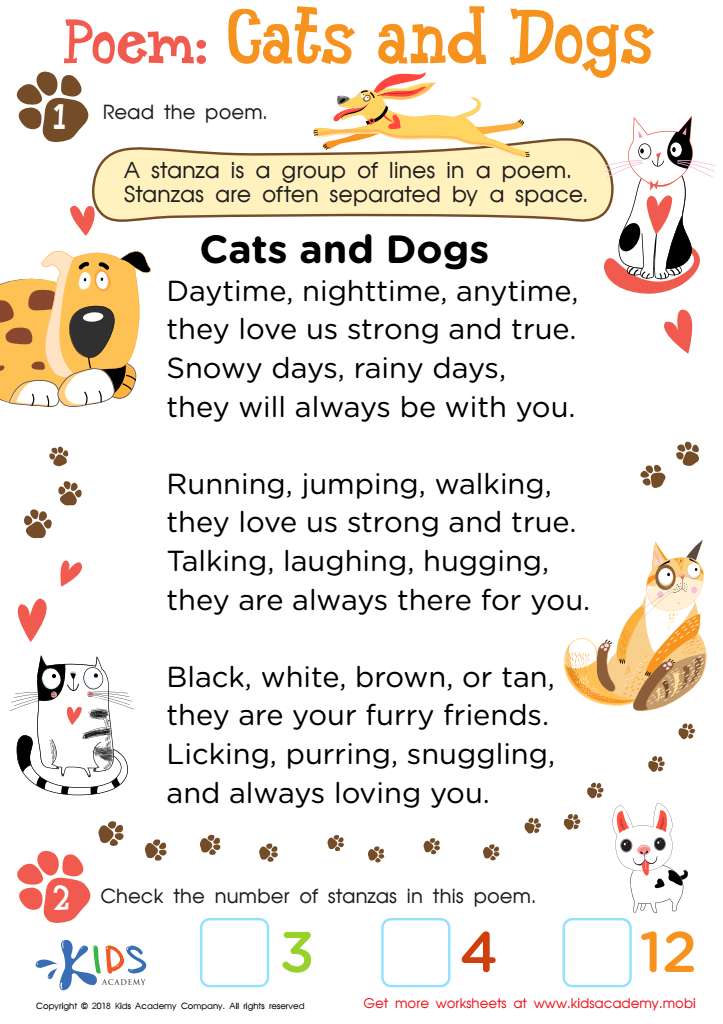
Poem: Cats and Dogs Worksheet








Rhyme recognition and knowledge of the alphabet are foundational skills critical to early childhood literacy, particularly for children aged 4-8. These activities facilitate phonemic awareness—the ability to hear, identify, and manipulate sounds within words. When children recognize rhyming patterns, they develop an ear for the sounds that compose language, which is an essential precursor to reading. Rhyming helps kids recognize patterns and predict word structures, fostering skills necessary for decoding and spelling.
Understanding the alphabet complements this by providing children with the building blocks of language: letters and their associated sounds. This dual focus on rhyme recognition and the alphabet builds a solid foundation for both reading and writing. Together, they make the often complex process of reading more approachable and engaging for young learners.
Furthermore, these activities promote a love of language and reading. Fun, interactive experiences with rhymes and letters can make learning joyful, sparking curiosity and a positive attitude towards education. Socially, engaging with these skills alongside peers or family can enhance collaboration and communication skills.
For parents and teachers, prioritizing rhyme recognition and alphabet knowledge means equipping children with essential tools to thrive academically and fostering a stimulating environment that values and enjoys the magical process of learning to read.







