
Uppercase identification Alphabet Worksheets for Ages 4-8
5 filtered results
Difficulty Level
Grade
Age
-
From - To
Subject
Activity
Standards
Discover our Uppercase Identification Alphabet Worksheets designed for children aged 4-8. These engaging and educational worksheets offer a fun way to master the capital letters of the alphabet. Through captivating activities and colorful visuals, kids will improve letter recognition, fine motor skills, and foundational literacy. Perfect for early learners, our worksheets provide essential practice that supports classroom learning and prepares youngsters for reading and writing success. Help your child excel by downloading our alphabet worksheets and watch them enjoy every step of their learning journey. Support their education at home with these fantastic, teacher-approved resources!
Favorites
With answer key
Interactive
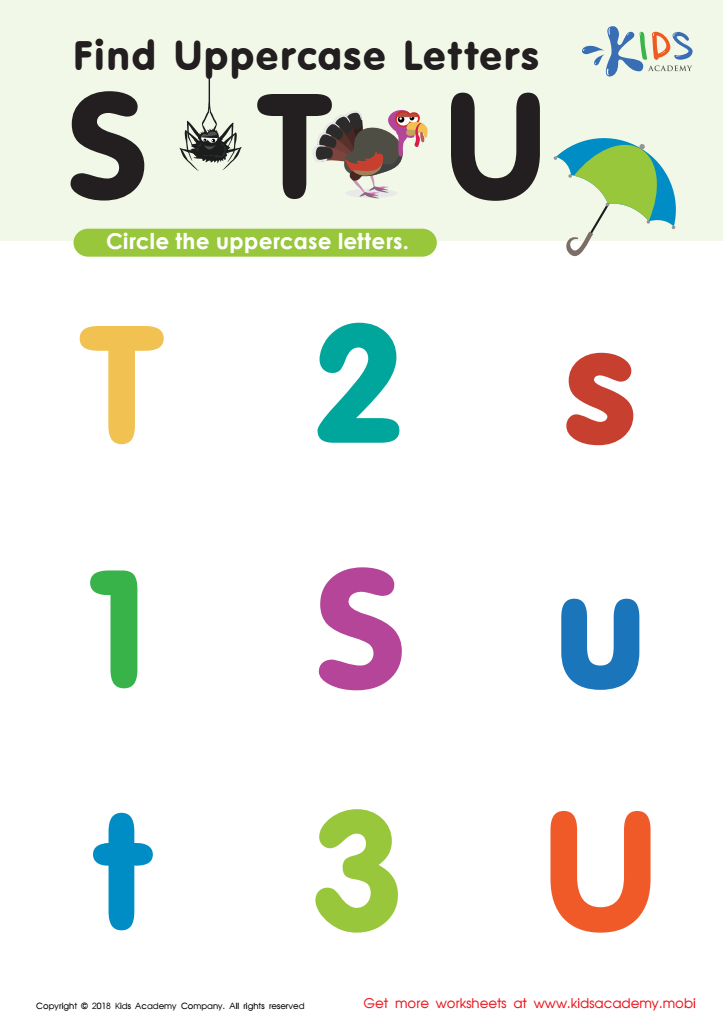
Find Uppercase Letters Worksheet
What level is your kid at now? Can they tell the difference between small and uppercase letters? Ask them to name words beginning with S, T and U, then help them find and circle the uppercase letters S, T and U in a mix of small letters, numbers and uppercase letters.
 Assign to My Students
Find Uppercase Letters Worksheet
Worksheet
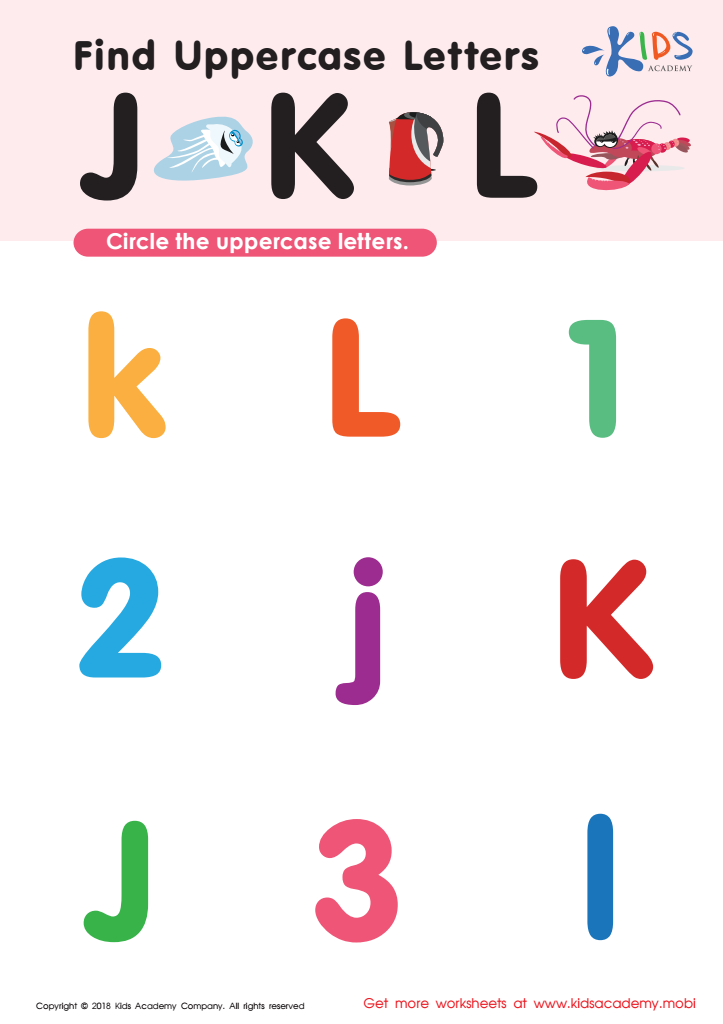
Find Uppercase Letters J, K, and L Worksheet
Search for the uppercase letters J, K, and L in this fun worksheet! Help your child identify the starting sound of each picture, then look for the letters. Keep an eye out for numbers that look like letters. Swim with the jellyfish and solve this delightful puzzle!
Find Uppercase Letters J, K, and L Worksheet
Worksheet

Find Uppercase Letters A, B, and C Worksheet
Check out this PDF worksheet and spot all the capital letters! Arranged as a puzzle, this exercise will test little learners to read and recognize uppercase letters and tell the difference between letters and numbers. To help them, use the pictures on top of the page to practice the sounds A, B and C make! 80 words.
Find Uppercase Letters A, B, and C Worksheet
Worksheet
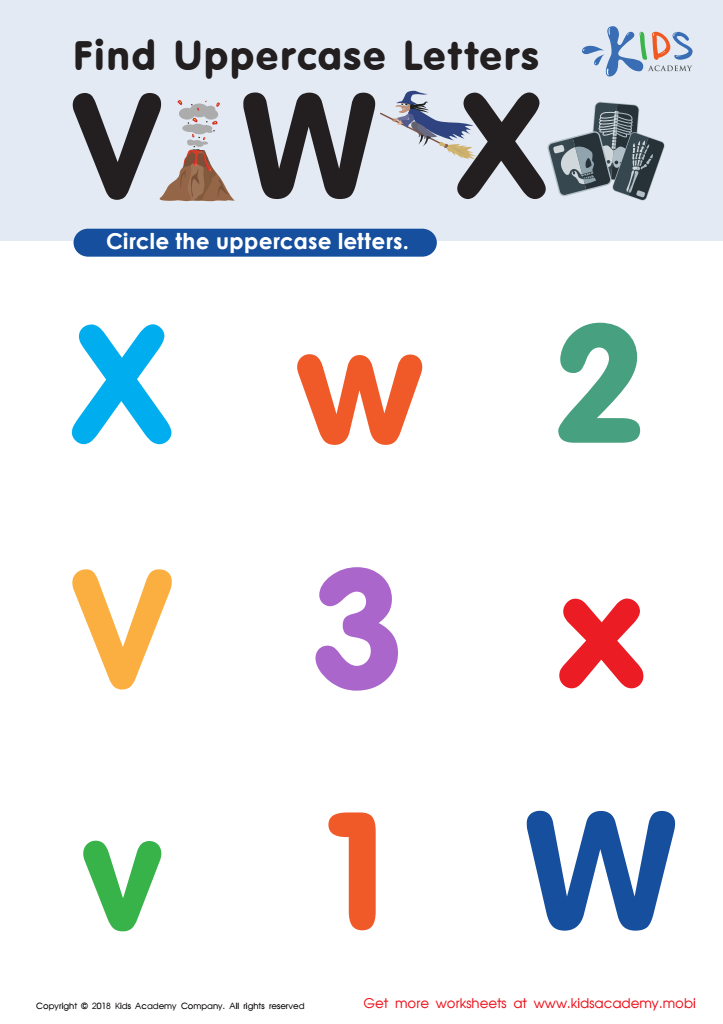
Find Uppercase Letters V, W, X Worksheet
Ask your kids if they can spot the uppercase letters V, W and X hidden in the lowercase letters and numbers, then have them circle them. After that, ask them to give you examples of words beginning with those letters. This worksheet will help them get started.
Find Uppercase Letters V, W, X Worksheet
Worksheet
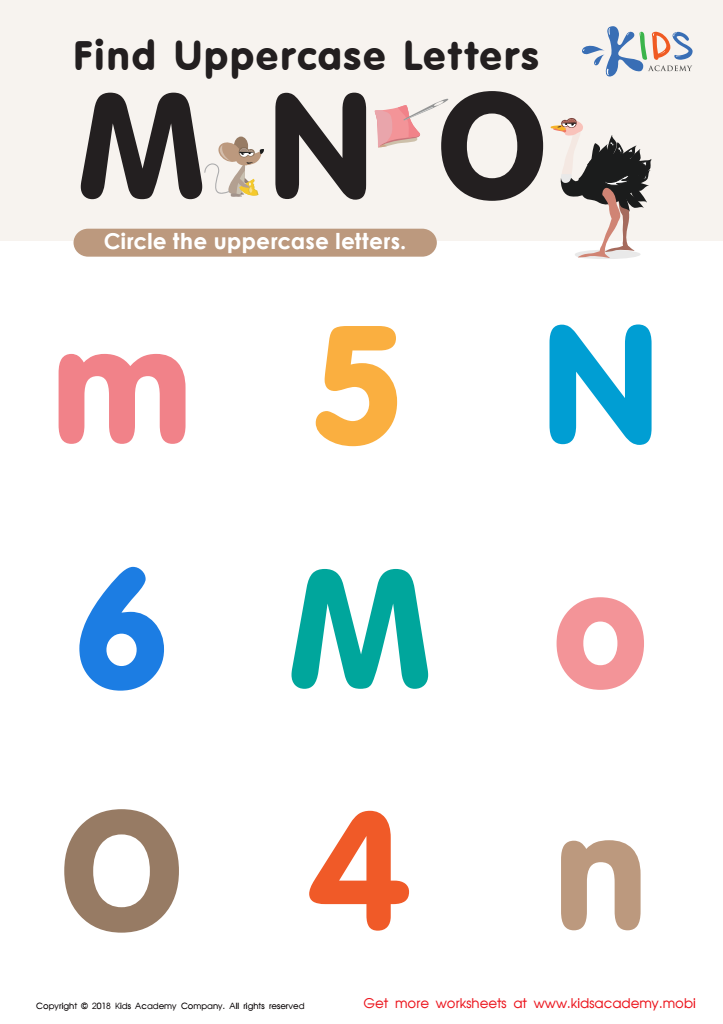
Find Uppercase Letters M, N, and O Worksheet
Kids love puzzles! This one scrambles up letters and numbers. Help your learner spot the capital letters, then search for the uppercase M, N, and O. For an extra challenge, cover the large letters and have kids circle the capitals using only beginning letter sounds.
Find Uppercase Letters M, N, and O Worksheet
Worksheet
Join Kids Academy for Free
Who is primarily going to use this learning content?








Parents and teachers should care deeply about uppercase alphabet identification for children aged 4-8 because it establishes the foundation for literacy and academic success. During these formative years, young children’s brains are highly receptive to learning new skills, making it the ideal period to introduce and reinforce letter recognition. Understanding uppercase letters is one of the initial steps in reading development, enabling children to decode words, which is crucial for reading fluency. Recognizing uppercase letters first is often easier for children because these letters tend to be more uniform and less confusing than lowercase letters with their varying shapes.
Moreover, familiarity with uppercase letters facilitates the development of writing skills, as children often begin learning to write using uppercase letters. This knowledge supports better handwriting by improving their fine motor skills. An early grasp of letters can also enhance children’s confidence and enthusiasm for learning, laying a positive groundwork for future educational experiences.
Parents and teachers ignoring this critical step may contribute to later literacy challenges, making it harder for children to catch up with their peers. Emphasizing uppercase letter identification ensures that young learners are well-equipped to pursue a journey of lifelong learning with enthusiasm and readiness.







