Alphabet familiarity Letter Recognition Worksheets for Ages 4-8
7 filtered results
-
From - To
Boost your child's literacy skills with our Alphabet Familiarity Letter Recognition Worksheets, designed for ages 4-8. These engaging, printable worksheets promote letter recognition and help young learners become comfortable with the alphabet. Each activity is tailored to foster essential skills through fun exercises, including tracing, matching, and identifying letters in various contexts. Our worksheets not only support early reading development but also enhance fine motor skills and boost confidence. Perfect for teachers and parents, these worksheets offer a seamless blend of learning and enjoyment, laying a solid foundation for future literacy success. Explore our collection today and watch your child flourish!
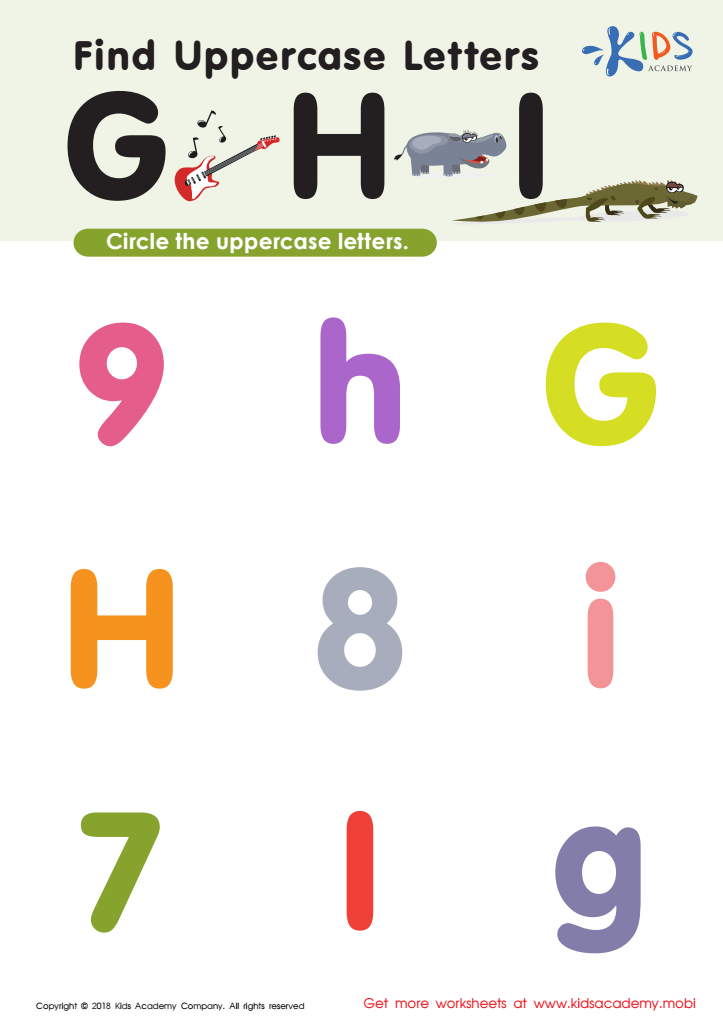
Find Uppercase Letters G, H, and I Worksheet
 Assign to My Students
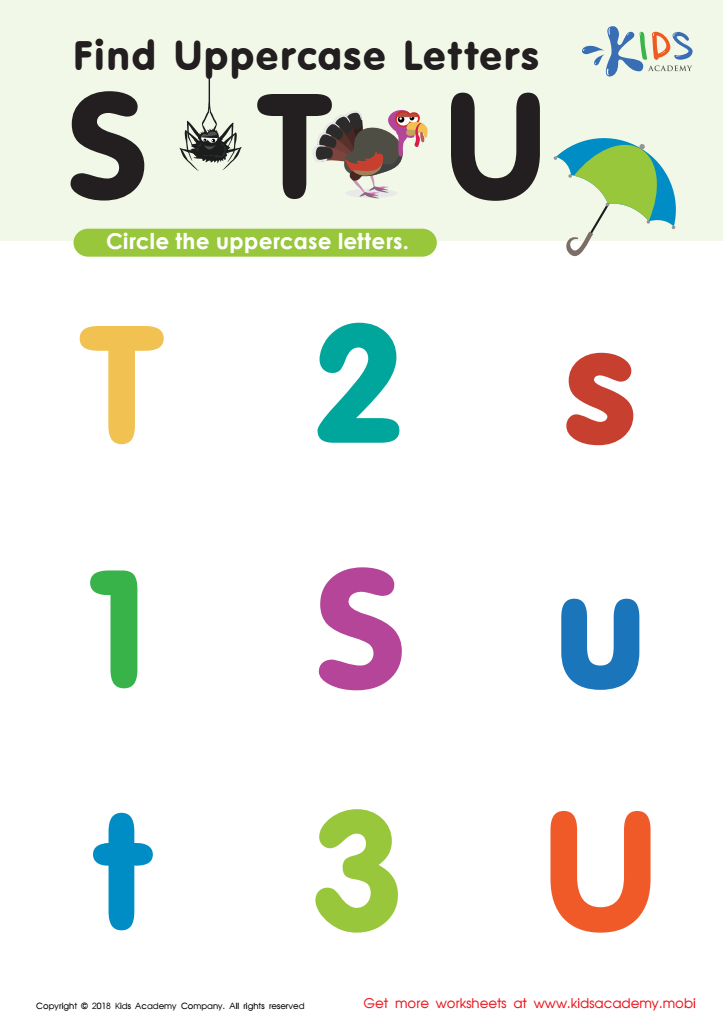
Find Uppercase Letters Worksheet
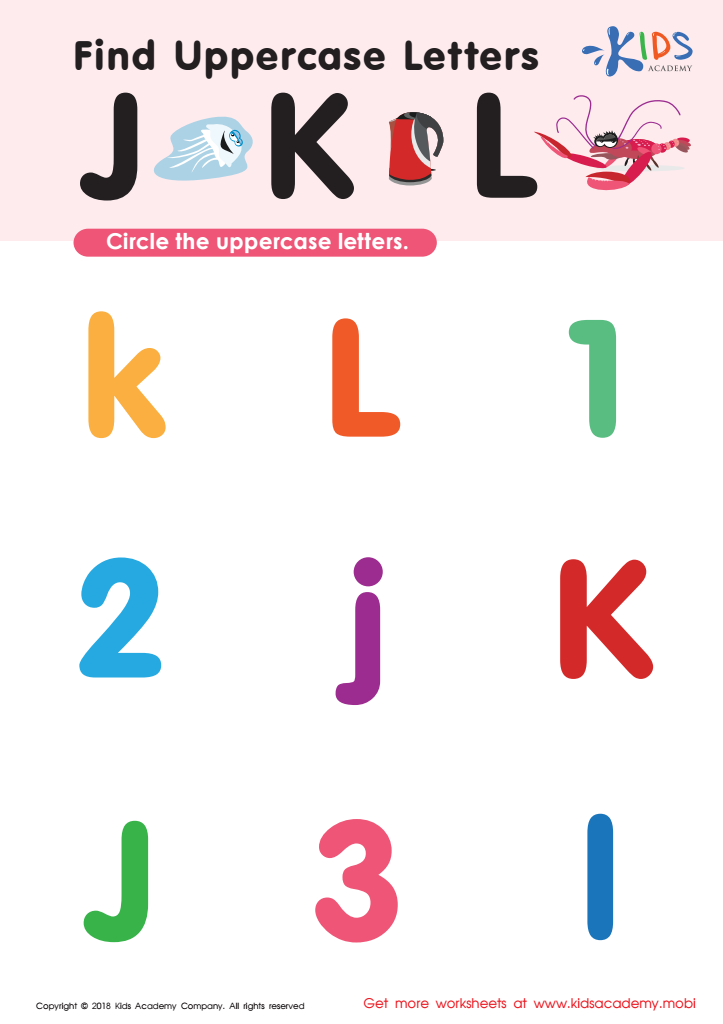
Find Uppercase Letters J, K, and L Worksheet
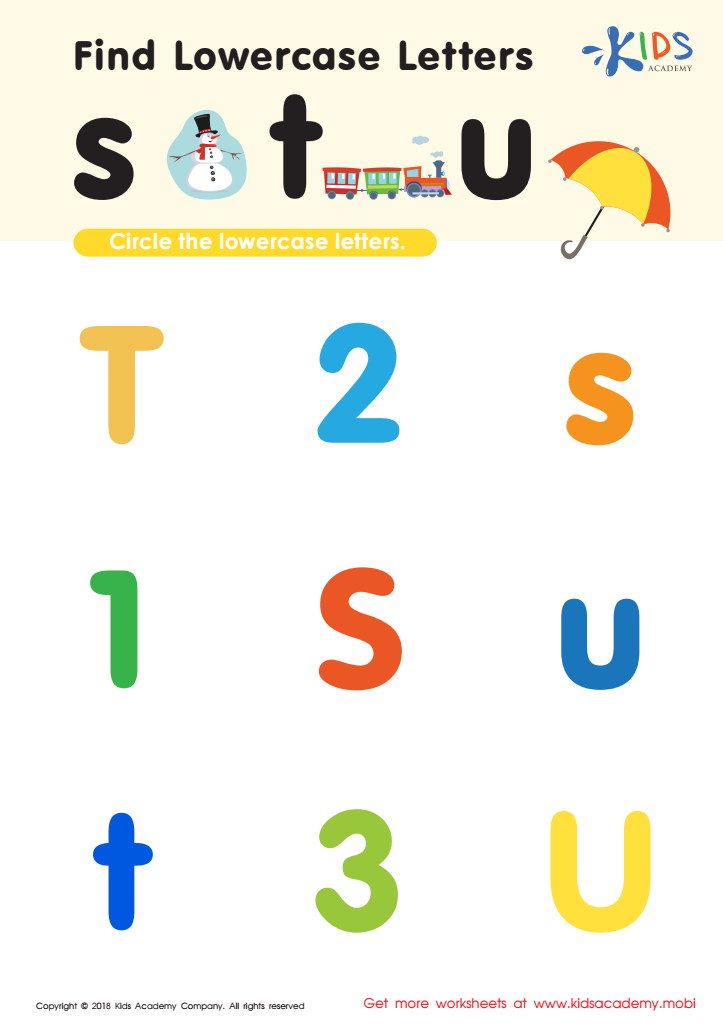
Find lowercase Letters s t u Worksheet
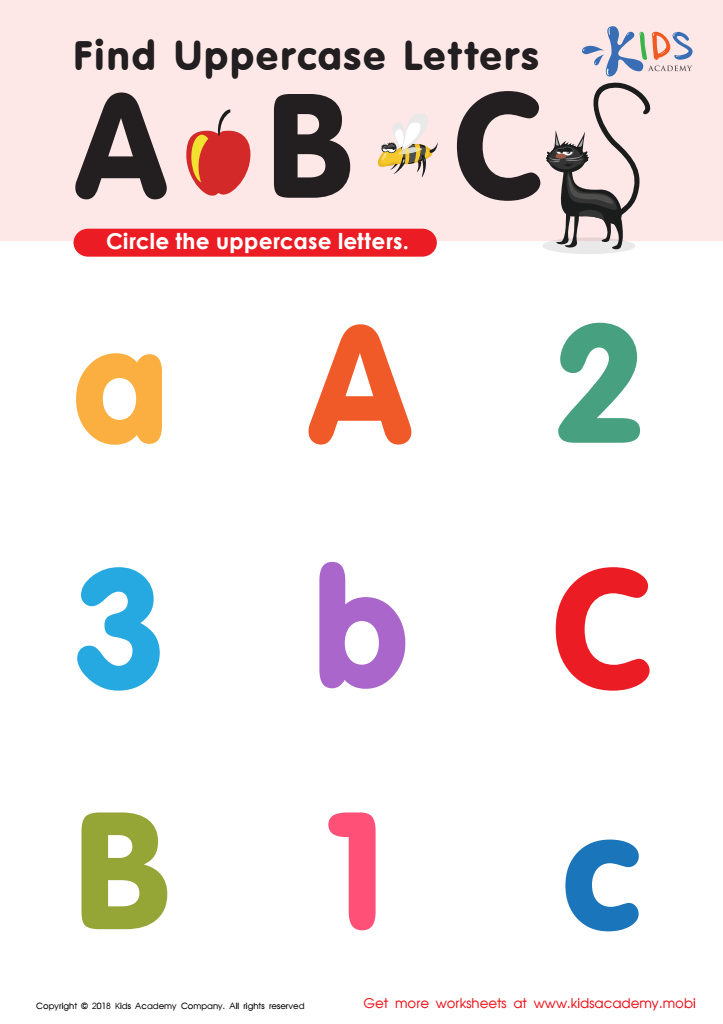
Find Uppercase Letters A, B, and C Worksheet
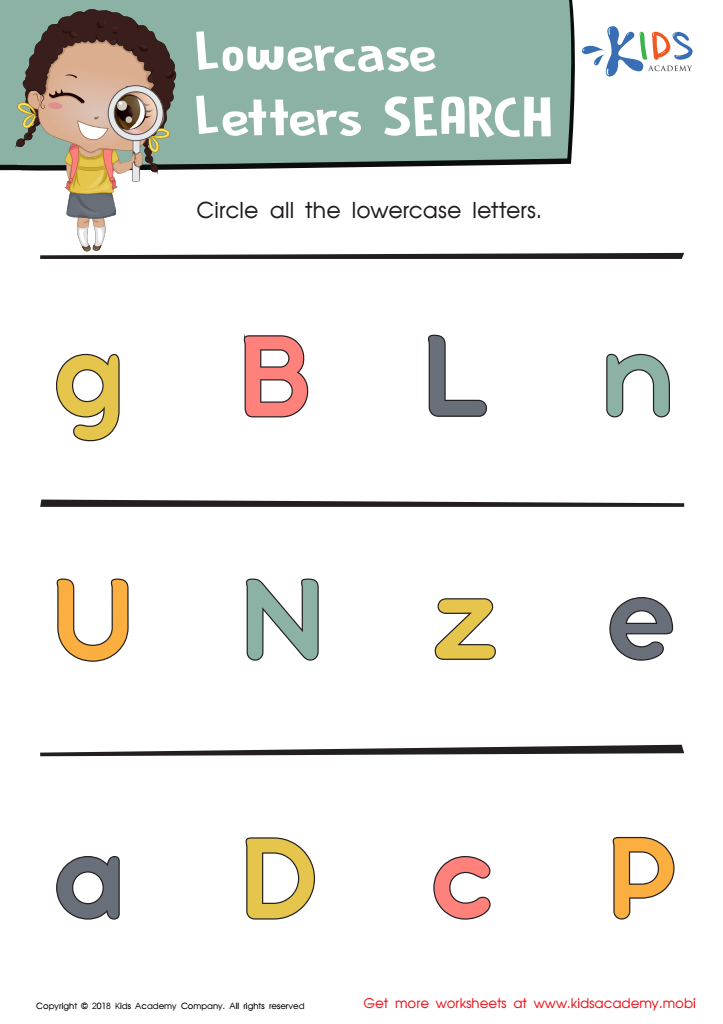
Lowercase Letters Search: Assessment Worksheet
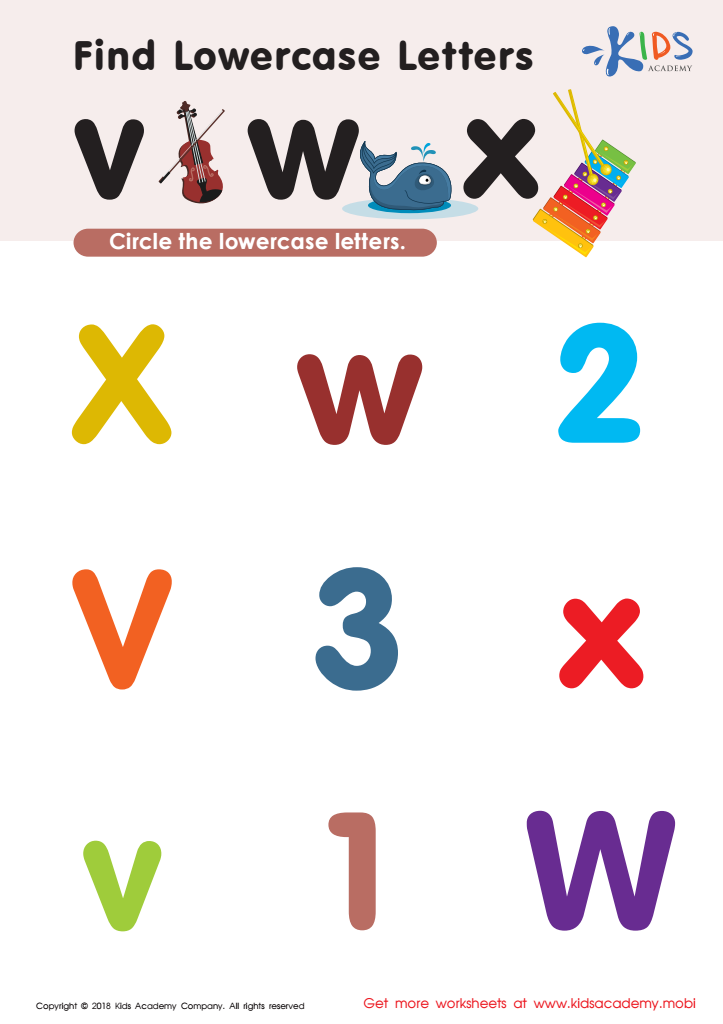
Find Lowercase Letters v w x Worksheet








Alphabet familiarity and letter recognition are fundamental skills for young learners aged 4-8, laying the groundwork for literacy development. Understanding the alphabet is crucial, as it enables children to decode words and comprehend written language. When parents and teachers emphasize these skills, they empower children to connect sounds to letters, which fosters effective communication and self-expression.
Recognizing letters is not just about memorization; it enhances cognitive development by allowing children to classify and categorize information. Familiarity with the alphabet significantly boosts a child's confidence in reading and writing, leading to improved academic performance in the long run. As children interact with letters through songs, games, and storybooks, they develop a love for reading that can inspire lifelong learning.
Moreover, early exposure to alphabet literacy helps maintain engagement in school activities, setting the stage for more complex literacy tasks. This skill often impacts future educational success, as a solid foundation in letter recognition is essential for mastering more advanced reading and writing skills.
Ultimately, parents and teachers should prioritize alphabet familiarity for the ages of 4-8 as it is a vital component of children’s educational journeys, fostering communication, creativity, and confidence in their abilities.







