
Vowel Recognition Long And Short Vowel Worksheets for Ages 4-8
4 filtered results
Difficulty Level
Grade
Age
-
From - To
Subject
Activity
Standards
Enhance your child's reading skills with our engaging Vowel Recognition Long and Short Vowel Worksheets, designed specifically for ages 4-8. These printable worksheets provide a fun and interactive way for young learners to identify and differentiate between long and short vowel sounds. With vibrant illustrations and diverse activities, children can practice vowel recognition through phonics exercises, word sorting, and fill-in-the-blank tasks. Our worksheets not only support early literacy development but also encourage critical thinking and creativity. Equip your child with the essential skills needed for reading readiness and boost their confidence as they master the fundamentals of vowels!
Favorites
With answer key
Interactive
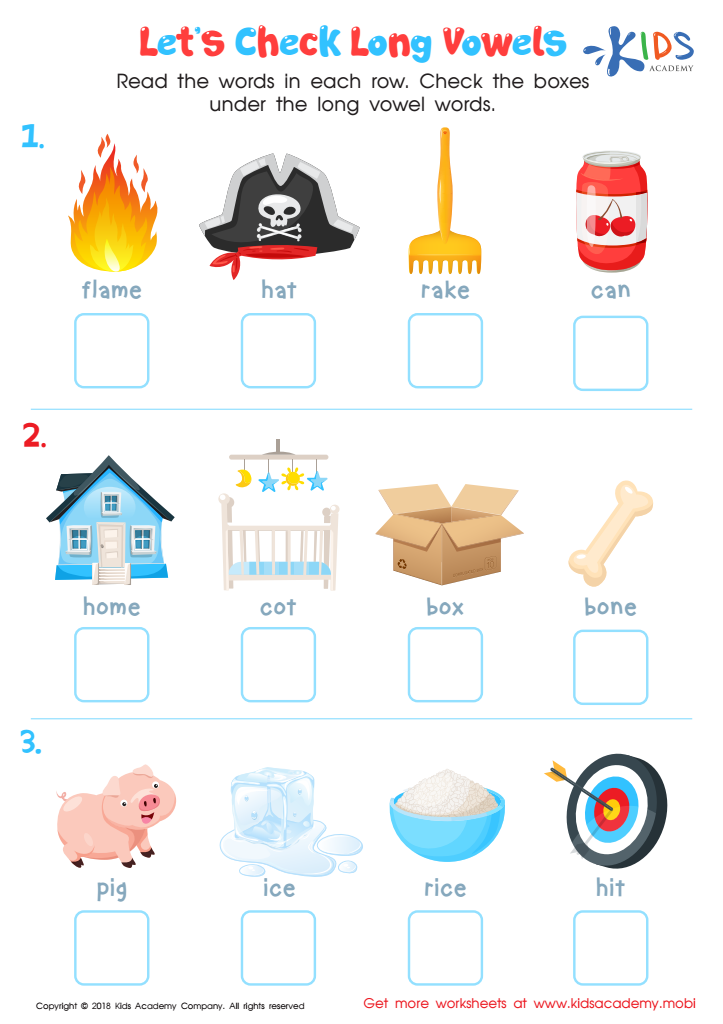
Let's Check Long Vowels: Assessment Worksheet
This worksheet helps your child identify objects and learn long vowel sounds. Ask them to say the names of the four objects in each row. Then, help them check the boxes to confirm they know the long vowel sounds. This will help them develop their reading skills.
 Assign to My Students
Let's Check Long Vowels: Assessment Worksheet
Worksheet
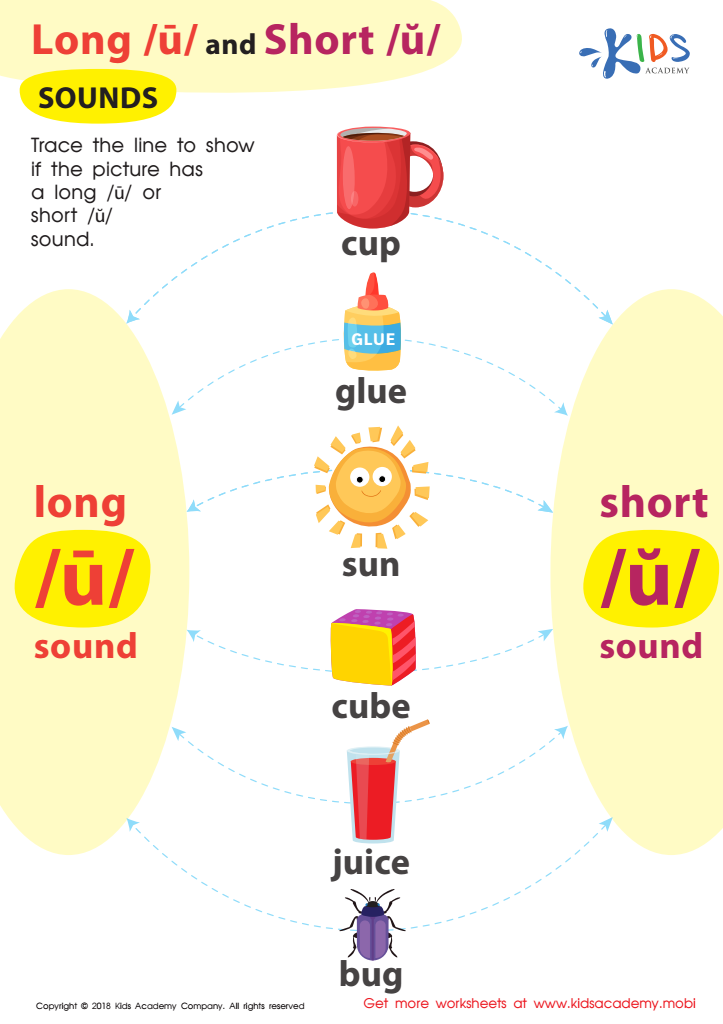
Reading: Long U and Short U Sounds Worksheet
Learning about long and short vowel sounds can be tricky, especially with the letter U. Extra practice with this worksheet is recommended for mastering this sound. Children read words with the different vowel sounds and categorize them. Great for instruction, practice and reteaching in reading classes.
Reading: Long U and Short U Sounds Worksheet
Worksheet
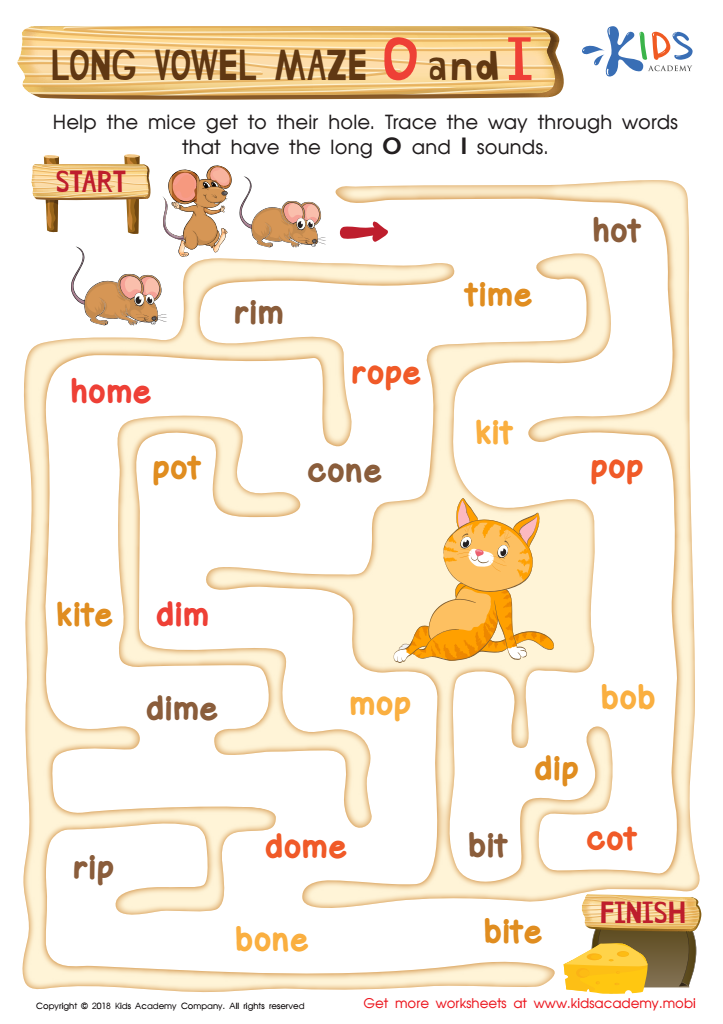
Long Vowel Maze /o/ and /i/ Worksheet
Help your new readers have fun and build their sight word vocabulary! Guide the mice to their prize cheese by having them trace the route on the worksheet, using words with the long o and long i sounds. But watch out for the kitty!
Long Vowel Maze /o/ and /i/ Worksheet
Worksheet
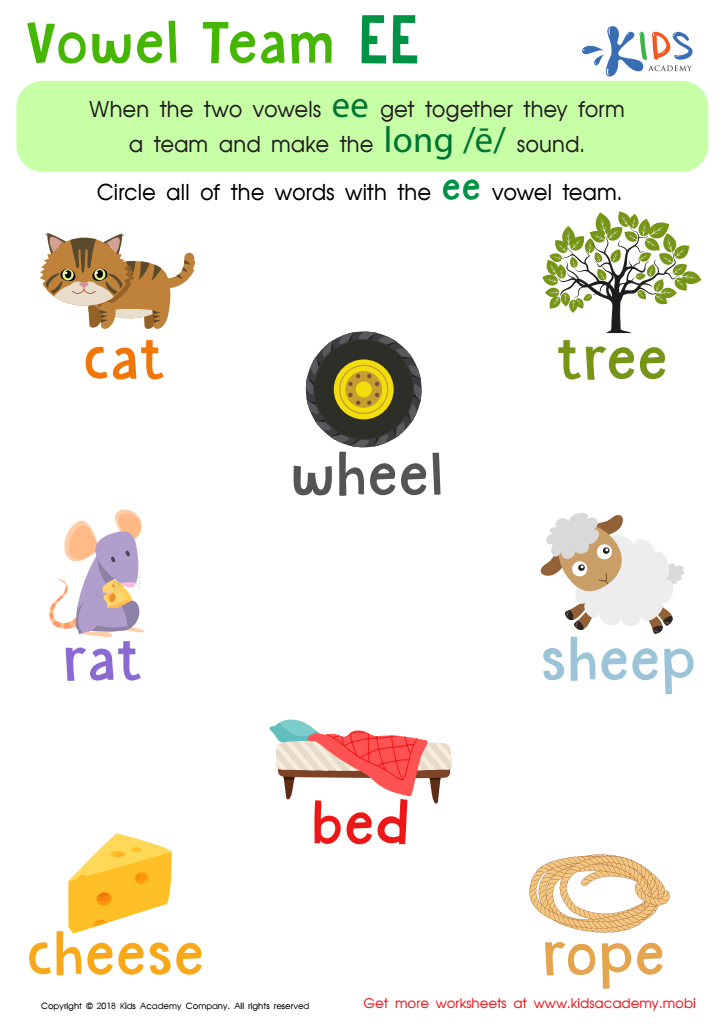
Reading: Vowel Team EE Worksheet
This worksheet is perfect for helping young learners master the /ee/ vowel team. It shows the first vowel with a long sound and the second vowel silent. It also provides pictures for unfamiliar words for readers of all levels. It's an ideal resource for teaching phonics skills.
Reading: Vowel Team EE Worksheet
Worksheet
Join Kids Academy for Free
Who is primarily going to use this learning content?




Vowel recognition, particularly understanding long and short vowels, is a crucial aspect of early literacy development for children aged 4-8. This age group is a formative time for language acquisition, where foundational skills are established that lay the groundwork for reading and writing proficiency.
Long and short vowels significantly impact phonics skills, helping children decode words. Understanding the difference prepares them to sound out unfamiliar words, enhancing their reading fluency and comprehension. For instance, recognizing that “cap” and “cape” differ in vowel sound not only assists in reading but also in spelling.
Moreover, as children read and hear more complex texts, knowing their vowels affects their confidence and motivation. Children often become frustrated if they struggle with decoding, leading to diminished participation in reading activities. Parents and teachers who emphasize vowel recognition provide essential support that directly contributes to children's literacy success.
Additionally, vowel recognition helps build a basis for more advanced concepts in language arts. By prioritizing this skill, adults foster a positive learning environment where students can thrive, paving the way for future academic success and a lifelong love for reading. Investing in vowel recognition is ultimately investing in children’s overall educational journey.








