Lowercase identification Lowercase/Small Letters Worksheets for Ages 4-8
5 filtered results
-
From - To
Looking to enhance your child's alphabet skills? Our Lowercase/Small Letters Worksheets for Ages 4-8 are the perfect solution! Designed to make learning fun and effective, these engaging worksheets help young learners confidently identify and practice lowercase letters. Explore various activities that include tracing, matching, and identifying lowercase letters, essential for building strong reading and writing foundations. Ideal for both classroom use and home practice, parents and teachers will find these printable worksheets invaluable. Watch as kids progress through carefully curated exercises that boost their letter recognition skills, setting them up for literacy success.
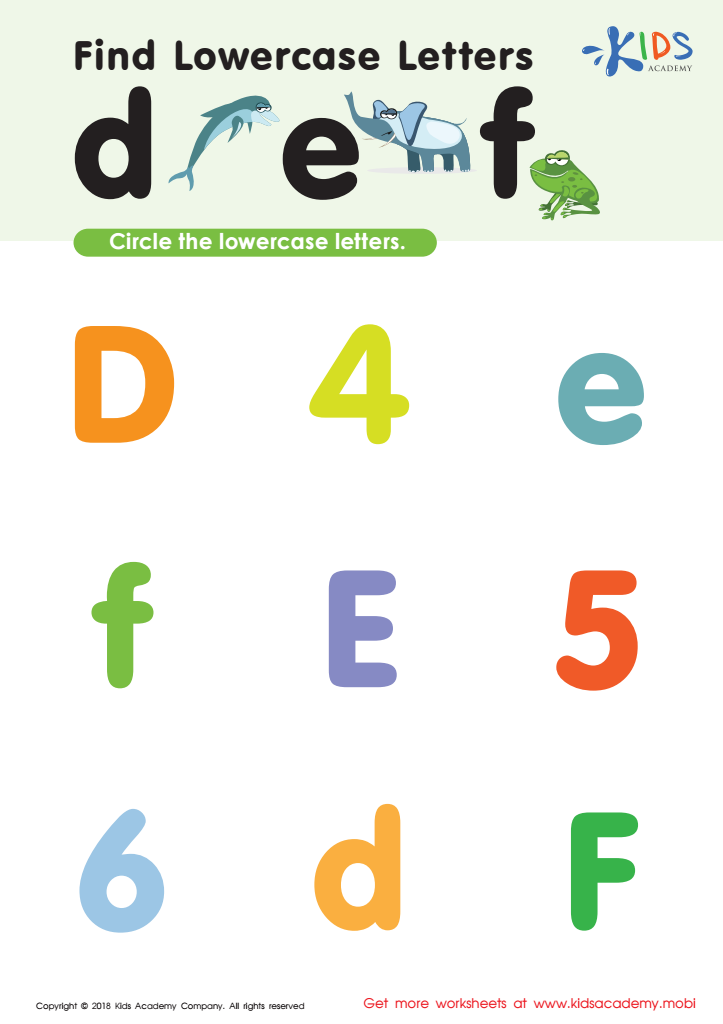
Find Lowercase Letters d e f Worksheet
 Assign to My Students
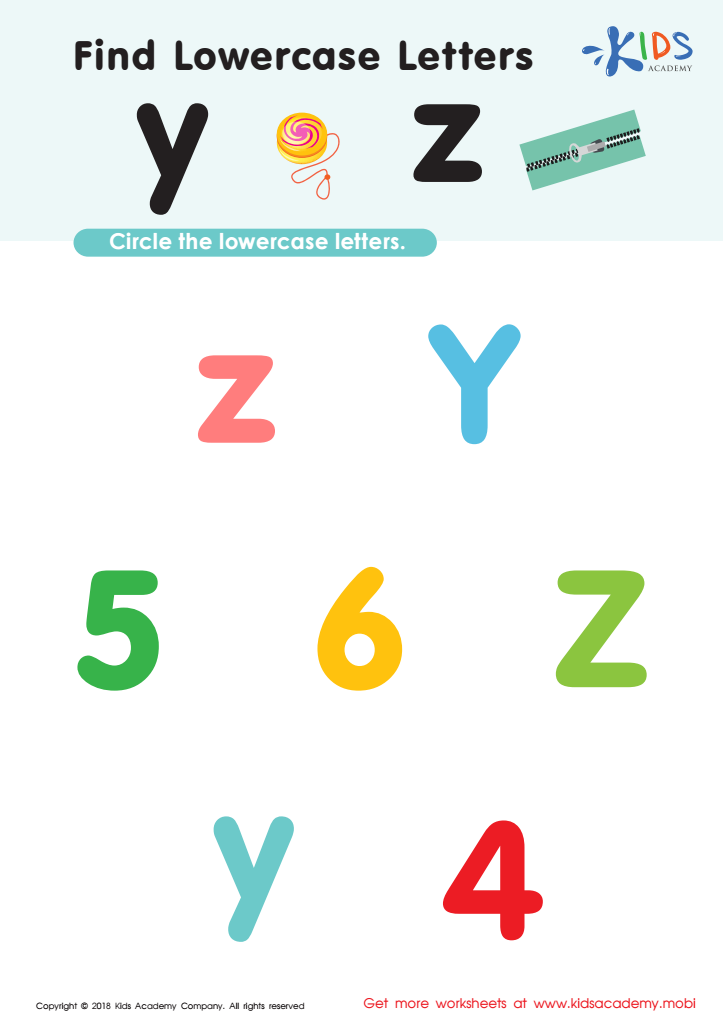
Find Lowercase Letters y z Worksheet

Find lowercase letters a b c Worksheet
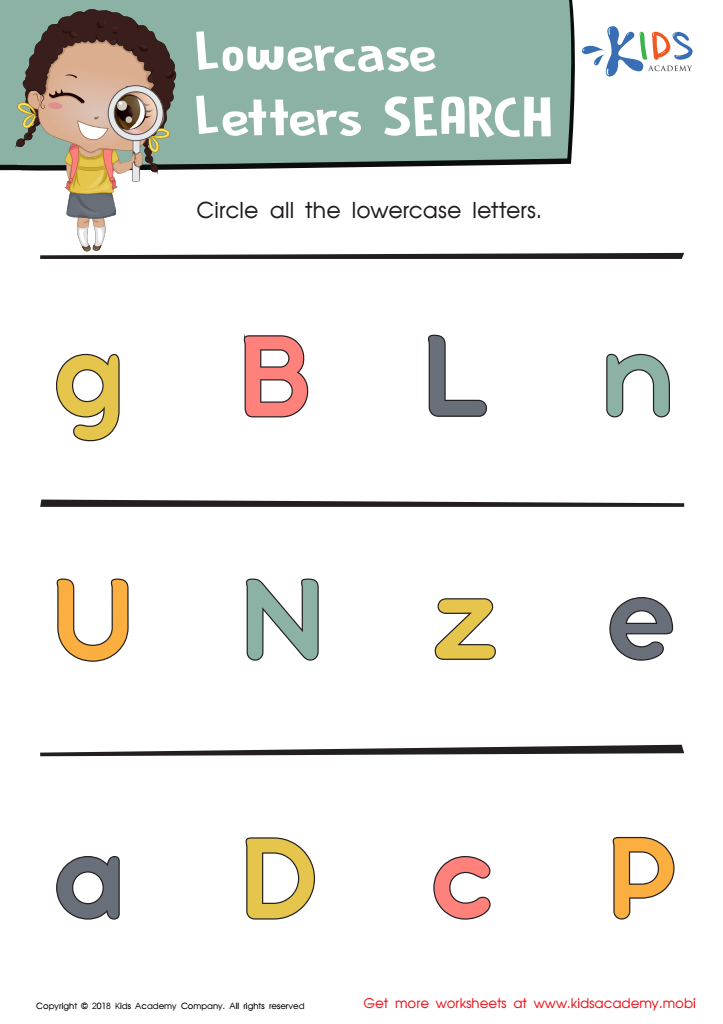
Lowercase Letters Search: Assessment Worksheet
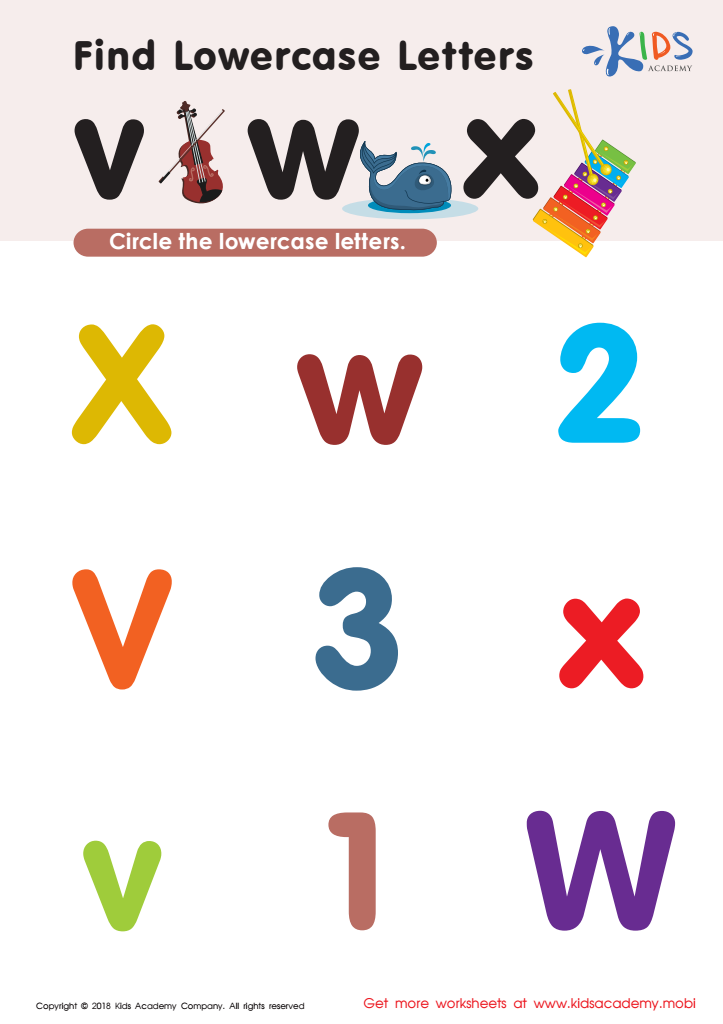
Find Lowercase Letters v w x Worksheet


Parents and teachers should prioritize lowercase letter identification for children aged 4-8 because it is foundational for early literacy development. At this age, children are in crucial stages of learning how to read and write. Proficiency in recognizing lowercase letters directly impacts their ability to decode words, as most written text is in lowercase. Mastery of lowercase letters helps in distinguishing between similarly shaped letters and gathering contextual cues from words. This sets the stage for smoother, more confident reading experiences.
Furthermore, understanding lowercase letters bolsters children's writing skills. Since lowercase letters are predominantly used in writing, proficiency ensures that children can express their thoughts coherently. Recognizing, distinguishing, and writing these letters enhance motor skills and cognitive association with sounds, enriching both phonemic awareness and vocabulary.
Early familiarity with lowercase letters also contributes significantly to academic confidence. Children adept in identifying and manipulating lowercase letters tend to transition more smoothly into advanced literacy tasks without feeling overwhelmed. This early competency increases classroom participation, reduces frustration, and ignites an enthusiasm for learning. Hence, teachers and parents play a critical role in guiding children through systematic and engaging exposure to lowercase letters, effectively nurturing a lifelong foundation for literacy and academic success.