Alphabet Recognition Missing Letters Worksheets for Ages 4-8
3 filtered results
-
From - To
Boost your child's alphabet recognition skills with our engaging Missing Letters Worksheets, designed specifically for ages 4-8! These fun and visually appealing worksheets encourage young learners to identify and complete the missing letters within words and sequences, enhancing their understanding of letter sounds and sequences. Aligned with early literacy goals, these printable resources support fine motor skills development and cognitive growth. Perfect for classroom or at-home learning, our worksheets make practicing letters enjoyable while building essential reading readiness. Explore a variety of themes and formats to keep your child motivated and excited about mastering the letters of the alphabet today!
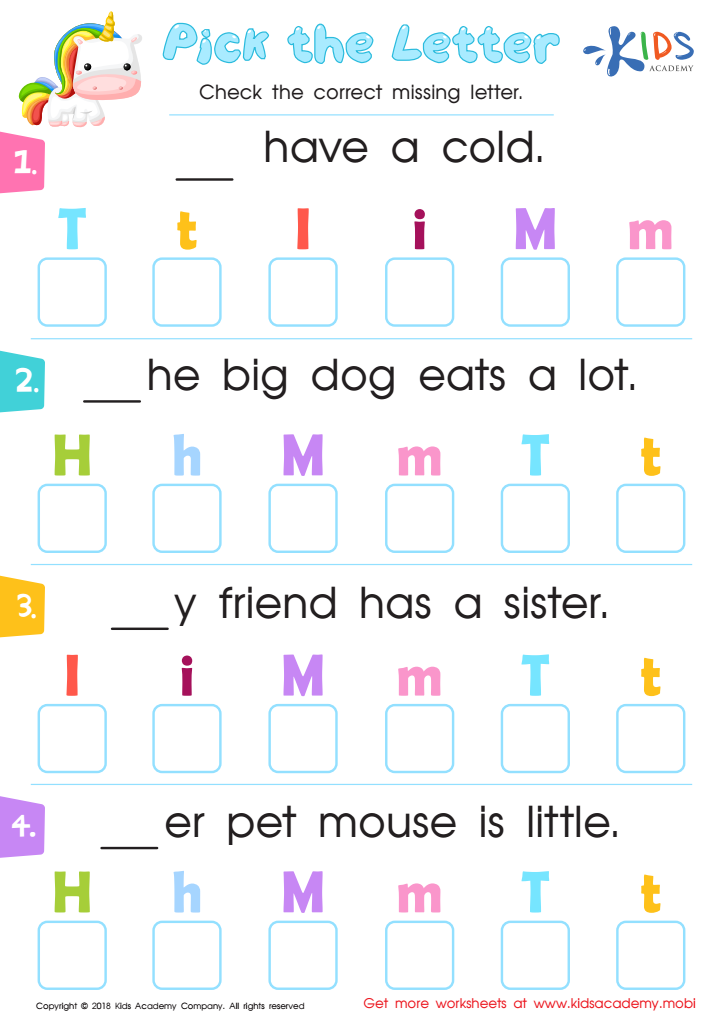
Pick the Letter Worksheet
 Assign to My Students
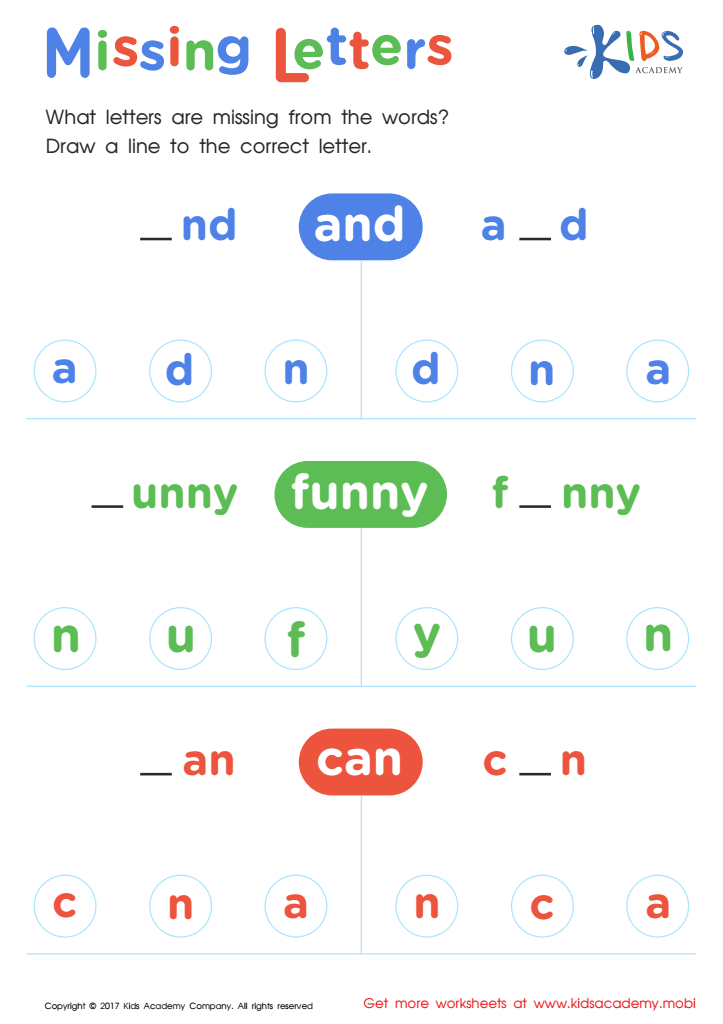
Missing Letters Worksheet
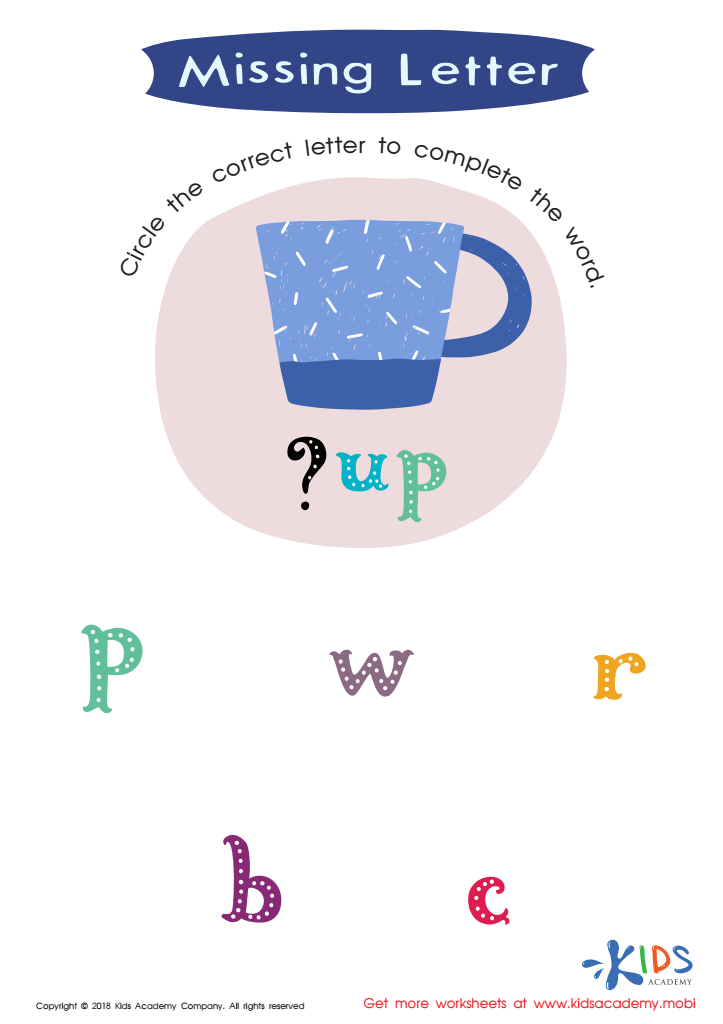
Missing Letter Worksheet



Alphabet recognition and the ability to identify missing letters are foundational skills for children aged 4-8, laying the groundwork for reading and writing success. Parents and teachers should prioritize these skills as they are crucial in early literacy development. Recognizing letters helps children understand the alphabetic principle, which is essential for decoding words during reading and phonetic understanding.
When children can identify missing letters, they sharpen their cognitive abilities, enhancing problem-solving and critical thinking skills. As they learn to recognize patterns and complete words, their phonemic awareness improves, leading to better spelling and vocabulary acquisition. This proficiency promotes confidence, making them more willing to engage with texts and express themselves in writing.
Additionally, alphabet recognition supports overall academic achievement. Literacy skills developed in these formative years significantly correlate with future success, including improved performance in subjects such as math and science that require strong reading comprehension.
By actively involving children in activities focused on letter recognition and finding missing letters, parents and teachers foster a love for learning. This engagement contributes to more robust communication skills, empowering children to express their thoughts and ideas effectively throughout their educational journey. Encouraging these skills creates a press of curiosity and enthusiasm for lifelong learning.







