Handwriting practice Phonics Worksheets for Ages 4-8
5 filtered results
-
From - To
Discover our Handwriting Practice Phonics Worksheets for Ages 4-8 at Kids Academy. These engaging and educational resources are specially designed to help young learners master letter formation, phonics, and reading skills. Each worksheet combines fun activities with focused handwriting practice to strengthen fine motor skills. Children will enjoy tracing letters, identifying sounds, and completing word exercises, all while building a strong foundation for literacy. Perfect for use at home or in the classroom, our worksheets are an excellent tool to support your child's journey as they develop essential reading and writing abilities. Start exploring today!
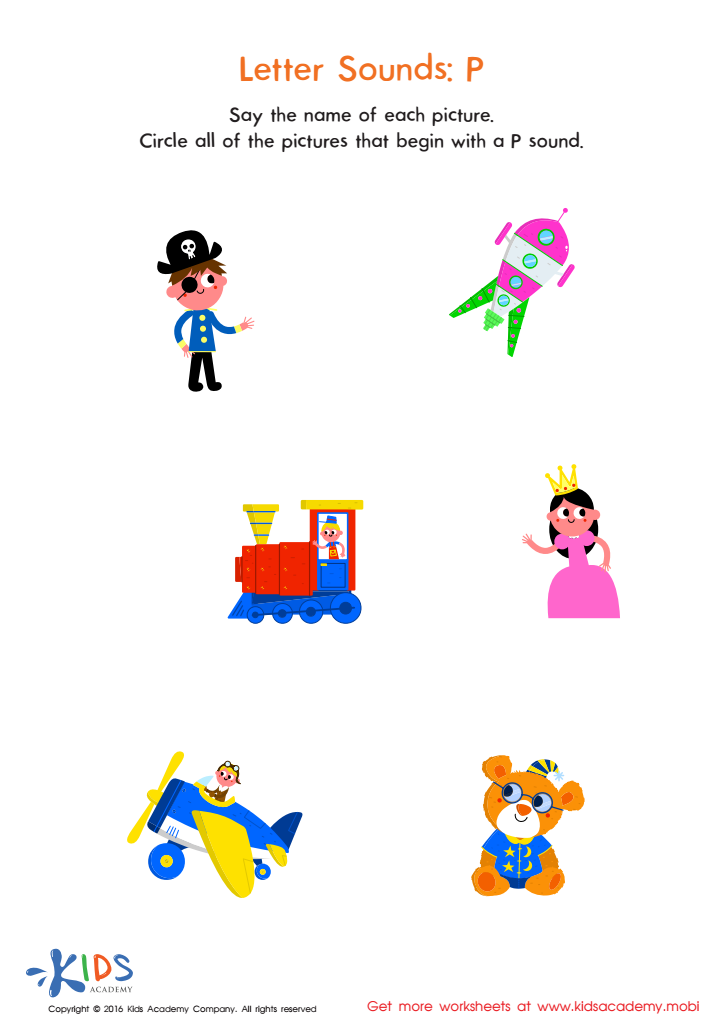
Letter P Sound Worksheet
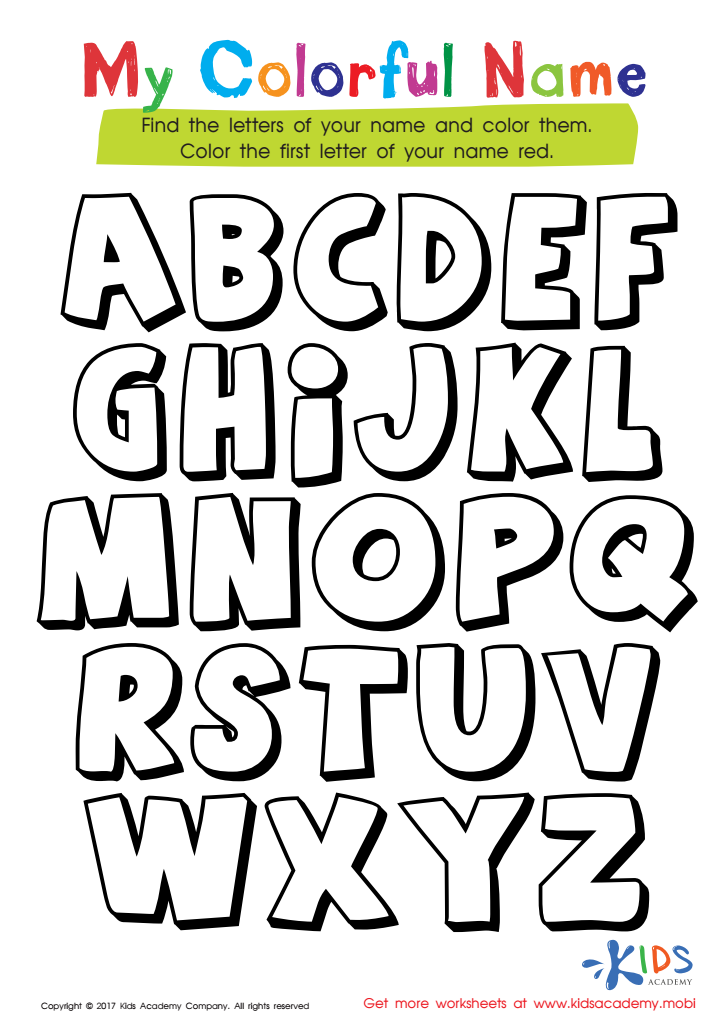
My Colorful Name Worksheet
 Assign to My Students
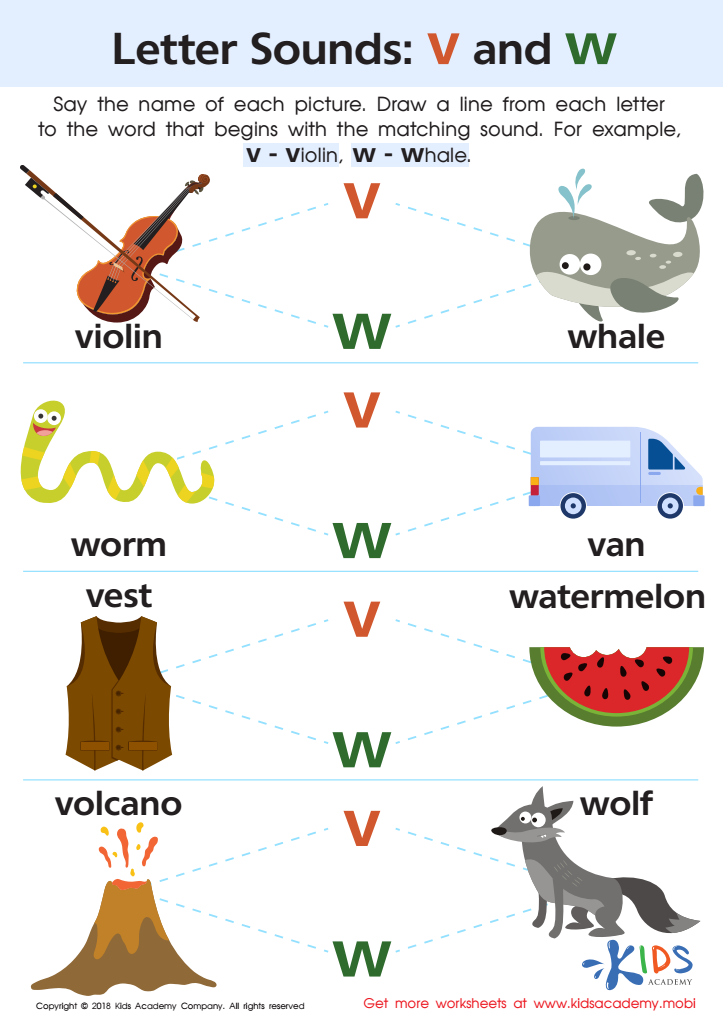
Letter V and W Sounds Worksheet
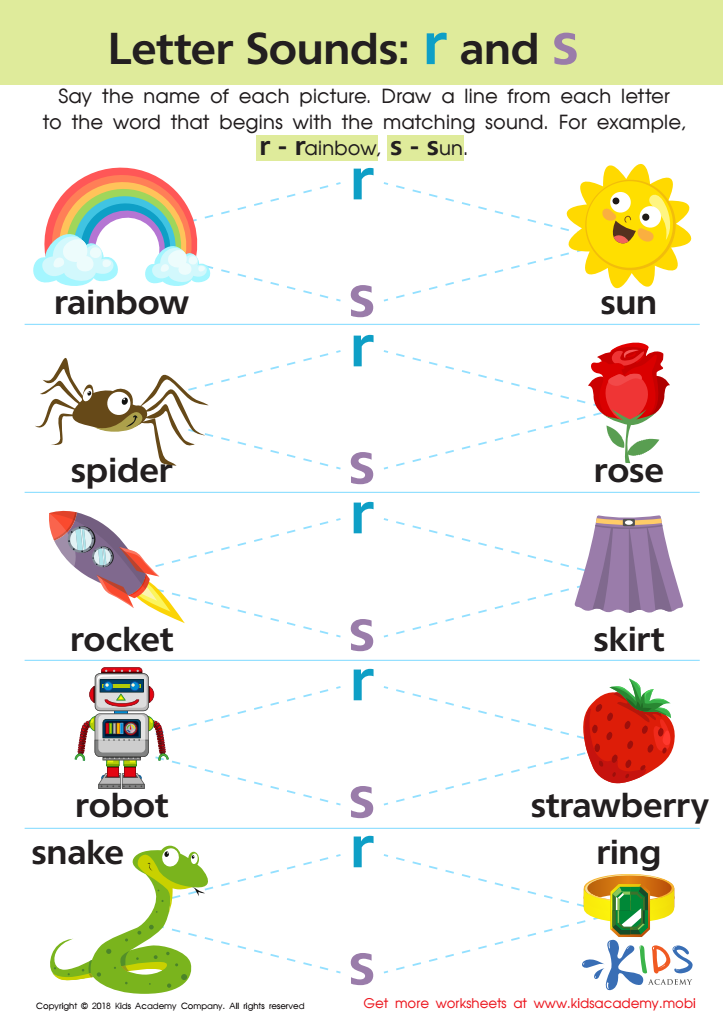
Letter R and S Sounds Worksheet
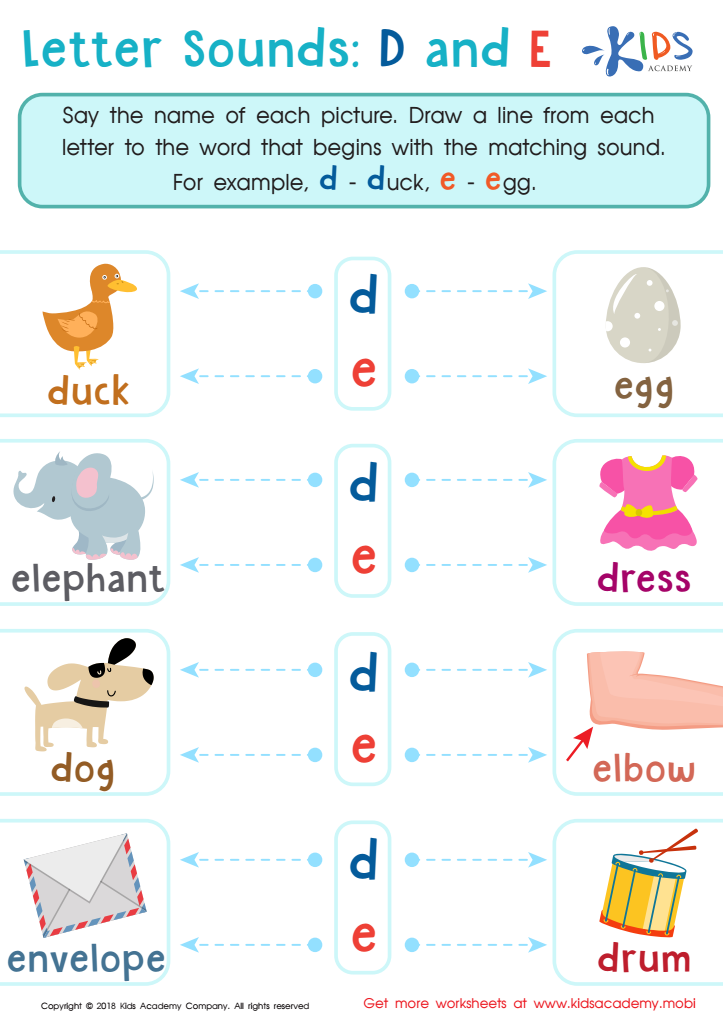
Letter D and E Sounds Worksheet








Handwriting practice and phonics instruction are crucial for children aged 4-8 as they lay the foundational skills necessary for effective communication and academic success. Handwriting practice helps develop fine motor skills, hand-eye coordination, and muscle memory, all of which are vital for young learners as they begin to write. Through repetitive practice, children learn to control their pencil grip, form letters correctly, and develop a legible handwriting style that will benefit them throughout their educational journey.
Phonics instruction, on the other hand, is imperative for reading development. It teaches children the relationship between letters and sounds, enabling them to decode words quickly and accurately. When children understand phonics, they can read more fluently, which fosters better comprehension and encourages a love for reading. Fluency achieved through phonics also translates into improved writing skills, as children can more easily spell and construct words.
Together, handwriting practice and phonics build a strong literacy foundation. For parents and teachers, emphasizing these skills can lead to more confident and capable learners. Cultivating these abilities at an early age not only enhances academic performance but also boosts a child’s self-esteem, setting the stage for long-term educational success and lifelong learning.







