Letter identification Phonics Worksheets for Ages 4-8
3 filtered results
-
From - To
Discover our engaging Letter Identification Phonics Worksheets, designed specifically for children ages 4-8! These interactive resources help young learners develop crucial literacy skills by focusing on letter recognition and sounds. Featuring colorful graphics and fun activities, our worksheets make learning enjoyable and effective. Perfect for use at home or in the classroom, these resources support phonics education while enhancing fine motor skills through tracing and coloring activities. Boost your child's confidence in reading and writing with our expertly crafted worksheets that cater to various learning styles and paces. Start the journey towards literacy success today!
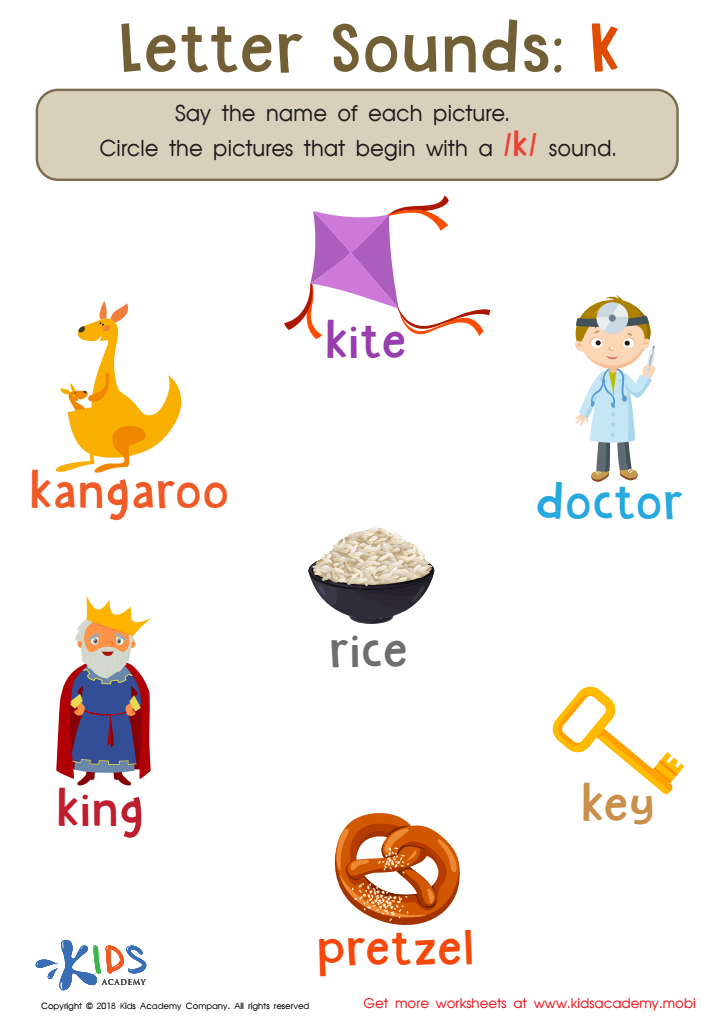
Letter K Sounds Worksheet
 Assign to My Students
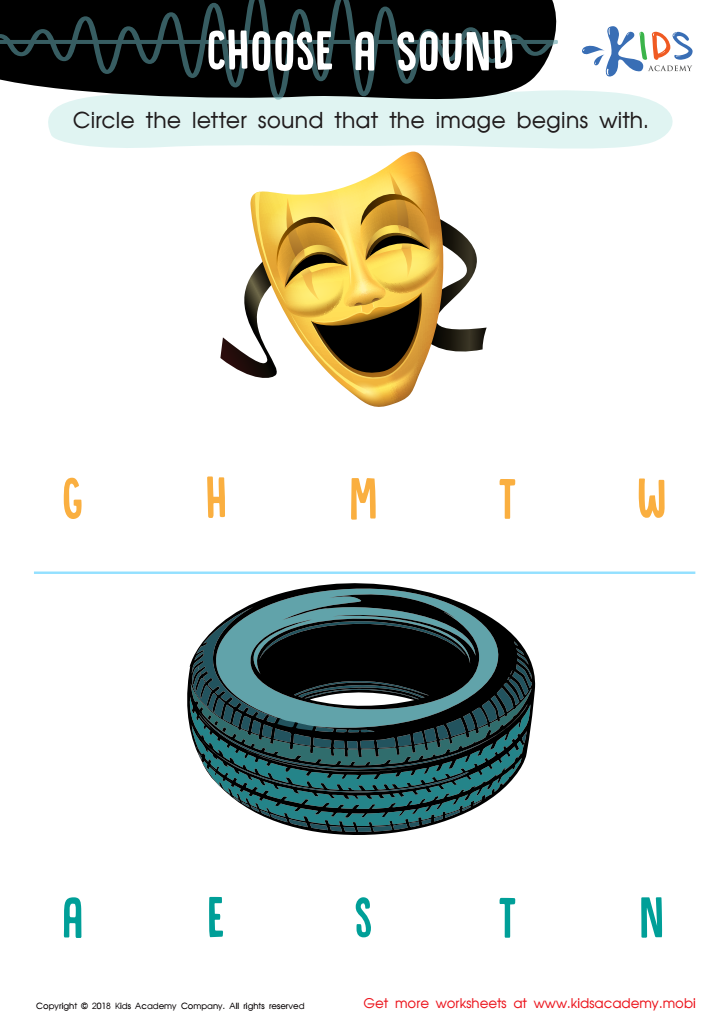
Choose a Sound Worksheet
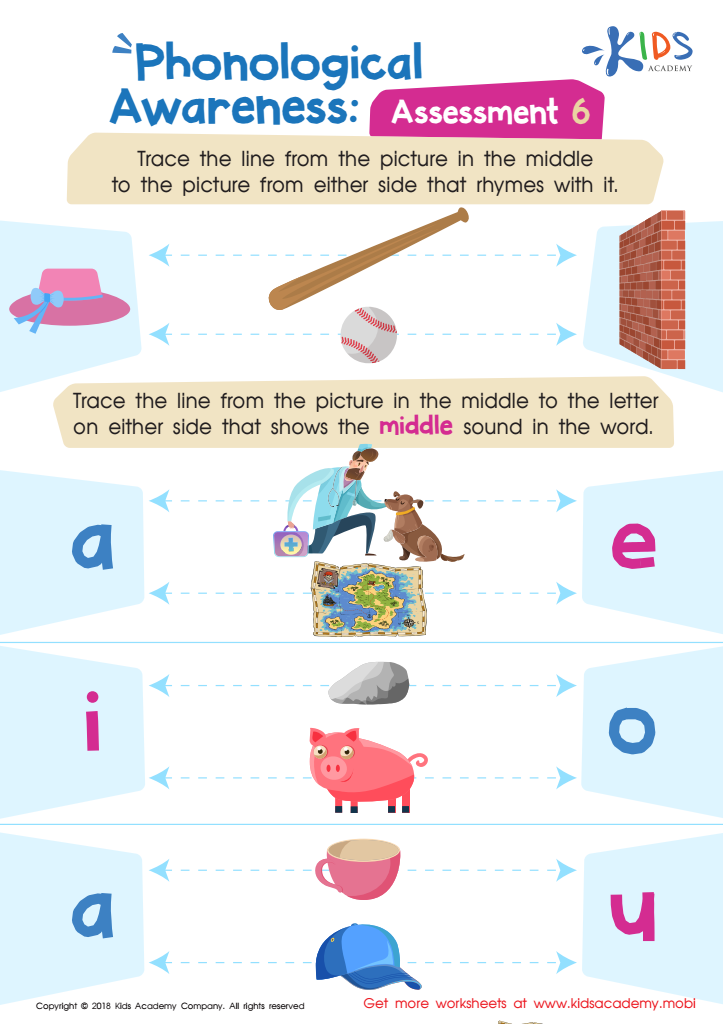
Phonological Awareness: Assessment 6 Worksheet








Letter identification and phonics are critical components of early literacy development for children aged 4 to 8. Parents and teachers should care about these skills because they serve as the foundation for reading and writing. Identifying letters helps children recognize the symbols that represent sounds, which is essential for decoding words. Without mastering the alphabet, children may struggle to make connections between letters and their sounds, leading to difficulty in reading comprehension.
Phonics instruction provides systematic and explicit teaching of the relationships between letters and sounds. When children learn phonics, they become equipped to sound out unfamiliar words, promoting confidence and independence in their reading abilities. Furthermore, strong phonics skills contribute to broader literacy outcomes, as they impact vocabulary development, spelling, and writing fluency.
By prioritizing letter identification and phonics, parents and teachers can foster a love for reading and avoid future academic challenges. Structured early literacy experiences, whether through playful activities or targeted instruction, create positive learning environments. Engaging children with books, games, and interactive lessons boosts their enthusiasm and understanding of literacy—a gift that will benefit them throughout their educational journey and beyond. In conclusion, investing time in these skills is vital for a child’s future success in reading and academic achievement.







