
Phonetics understanding Phonics Worksheets for Ages 4-8
3 filtered results
Difficulty Level
Grade
Age
-
From - To
Subject
Activity
Standards
Discover the essential foundation of reading and writing with our engaging Phonetics Understanding Phonics Worksheets designed for ages 4-8. Our expertly crafted worksheets help young learners master sounds and letter associations through fun, interactive activities. Each worksheet is tailored to enhance phonemic awareness and develop critical reading skills in early stages. Customized for different proficiency levels, our comprehensive resources ensure that children build a solid understanding of phonetics while enjoying the learning process. Start your child's reading journey with Kids Academy’s phonics worksheets and watch their confidence and language skills soar. Perfect for classrooms or at-home learning!
Favorites
With answer key
Interactive
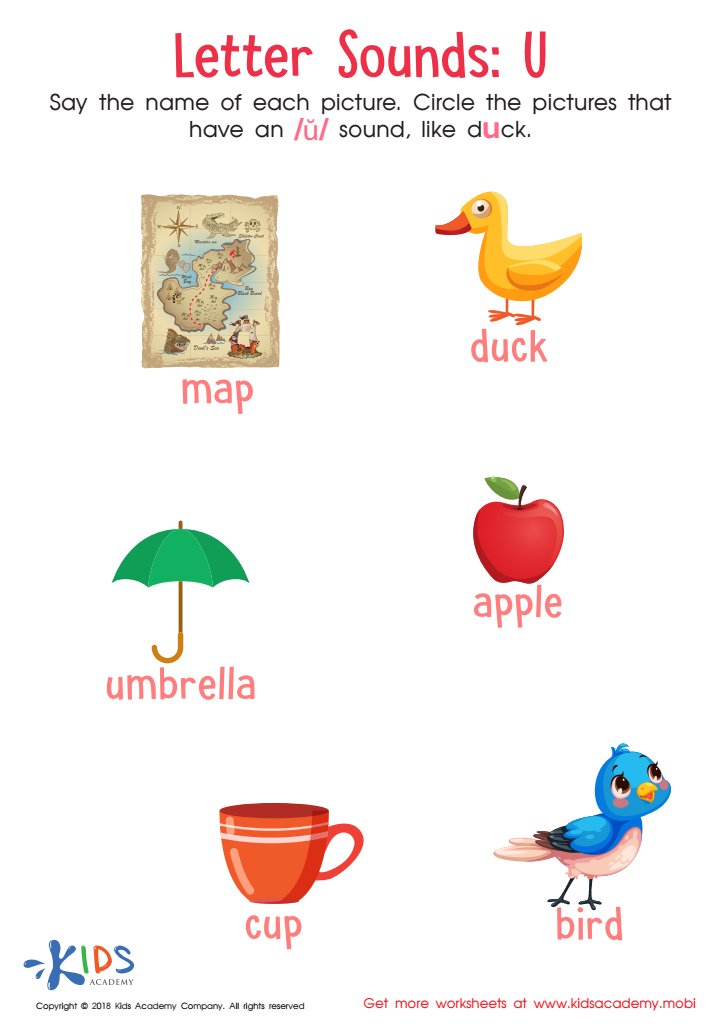
Letter U Sounds Worksheet
The letter U is special with multiple pronunciations. This worksheet helps kids identify the short «u» in words like duck and cup. Read the words aloud and listen closely to the sounds. Circle only words with the correct sound to complete the sheet. Kids will quickly know that words like "map" don't contain a U.
 Assign to My Students
Letter U Sounds Worksheet
Worksheet
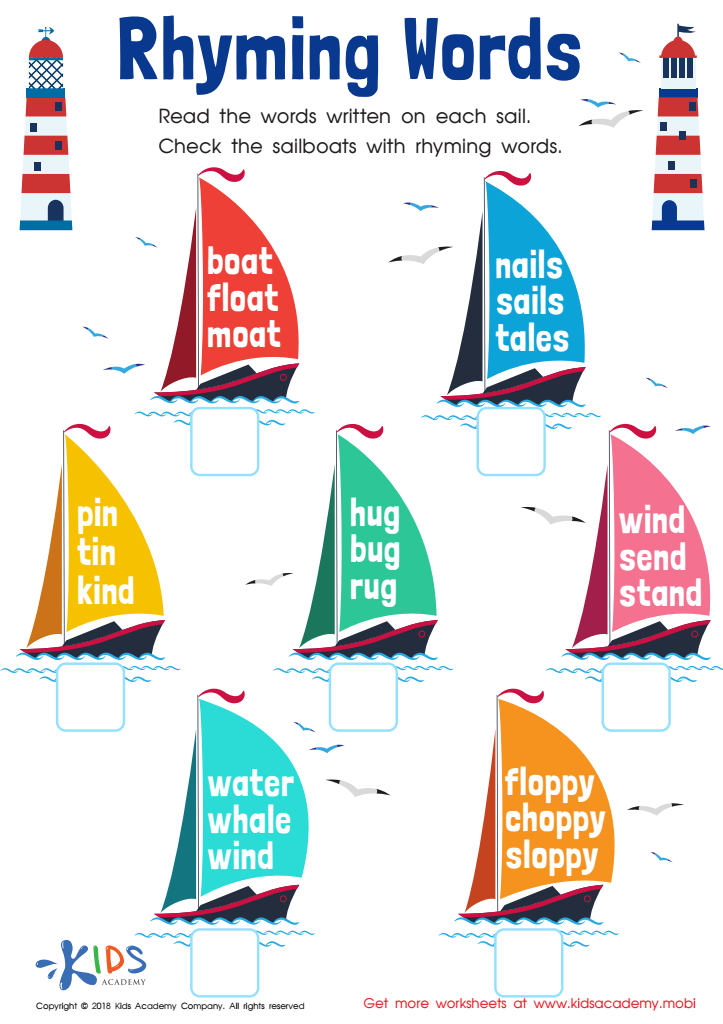
Rhyming Words Worksheet
Does your child know about rhyming words? Get them interested in poetry and explain that these words have similar sounds when pronounced. Read the words on each sailboat to your child and ask them to identify the rhyming pairs. Guide them to check the sailboats.
Rhyming Words Worksheet
Worksheet
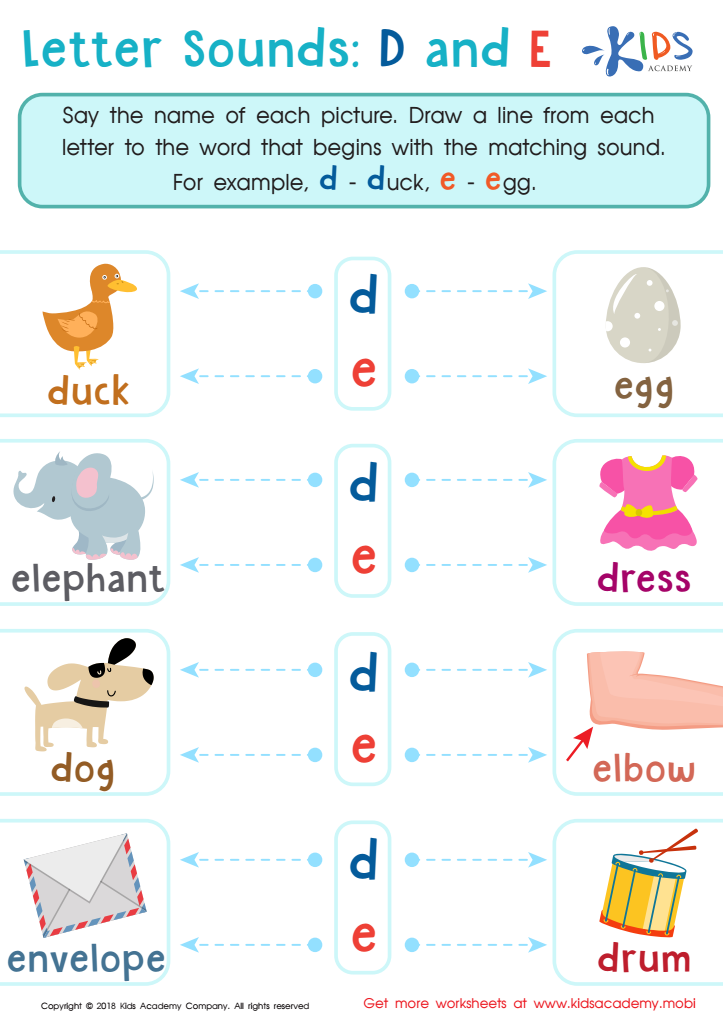
Letter D and E Sounds Worksheet
Kids can use picture clues and visual discrimination to name cheerful pics and isolate the beginning sound. This free PDF worksheet will help them develop phonological awareness, differentiate between "D" and "E", and hone fine-motor skills. It'll also boost their confidence as they become readers.
Letter D and E Sounds Worksheet
Worksheet
Join Kids Academy for Free
Who is primarily going to use this learning content?








Phonetics and phonics are foundational elements in early literacy development for children aged 4-8, and understanding their importance can greatly enhance a child's reading skills. Phonetics is the study of sounds in speech; it helps children differentiate and produce the individual sounds that make up words. Phonics, on the other hand, is about connecting these sounds to specific letters or groups of letters.
When parents and teachers invest time in phonetic awareness and phonics instruction, they lay the groundwork for fluent reading and effective communication. By recognizing the sounds in spoken words (phonemic awareness) and mapping these sounds to written text (phonics), children develop crucial decoding skills. This makes it easier for them to read unfamiliar words, fostering independence and confidence in reading.
Moreover, early proficiency in phonetics and phonics can prevent future reading difficulties. Research indicates that strong early literacy skills correlate with better academic performance across subjects. This foundational knowledge also supports spelling and writing skills, leading to improved overall language abilities.
By integrating playful and engaging phonics activities, parents and teachers not only make learning enjoyable but also ensure that children build the necessary skills to become proficient readers and lifelong learners. Investing in phonological skills at a young age reaps long-term benefits, making it a critical focus in early education.







