Phonics skills development Short Vowels Worksheets for Ages 4-8
3 filtered results
Difficulty Level
Grade
Age
-
From - To
Subject
Activity
Standards
Enhance early literacy with our engaging Phonics Skills Development Short Vowels Worksheets, specifically designed for children ages 4-8. These worksheets provide a captivating way for young learners to master short vowel sounds through playful activities, from matching games to fill-in-the-blanks exercises. Each worksheet promotes phonemic awareness, helping children decode words and build a strong foundation in reading. Ideal for preschool and early elementary classrooms, our resources cater to diverse learning styles while fostering a positive learning environment. Equip your students with essential phonics skills and set them on a path to literacy success today! Explore our collection now!
Favorites
With answer key
Interactive
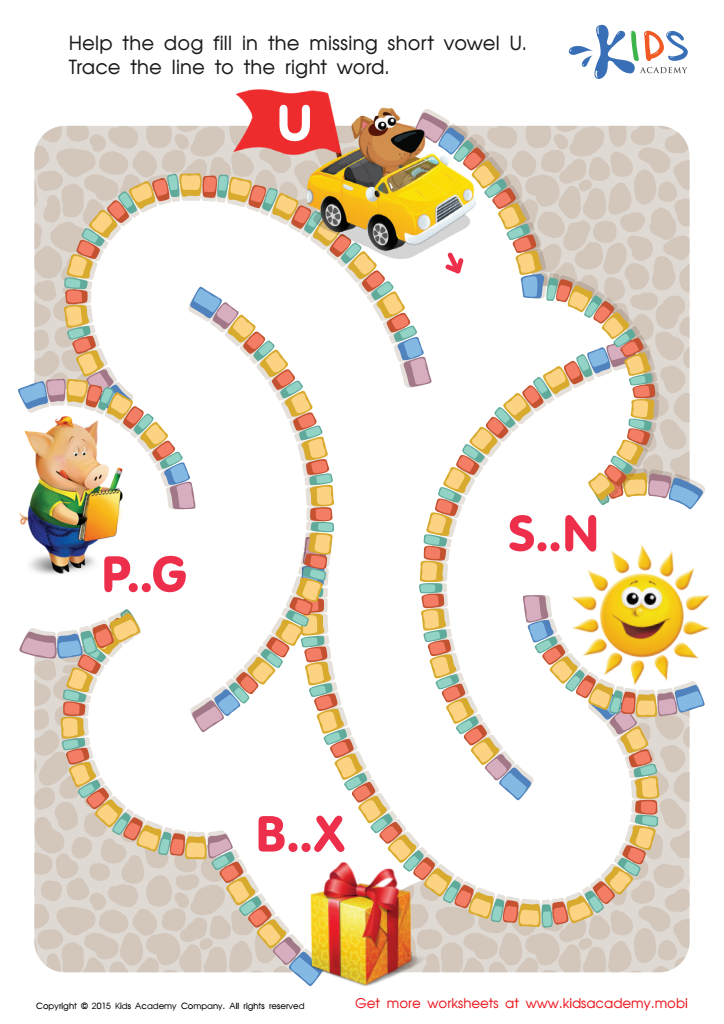
Short Vowel Sound U Worksheet
Practice abc phonics to help young learners link sounds to letters. This free printable phonics worksheet helps your kid learn the short vowel sound U. Guide them through the maze to help the dog complete the word "sun". Make sure they say the word out loud to emphasize the short U sound. Check out more phonics worksheets with mazes here.
Short Vowel Sound U Worksheet
Worksheet
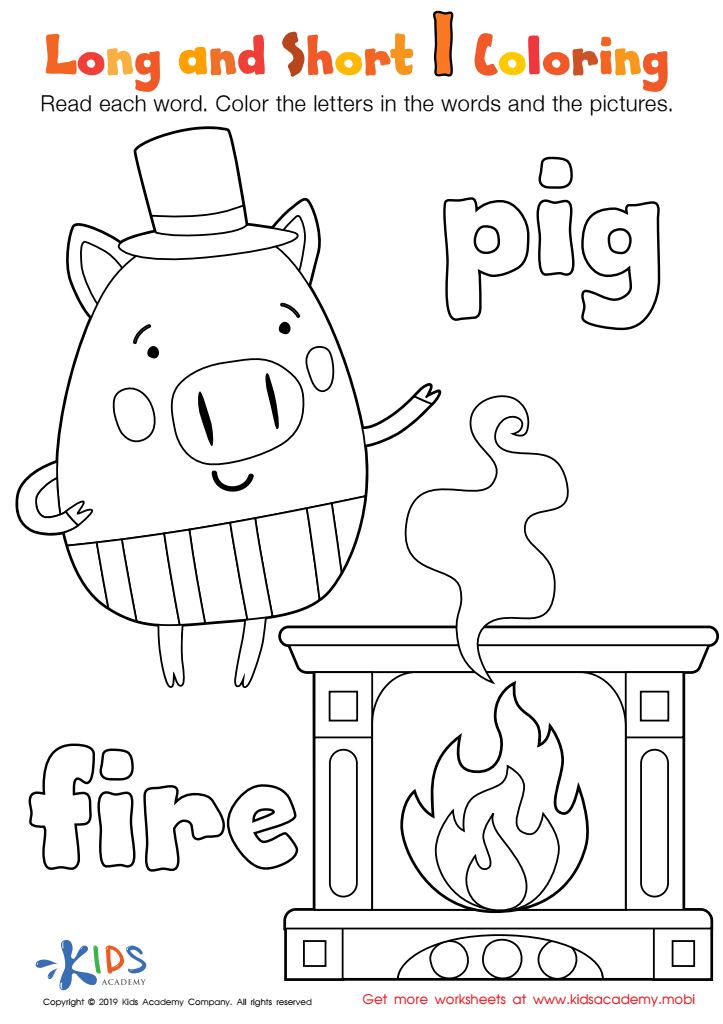
Long and Short I Worksheet
Print the worksheet and have the students read "pig" and "fire". Check for understanding the difference between long and short vowels. Color in words and pictures to make learning phonics fun! This exercise is perfect for introducing the topic to your students.
Download (PDF)
 Assign to My Students
Assign to My Students
Long and Short I Worksheet
Worksheet
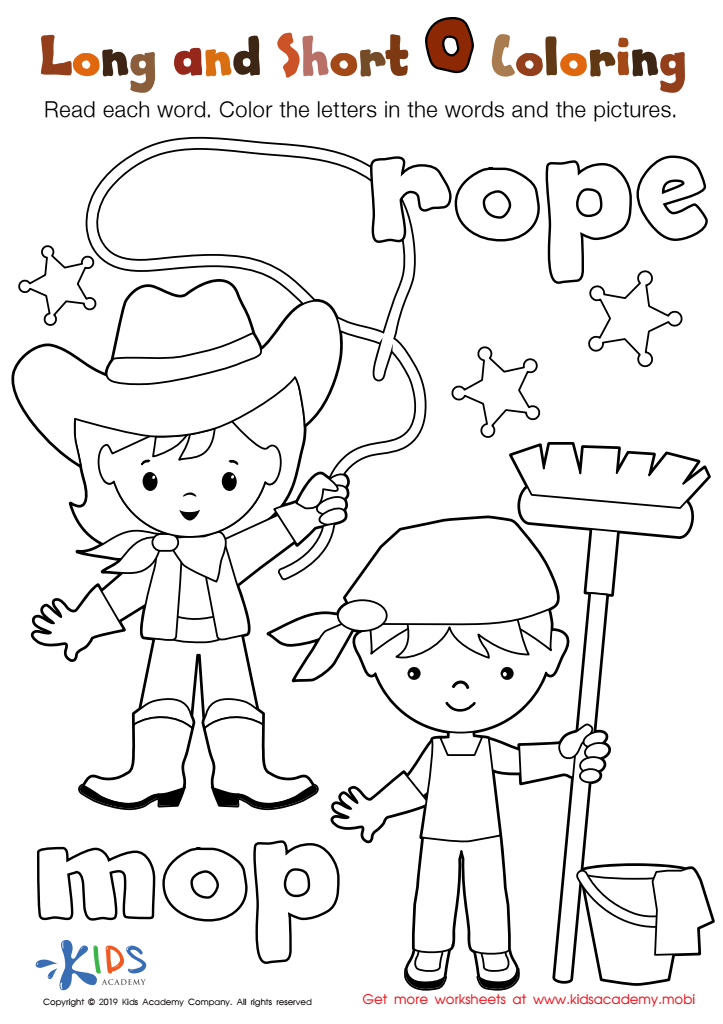
Long and Short O Worksheet
Help your students recognize the difference between long and short «Os» with this fun printout. Let them read and color-in "rope" and "mop" simultaneously. Listen to the different sounds, then color the words and pictures. Great for classes, it'll make your phonics lesson memorable and enjoyable.
Download (PDF)
Assign to My Students
Assign to My Students
Long and Short O Worksheet
Worksheet
Join Kids Academy for Free
Who is primarily going to use this learning content?



Parents and teachers play a crucial role in developing phonics skills, particularly short vowels, in children aged 4-8. Mastery of short vowels is foundational for reading and language development. These skills help young learners decode words, enabling them to sound out words independently and build confidence in their reading abilities. Early phonics instruction promotes literacy by teaching children how auditory sounds connect to letters and words.
Understanding short vowels enhances vocabulary growth and comprehension. Since many short vowel words are prevalent in everyday language, familiarity helps children engage in oral communication and storytelling. Moreover, a solid grasp of short vowels leads to improved spelling, as children learn to recognize and represent these sounds in written form.
In addition, short vowel skills serve as a stepping-stone for more complex literacy concepts. When children gain mastery over these skills in the early years, they are more likely to succeed academically in reading and writing as they progress through school. Encouraging phonics skill development through playful and interactive activities makes learning enjoyable and motivates children to explore reading further and strengthen their foundational literacy knowledge. Ultimately, a commitment to phonics skills sets the stage for lifelong learning and communication proficiency.