
Spelling practice Silent Vowels Worksheets for Ages 4-8
3 filtered results
Difficulty Level
Grade
Age
-
From - To
Subject
Activity
Standards
Discover our delightful Spelling Practice Silent Vowels Worksheets, tailored for kids aged 4-8! These captivating worksheets from Kids Academy help young learners master the often tricky silent vowels in common words. Each activity is designed to make spelling fun and engaging, featuring vibrant illustrations and interactive exercises. Your child will enhance their phonics skills and spelling accuracy while enjoying hands-on learning. Perfect for both classroom and home practice, these worksheets support early literacy and boost confidence in reading and writing. Start your child’s spelling journey today with these essential learning tools!
Favorites
With answer key
Interactive
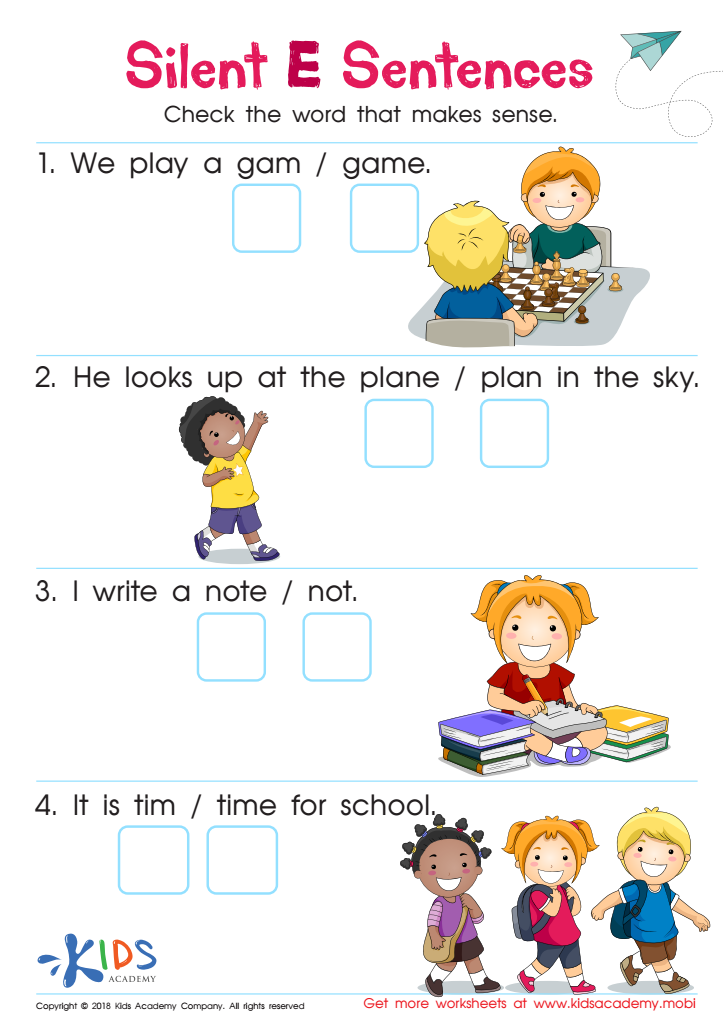
Silent E Sentences Worksheet
Young readers can find learning Silent E tricky, so this helpful worksheet can help! It teaches them to distinguish words that look the same but for the Silent E and choose the right word for sentence blanks. Kids can mark the correct answer and become familiar with closed syllables and words that require the E.
 Assign to My Students
Silent E Sentences Worksheet
Worksheet
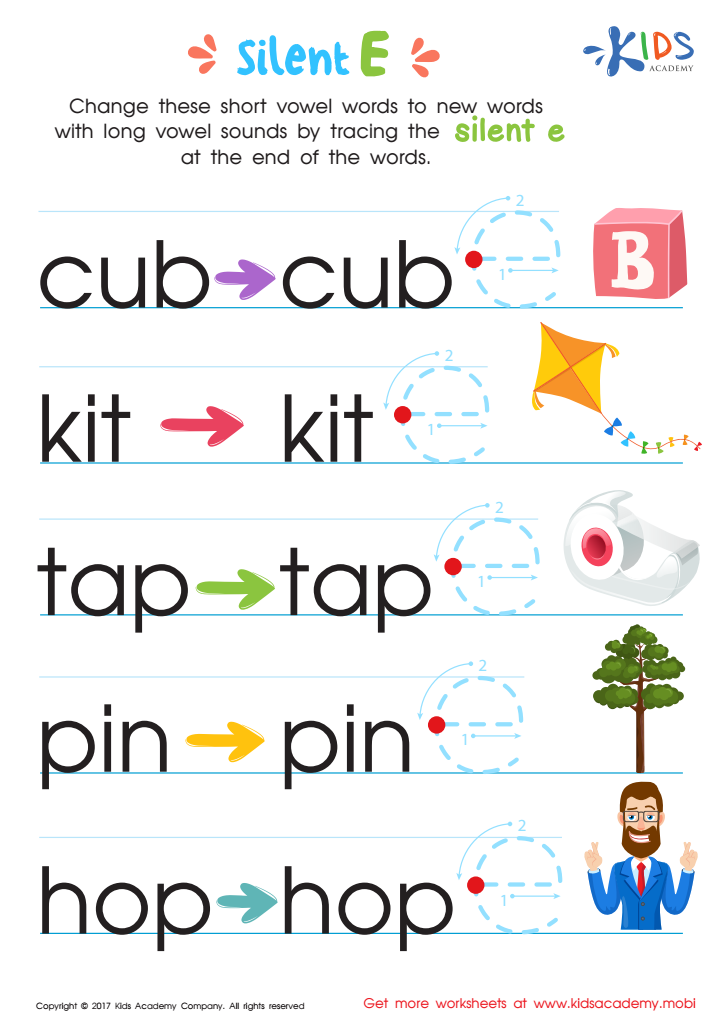
Silent E Words Worksheet
The letter e is amazing - it changes words without making a sound! Boost spelling and phonics with this Silent e worksheet from Kids Academy - fun and colorful!
Silent E Words Worksheet
Worksheet
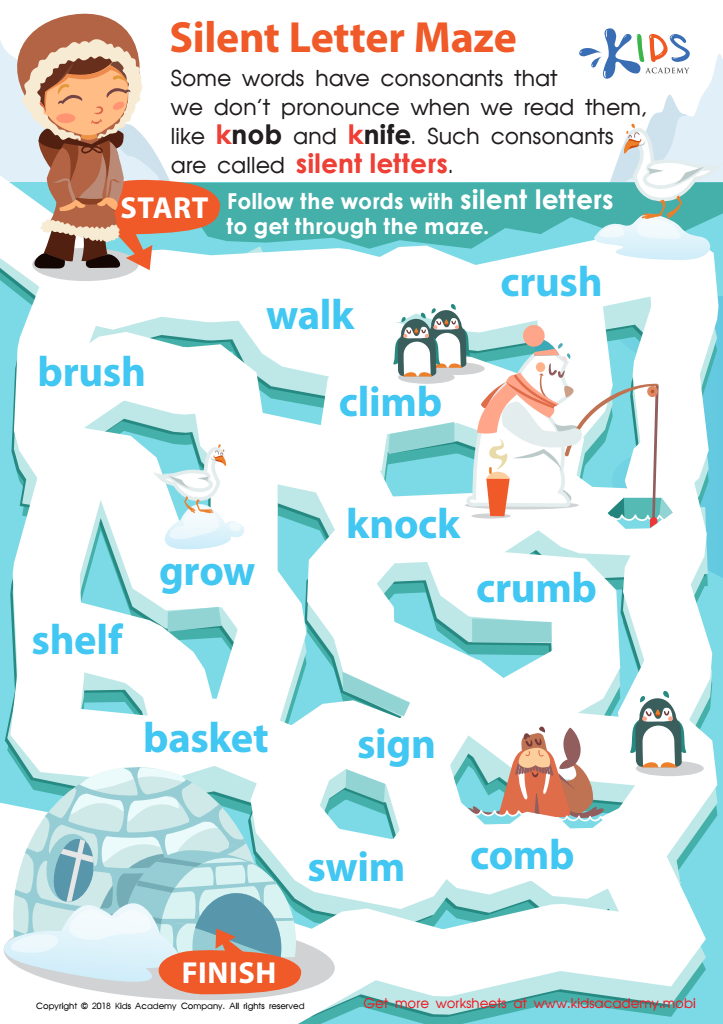
Silent Letter Maze Worksheet
Learning to read can be tricky, especially with words with irregular pronunciations. Explain to your child that some words have consonants we do not pronounce when reading. Ask them for examples like 'knife' and 'knob'. These consonants are called silent letters. Download this pdf to practice words with silent letters and complete the maze.
Silent Letter Maze Worksheet
Worksheet
Join Kids Academy for Free
Who is primarily going to use this learning content?


Spelling practice, particularly focusing on silent vowels, is crucial for young children ages 4-8 as it lays a foundation for strong reading and writing skills. At this formative age, understanding and mastering the concept of silent vowels—like the 'e' in "cake" or the 'a' in "bread"—can enhance a child’s phonemic awareness, an essential component for decoding words and reading fluency.
Silent vowels often trip up early readers, leading to confusion and frustration. By practicing spelling, children learn to recognize these quirks and irregularities in English, which in turn helps them with word recognition. Additionally, proficient spelling aids in better writing skills. When children are confident spellers, they tend to write more fluidly and with greater vocabulary. This kind of practice also strengthens their memory and attention to detail, reinforcing the correct pronunciation and usage of words, which is pivotal in their overall literacy development.
Moreover, early exposure to spelling patterns helps ingrained habits form, making learning more advanced spelling and grammar rules easier as they progress in school. For parents and teachers, focusing on silent vowels in spelling practice means equipping children with the essential tools for academic success and boosting their self-esteem as confident readers and writers. This early intervention can set the stage for lifelong learning and a positive attitude towards literacy.








