Letter Tracing Practice Tracing Letters Worksheets for Ages 4-8
5 filtered results
-
From - To
Enhance your child's handwriting prowess with our "Letter Tracing Practice" worksheets designed for ages 4-8. Engaging and educational, these printable sheets help young learners master alphabet formation, build fine motor skills, and boost writing confidence. Each worksheet offers a fun, guided approach to tracing uppercase and lowercase letters, blending playful illustrations with structured practice. Perfect for preschoolers, kindergarteners, and first graders, our resources ensure a solid foundation in letter recognition and writing. Inspire your little one to enjoy the art of letters through playful learning experiences tailored just for them!
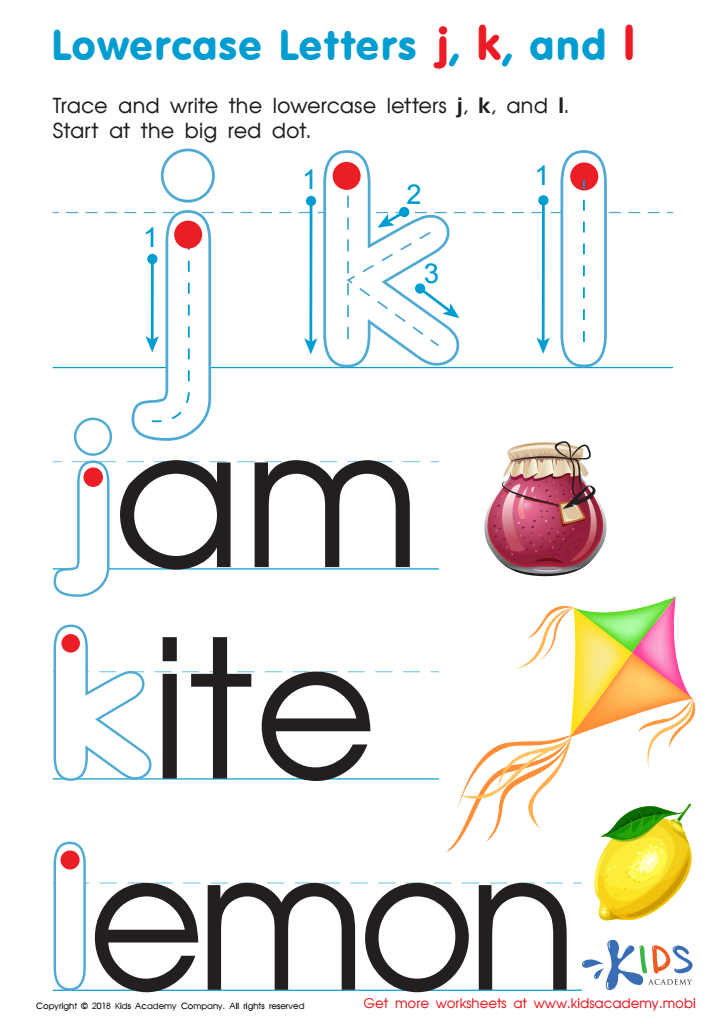
Lowercase Letters j k l Worksheet
 Assign to My Students
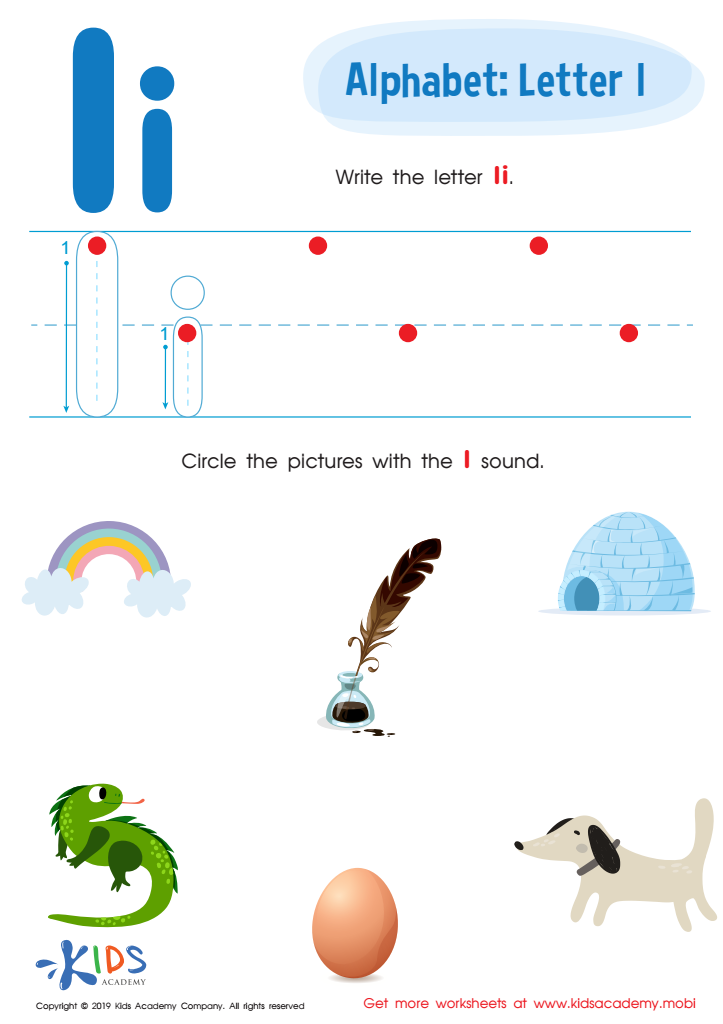
Letter I Tracing Worksheet
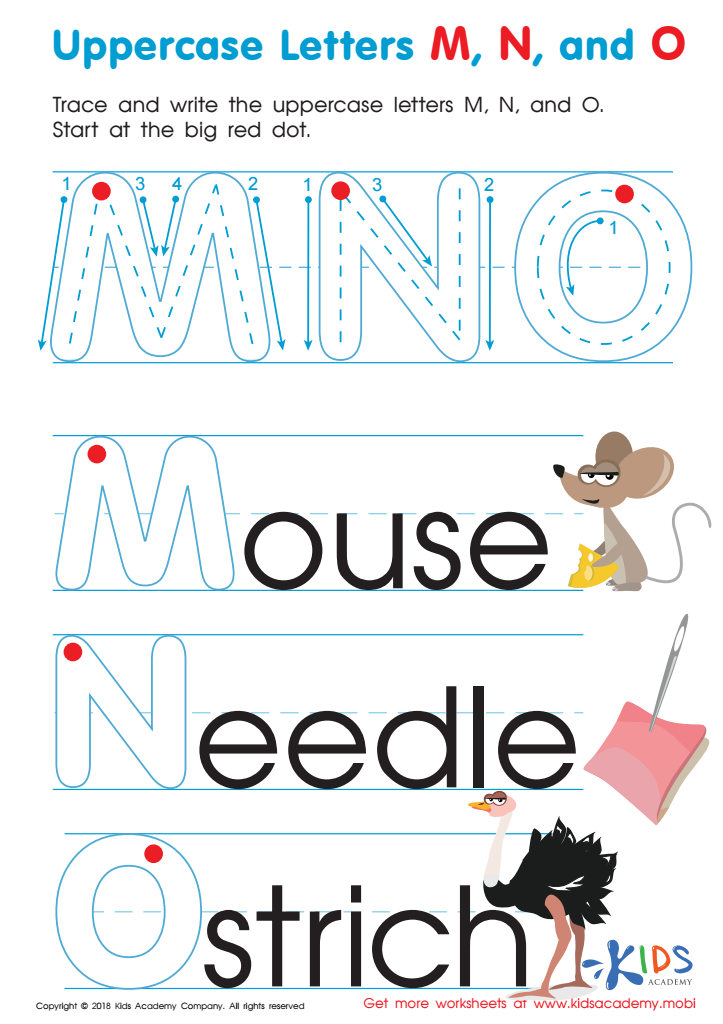
Uppercase Letters M, N, and O Worksheet
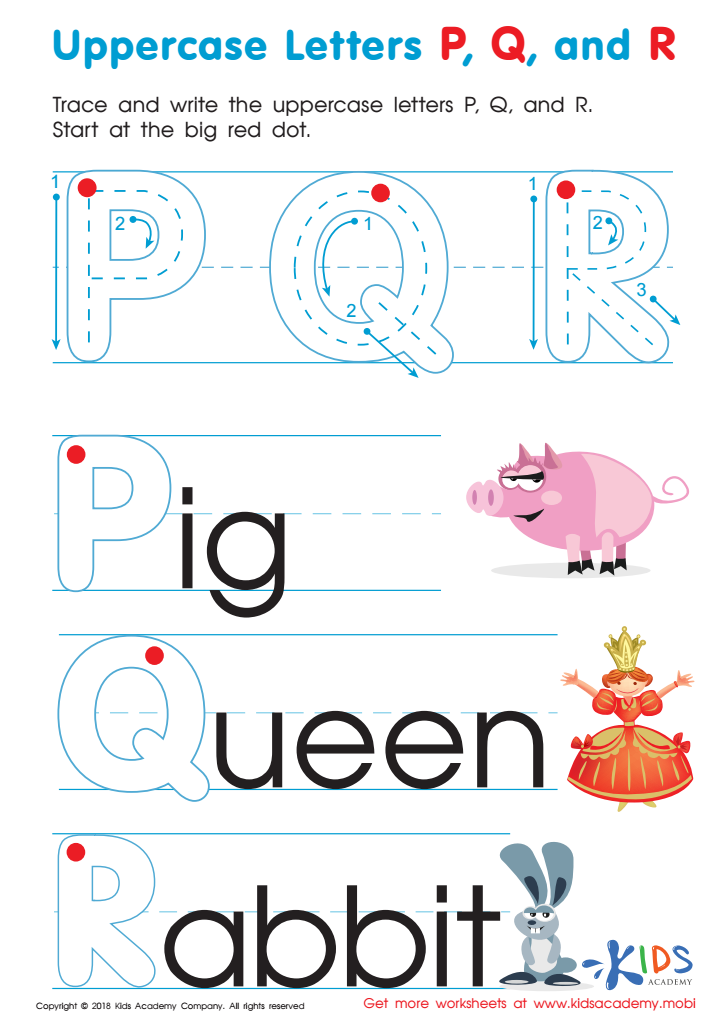
Uppercase Letters P, Q, and R Worksheet
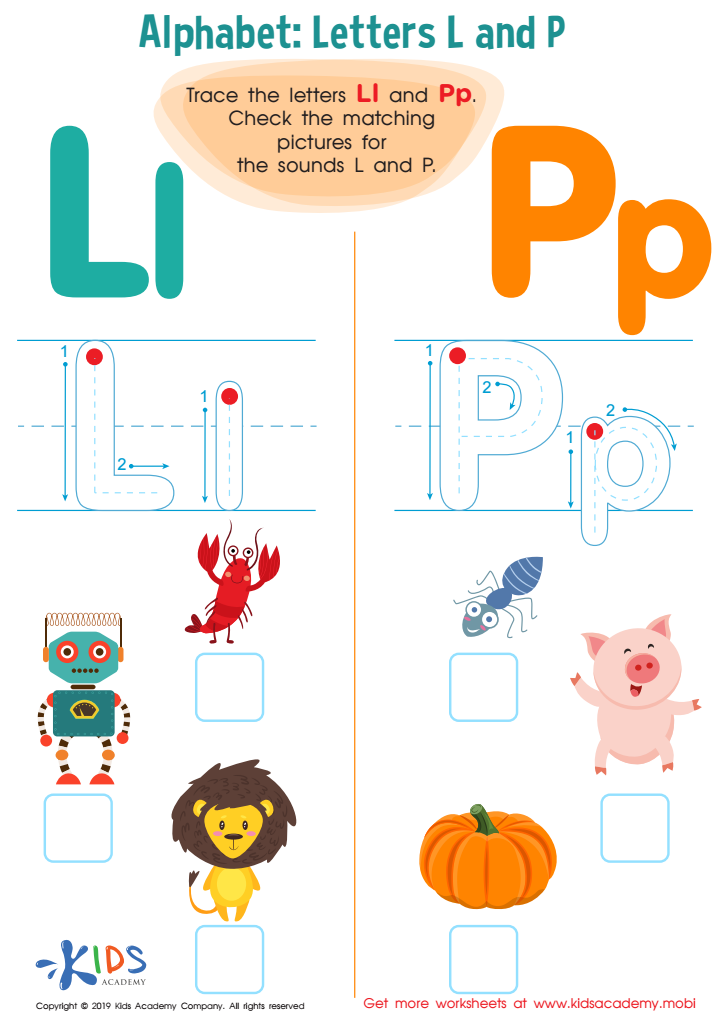
Letter L and P Tracing Worksheet








Parents and teachers should pay close attention to Letter Tracing Practice for children aged 4-8 because it plays a crucial role in early childhood development. These formative years are essential for building the foundational skills needed for literacy and academic success.
Firstly, letter tracing helps develop fine motor skills in young children. By repeatedly following the shapes of letters, children strengthen their hand muscles and improve hand-eye coordination, which is essential not only for writing but also for other tasks requiring precise hand movements.
Secondly, letter tracing practice reinforces letter recognition and memory. As children trace, they become familiar with the shape, structure, and sequencing of each letter, which aids in quicker and more accurate letter recall. This familiarity is pivotal as children begin to read and write independently.
Furthermore, such tracing activities instill a sense of discipline and concentration. Children learn to focus on tasks, follow directions, and complete assignments, forming positive learning habits that will benefit them throughout their educational journey.
In addition, the practice strengthens cognitive development by helping children understand the directional flow of writing. It’s an engaging way to introduce them to writing from left to right and top to bottom.
Investing time in Letter Tracing Practice provides children with essential skills that underpin their future academic endeavors and boosts their confidence in handling academic challenges.








