Alphabet familiarity Upper & Lowercase Letters Worksheets for Ages 4-8
7 filtered results
-
From - To
Discover our engaging "Alphabet Familiarity Upper & Lowercase Letters Worksheets" designed for children aged 4-8. These interactive worksheets enhance letter recognition and support early literacy skills. Through colorful activities, children can practice distinguishing between uppercase and lowercase letters, honing their writing and comprehension abilities. Each worksheet is crafted to foster a love of learning while building a solid foundation in the alphabet. Perfect for parents and educators, these resources cater to various learning styles, making it easy for young learners to grasp letter concepts with confidence. Let your child embark on a fun-filled alphabet adventure today!
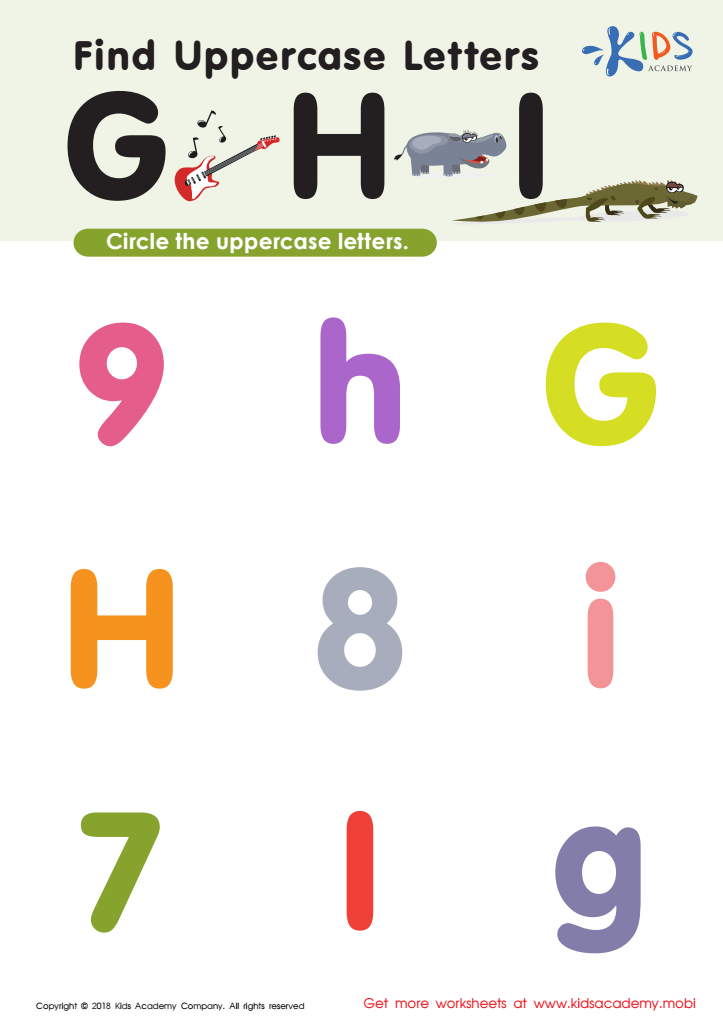
Find Uppercase Letters G, H, and I Worksheet
 Assign to My Students

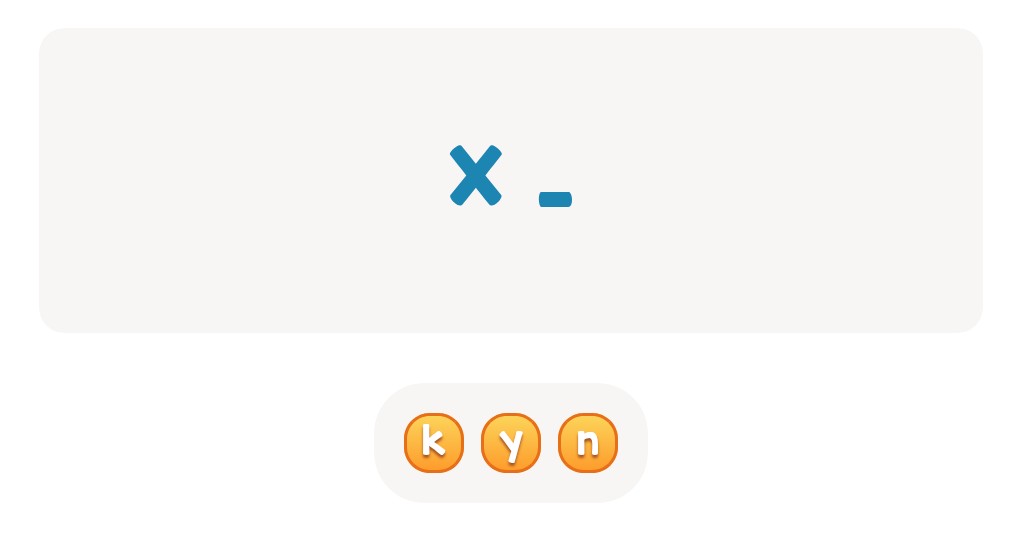
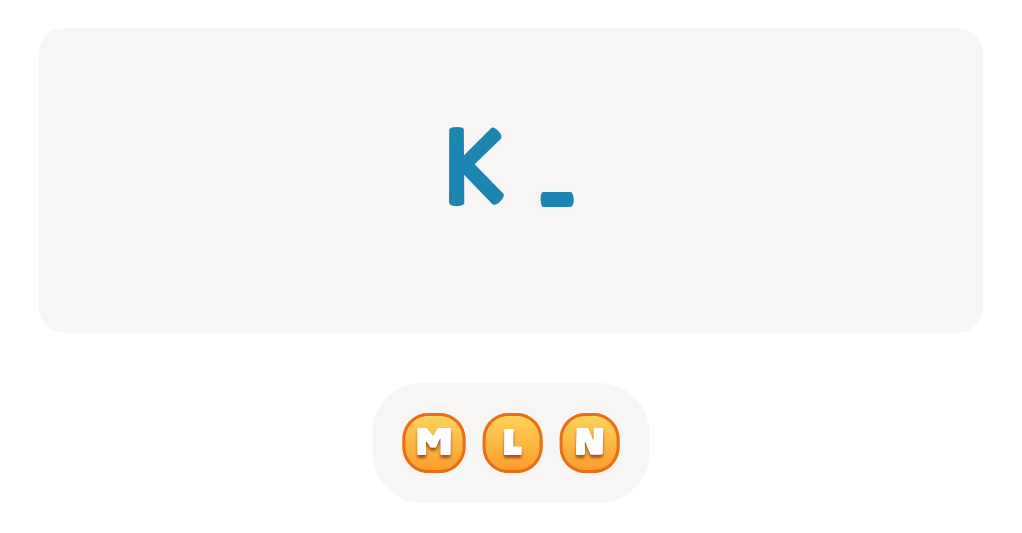
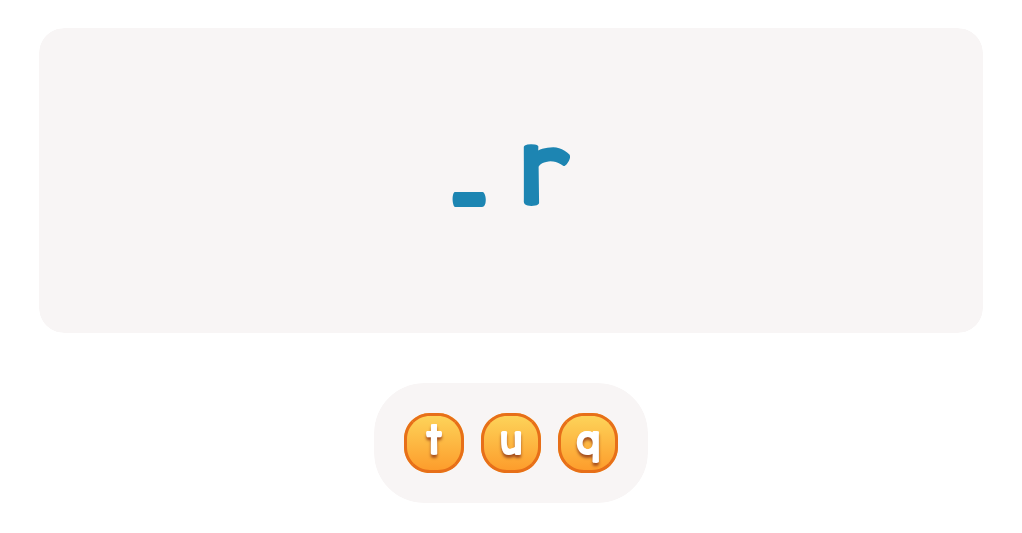
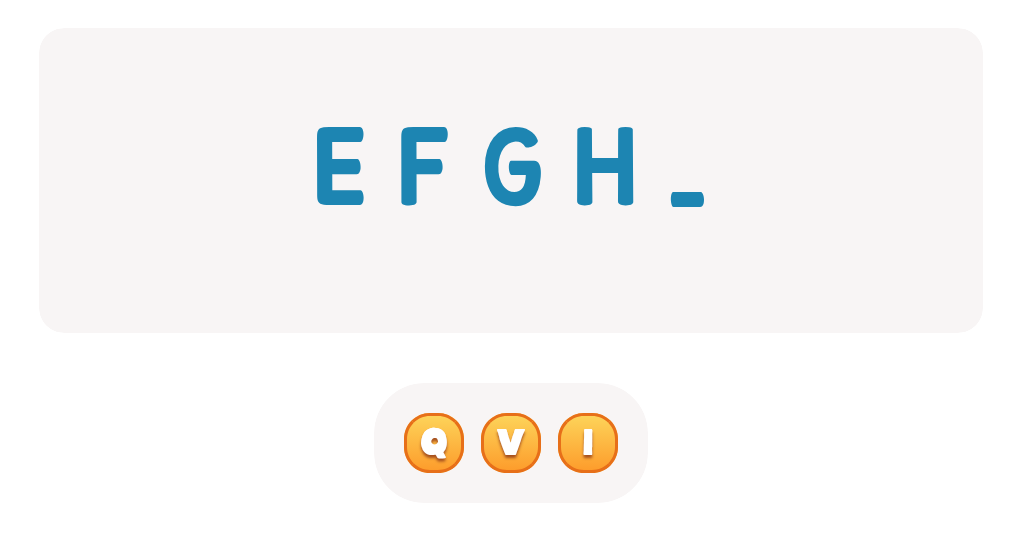
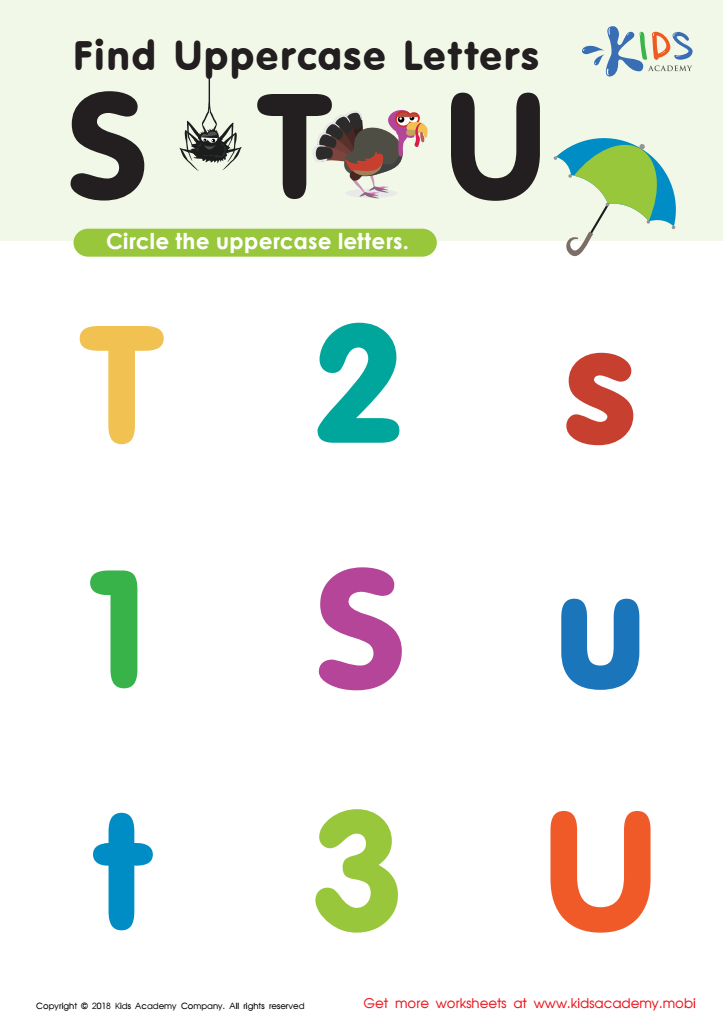
Find Uppercase Letters Worksheet
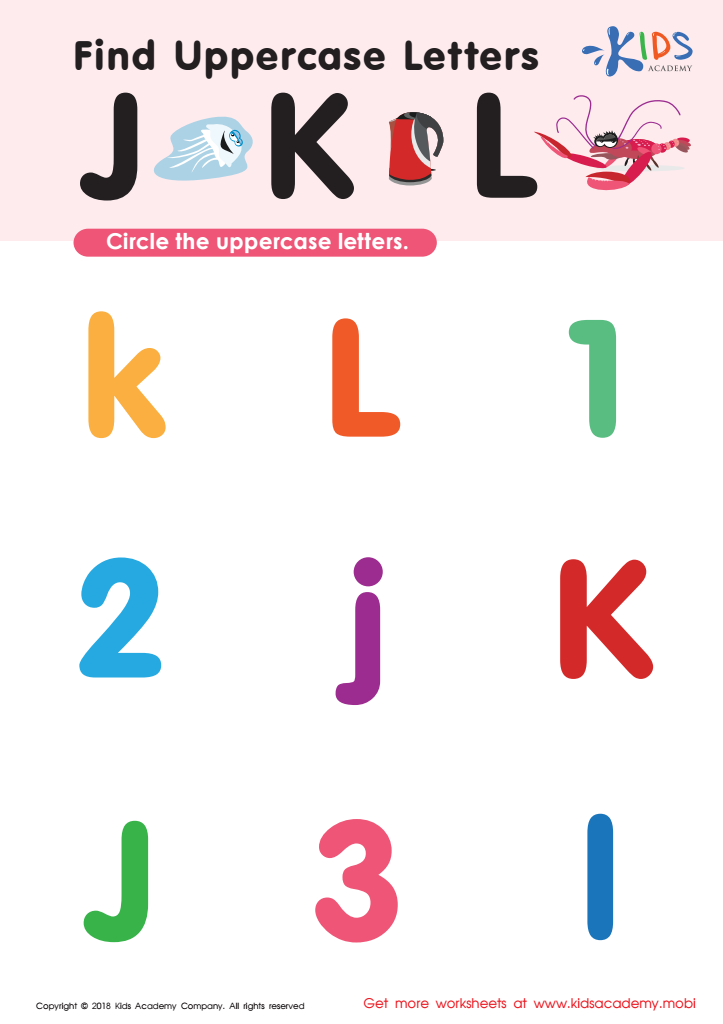
Find Uppercase Letters J, K, and L Worksheet
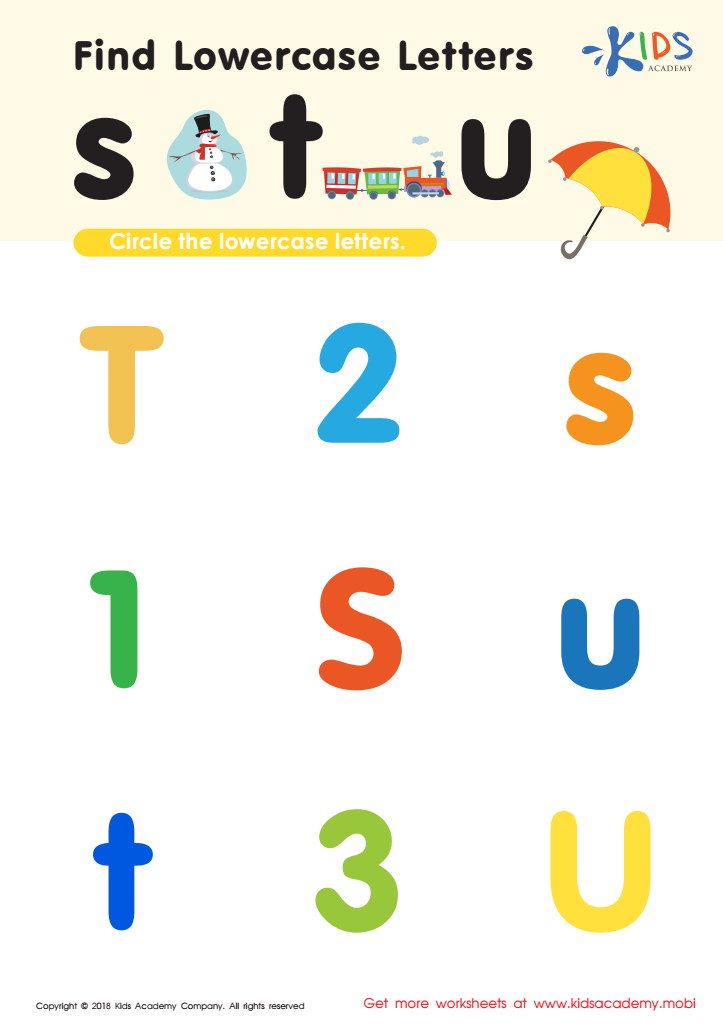
Find lowercase Letters s t u Worksheet
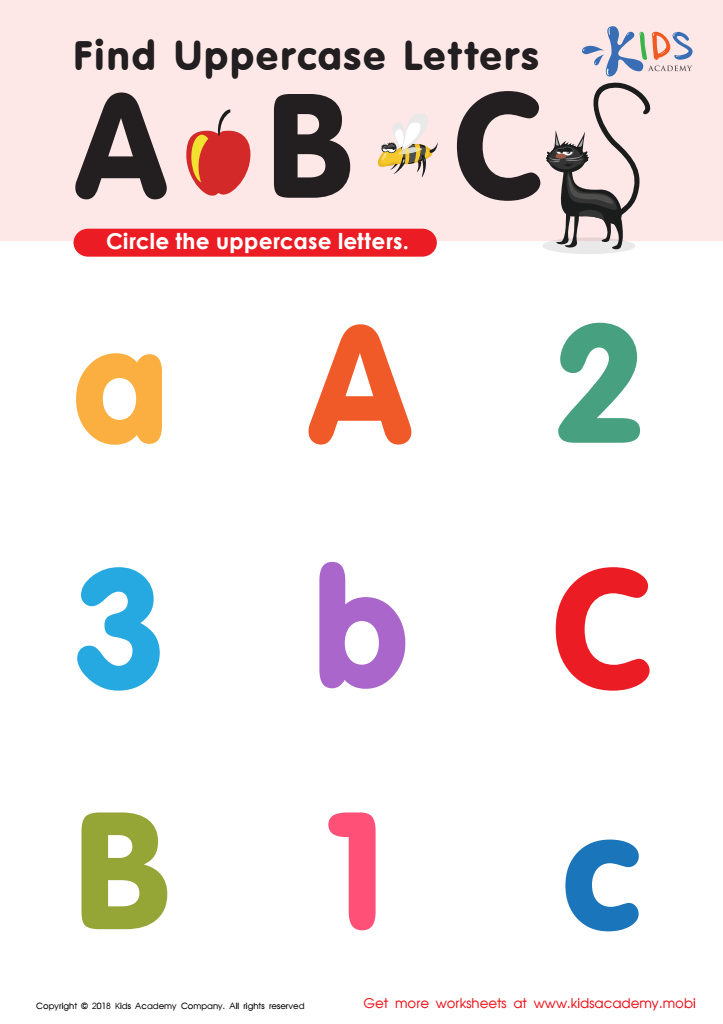
Find Uppercase Letters A, B, and C Worksheet
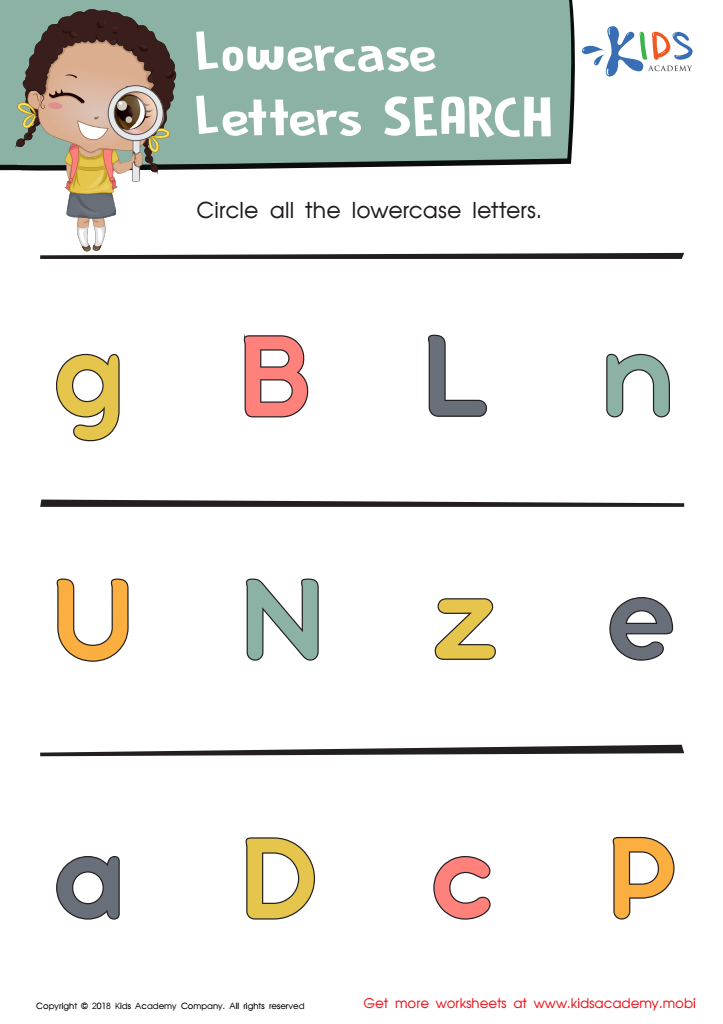
Lowercase Letters Search: Assessment Worksheet
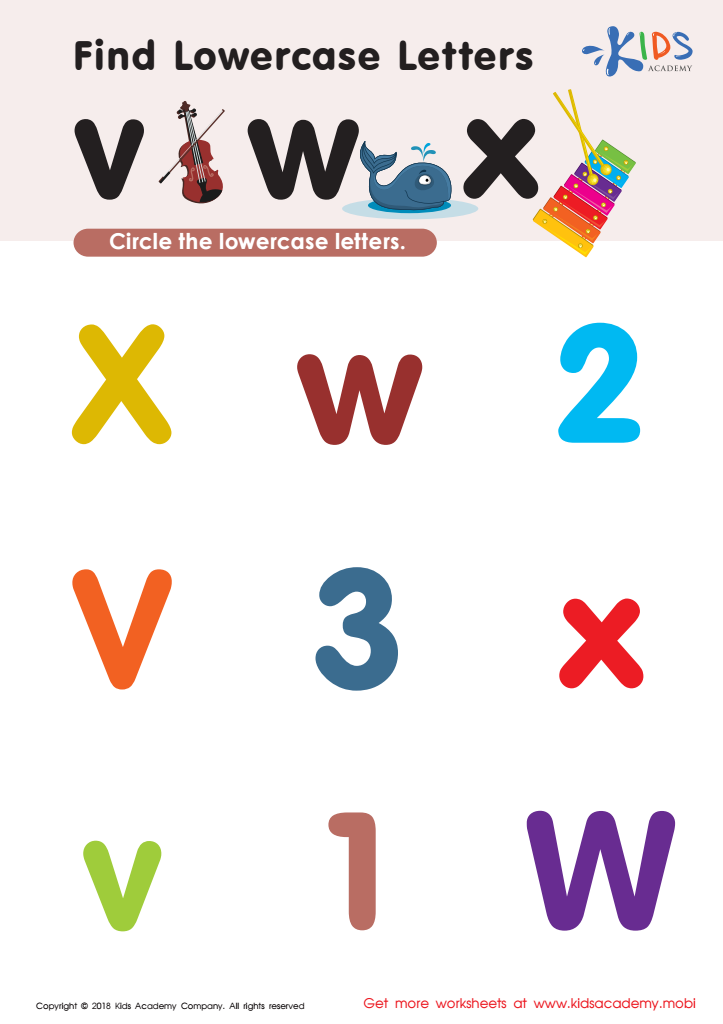
Find Lowercase Letters v w x Worksheet






Alphabet familiarity, including both uppercase and lowercase letters, is crucial for children aged 4 to 8 as it lays the foundation for literacy development. At this age, children are in a critical stage where they begin recognizing letters, understanding their sounds, and learning to read and write. Familiarity with both uppercase and lowercase letters enhances their ability to decode words, making reading more accessible and promoting confidence as they progress.
Moreover, different contexts utilize letters differently. For instance, children's names and many print forms use uppercase letters prominently, while most books and everyday writing features lowercase letters. Recognizing this distinction helps them navigate reading materials effectively, whether in school or at home.
Teachers and parents play a key role in ensuring children become adept at recognizing and using both types of letters. Through engaging activities such as games, puzzles, and interactive reading sessions, they can foster an enjoyable learning environment that sparks curiosity and excitement about learning. A solid understanding of letter forms bolsters children's writing skills, enhances their vocabulary, and sets the stage for more complex language and reading skills. Overall, supporting children in achieving alphabet familiarity at an early age can significantly impact their academic success and lifelong love for learning.







