Alphabet understanding Upper & Lowercase Letters Worksheets for Ages 4-8
3 filtered results
-
From - To
Introduce your child to the wonderful world of letters with our Alphabet Understanding Upper & Lowercase Letters Worksheets, designed specifically for ages 4-8! These engaging, age-appropriate worksheets will help young learners master the difference between uppercase and lowercase letters through fun activities. Your child will enjoy tracing, matching, and identifying letters, which lays a solid foundation for reading and writing skills. Our worksheets are interactive and visually appealing, ensuring an enjoyable learning experience that fosters confidence and creativity. Perfect for homeschooling, classroom use, or supplementary practice, these resources will have your little one excited about mastering their ABCs! Start exploring today!
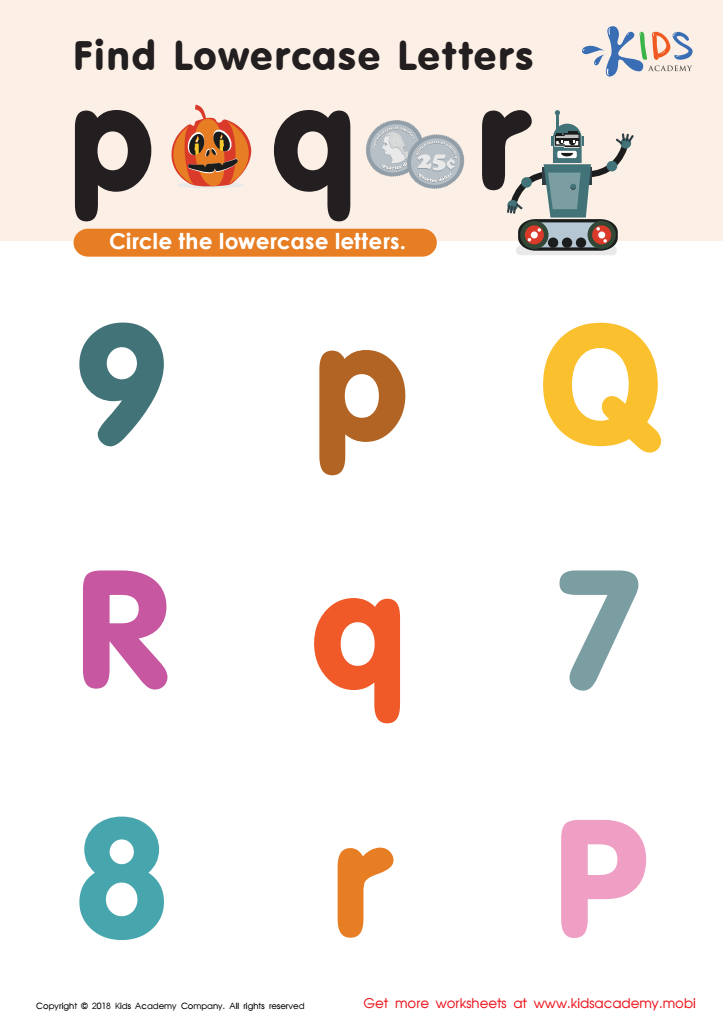
Find lowercase Letters p q r Worksheet
 Assign to My Students
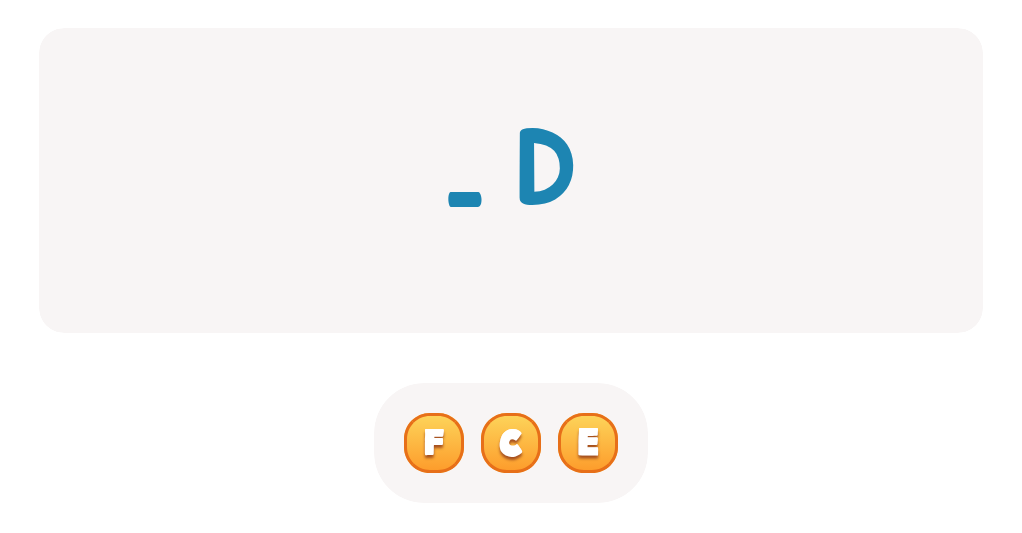

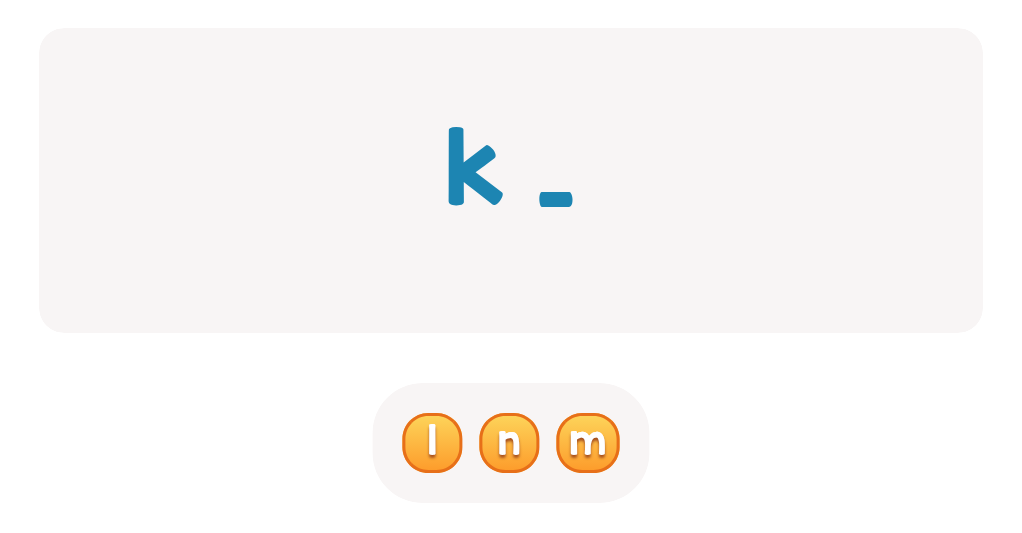
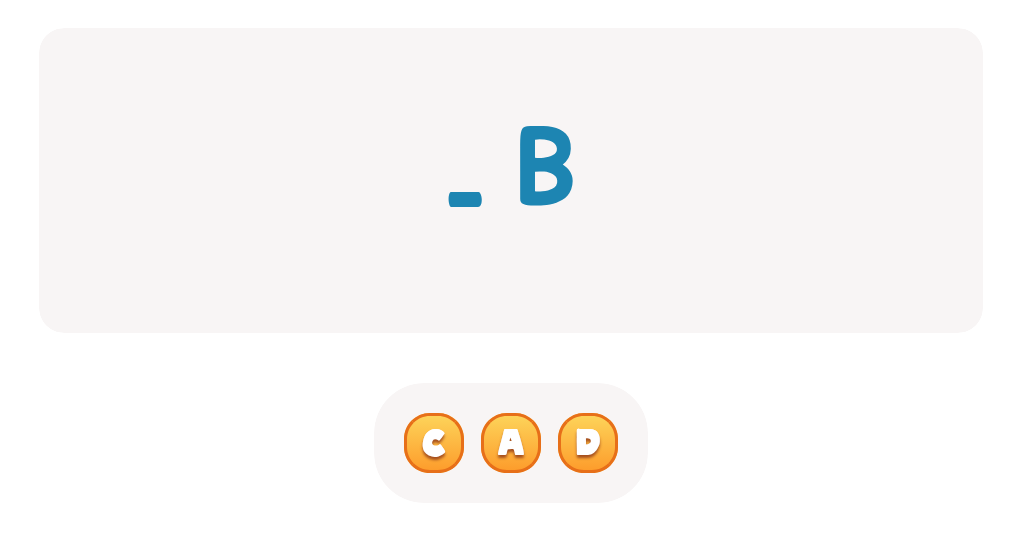
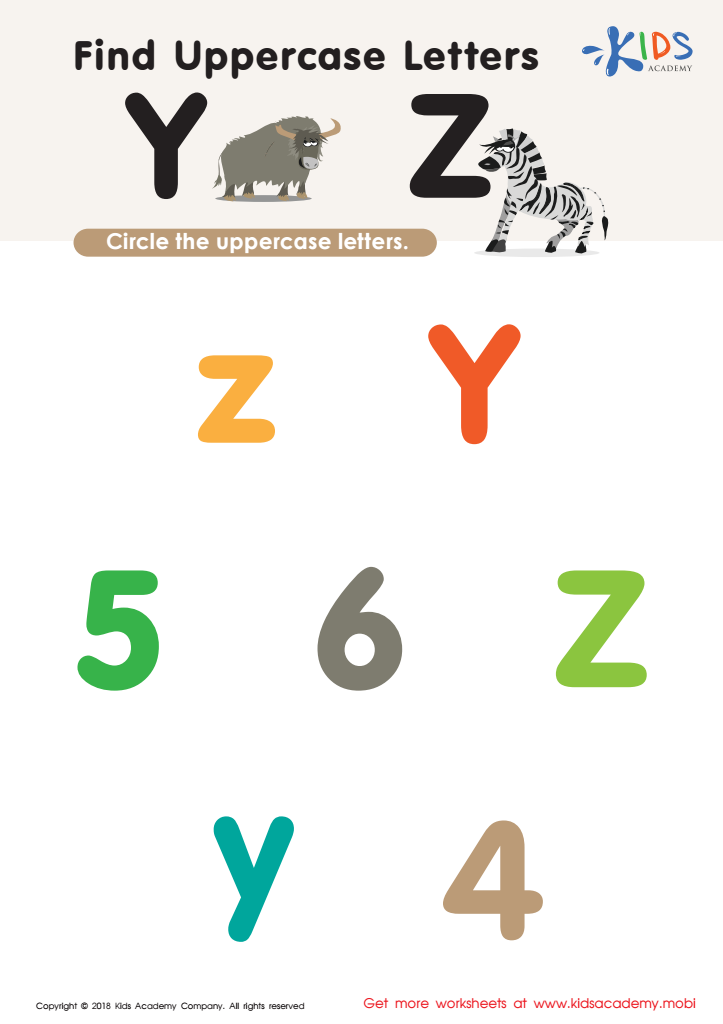
Find Uppercase Letters Y Z Worksheet
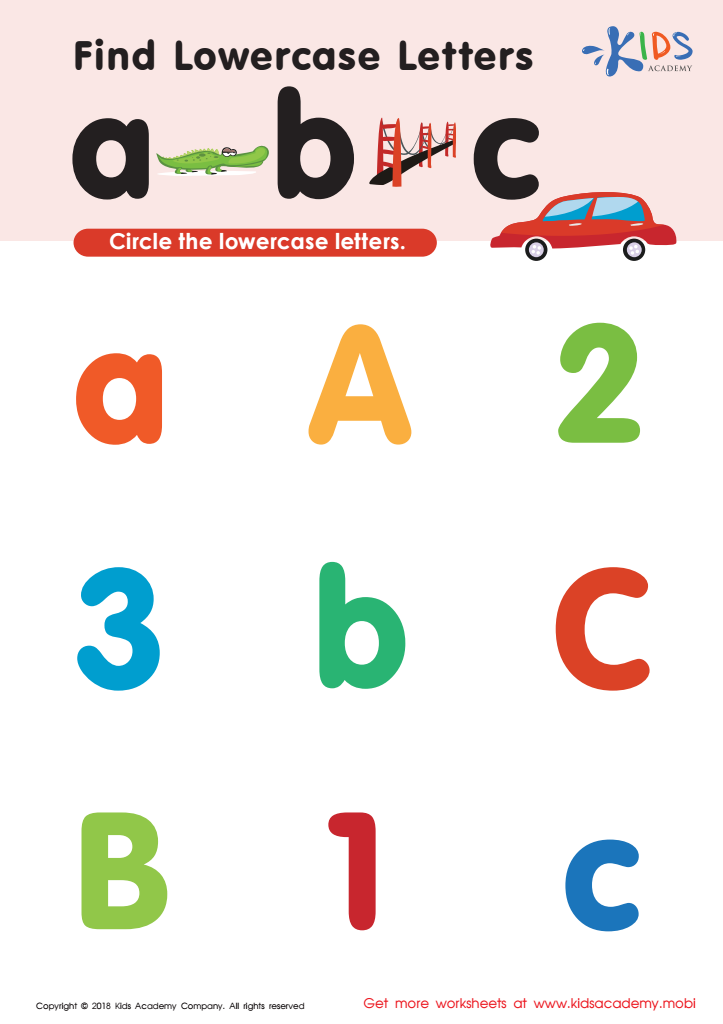
Find lowercase letters a b c Worksheet






Understanding uppercase and lowercase letters is crucial for children aged 4-8 as it lays the foundation for their literacy development. First, recognizing and differentiating between these letters helps children build strong reading and writing skills. Uppercase letters are often used to denote proper nouns and the beginning of sentences, while lowercase letters comprise the majority of written communication. Mastery of both forms enhances reading fluency and comprehension.
Second, this understanding fosters phonemic awareness, supporting children in learning phonics—the relationship between letters and sounds. By becoming familiar with both letter cases, children can decode words more effectively, a vital skill as they progress in their literacy journey.
Moreover, early exposure to uppercase and lowercase letters can boost children's confidence in their writing abilities. As they learn to form letters correctly, they gain ownership over their written communication, making them more likely to express their thoughts and stories.
Lastly, a strong grasp of alphabet understanding can encourage a love for reading and writing. Engaging approaches by parents and teachers can instill curiosity and excitement about language, nurturing lifelong learners who feel confident in their skills. Thus, emphasis on this knowledge is essential for fostering literacy and communication in young children.







