Visual discrimination skills Upper & Lowercase Letters Worksheets for Ages 4-8
4 filtered results
-
From - To
Enhance your child's learning experience with our engaging Visual Discrimination Skills Worksheets designed for ages 4-8, focusing on uppercase and lowercase letters. These worksheets help children distinguish between similar letter forms, reinforcing essential literacy skills. Fun and interactive, they foster concentration and attention to detail, crucial for reading and writing success. Our carefully crafted activities are suitable for both classroom and home learning environments, stimulating cognitive growth while keeping kids entertained. Ideal for preschool and early grade students, these resources support early literacy development and introduce foundational concepts in a friendly and appealing way. Start your child's educational journey today!

Find Uppercase Letters A, B, and C Worksheet
 Assign to My Students










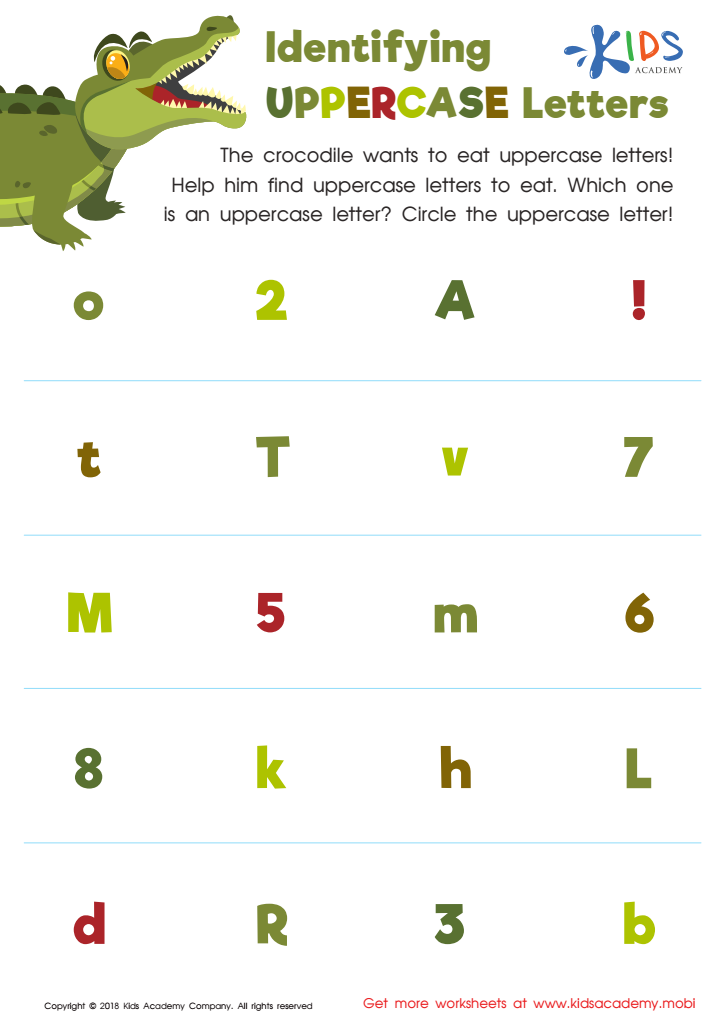
Identifying Uppercase Letters Worksheet
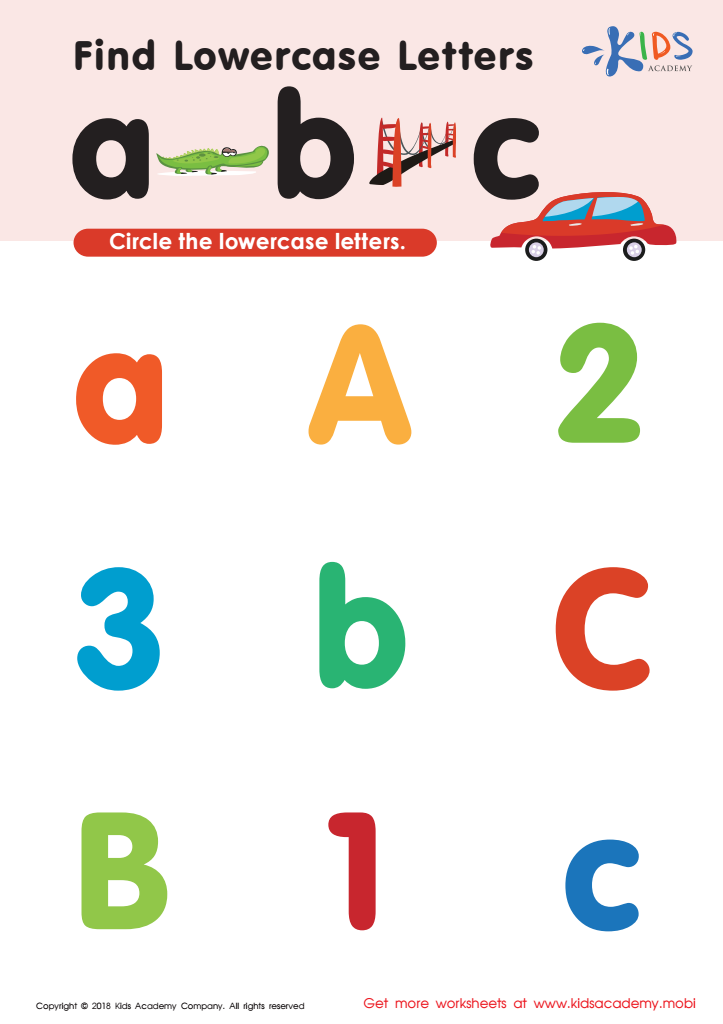
Find lowercase letters a b c Worksheet

Find Lowercase Letters v w x Worksheet






Visual discrimination skills, particularly concerning upper and lowercase letters, are vital for children aged 4-8 as they form the foundation for reading and writing development. Parents and teachers should prioritize these skills because they enable children to distinguish between similar-looking letters, such as 'b' and 'd,' or 'p' and 'q.' This ability is crucial for effective reading fluency, spelling accuracy, and overall literacy proficiency.
By fostering visual discrimination skills, children can better recognize letters in various contexts, including print and handwriting. It helps reduce confusion, minimizes the chances of writing reversals, and enhances their self-confidence when reading and writing. Engaging activities that enhance these skills, such as letter matching games, sorting exercises, or fun visual puzzles, create a playful learning environment that captivates young minds.
Moreover, strong visual discrimination also feeds into broader cognitive development, enhancing attention to detail, critical thinking, and problem-solving skills, which are essential life skills. In essence, investing time in developing these skills can lead to a more robust academic foundation and inspire a lifelong love of learning, ultimately benefiting children as they grow and progress in education.







