
Reading enhancement Vowels Worksheets for Ages 4-8
4 filtered results
Difficulty Level
Grade
Age
-
From - To
Subject
Activity
Standards
Discover our engaging "Reading Enhancement Vowels Worksheets" designed for children ages 4-8! These worksheets are specifically crafted to help young learners master the essential vowels, boosting their reading skills and phonemic awareness. Fun and interactive activities encourage early literacy while fostering a love for reading. Each worksheet features colorful illustrations and exciting exercises that make learning enjoyable. Perfect for home or classroom use, our resources align with educational standards and are ideal for reinforcing vowel recognition and usage in everyday words. Support your child's reading journey and watch them excel with these valuable tools tailored for early learners!
Favorites
With answer key
Interactive
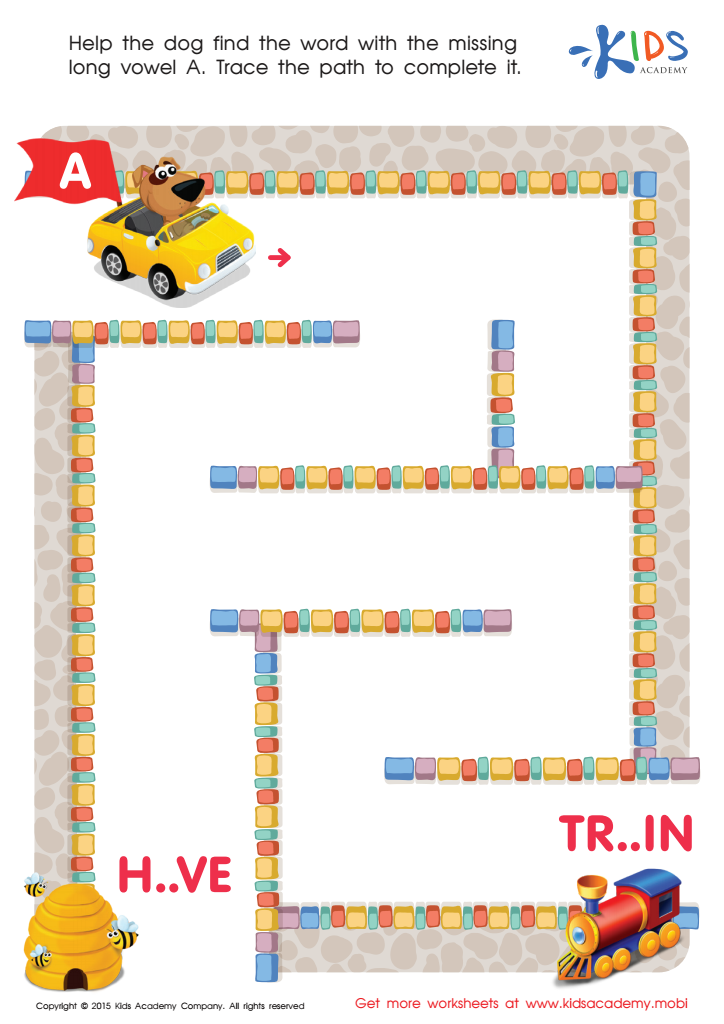
Long Vowel Sound A Worksheet
Teach your young learner about the long vowel A with this colorful free printable phonics worksheet. The long vowel A says its name while the short vowel A does not. Complete the worksheet by tracing the root to the toy train and helping the dog by filling in the missing letter A. Have them practice writing and spelling with phonics while having fun!
 Assign to My Students
Long Vowel Sound A Worksheet
Worksheet
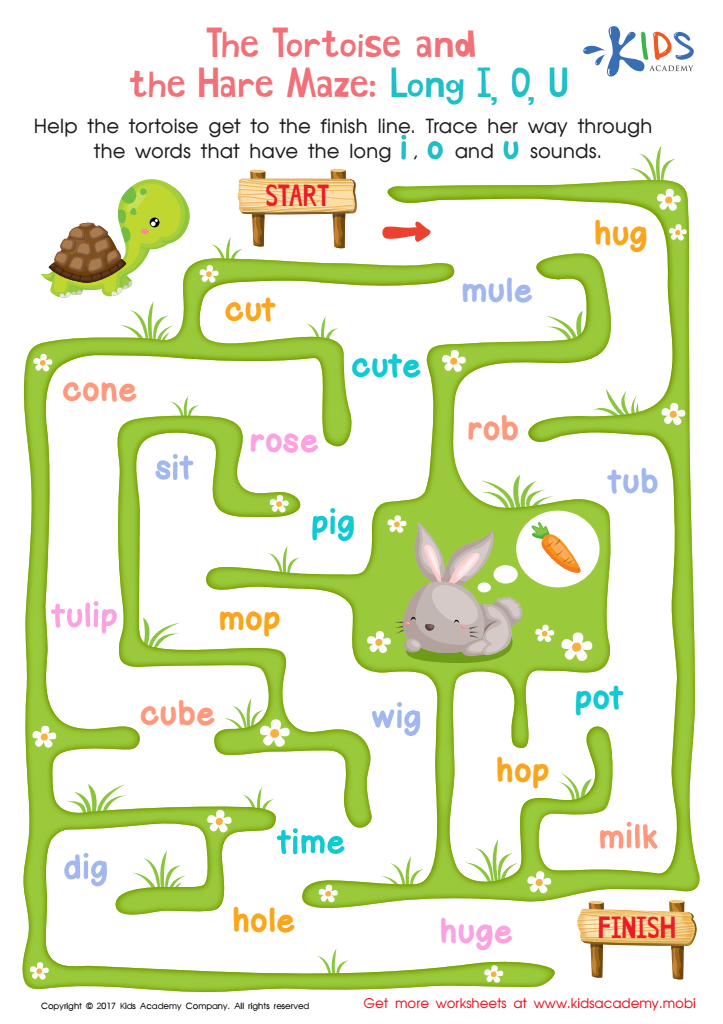
Long I, O, U Words Worksheet
This fun phonics worksheet has your child race the tortoise and hare to the finish line. Find all the long vowel sounds to win! It'll help your child's recognition of long I, O, and U words without him realizing it!
Long I, O, U Words Worksheet
Worksheet
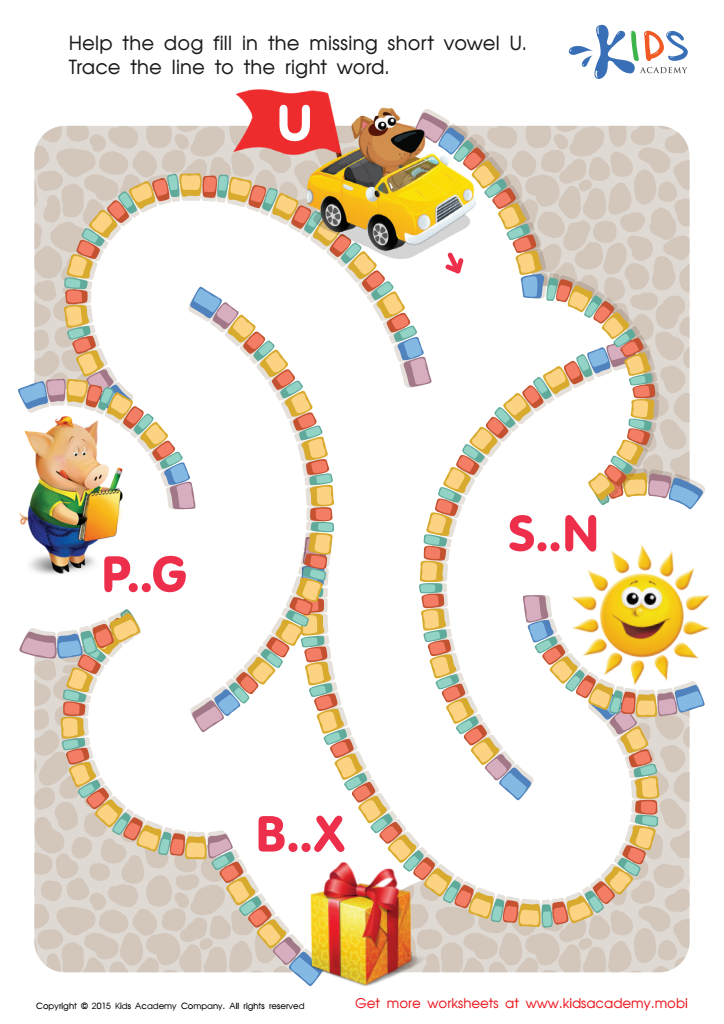
Short Vowel Sound U Worksheet
Practice abc phonics to help young learners link sounds to letters. This free printable phonics worksheet helps your kid learn the short vowel sound U. Guide them through the maze to help the dog complete the word "sun". Make sure they say the word out loud to emphasize the short U sound. Check out more phonics worksheets with mazes here.
Short Vowel Sound U Worksheet
Worksheet
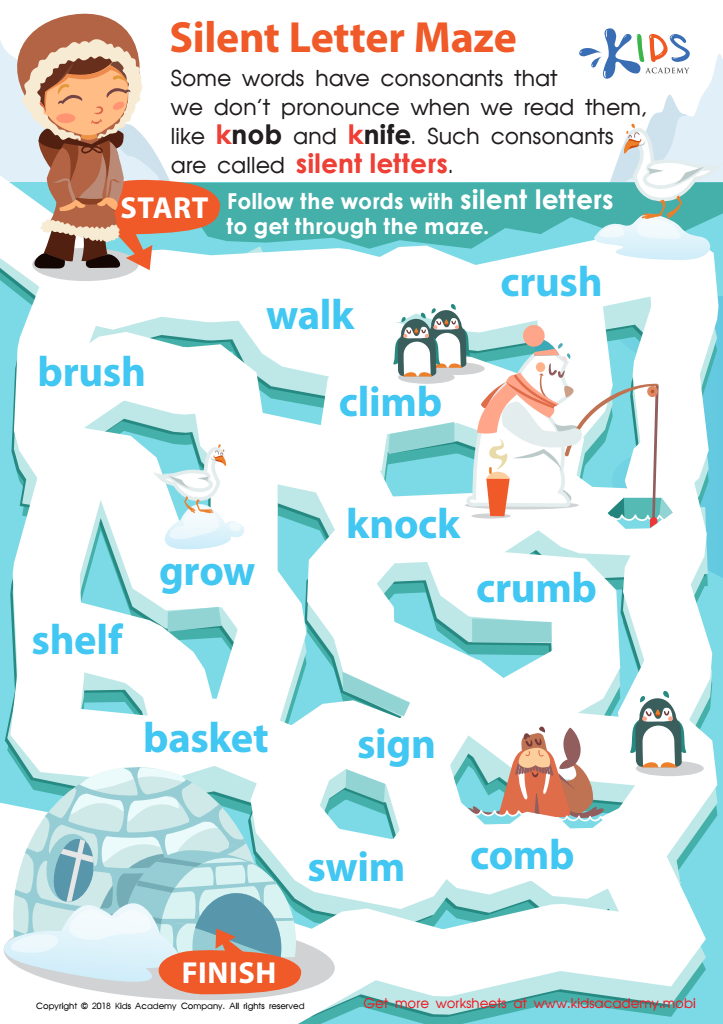
Silent Letter Maze Worksheet
Learning to read can be tricky, especially with words with irregular pronunciations. Explain to your child that some words have consonants we do not pronounce when reading. Ask them for examples like 'knife' and 'knob'. These consonants are called silent letters. Download this pdf to practice words with silent letters and complete the maze.
Silent Letter Maze Worksheet
Worksheet
Join Kids Academy for Free
Who is primarily going to use this learning content?





Reading enhancement for vowels in early childhood is essential for the literacy development of children aged 4-8. Vowels, being the heart of language structure, play a crucial role in decoding and spelling, allowing young learners to develop foundational reading skills. By focusing on vowel recognition and pronunciation, educators and parents can help children make connections between sounds and letters, fostering phonemic awareness which is vital for reading success.
At this age, children's brains are highly malleable; they can easily absorb new information and skills. Enhancing their understanding of vowels not only improves their reading fluency but also boosts their confidence as learners. When children recognize vowels, they can better tackle unfamiliar words, making reading a more enjoyable and less intimidating experience.
Furthermore, engaging activities centered around vowels can enhance children's cognitive development, promoting critical thinking, and problem-solving skills. In collaborative learning environments, teachers and parents can foster a love of language that extends beyond reading—that progresses into writing and communication skills. As literacy becomes increasingly linked to success in later education and life, investing in reading enhancement strategies for vowels is a crucial step in ensuring that children become competent, enthusiastic readers.







