Sound differentiation Vowels Worksheets for Ages 4-8
3 filtered results
-
From - To
Enhance your child's phonetic skills with our engaging "Sound Differentiation Vowels Worksheets" designed specifically for ages 4 to 8. These interactive worksheets provide a fun way to help young learners recognize and differentiate between vowel sounds, essential for building a solid foundation in reading and writing. With colorful illustrations and playful exercises, kids will enjoy identifying vowels in various contexts. Our resources cater to diverse learning styles, ensuring an enjoyable educational experience. Perfect for home or classroom use, these worksheets promote essential auditory discrimination, fostering early literacy skills that pave the way for lifelong learning. Download now and watch their confidence soar!
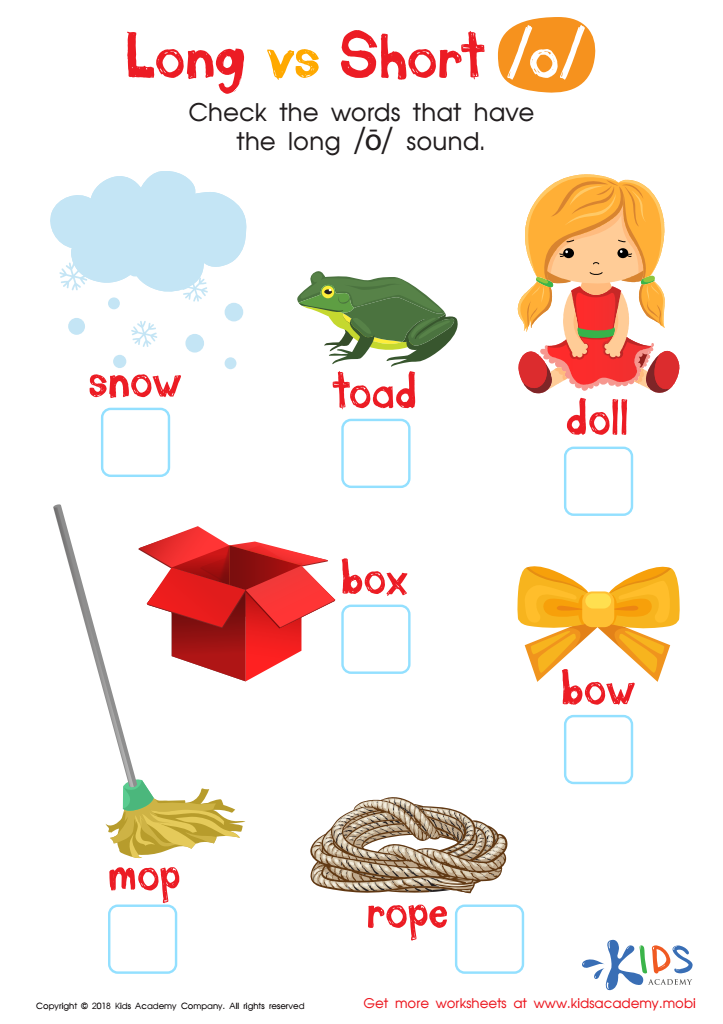
Long vs Short O Reading Worksheet
 Assign to My Students
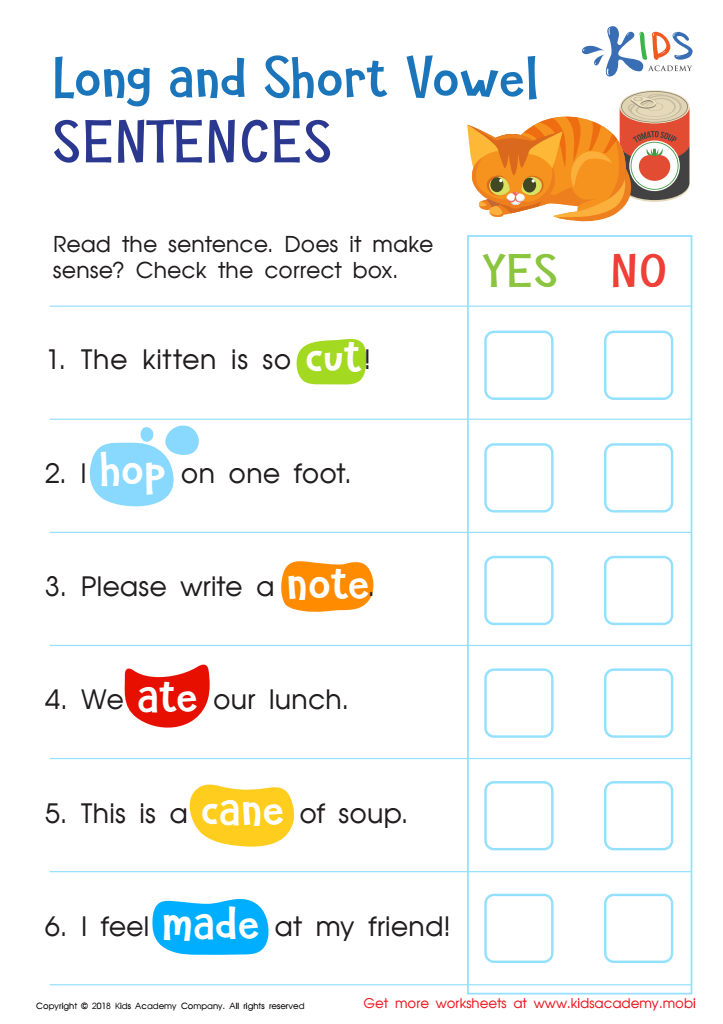
Long and Short Vowel Sentences: Assessment Worksheet
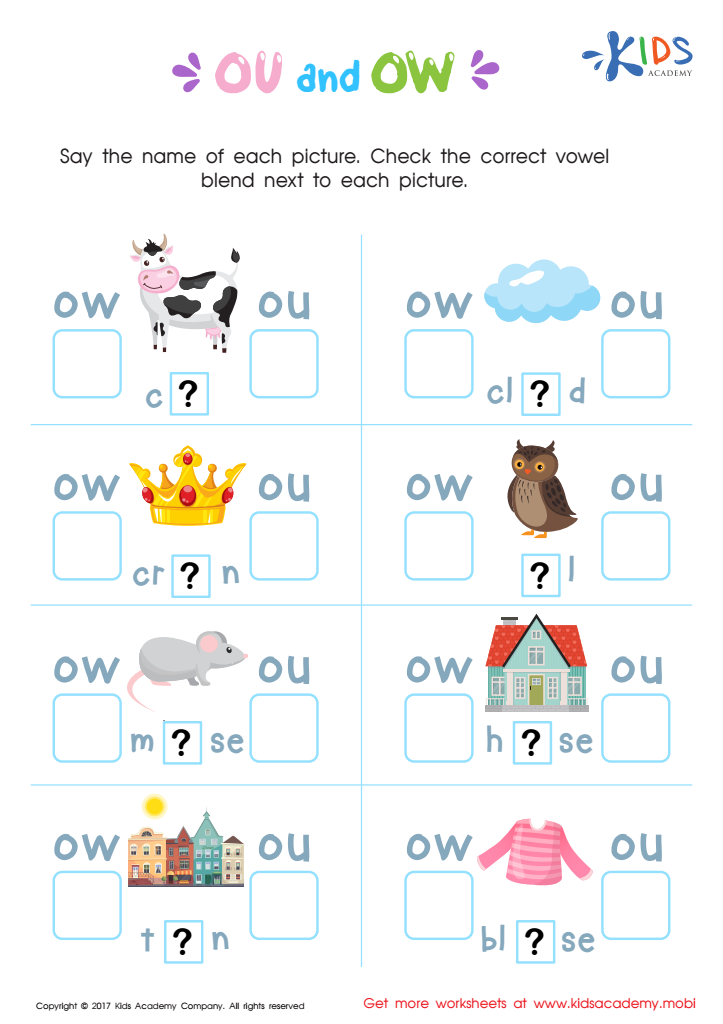
OU and OW Words Worksheet





Sound differentiation, specifically focusing on vowels, is crucial for children ages 4-8, as it lays the foundation for reading, writing, and effective communication. At this developmental stage, children's brains are primed for phonemic awareness, the ability to identify and manipulate sounds in language. Differentiating vowel sounds helps children recognize that spoken words can be broken down into individual sounds, promoting skills necessary for phonics and spelling.
By mastering vowel sound differentiation, children can decode words more efficiently, enhancing their reading fluency. It aids in reducing mispronunciations and fosters stronger vocabulary development. Additionally, understanding vowel sounds supports children as they begin writing, allowing them to spell words more accurately and express their ideas clearly.
Parents and teachers play a pivotal role in developing this skill through engaging activities like rhyming games, listening exercises, and phonics lessons. Such interactions not only strengthen children's linguistic capabilities but also boost their confidence in using language. Ultimately, sound differentiation lays the groundwork for academic success and lifelong learning, making it a key focus for educators and families invested in children's literary journeys. By prioritizing vowel sound differentiation, stakeholders can help facilitate a smoother transition from oral language to literacy.







