
Sound recognition Vowels Worksheets for Ages 4-8
5 filtered results
Difficulty Level
Grade
Age
-
From - To
Subject
Activity
Standards
Enhance your child's phonetic skills with our engaging Sound Recognition Vowels Worksheets, designed specifically for ages 4-8. These worksheets provide a fun and interactive way for young learners to identify and pronounce vowel sounds effectively. Through a variety of activities, including matching, coloring, and sound recognition exercises, children will strengthen their understanding of vowels in an enjoyable format. Each worksheet is crafted to foster confidence in early literacy skills while keeping kids excited about learning. Perfect for parents and educators, our resources help lay a solid foundation for reading readiness and phonemic awareness. Discover the joy of learning vowels today!
Favorites
With answer key
Interactive
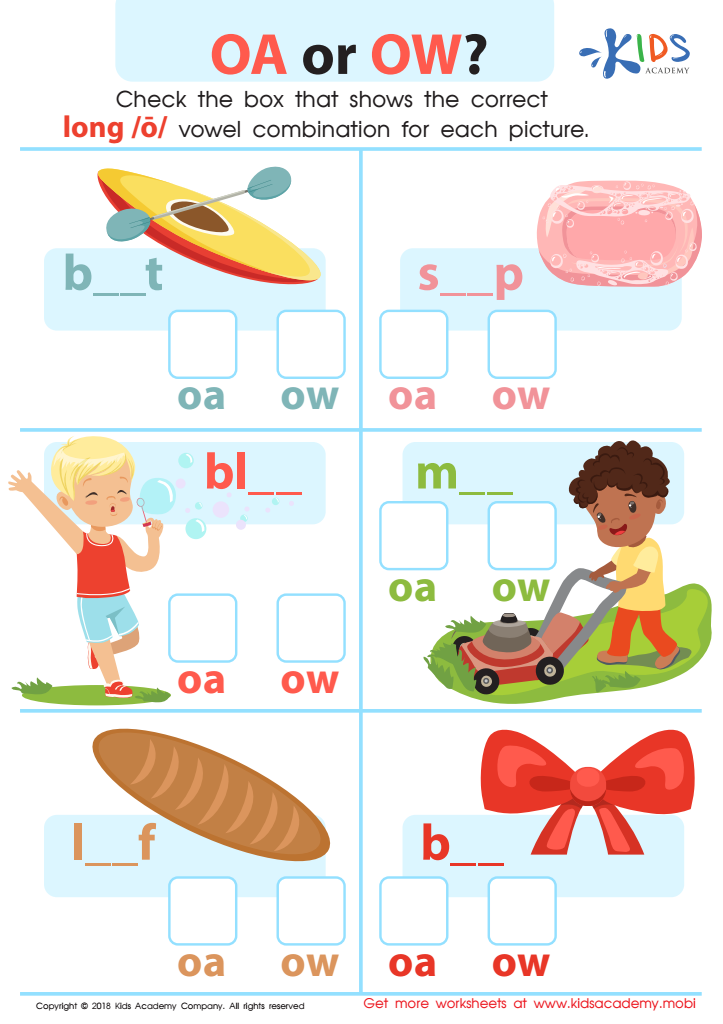
Reading: OA or OW Worksheet
This printable worksheet helps young and emergent readers with decoding words and understanding digraphs (two letters with one sound). It requires students to complete the spelling for each word based on the picture, focusing on /oa/ and /ow/ spellings. It's ideal for a reading classroom and for spelling practice.
Reading: OA or OW Worksheet
Worksheet
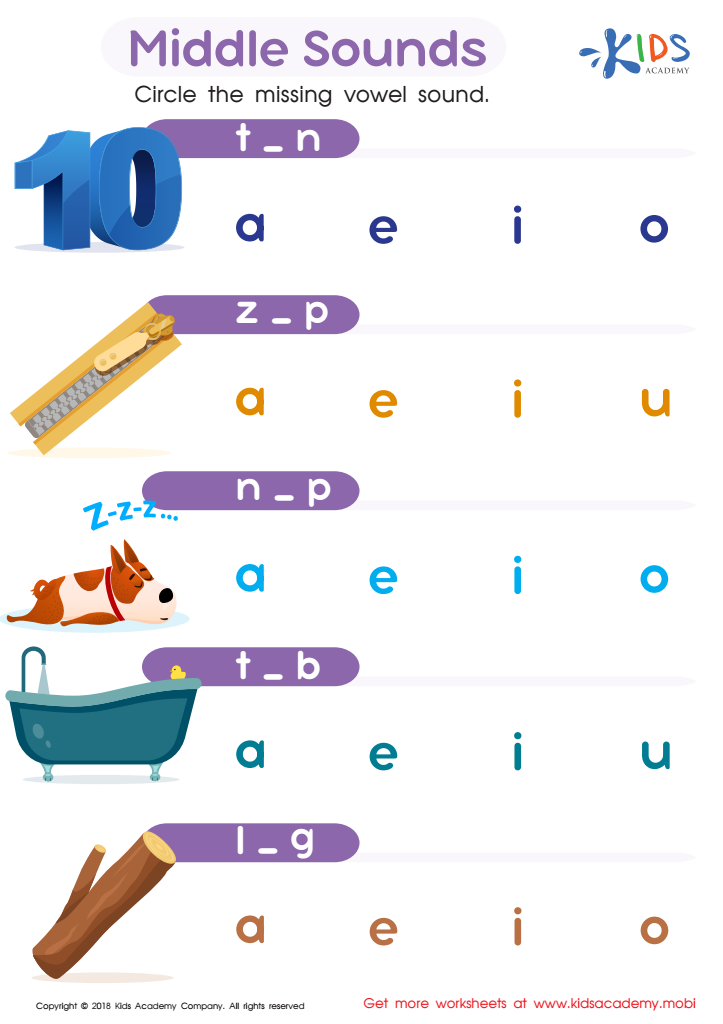
Middle Sounds Worksheet
Download this free worksheet and help your reader identify middle sounds in words. Pictures provide clues to the word, while tracing circles around the middle vowel sound strengthens fine motor and visual discrimination skills. It's a great way to teach sound discrimination between similar-sounding short vowels - a key component for proficient reading.
Middle Sounds Worksheet
Worksheet

Long and Short U Worksheet
Revised: Spice up your lesson on long and short vowels with this fun printout! Kids read the words "tube" and "tub," then reinforce the sound by coloring in the words and pictures. It's a great way to make phonics class enjoyable!
Download (PDF)
 Assign to My Students
Assign to My Students
Long and Short U Worksheet
Worksheet
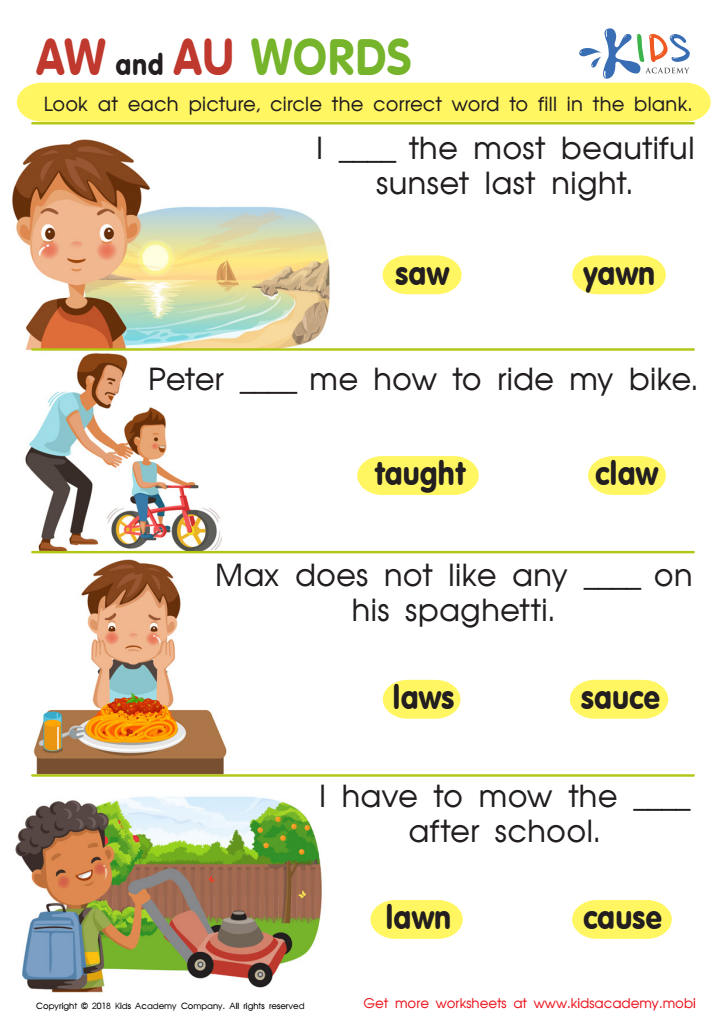
Reading: AW and AU Words Worksheet
This worksheet helps kids recognize that /au/ and /aw/ can make the same sound. Students read sentences and pick the correct word with one of the digraphs. Understanding digraphs improves decoding and reading fluency. Perfect for reading and phonics classes.
Reading: AW and AU Words Worksheet
Worksheet
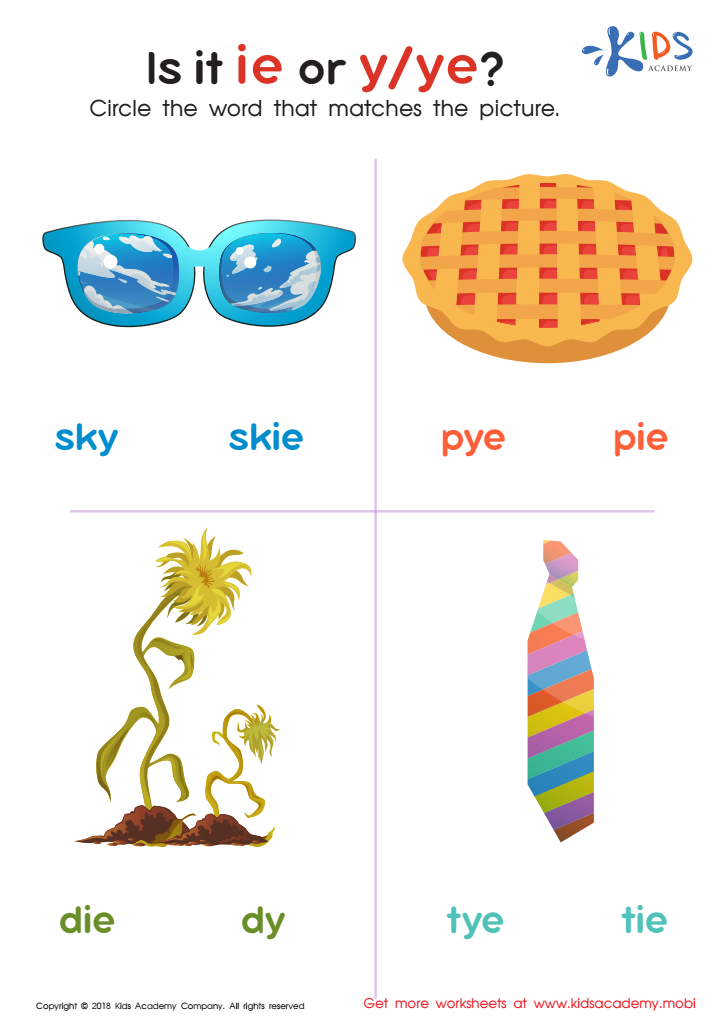
Is It IE or Y/Ye? Worksheet
Test your child's picture identification skills by pointing at common items in your house and asking them to name them. Then, look at the objects in this worksheet with your little one. Point at each one, ask for the name, then ask which spelling is correct. Help them circle the correct word.
Is It IE or Y/Ye? Worksheet
Worksheet
Join Kids Academy for Free
Who is primarily going to use this learning content?





Sound recognition, particularly of vowels, is a crucial skill for young learners aged 4-8. Vowels are the building blocks of language and significantly influence reading and spelling proficiency. By developing sound recognition in this age group, parents and teachers can lay a strong foundation for literacy skills that will support lifelong learning.
At this stage, children are often beginning to correlate sounds with letters. Actively engaging them in vowel sound recognition helps improve their phonemic awareness, which is essential for decoding words. By recognizing vowel sounds, children can better understand how words are formed, leading to stronger reading capabilities and vocabulary development. Additionally, mastering vowels aids in spelling correctness, a skill they will continuously utilize in their academic journeys.
Furthermore, sound recognition boosts confidence in communication. As children become adept at identifying and using vowel sounds in their speech and writing, they feel more empowered to express their thoughts and ideas clearly. Parents and teachers play a vital role in providing engaging activities that foster these skills, such as singing, rhymes, and phonics games, making learning enjoyable and interactive. Ultimately, emphasizing vowel sound recognition is key to nurturing effective communicators and eager learners.







