Check out this FREE "Basic Addition Skills" Trial Lesson for age 4-8!

X

Favorites
With answer key
Interactive
  • 4-8
  • Basic Addition Skills
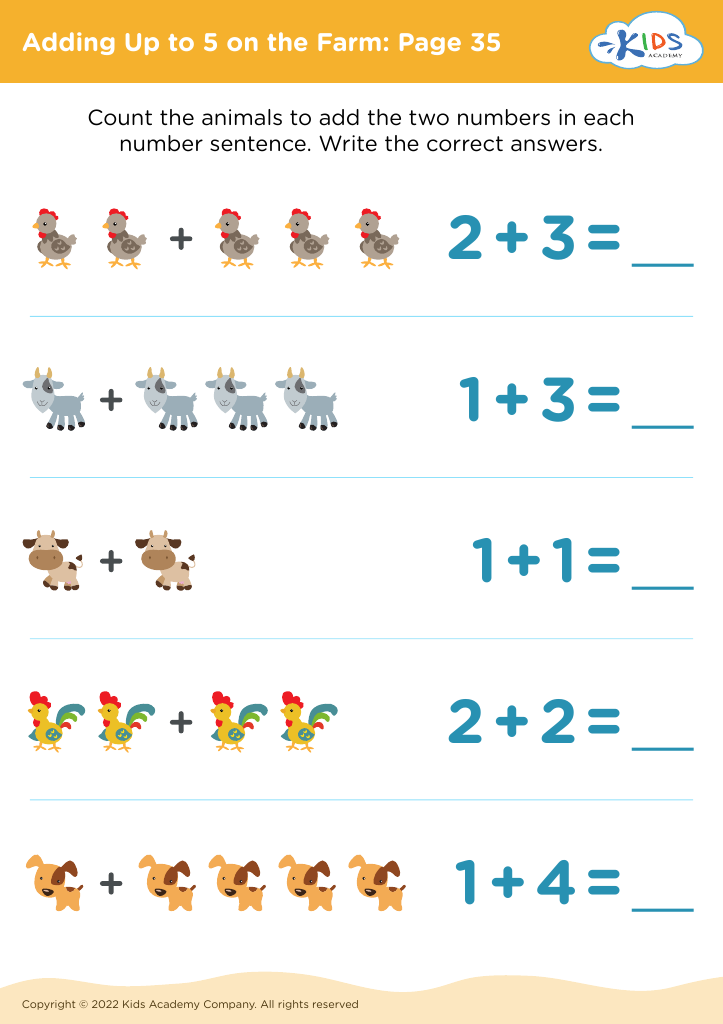
Adding Up to 5 on the Farm: Page 35
Worksheet
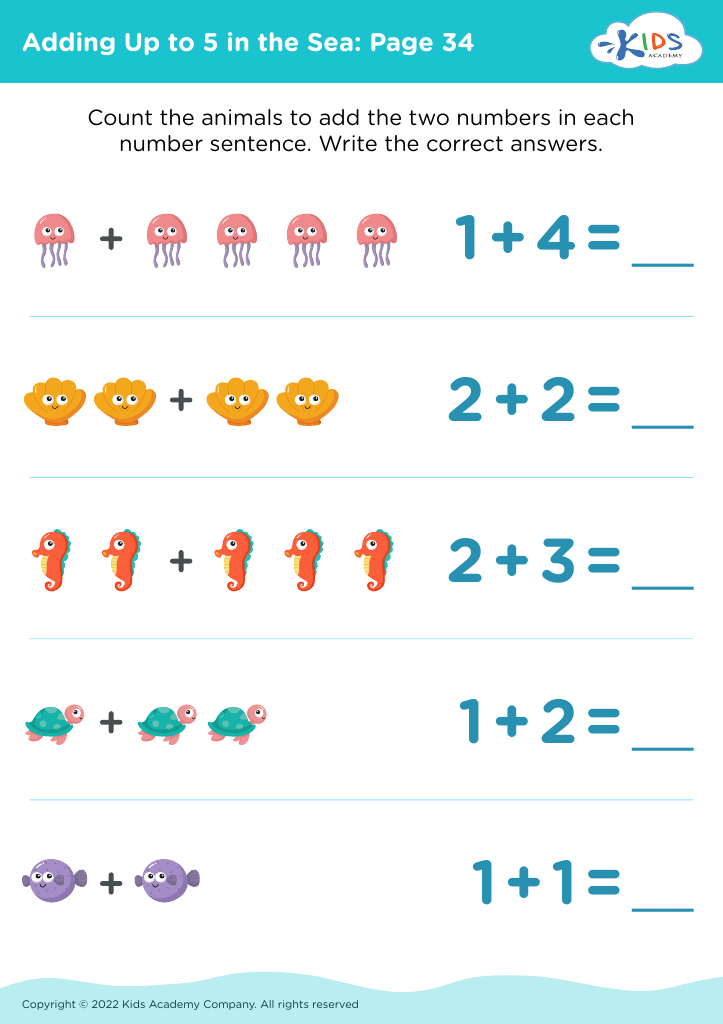
Adding Up to 5 in the Sea: Page 34
Worksheet
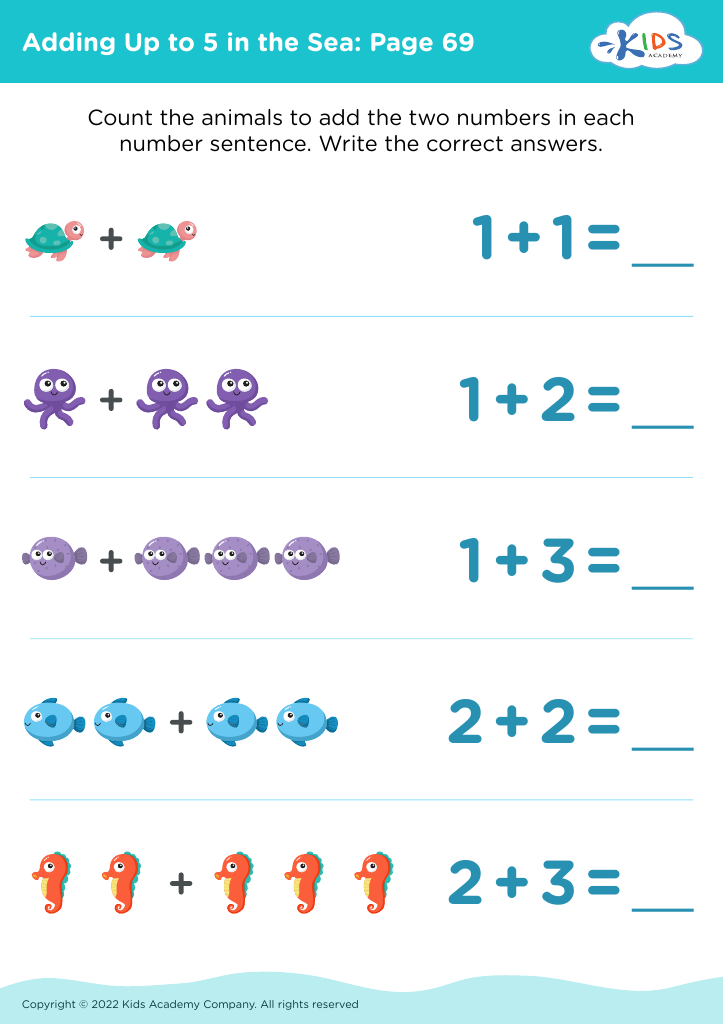
Adding Up to 5 in the Sea: Page 69
Worksheet
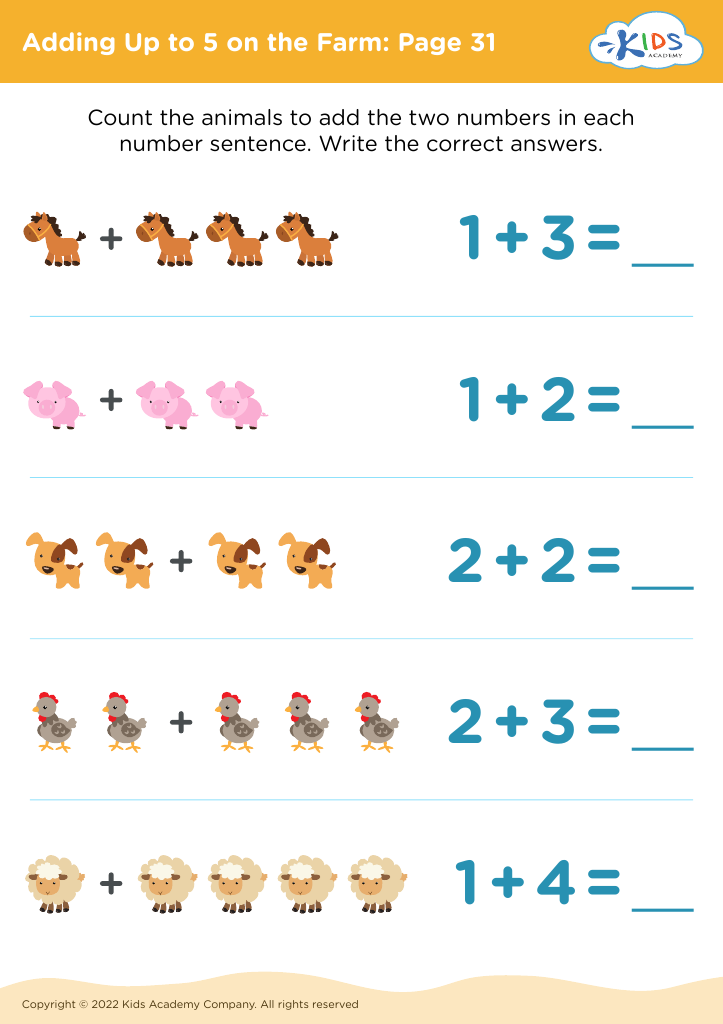
Adding Up to 5 on the Farm: Page 31
Worksheet
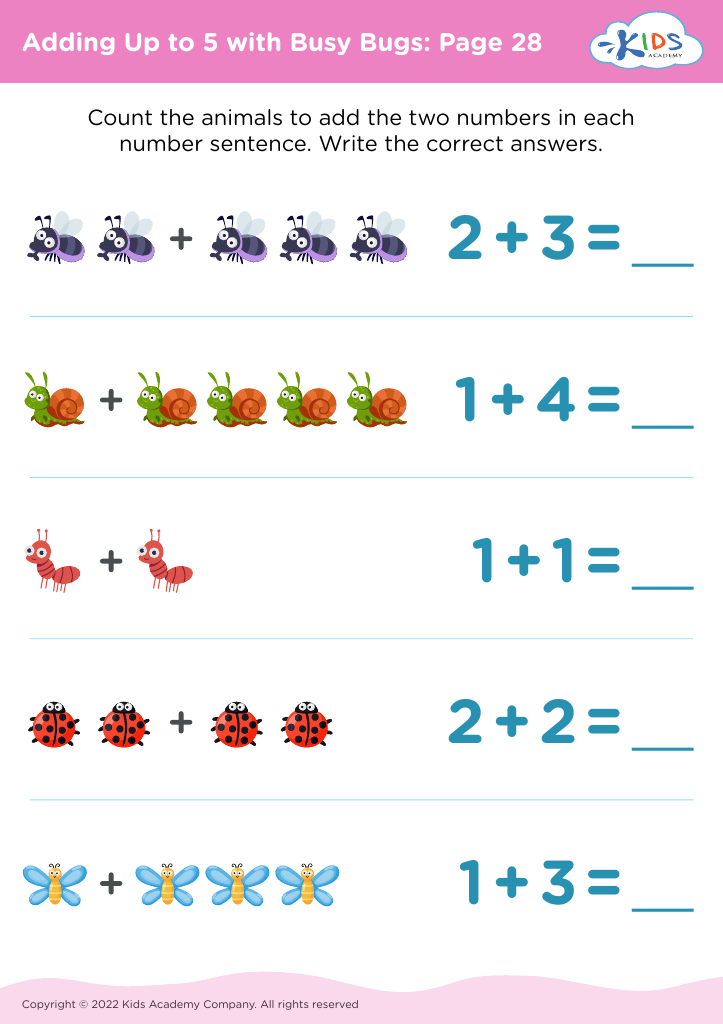
Adding Up to 5 with Busy Bugs: Page 28
Worksheet
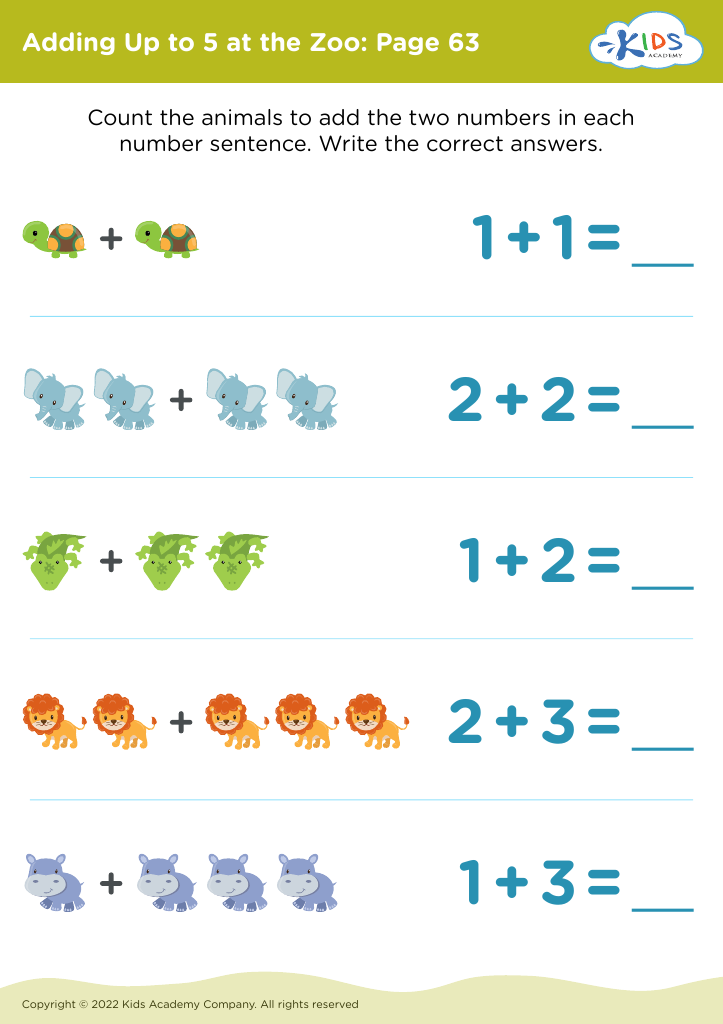
Adding Up to 5 at the Zoo: Page 63
Worksheet
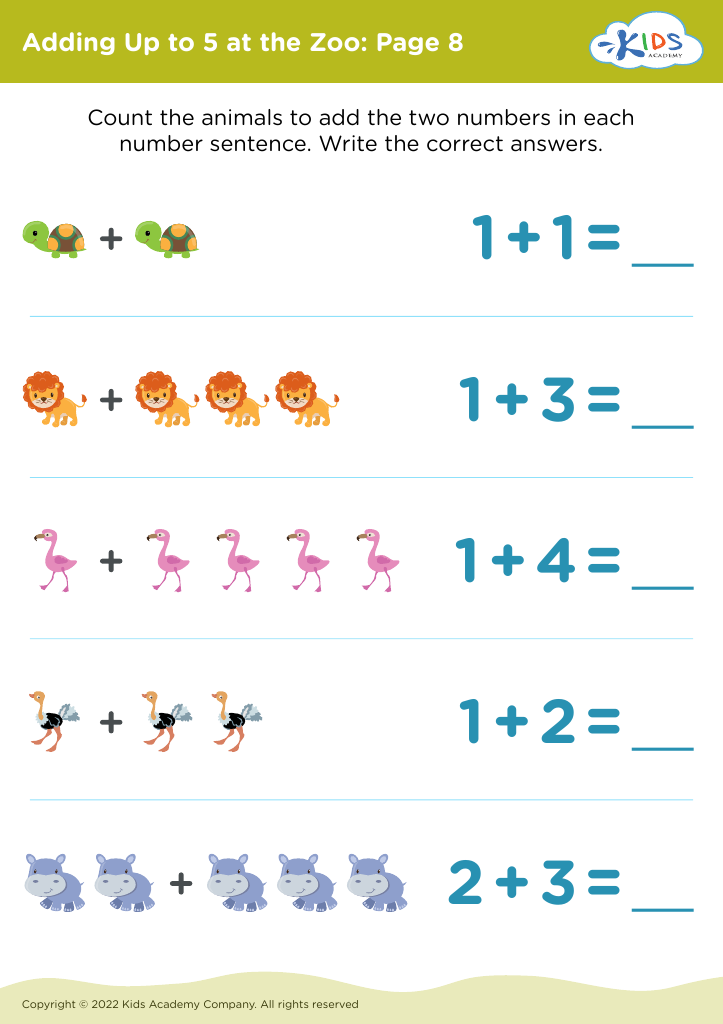
Adding Up to 5 at the Zoo: Page 8

Adding Up to 5 at the Zoo: Page 8

Adding Up to 5 at the Zoo: Page 8
Worksheet
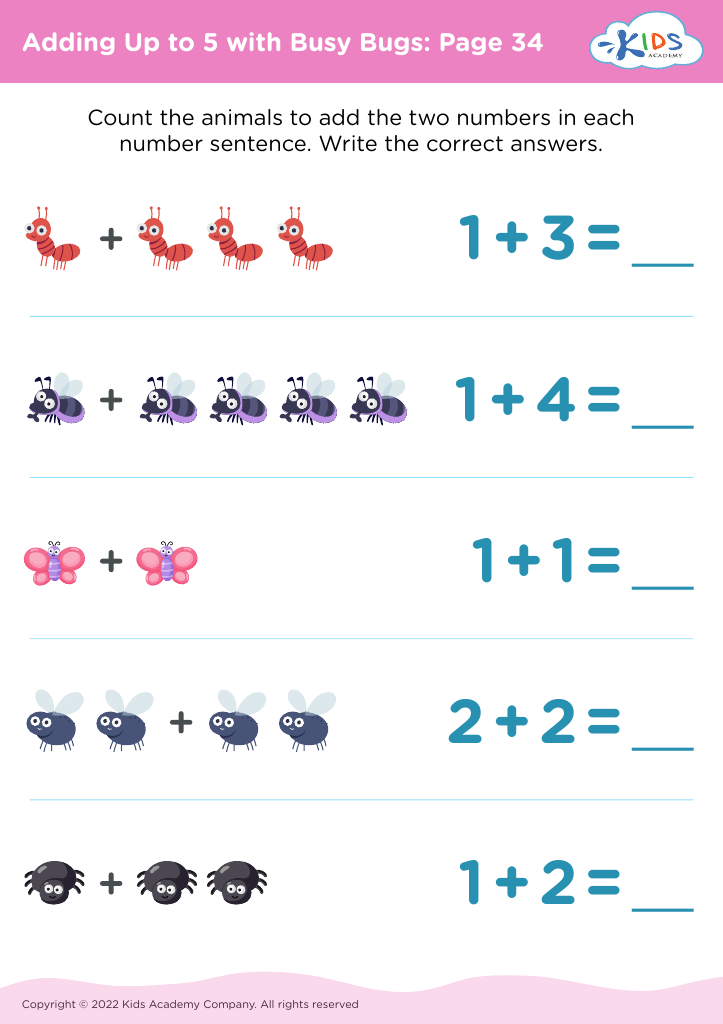
Adding Up to 5 with Busy Bugs: Page 34
Worksheet
Simple Addition PDF Worksheet

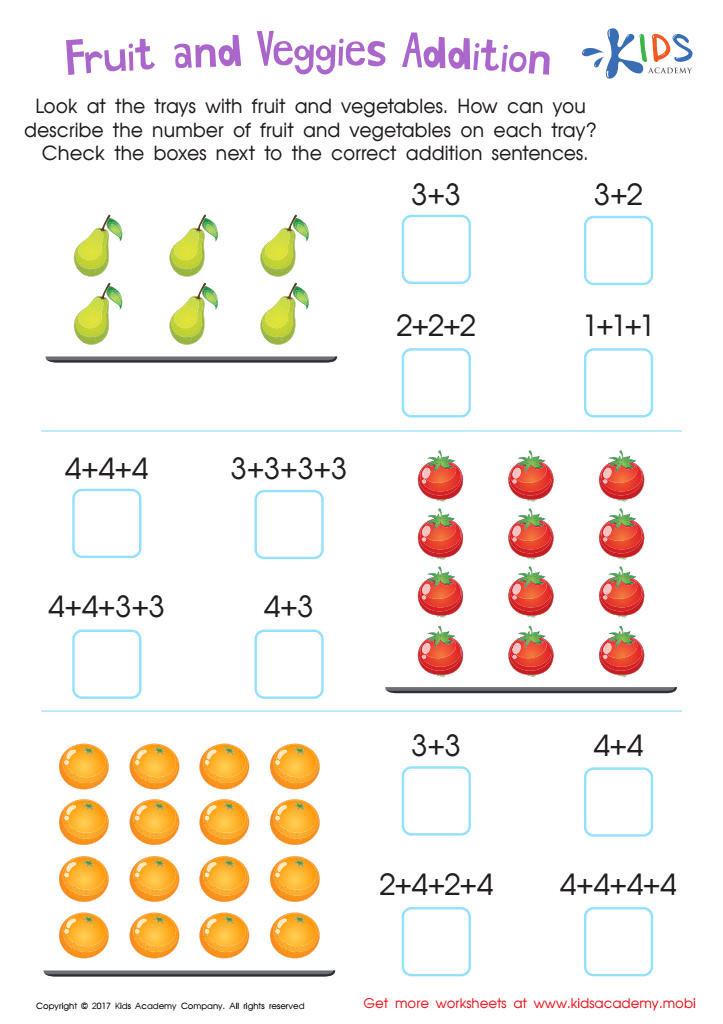
Fruit and Veggies Worksheet

It promotes problem-solving and analytical skills as kids match pictures to correct addition sentences. Help your child go beyond simple addition with this PDF worksheet!
Fruit and Veggies Worksheet
Worksheet
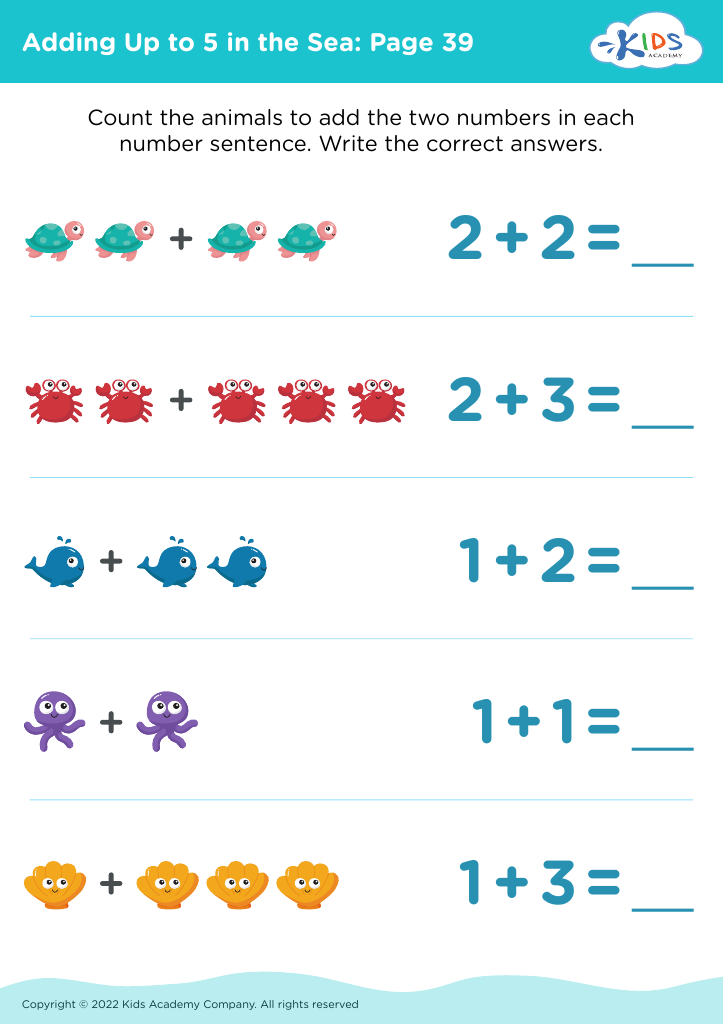
Adding Up to 5 in the Sea: Page 39
Worksheet
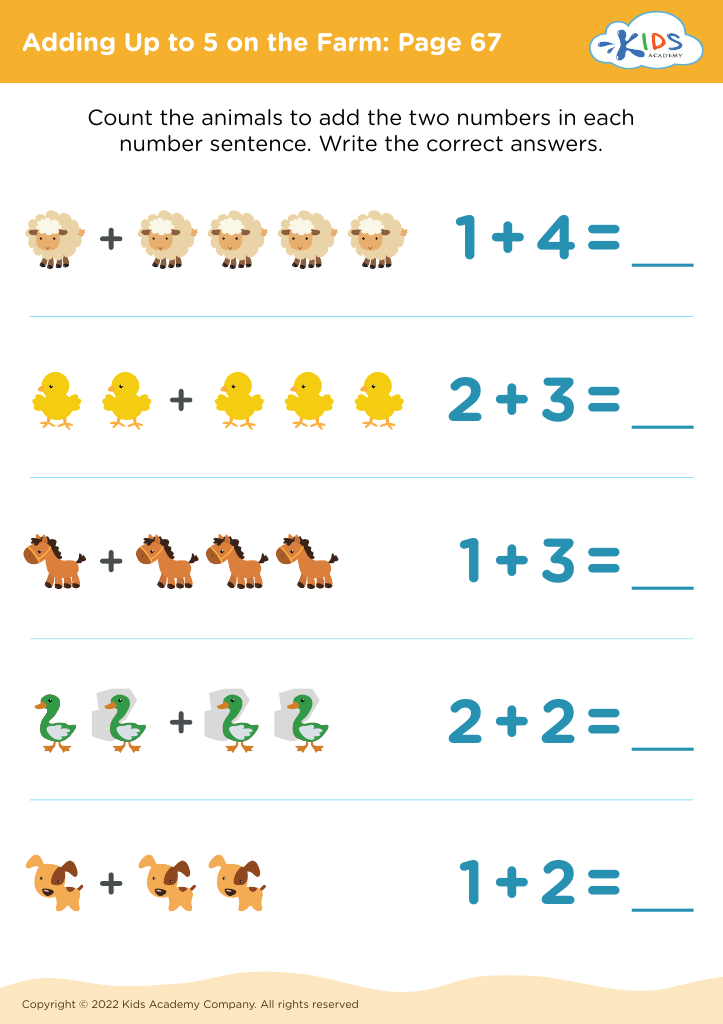
Adding Up to 5 on the Farm: Page 67
Worksheet
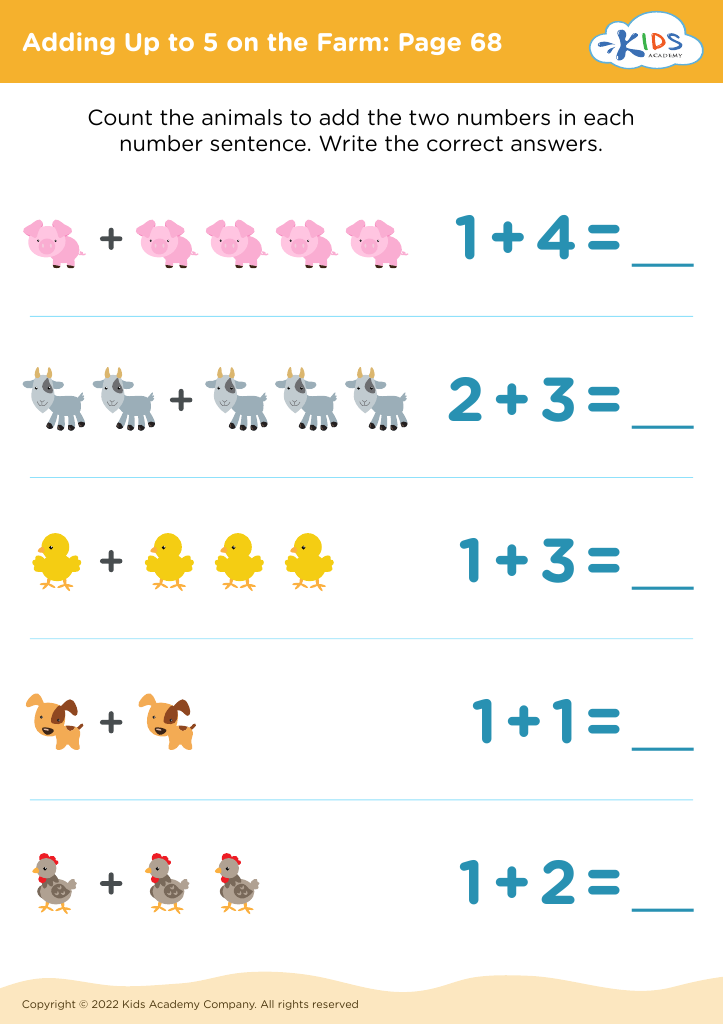
Adding Up to 5 on the Farm: Page 68
Worksheet
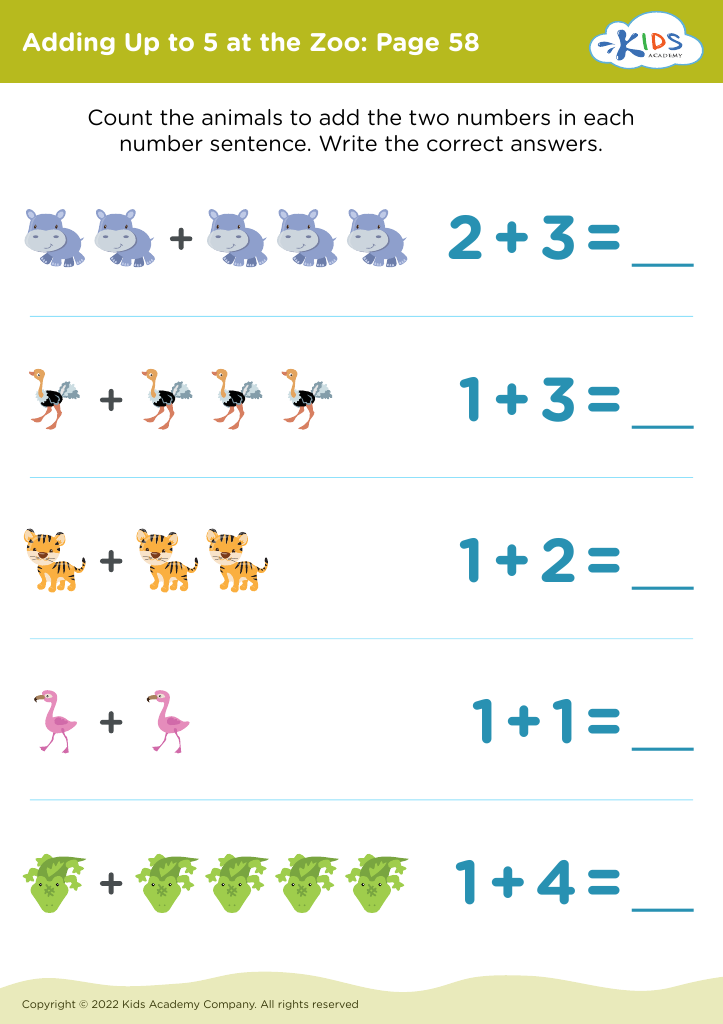
Adding Up to 5 at the Zoo: Page 58
Worksheet
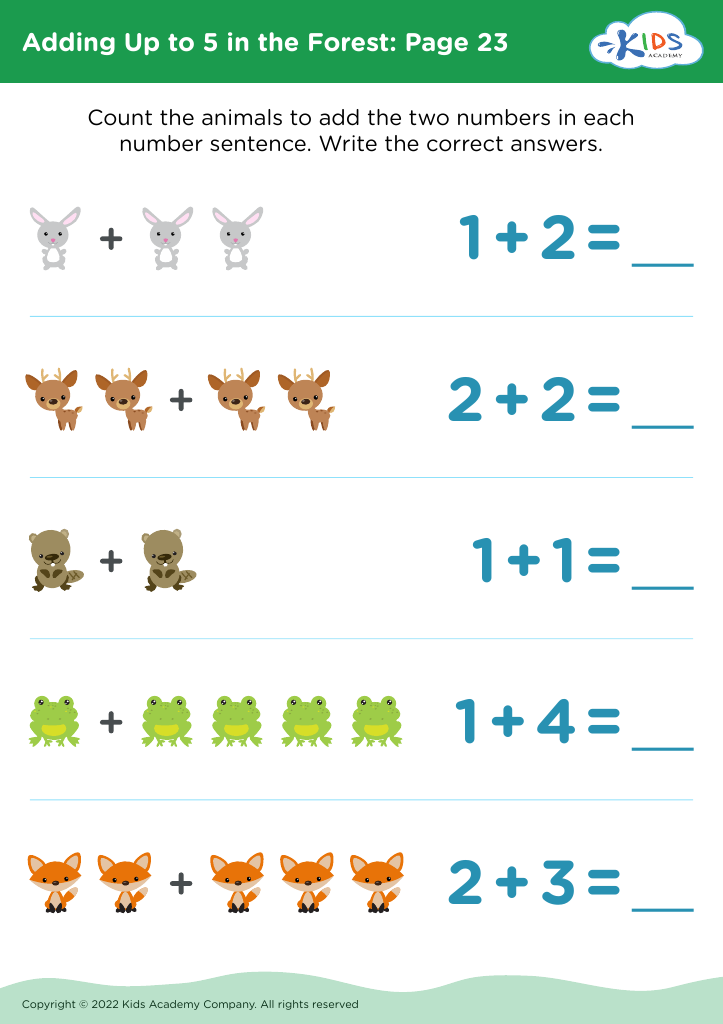
Adding Up to 5 in the Forest: Page 23
Worksheet
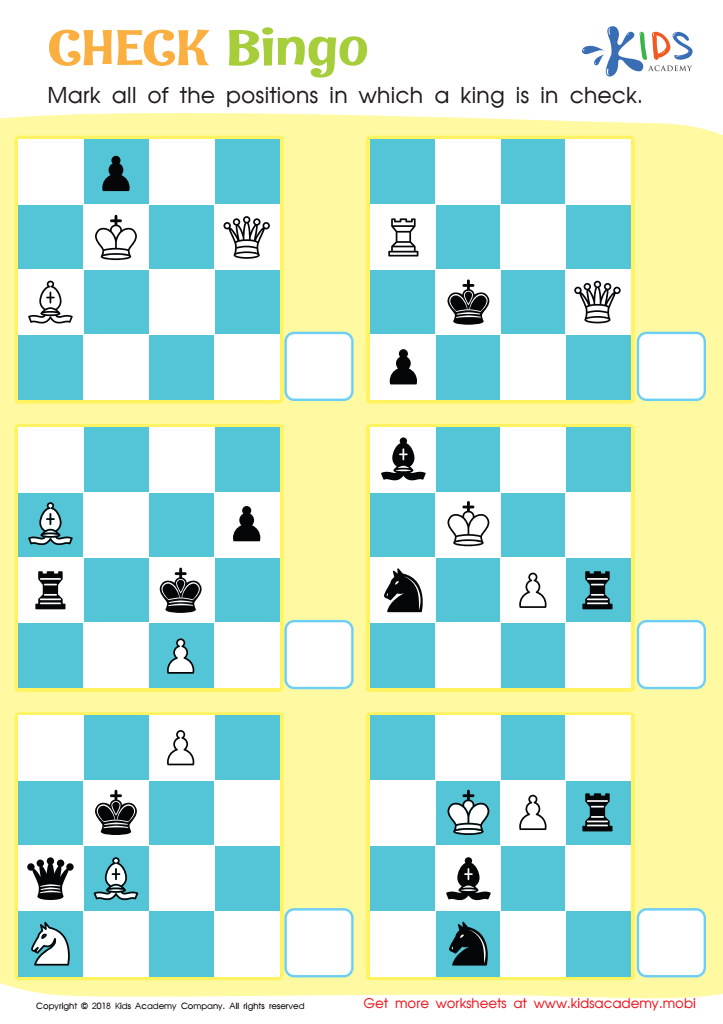
Check Bingo Worksheet


Check Bingo Worksheet

Chess helps young minds build critical thinking, problem-solving and logical reasoning skills. This free PDF worksheet is a fun way to teach these skills. It explains the concept of check and includes gameboards with kings in various positions. Students mark off the boards where a king isn't in check, and they're ready to move onto checkmate!
Check Bingo Worksheet

Worksheet
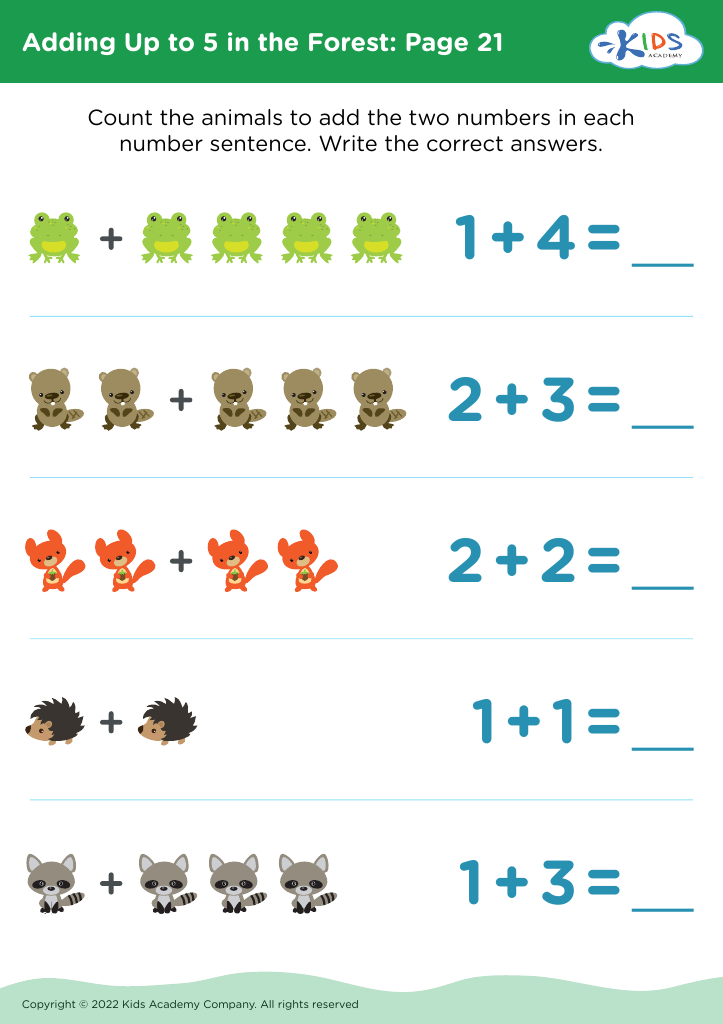
Adding Up to 5 in the Forest: Page 21
Worksheet
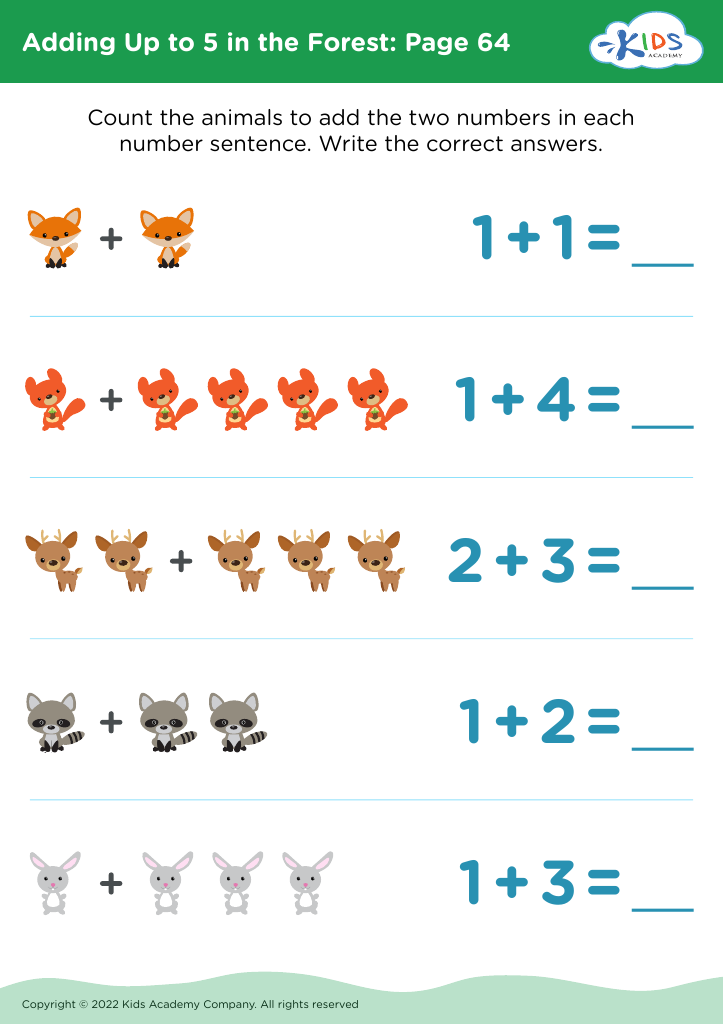
Adding Up to 5 in the Forest: Page 64
Worksheet
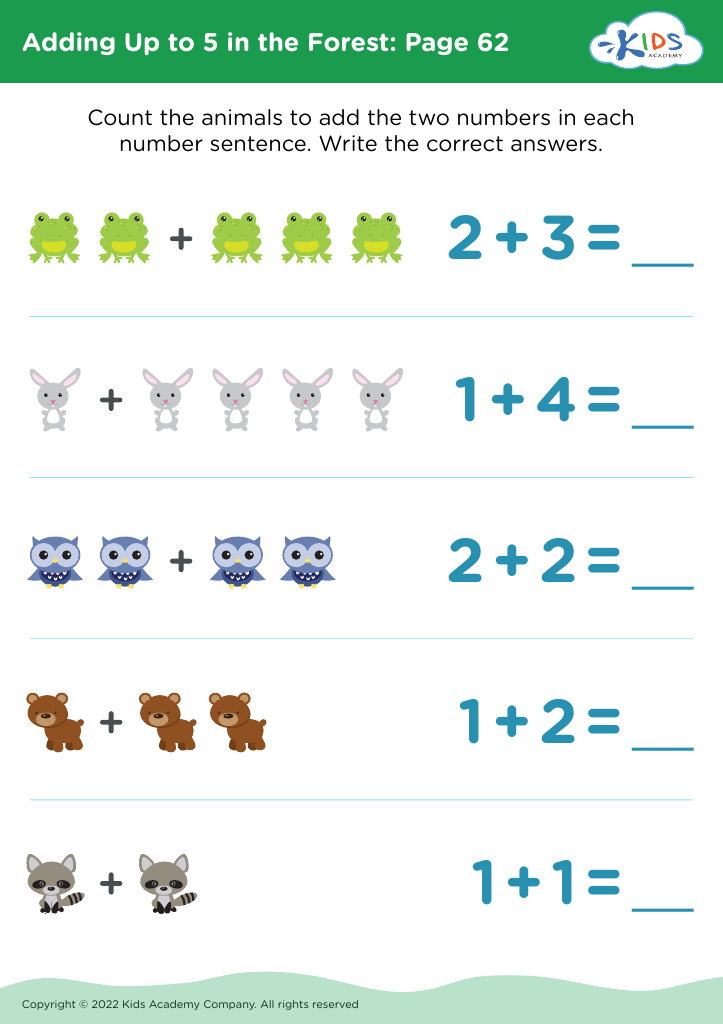
Adding Up to 5 in the Forest: Page 62
Worksheet
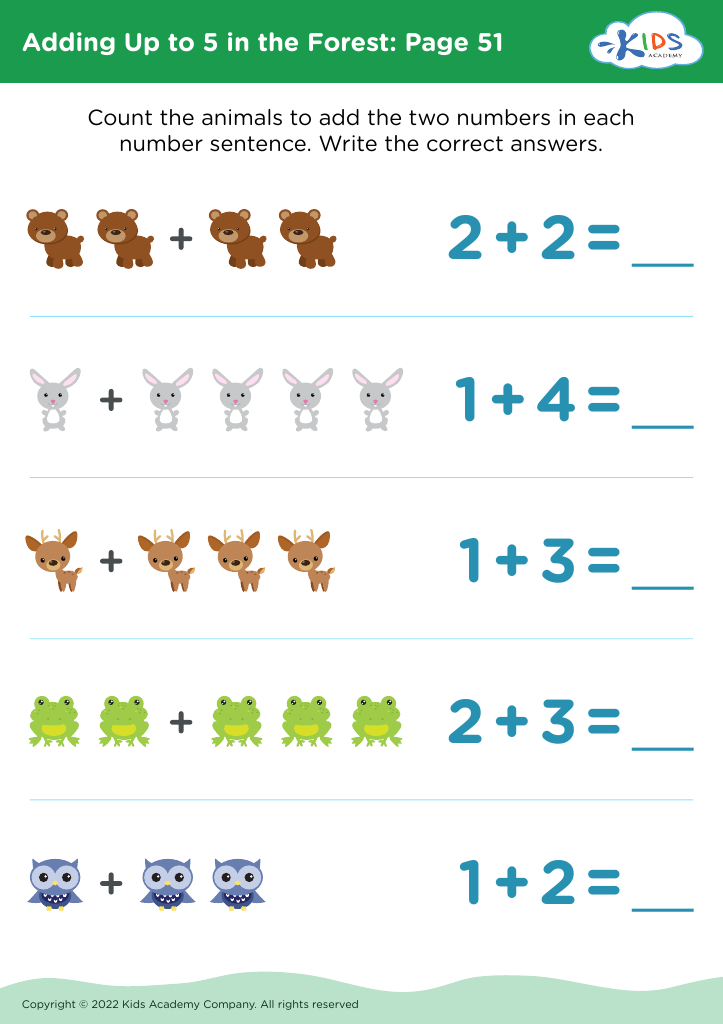
Adding Up to 5 in the Forest: Page 51
Worksheet
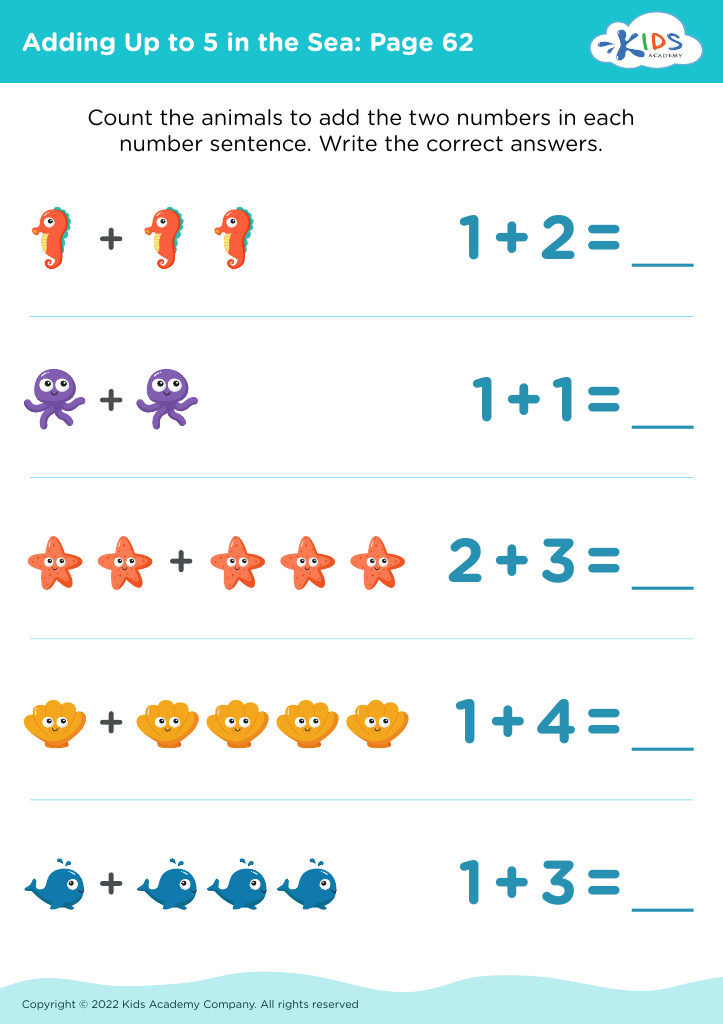
Adding Up to 5 in the Sea: Page 62
Worksheet
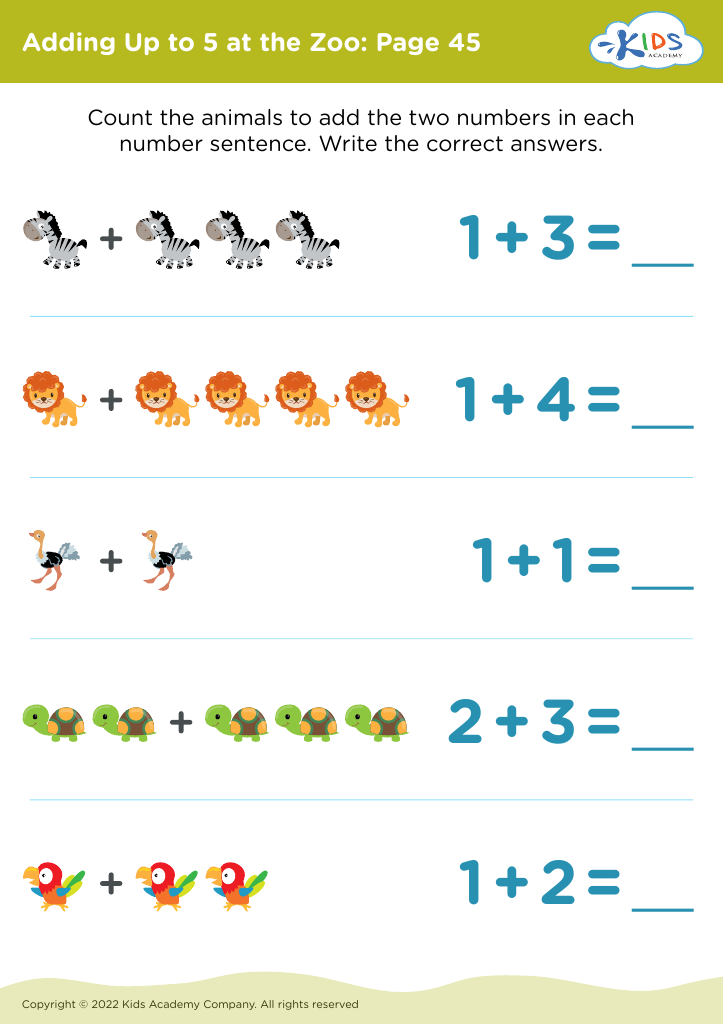
Adding Up to 5 at the Zoo: Page 45
Worksheet
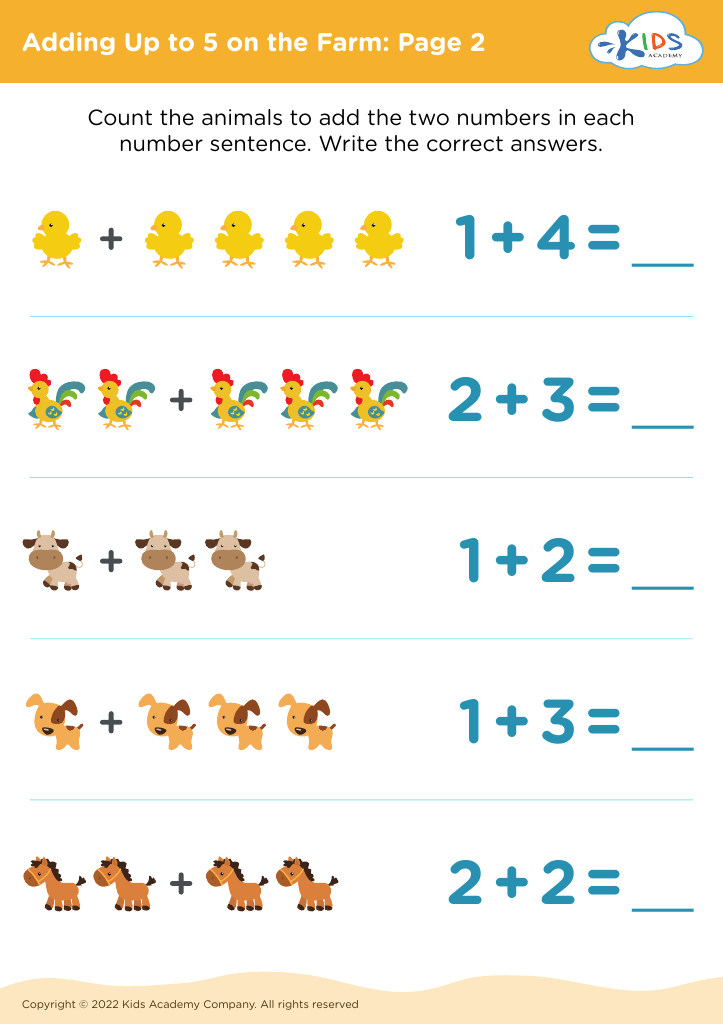
Adding Up to 5 on the Farm: Page 2
Worksheet
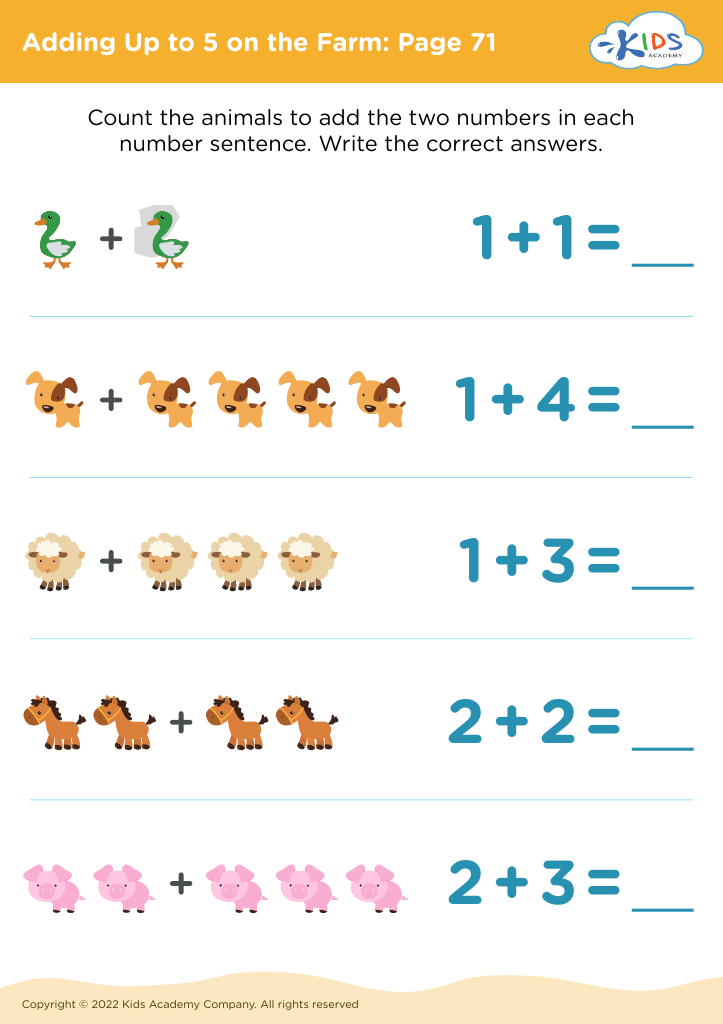
Adding Up to 5 on the Farm: Page 71
Worksheet
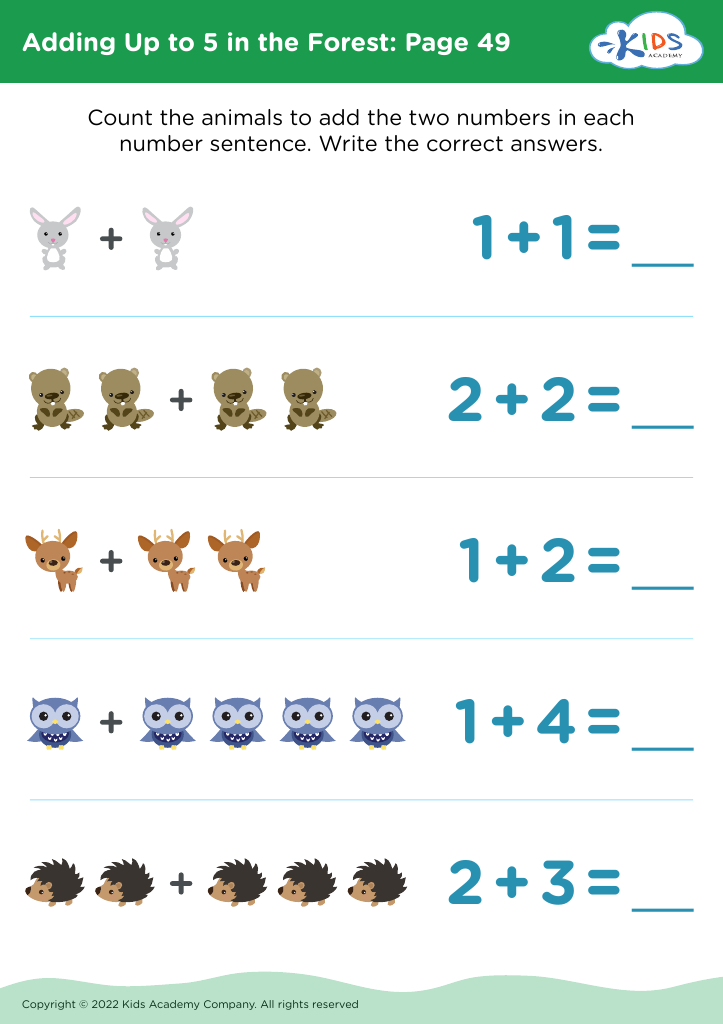
Adding Up to 5 in the Forest: Page 49
Worksheet


Basic addition skills are foundational to a child's overall mathematical development and critical for their future academic success. For children aged 4-8, mastering addition is not just about numbers; it builds the confidence and cognitive skills necessary for more complex concepts later on. Early math skills are linked to numerous educational outcomes, including problem-solving abilities and logical reasoning.

Parents and teachers play crucial roles in nurturing these skills. Engaging in addition activities helps children learn to group, compare, and quantify—essential skills that extend beyond math. Through fun games, interactive lessons, and everyday situations like cooking or shopping, adults can creating a positive association with math, reducing anxiety around the subject.

Additionally, adding supportive communication with children about their learning reinforces their understanding and retention. Encouraging curiosity about numbers sparks a lifelong interest in mathematics, making kids better prepared for more advanced topics.

Ultimately, focusing on basic addition skills equips children with the tools to navigate their daily lives while fostering a love for learning that will benefit them in all subjects. Teachers and parents should invest effort into nurturing these early skills to ensure children face future challenges with resilience and a solid foundation.