Basic geometry comprehension Worksheets for Ages 4-8
3 filtered results
-
From - To
Explore our engaging Basic Geometry Comprehension Worksheets designed specifically for children ages 4 to 8! These interactive resources introduce young learners to essential geometric concepts like shapes, sizes, and spatial understanding through fun activities that promote critical thinking. Our worksheets support development in visual recognition and logical reasoning, making learning enjoyable and effective. Each activity is crafted to align with educational standards, ensuring that children build a strong foundation in geometry. Perfect for home or classroom use, these worksheets encourage creativity and exploration in the world of shapes. Start building your child's mathematical confidence today with our basic geometry worksheets!
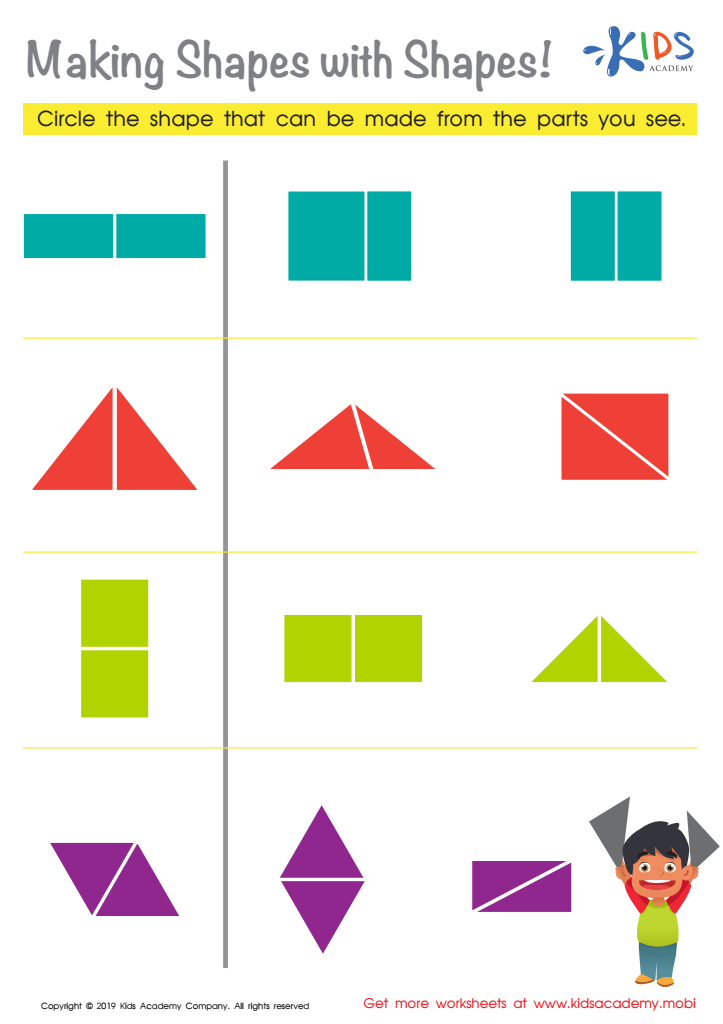
Making Shapes with Shapes Worksheet
 Assign to My Students
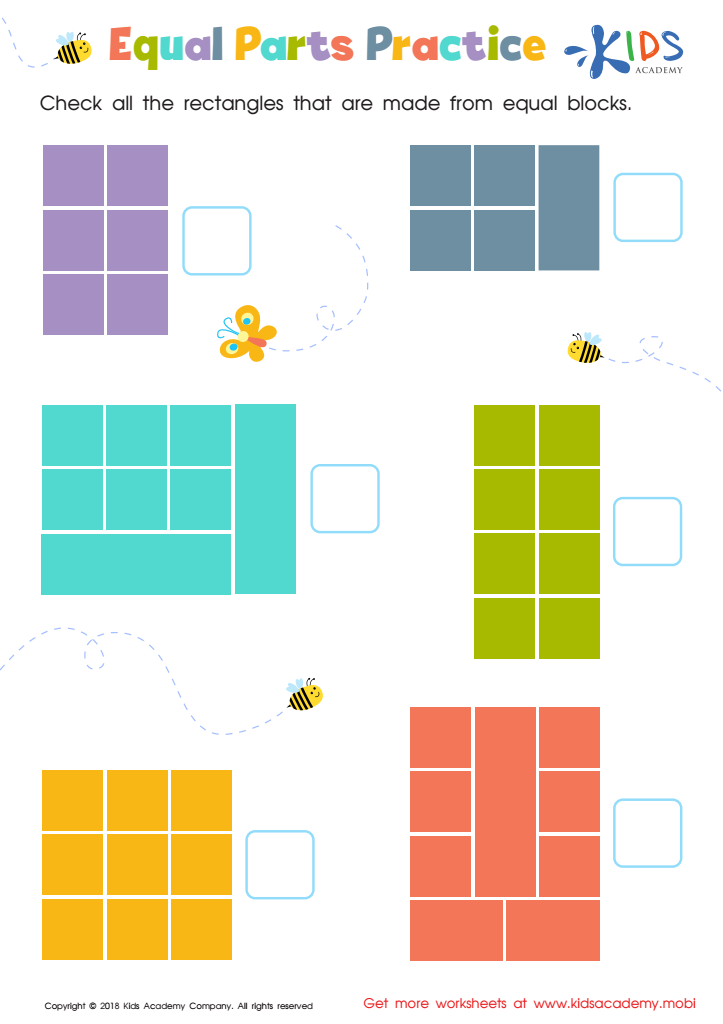
Equal Parts Practice Worksheet








Basic geometry comprehension for ages 4-8 forms a crucial foundation for a child's overall mathematical understanding and cognitive development. At this early stage, children begin to recognize shapes, understand spatial relationships, and engage in problem-solving through hands-on exploration. By learning basic geometric concepts, children enhance their ability to describe and categorize the world around them, empowering them to make sense of their environment.
Parents and teachers play a critical role in nurturing this comprehension, as early exposure to geometry promotes logical reasoning and critical thinking skills. Kids who understand geometric concepts exhibit improved performance in higher mathematics later in academic life. Moreover, mastering shapes and spatial awareness aids in activities such as reading, art, and even science, promoting a well-rounded education.
Encouraging exploration with geometric shapes via play, constructing objects, or engaging in art helps children form connections and retain knowledge more effectively. With geometry literacy, children not only develop specific mathematical skills but also cultivate persistence, curiosity, and an appreciation for logic that translates into other learning areas. Thus, prioritizing basic geometry comprehension in untangling a child’s educational journey empowers them with essential life skills and confidence in their academic pursuits.








