Unlock your child's mathematical potential with our Basic Math Understanding Worksheets, specially designed for ages 4 to 8! These engaging and interactive worksheets will help young learners grasp essential math concepts, including counting, addition, subtraction, and simple problem-solving. Each worksheet features fun illustrations and age-appropriate challenges that make learning enjoyable and effective. Parents and educators can easily use these printable resources to maintain children's interest and curiosity in mathematics. Encourage your child's confidence in numbers and watch them progress from basic counting to more complex operations. Start your child’s math journey today with our thoughtfully crafted worksheets!

Check out this FREE "Basic Math understanding" Trial Lesson for age 4-8!

Count up to 5 Objects

Favorites
With answer key
Interactive
  • 4-8
  • Basic Math understanding
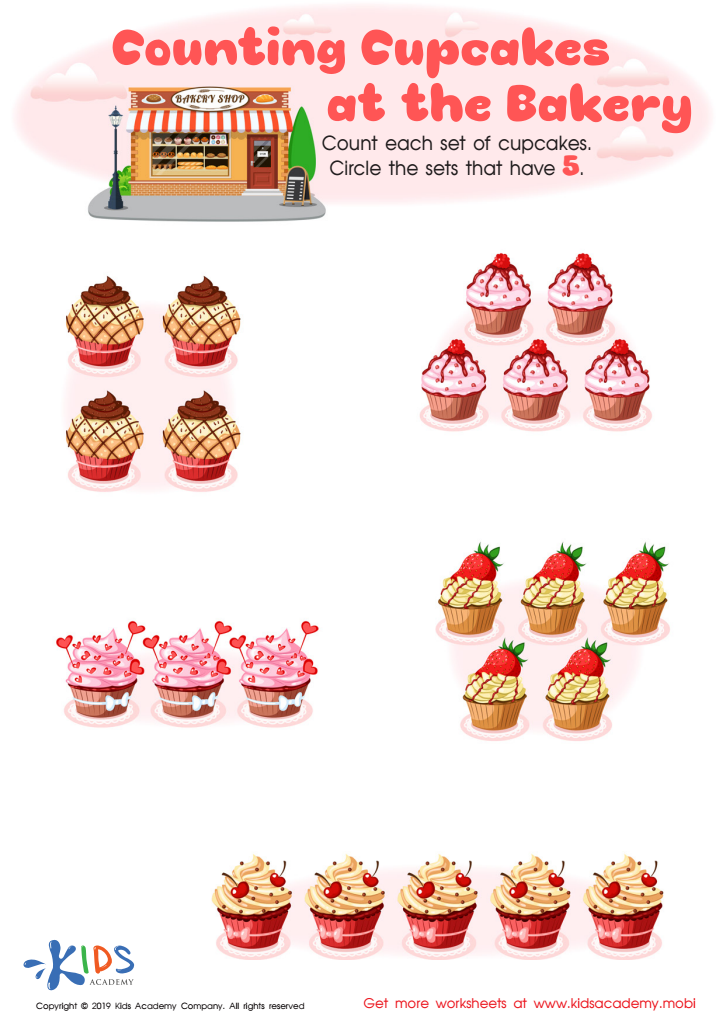
Counting Cupcakes Worksheet Preview

Counting Cupcakes Worksheet

This fun worksheet for preschoolers uses cupcakes to teach counting. Kids must circle the groups of cupcakes that add up to 5. The delicious treats make learning fun and engaging!
Counting Cupcakes Worksheet
Worksheet
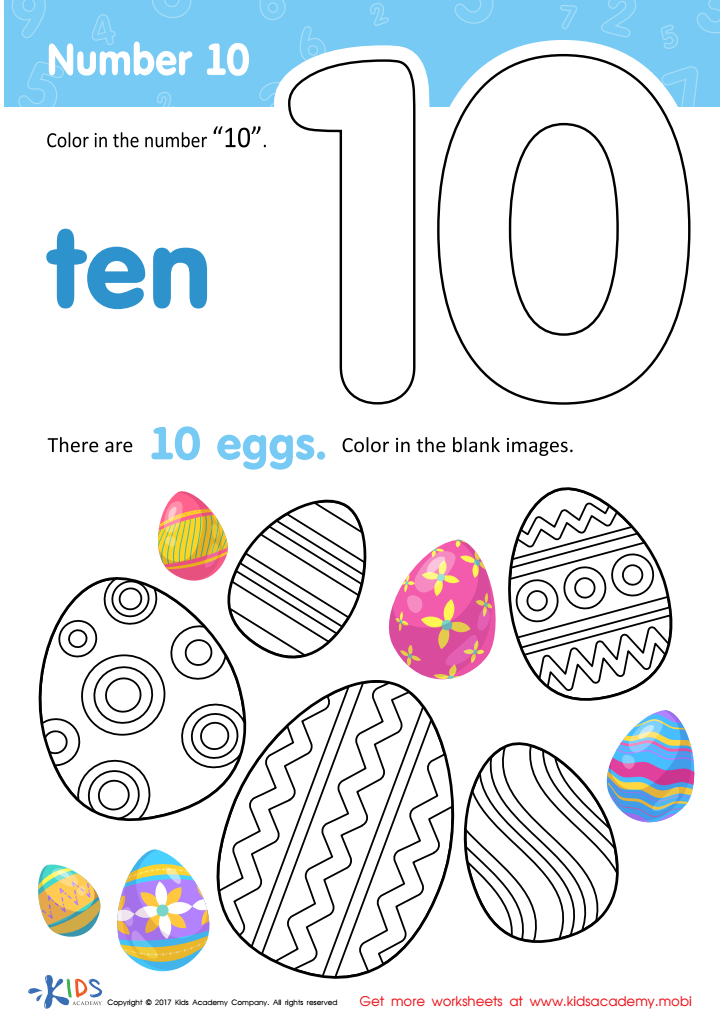
Coloring Page: Number 10

Number 10 Printable

Easter eggs are a great way to combine creativity and learning! Help your child explore the number 10 with our fun coloring page. The intricate designs will spark their imagination and fuel their artistic side, while they practice important numeracy basics. Get creative with eggs and enjoy the fun, no matter the time of year!
Download (PDF)
Assign to My Students
Number 10 Printable
Worksheet
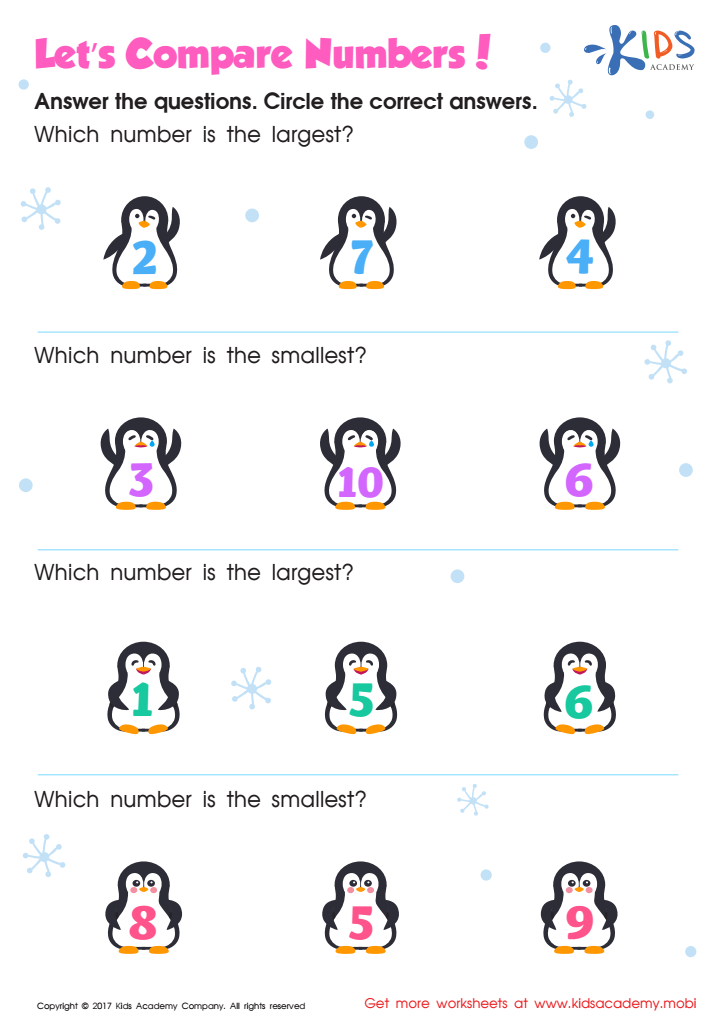
Comparing numbers 1-10 worksheet kindergarten

Comparing Numbers 1–10 Worksheet Kindergarten
Help your child sort out numbers 1-10 with this fun worksheet! They'll practice comparing numbers and boost their number sense. Plus, it features cute little penguins with numbers on their bellies - they make learning even more exciting!
Comparing Numbers 1–10 Worksheet Kindergarten
Worksheet
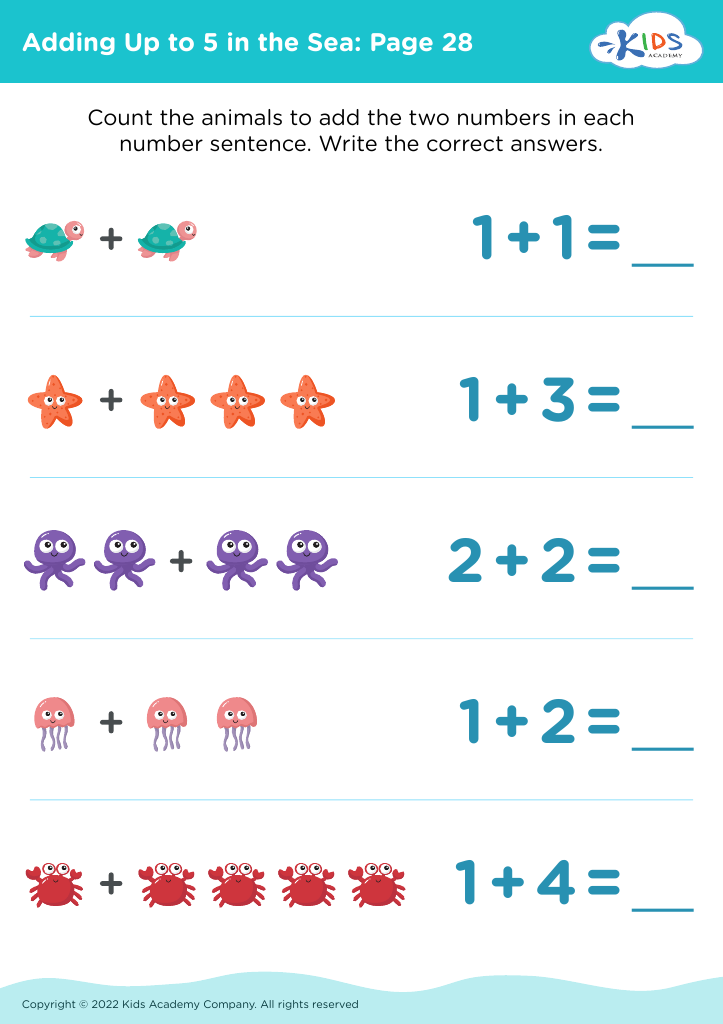
Adding Up to 5 in the Sea: Page 28
Worksheet
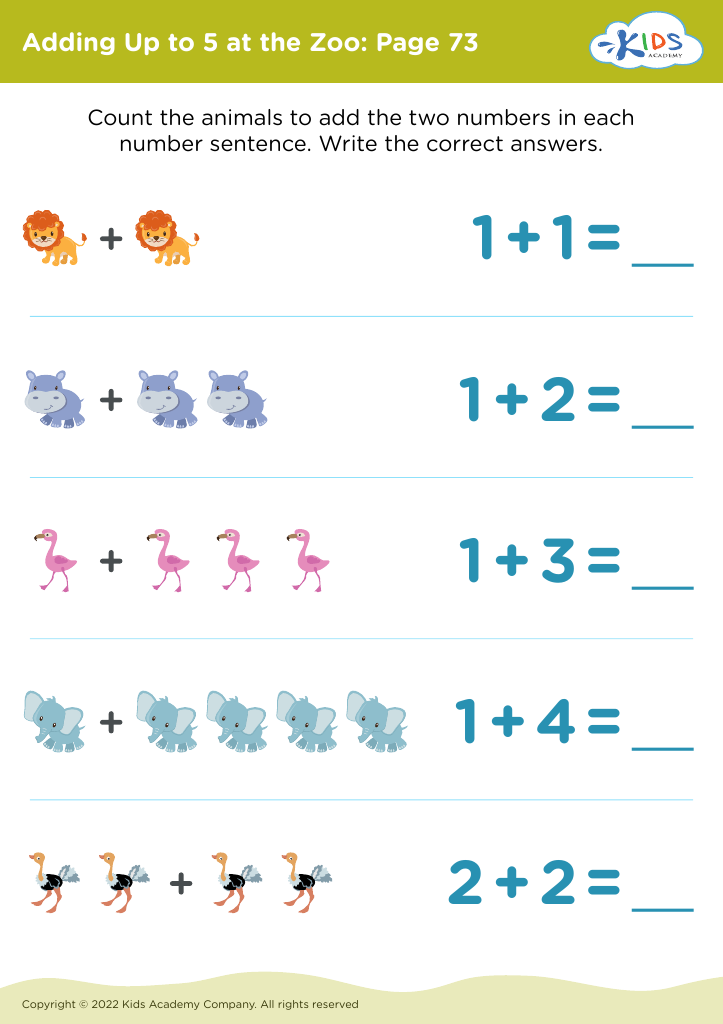
Adding Up to 5 at the Zoo: Page 73
Worksheet
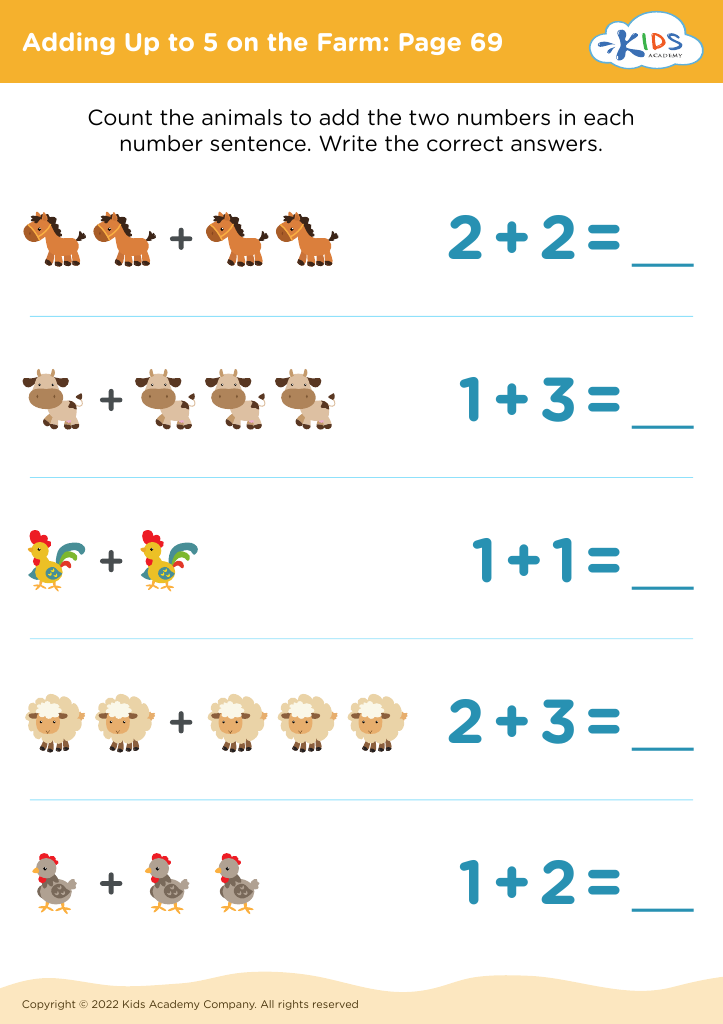
Adding Up to 5 on the Farm: Page 69
Worksheet
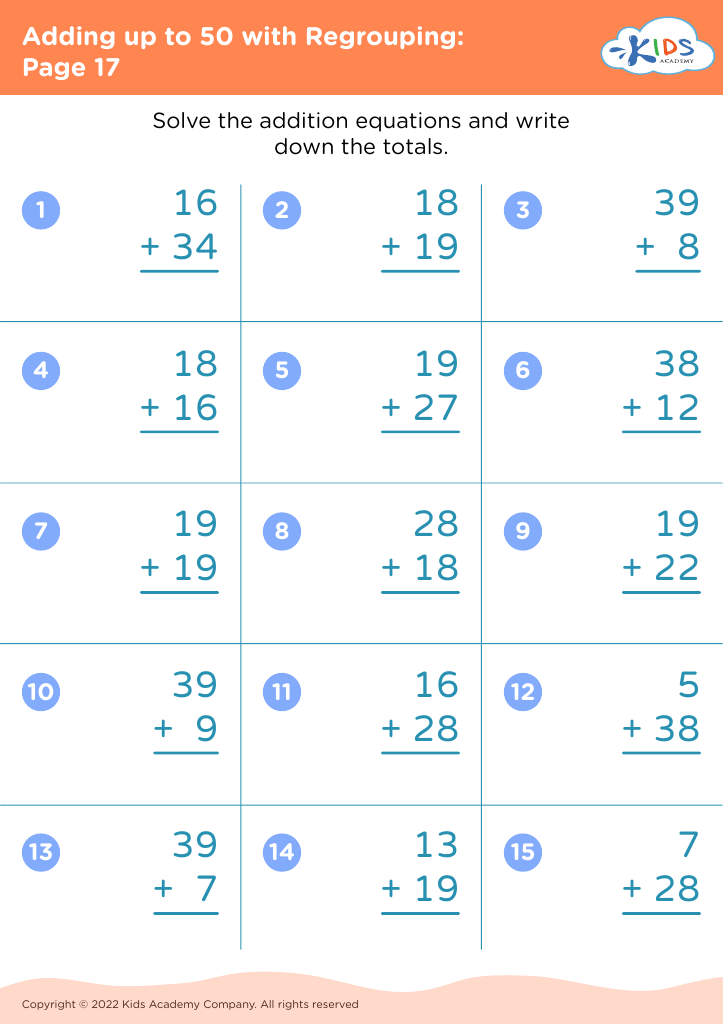
Adding up to 50 with Regrouping: Page 17
Worksheet
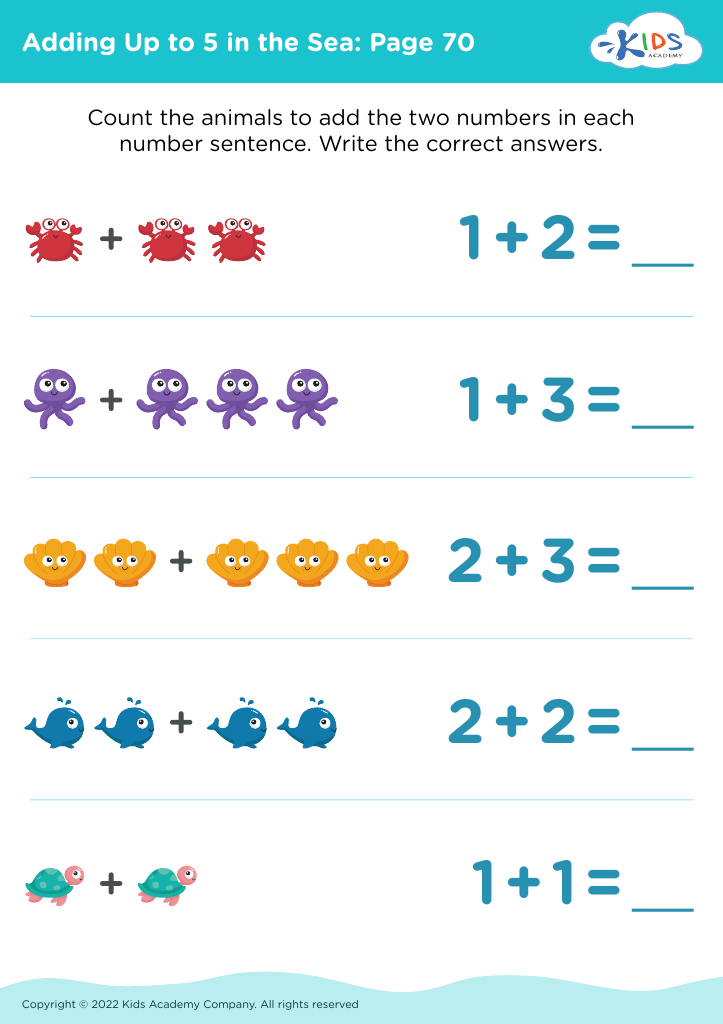
Adding Up to 5 in the Sea: Page 70
Worksheet
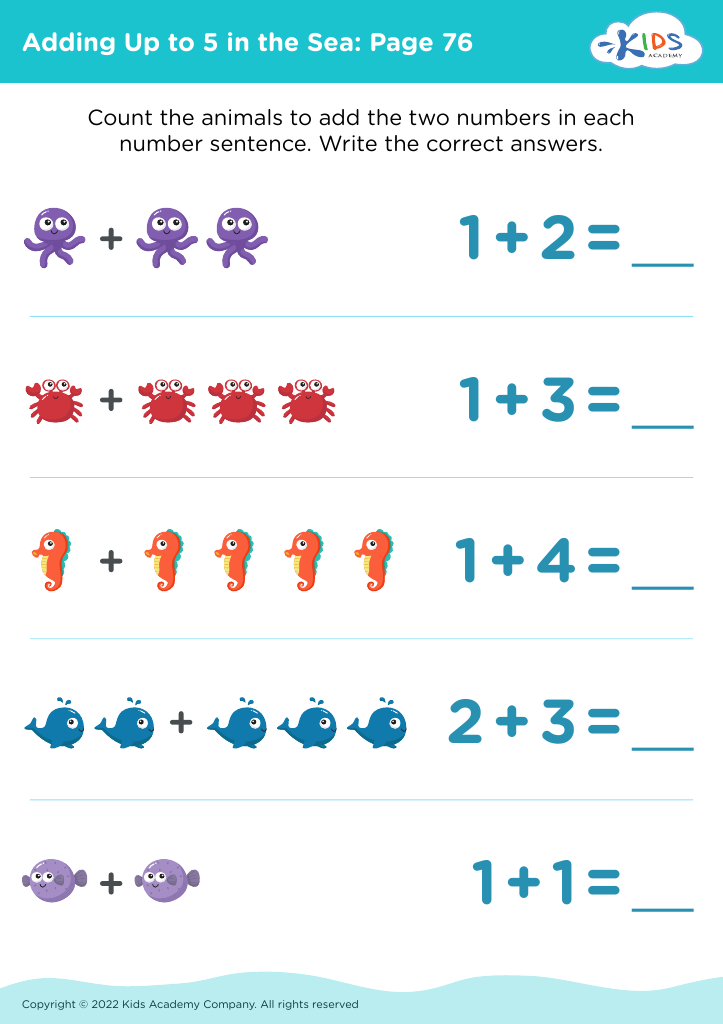
Adding Up to 5 in the Sea: Page 76
Worksheet
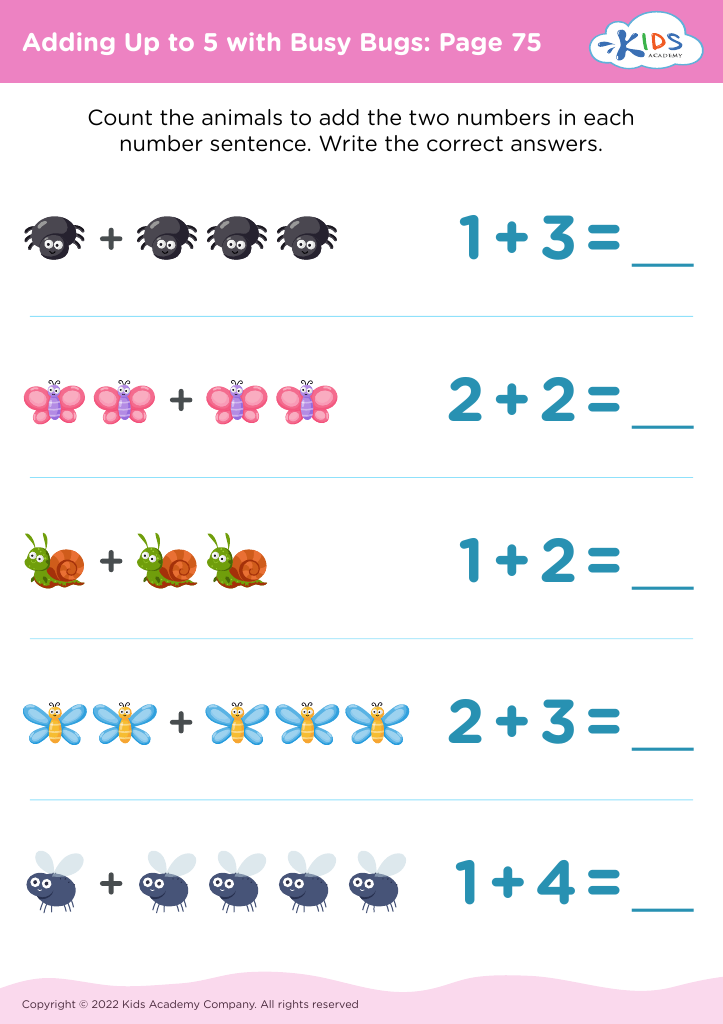
Adding Up to 5 with Busy Bugs: Page 75
Worksheet
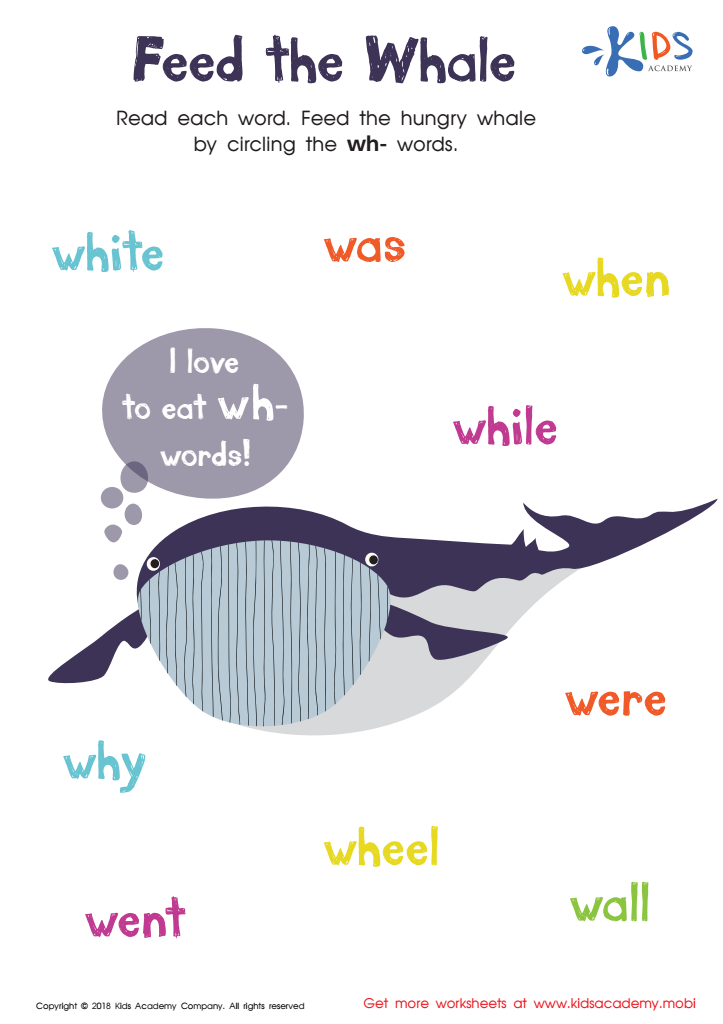
Feed the Whale Worksheet

Feed the Whale Worksheet

Help your early reader build beginning consonant and blend recognition with this fun whale worksheet! They'll feed the whale wh- words, circle sight words, and build fine motor skills—all while discriminating between differently colored words.
Feed the Whale Worksheet
Worksheet
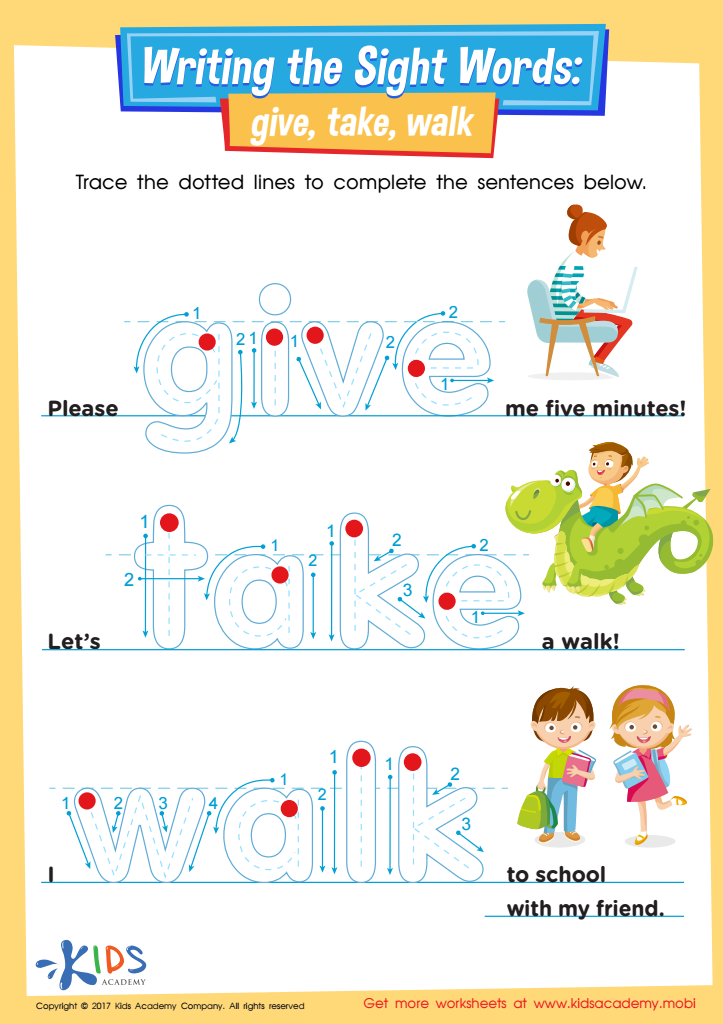
Sight Words: Give, Take, Walk

Give, Take, Walk Printable Sight Words Worksheet
Reading aids writing development: this worksheet has your child read sentences and write three sight words: give, take, and walk. It's a great way to strengthen writing skills.
Give, Take, Walk Printable Sight Words Worksheet
Worksheet
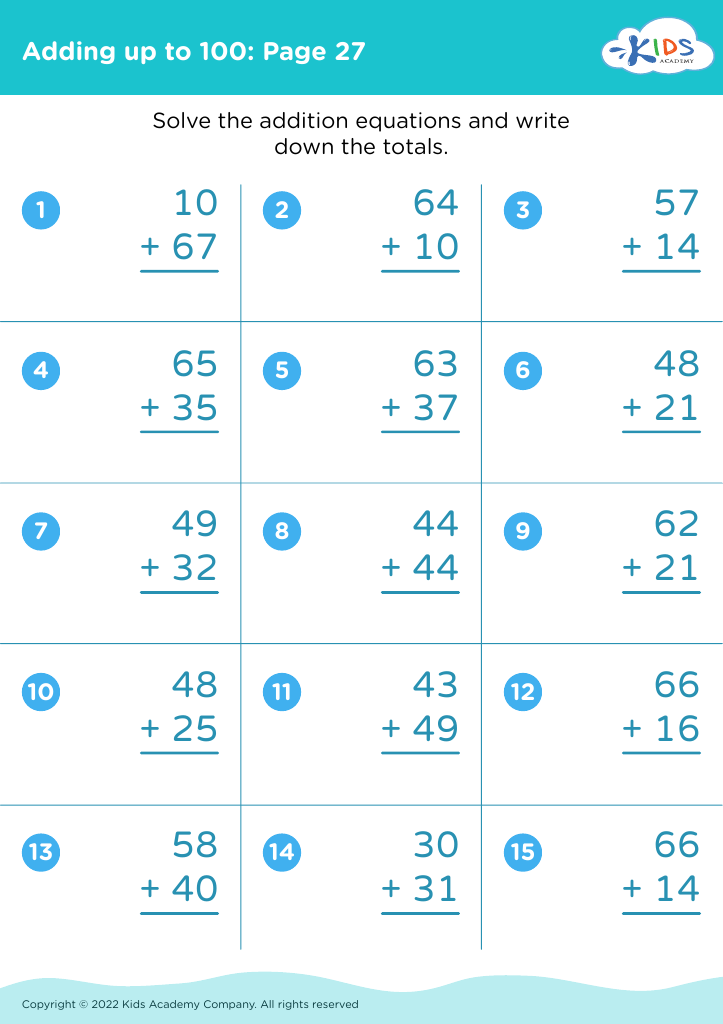
Adding up to 100: Page 27

Adding up to 100: Page 27

Adding up to 100: Page 27
Worksheet
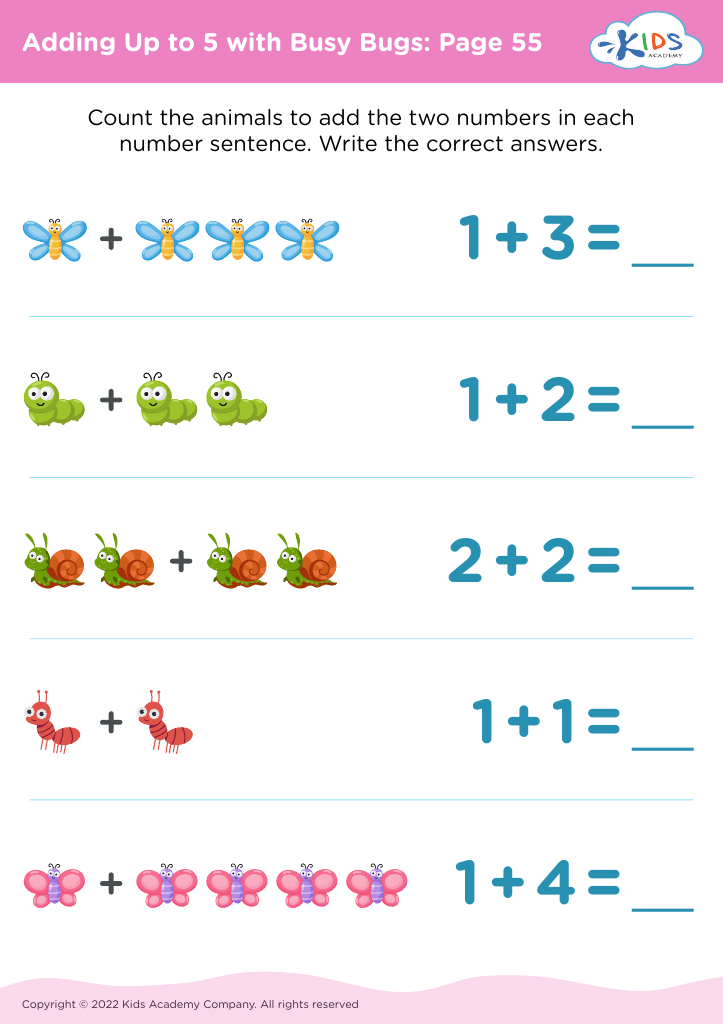
Adding Up to 5 with Busy Bugs: Page 55
Worksheet


Basic math understanding for ages 4-8 is crucial for several reasons. At this pivotal stage, children's brains are rapidly developing, and introducing foundational math concepts can significantly enhance cognitive skills. Engaging with numbers helps children build critical thinking and problem-solving abilities, laying the groundwork for more advanced mathematical concepts later on.

Moreover, early math skills are closely linked to success in later academic performance. Studies show that a solid grasp of basic math correlates with improved proficiency in both math and literacy skills. This foundational understanding fosters confidence, as children learn to manipulate numbers and understand relationships, contributing to a positive attitude toward learning.

Encouraging a love for math also helps combat anxiety and negative perceptions associated with the subject. When parents and teachers actively engage children in fun, age-appropriate math activities, they counteract stereotypes that math is difficult or unapproachable. By nurturing early math understanding, we equip children with essential life skills, such as budgeting and critical decision-making. Ultimately, prioritizing math education during these formative years is vital, as it shapes not only academic success but also equips children to navigate a world increasingly driven by data and technology.