Basic problem-solving Worksheets for Ages 4-8
3 filtered results
-
From - To
Welcome to our Basic Problem-Solving Worksheets for Ages 4-8! Designed to foster critical thinking and enhance logical reasoning, these engaging worksheets offer young learners a fun way to develop essential problem-solving skills. Each worksheet features age-appropriate puzzles and challenges that encourage creativity and critical thinking. Children will enjoy a variety of activities that promote number sense, pattern recognition, and spatial awareness. These worksheets are perfect for home and classroom use, making learning enjoyable and interactive. Equip your child with the confidence to tackle challenges independently while nurturing their investigative skills and curiosity. Get started today and watch their problem-solving abilities flourish!
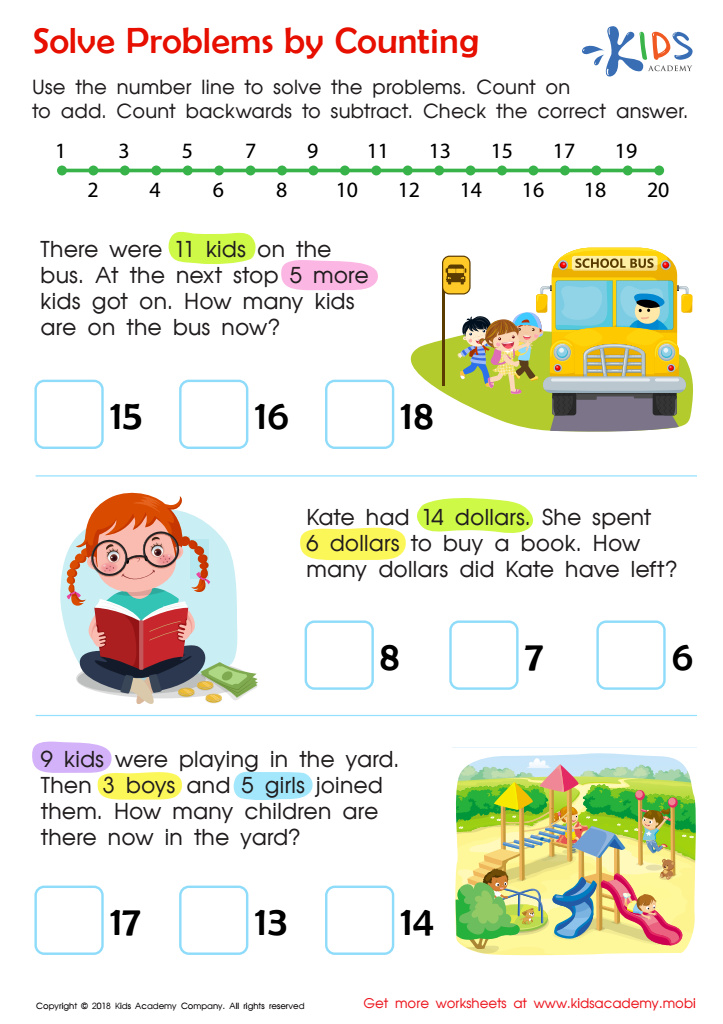
Solve Problems by Counting Worksheet
 Assign to My Students
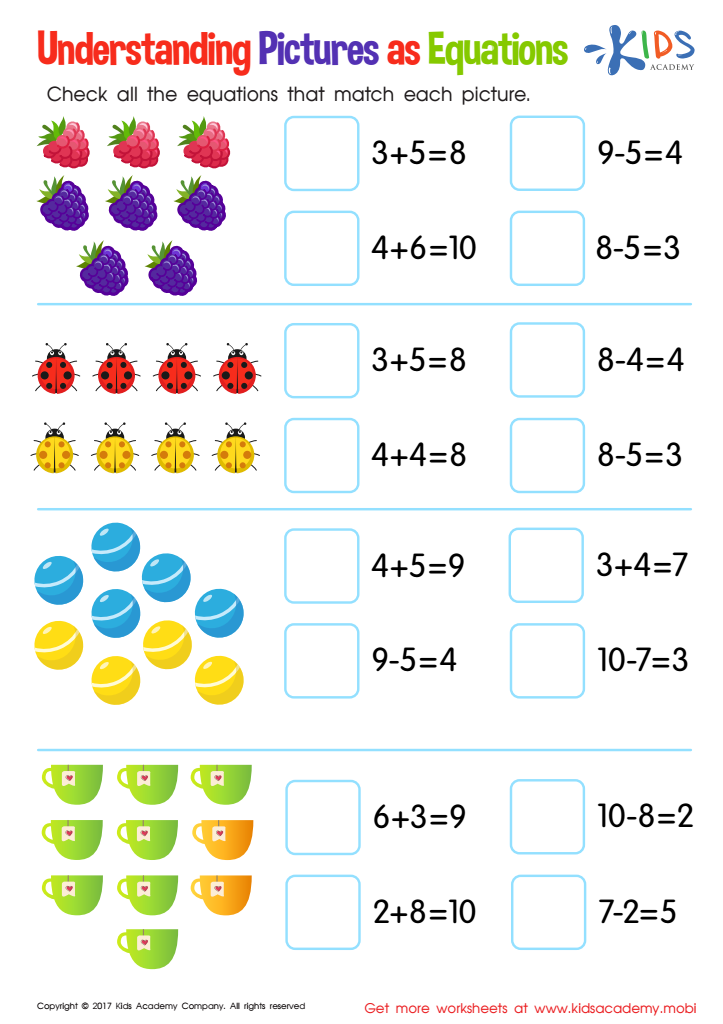
Understanding Pictures as Equations Worksheet
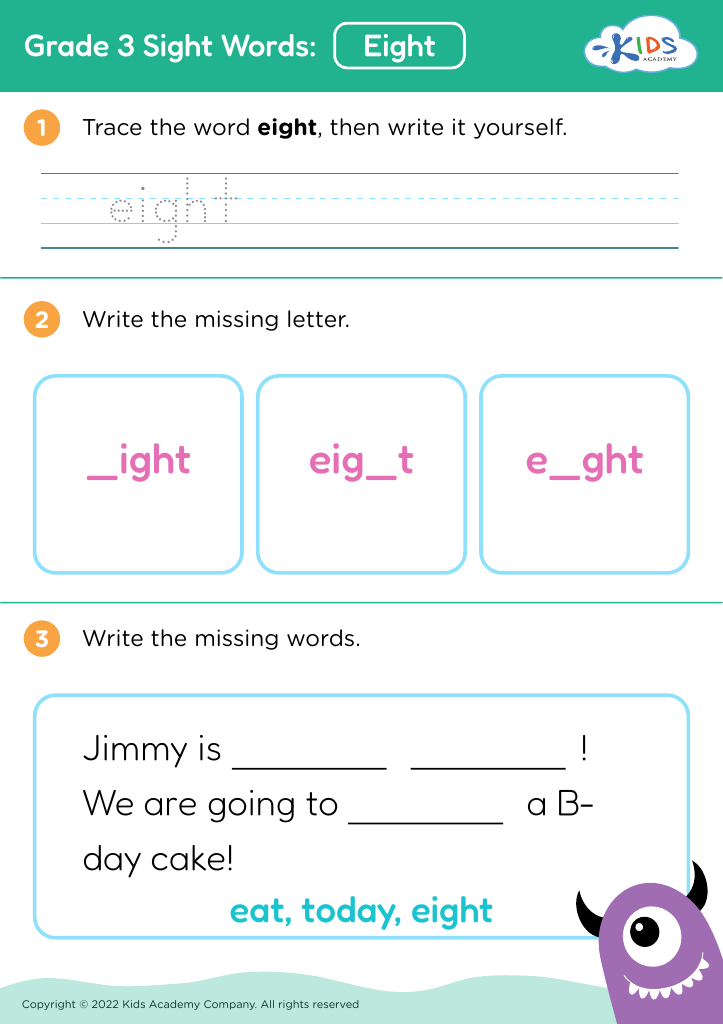



.jpg)


Basic problem-solving skills are crucial for children ages 4 to 8 as they lay the foundation for lifelong learning and cognitive development. During these formative years, children are naturally curious and eager to explore their environment. By nurturing problem-solving abilities, parents and teachers can foster critical thinking, creativity, and resilience in young learners, equipping them with the tools to navigate challenges effectively.
Engaging children in problem-solving activities enhances their cognitive skills, such as reasoning, decision-making, and logical thinking. These skills enable children to identify issues, brainstorm solutions, test their ideas, and evaluate outcomes, promoting a proactive approach to challenges. Additionally, problem-solving fosters social-emotional development, teaching children to manage frustration, collaborate with peers, and develop confidence in their abilities.
Early exposure to problem-solving also prepares children for academic success. As they learn to tackle simple math problems or navigate social interactions, they build a strong foundation for more complex challenges in the future. Ultimately, encouraging problem-solving strategies empowers children to become independent thinkers and lifelong learners, enabling them to tackle the complexities of life with optimism and critical understanding. Therefore, parents and teachers should prioritize problem-solving during these pivotal years.








