Comparative skills Worksheets for Ages 4-8
3 filtered results
-
From - To
Nurture early learning with our engaging Comparative Skills Worksheets for Ages 4-8. Designed by educational experts, these worksheets offer fun, interactive activities to help young learners grasp concepts like bigger vs. smaller, taller vs. shorter, and heavier vs. lighter. Tailored to enhance critical thinking and problem-solving abilities, our vibrant printables make it easy and enjoyable for kids to understand comparisons and build foundational math skills. Perfect for home or classroom use, these resources foster confidence and cognitive development in a creative, student-friendly way. Elevate your child's educational journey with our dynamic comparative skills worksheets!
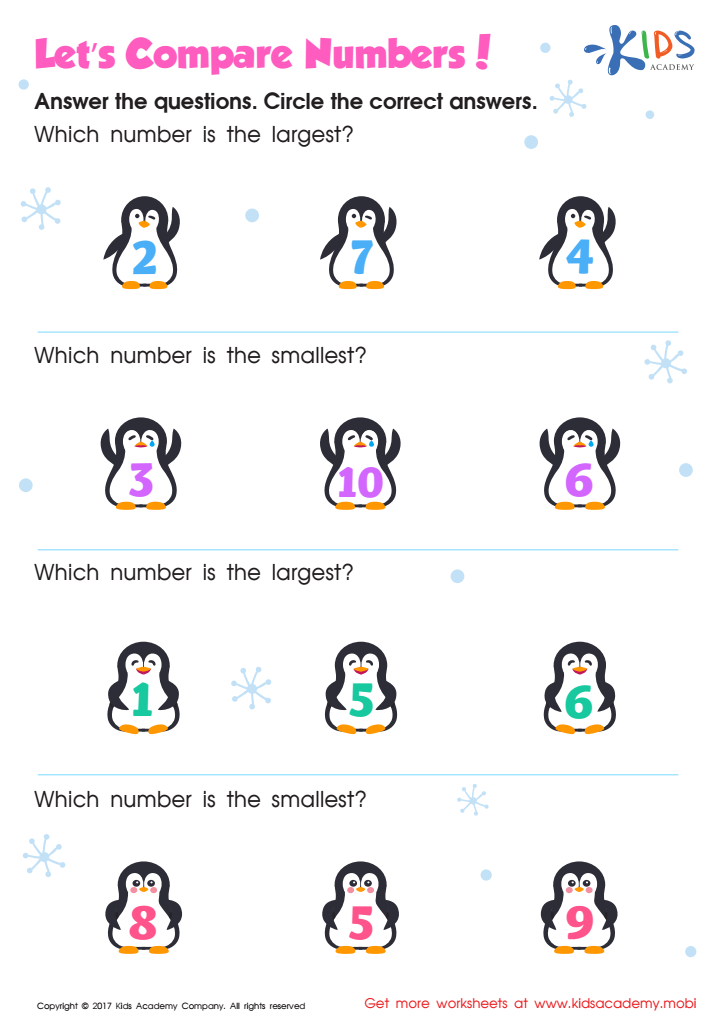
Comparing Numbers 1–10 Worksheet Kindergarten
 Assign to My Students
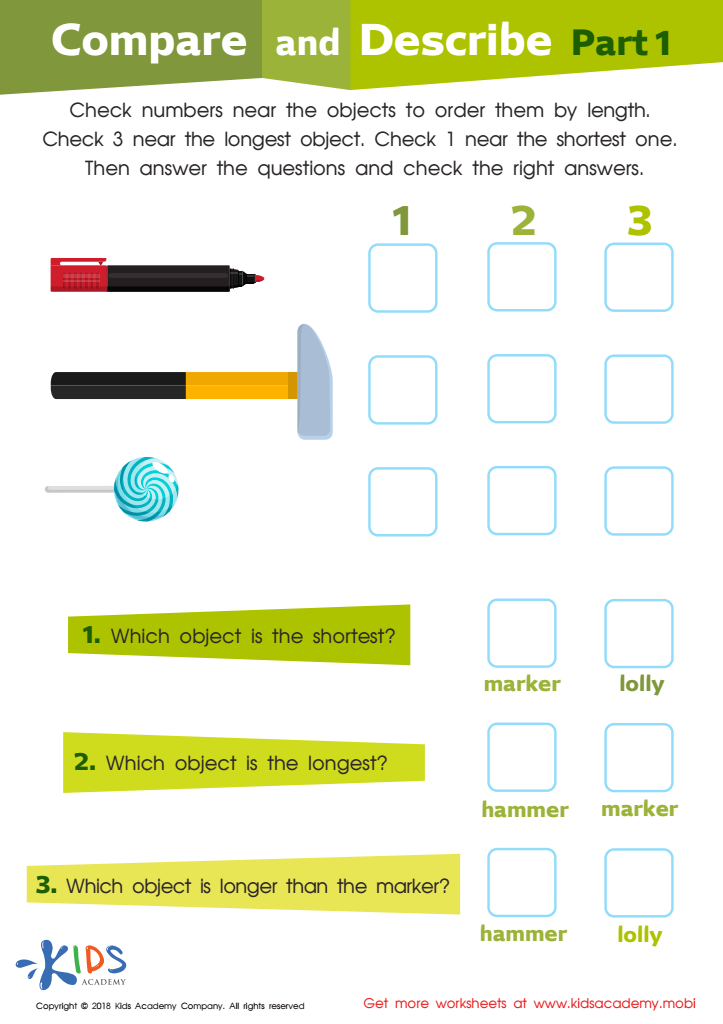
Compare and Describe: Part 1 Worksheet
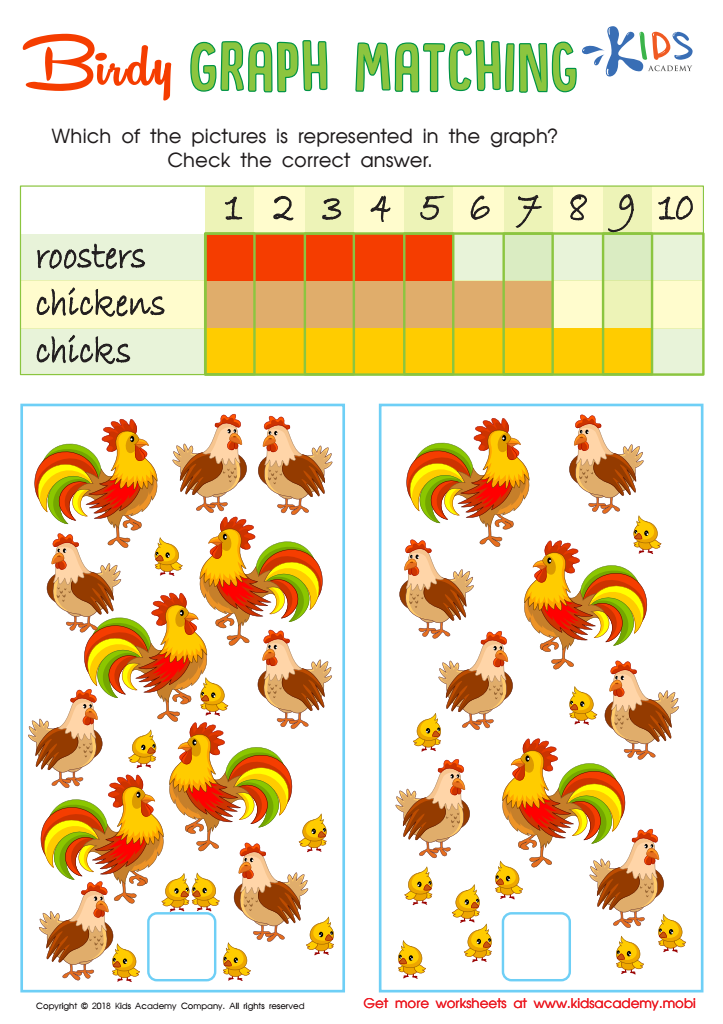
Birdy Graph Matching Worksheet








Comparative skills are essential for children ages 4-8 as they form the foundation for critical cognitive development, encompassing areas such as mathematics, language, and social understanding. By learning to compare objects, numbers, and even ideas, kids sharpen their analytical thinking and problem-solving abilities. For instance, understanding the concept of "bigger vs. smaller" or "more vs. less" provides a basis for early math lessons, crucial for future academic achievement.
Language development is also enhanced through comparative skills. When children learn to articulate differences and similarities, they expand their vocabulary and communication abilities. For example, describing why one story character is happier than another cultivates emotional intelligence and empathy, crucial for social interactions and relationship building.
Moreover, these skills lay the groundwork for scientific inquiry. Asking questions like "How are these rocks different?" cultivates a natural curiosity and nurturing a lifelong love of learning. Comparative reasoning helps children make sense of their world, leading to better decisions and fostering innovation.
Ultimately, by nurturing comparative skills, parents and teachers provide children with tools essential for holistic development, preparing them for more advanced concepts and strategies in their educational journey. Therefore, focusing on these skills supports a child's intellectual growth and success across multiple domains.








