
Developing analytical thinking Worksheets for Ages 4-8
6 filtered results
Difficulty Level
Grade
Age
-
From - To
Subject
Activity
Standards
Unlock your child's potential with our engaging analytical thinking worksheets designed for ages 4-8! These printable activities promote problem-solving skills, critical thinking, and logical reasoning through fun and interactive challenges. Perfect for home or classroom use, our worksheets feature colorful designs and varied tasks, encouraging young minds to analyze, compare, and think creatively. From puzzles to pattern recognition, each worksheet is crafted to enhance cognitive development and foster a love for learning. Help your child build a strong foundation in analytical skills while enjoying a delightful learning experience. Dive into our collection and watch your child's confidence soar!
Favorites
With answer key
Interactive
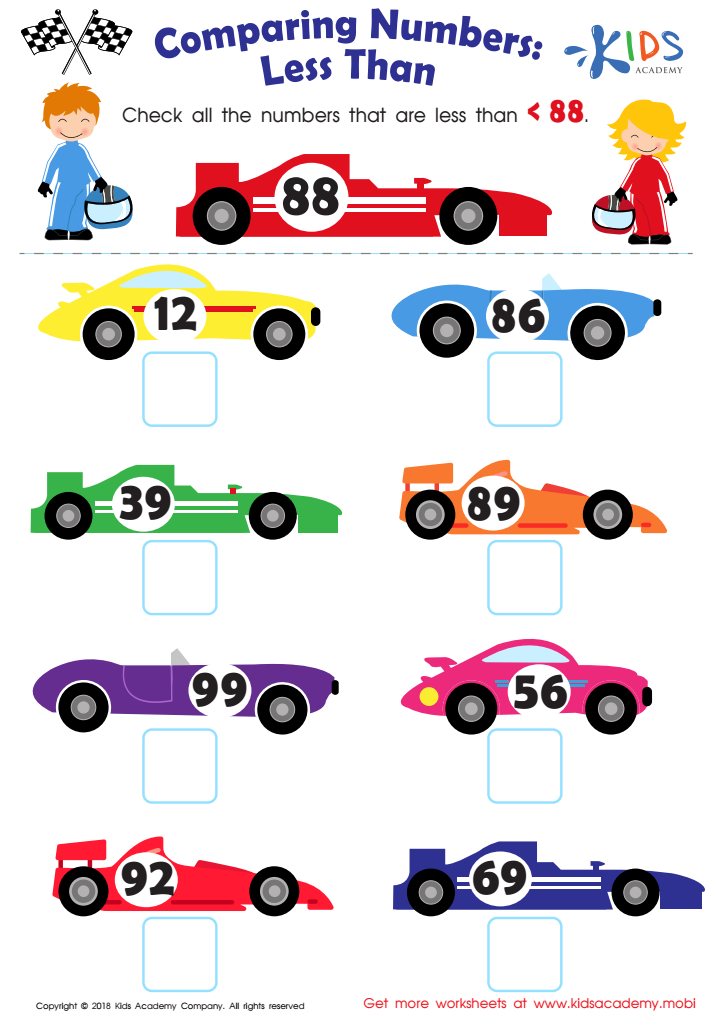
Less Than Worksheet
Compare numbers with your child using this fun worksheet! Paintings of sports cars add visuals to the task of counting up to 88. Make learning enjoyable with this colorful activity - your child will stay engaged and eager to learn more.
 Assign to My Students
Less Than Worksheet
Worksheet
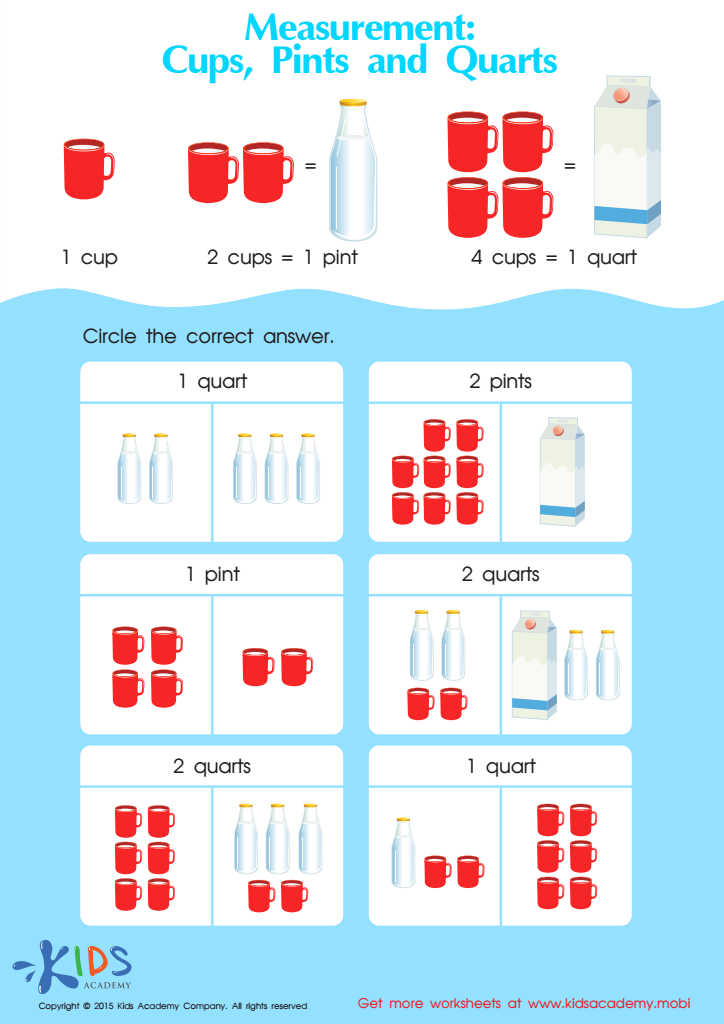
Cups, Pints and Quarts Worksheet
Let your kids explore the world of math with our worksheet! Have them count cups, pints and quarts in pictures and circle the right answer. Get even more free printable math worksheets for kindergarten on our website. Come on, join the adventure!
Cups, Pints and Quarts Worksheet
Worksheet
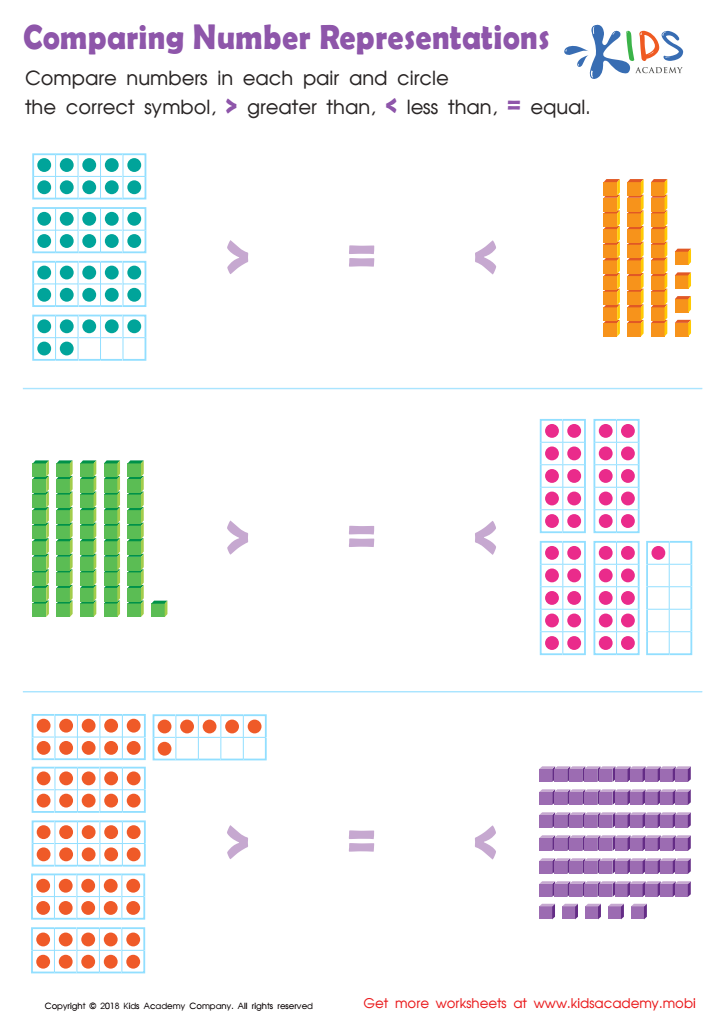
Comparing Number Representations Worksheet
Children need number representation skills to develop efficient computation and number sense. This free worksheet gives them practice with ten frames and place value blocks. They compare numbers and select the right comparative symbol: <, > or =. This helps them build a solid foundation for math.
Comparing Number Representations Worksheet
Worksheet
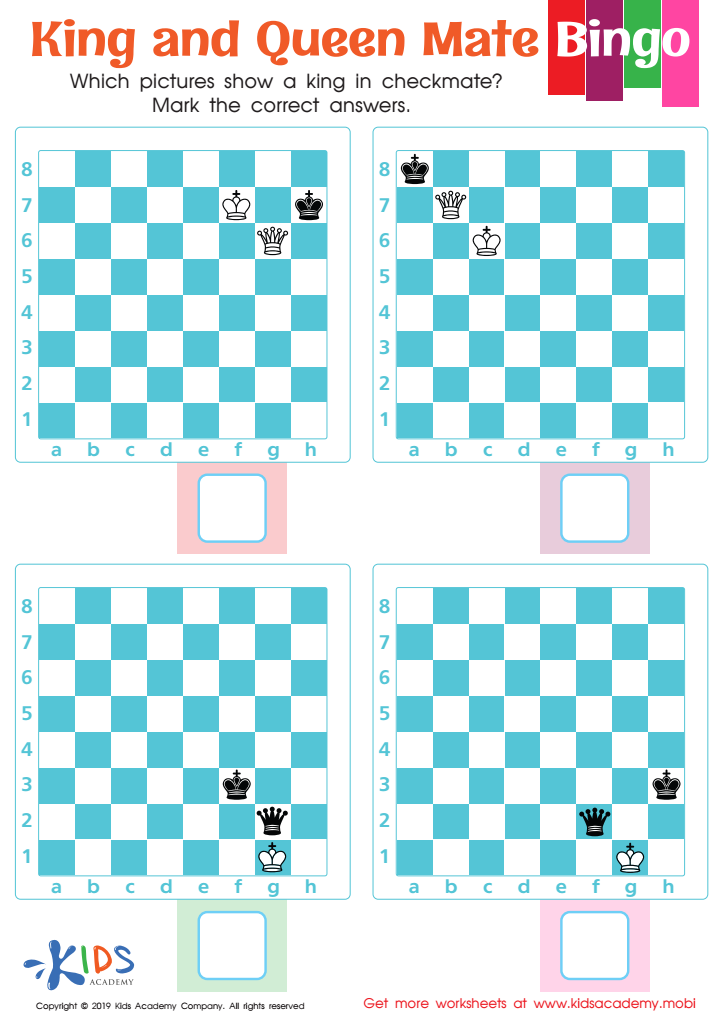
King and Queen Mate: Bingo Worksheet
Let your child strengthen their strategy skills with this free King and Queen Mate Bingo worksheet. They must decide which board uses the King and Queen effectively for checkmate and victory. Check the correct board off in the box, and enjoy sharpening your little one's skills!
King and Queen Mate: Bingo Worksheet
Worksheet
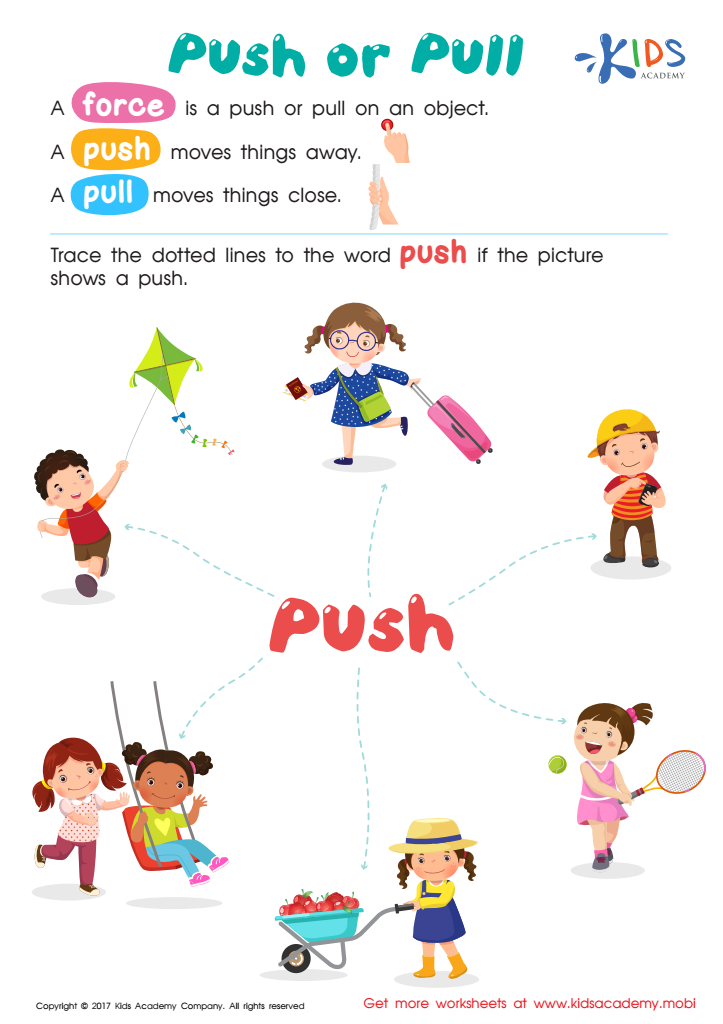
Push or Pull Worksheet
and which involve pulling! With this fun worksheet, your child will learn about force and its simple application in everyday activities. Get them started with Push or Pull! (80 words)
Push or Pull Worksheet
Worksheet
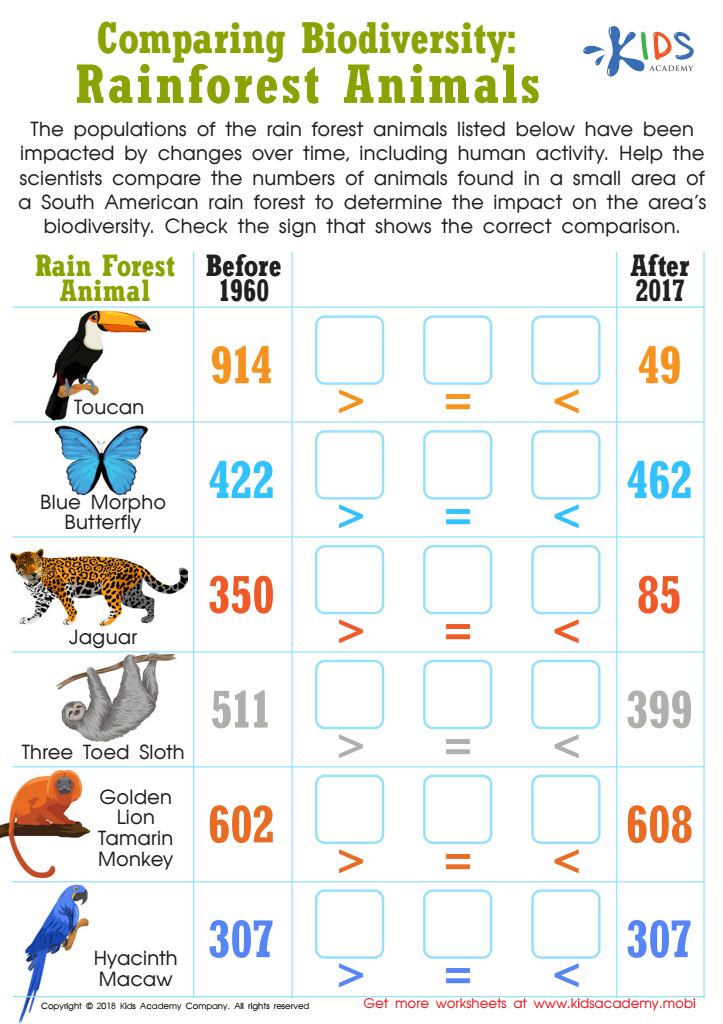
Comparing Biodiversity: Rainforest Animals Worksheet
This dynamic PDF worksheet combines fun and education. Kids will explore rainforest animals and biodiversity, comparing numbers from 1960 to 2017. They'll strengthen number sense and reasoning skills while learning about area biodiversity and its effects. A perfect mix of math and social science!
Comparing Biodiversity: Rainforest Animals Worksheet
Worksheet
Join Kids Academy for Free
Who is primarily going to use this learning content?








Developing analytical thinking skills in children ages 4-8 is crucial because it lays the foundation for their future academic and life successes. During these formative years, children's brains are highly receptive to new information, making it an optimal time to foster critical thinking and problem-solving abilities. Engaging their analytical skills helps them understand not only the "what" but also the "why" behind various concepts, facilitating deeper comprehension across subjects.
Additionally, as children learn to analyze and evaluate information, they become more adept at making sound decisions and solving real-world problems. This skill set encourages independence and confidence, empowering them to think for themselves rather than solely relying on others. Moreover, analytical skills promote creativity as children learn to approach problems from multiple angles, leading to innovative solutions.
Ultimately, equipping young children with analytical thinking prepares them for future academic challenges and equips them with important life skills, such as effective communication and collaboration. Encouraging these skills not only benefits students' performance in school but also helps them navigate an increasingly complex world, making it essential for parents and teachers alike to prioritize this aspect of development during early childhood.








