
Developing arithmetic skills Worksheets for Ages 4-8
3 filtered results
Difficulty Level
Grade
Age
-
From - To
Subject
Activity
Standards
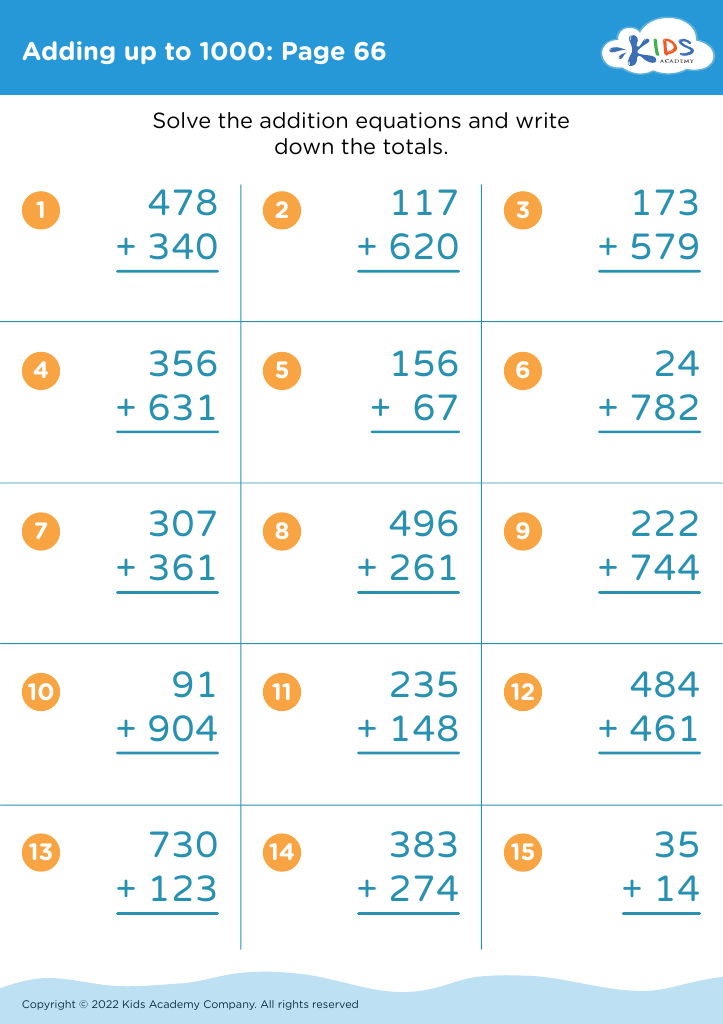
Introducing our "Developing Arithmetic Skills Worksheets" for ages 4-8, designed to make math learning fun and engaging! These worksheets help young learners build a strong foundation in essential arithmetic concepts through colorful and interactive activities. Children will explore addition, subtraction, number recognition, and problem-solving with carefully crafted tasks that cater to their developmental stages. Our resources promote cognitive growth, boost confidence, and encourage a love for learning. Ideal for classroom settings or homeschooling environments, these worksheets provide a comprehensive approach to mastering basic math skills. Get ready to empower your child’s arithmetic abilities and make learning a joyful experience!
Favorites
With answer key
Interactive
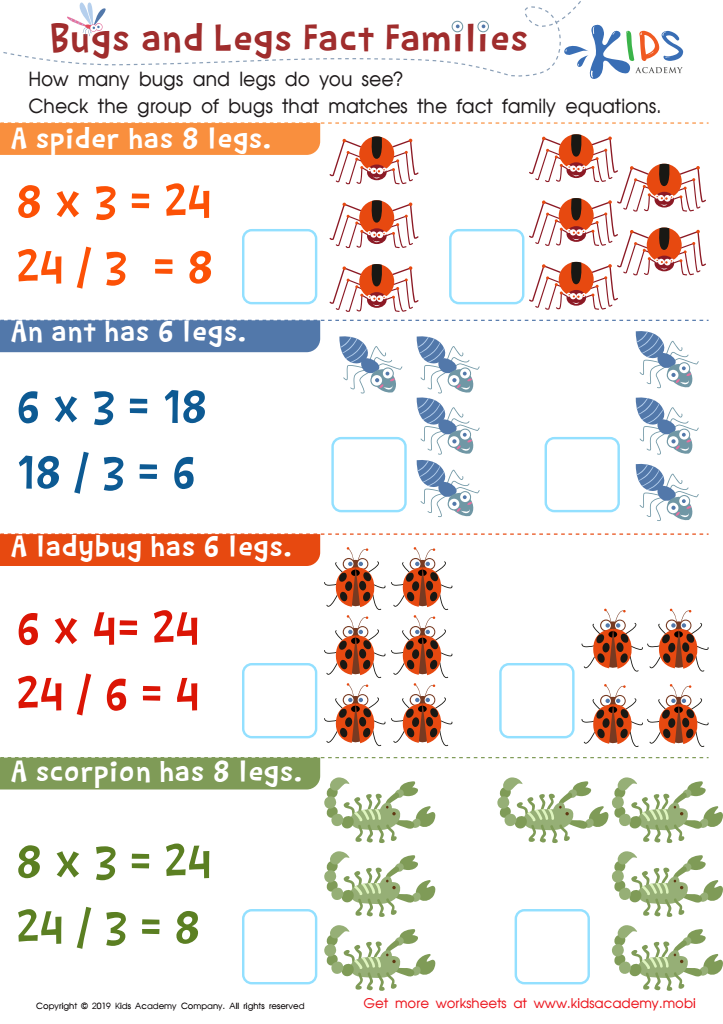
Bugs and Legs Fact Families Worksheet
This free worksheet uses bugs and insects to help young math students learn about fact families and recognize patterns in multiplication and division. It's a fun and colorful way to gain automaticity and efficiency in computation skills, without even realizing it's math!
 Assign to My Students
Bugs and Legs Fact Families Worksheet
Worksheet
Join Kids Academy for Free
Who is primarily going to use this learning content?








Developing arithmetic skills in children aged 4-8 is crucial for several reasons. First, these foundational years are vital for cognitive development; children are naturally curious and motivated to learn, making it an ideal time to introduce basic mathematical concepts such as addition, subtraction, and number recognition. Early exposure to arithmetic builds a strong number sense, enabling children to understand and Manipulate numbers effectively.
Secondly, arithmetic skills form the groundwork for lifelong learning. Establishing a solid mathematical foundation will not only enhance academic success in later grades but also foster problem-solving and critical thinking abilities, which are essential in everyday life. Moreover, a strong proficiency in arithmetic contributes to self-confidence in a child's abilities.
Additionally, in our increasingly technology-driven world, basic arithmetic is integral to everyday activities, from budgeting allowances to understanding measurements in cooking. As such, parents and teachers have a unique opportunity to instill a positive attitude towards math, transforming it from a source of anxiety into a subject of enjoyment and exploration.
Prioritizing arithmetic skill development prepares children not just for academic challenges but also equips them with essential life skills, making it a paramount concern for both parents and educators.








