
Developing counting skills Worksheets for Ages 4-8
6 filtered results
Difficulty Level
Grade
Age
-
From - To
Subject
Activity
Standards
Explore our "Developing Counting Skills Worksheets" specially designed for children aged 4 to 8. These engaging and colorful worksheets help young learners master essential counting concepts through fun activities and exercises. Our resources cater to various skill levels, enabling kids to practice counting objects, recognizing numbers, and improving one-to-one correspondence. With repetitive practice and vibrant illustrations, these worksheets foster a positive learning environment that inspires curiosity and confidence in counting. Perfect for classroom use or homeschooling, our counting skills worksheets promote foundational math abilities, laying the groundwork for future success. Start your child's mathematical journey with our thoughtfully crafted resources!
Favorites
With answer key
Interactive
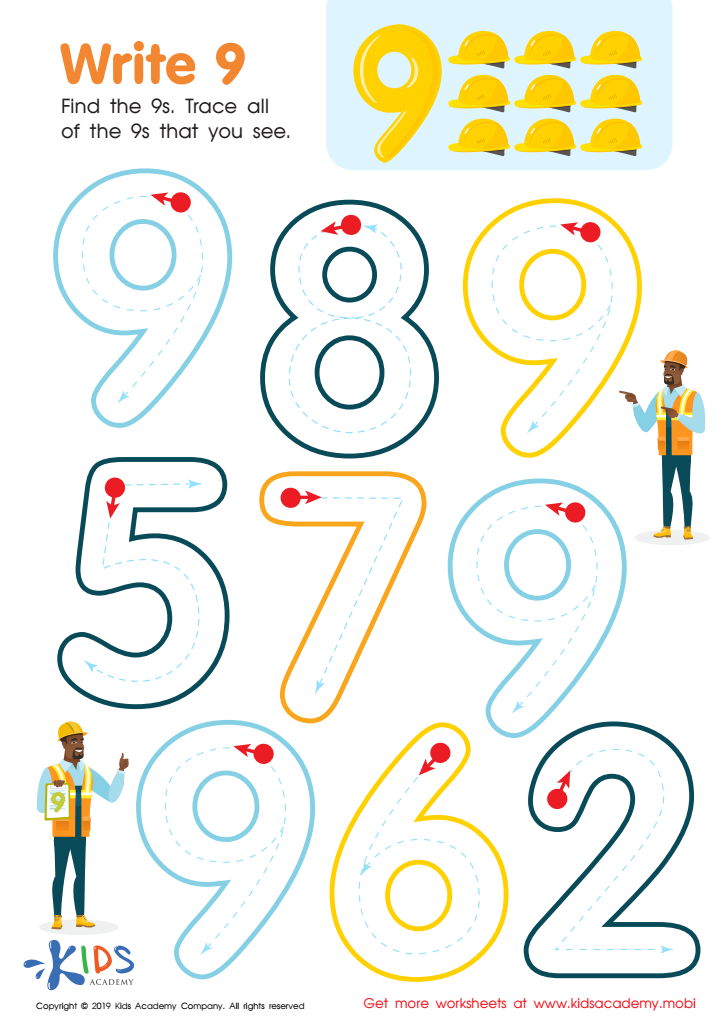
Write 9 Worksheet
Once your kids can count, help them learn to write numbers with your guidance and patience. This worksheet is designed to speed up the process. Help them spot the 9s in the picture, then help them trace them. With your help, your kids will soon be pros at counting and writing numbers.
 Assign to My Students
Write 9 Worksheet
Worksheet
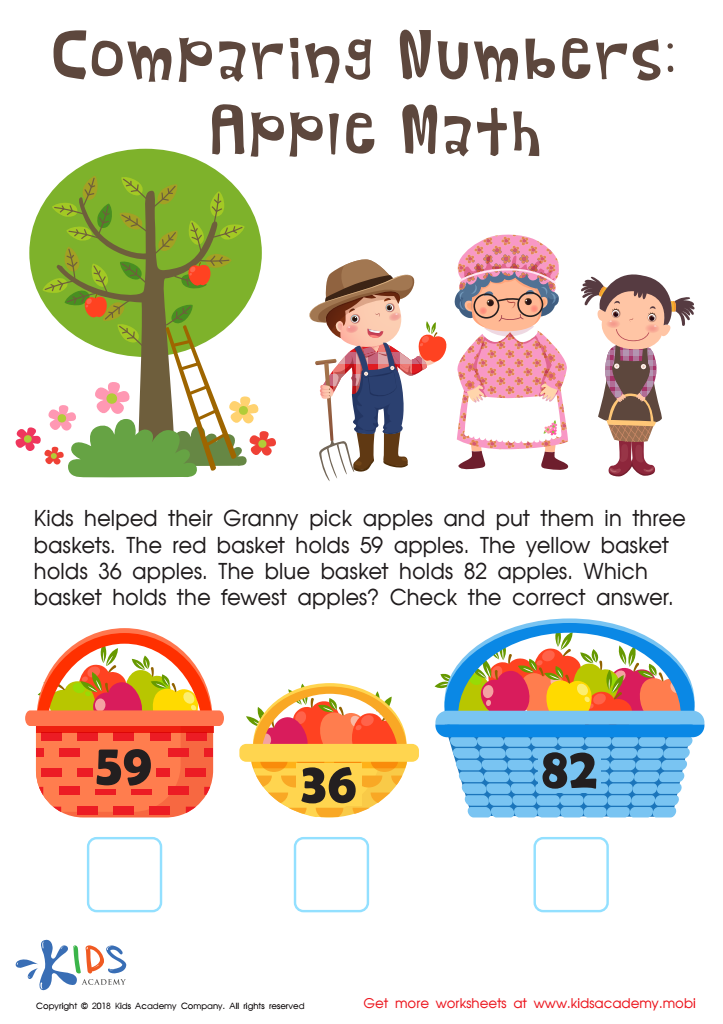
Apple Math Worksheet
Math is more than just counting, adding, subtracting, multiplying, and dividing. Your child may be feeling overwhelmed by all the complexities, like comparing numbers and their differences. But with this worksheet, you can make comparing numbers fun again!
Apple Math Worksheet
Worksheet
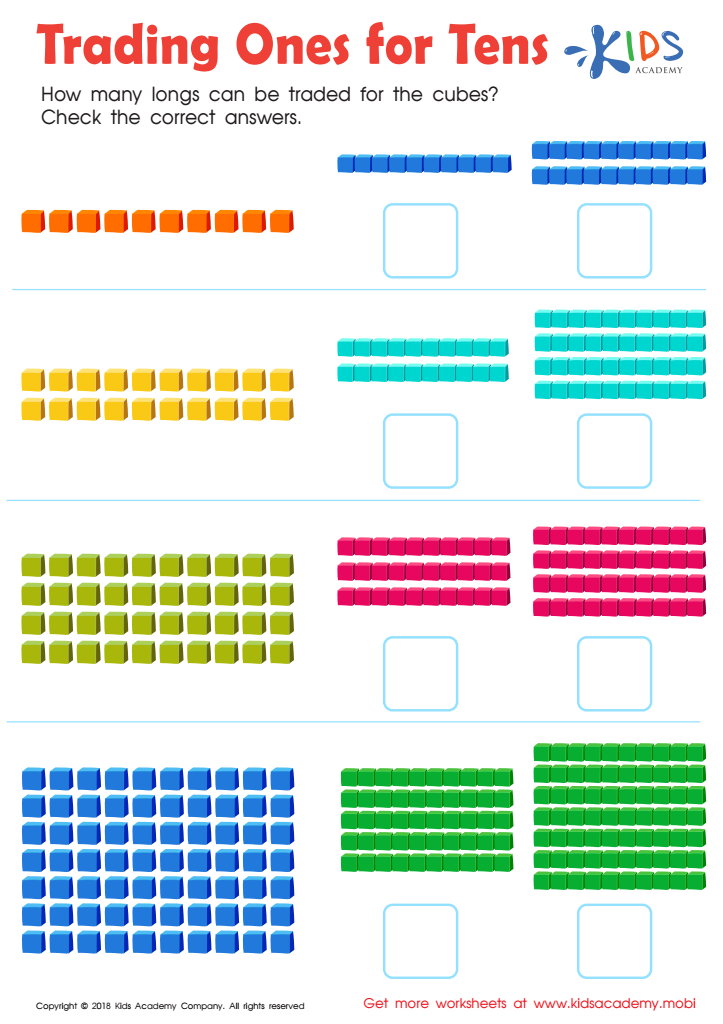
Trading Ones for Tens Worksheet: Part 2
Introduce your early learners to regrouping numbers! Catch their attention with this brightly colored worksheet. See how many 10s can be created from the cubes. Then, check the box with the correct answer to complete the sheet! Download now and get started!
Trading Ones for Tens Worksheet: Part 2
Worksheet
Join Kids Academy for Free
Who is primarily going to use this learning content?






Developing counting skills in children aged 4 to 8 is crucial for their cognitive and educational growth. First and foremost, counting forms the foundation of mathematics, enabling them to understand more complex concepts such as addition, subtraction, and even multiplication as they progress. During these formative years, children are like sponges, absorbing foundational knowledge that shapes their future academic journey.
Moreover, counting skills foster critical thinking and problem-solving abilities. By learning to count, children engage with numbers in hands-on experiences which enhance their spatial awareness and logical reasoning. This development extends beyond mathematics; it enriches various aspects of their daily lives, from managing time to handling monetary exchanges during play or real-life scenarios.
Additionally, early counting experiences can boost a child’s confidence. As they recognize their capabilities in counting and manipulating numbers, they become more willing to engage in new learning opportunities. Teachers and parents play a pivotal role in creating a supportive environment that promotes counting through songs, games, and practical activities. By prioritizing counting skills, they empower children to become independent learners, well-equipped for future academic challenges and everyday life. Encouraging this essential skill prepares children not just for school, but for their journey in life as capable young adults.








