Drawing conclusions Worksheets for Ages 4-8
3 filtered results
-
From - To
Enhance your child's critical thinking skills with our Drawing Conclusions Worksheets designed for ages 4-8. These engaging worksheets help young learners develop the ability to infer, interpret, and draw conclusions from various scenarios, images, and stories. Through a combination of fun illustrations and age-appropriate activities, children will practice understanding context clues, making predictions, and analyzing information. Our tailored resources support essential cognitive development, weaving learning into enjoyable experiences. Perfect for classrooms or home study, these worksheets foster creativity while building foundational skills in comprehension and reasoning. Explore our collection today to inspire your child’s curiosity and confidence!
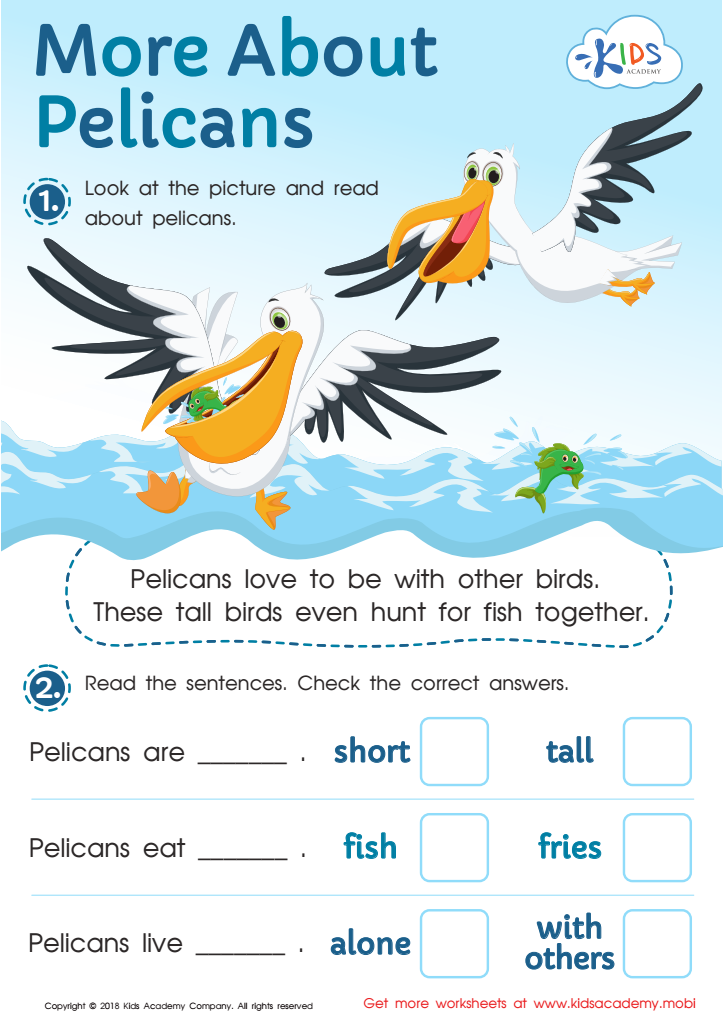
More About Pelicans Worksheet
 Assign to My Students
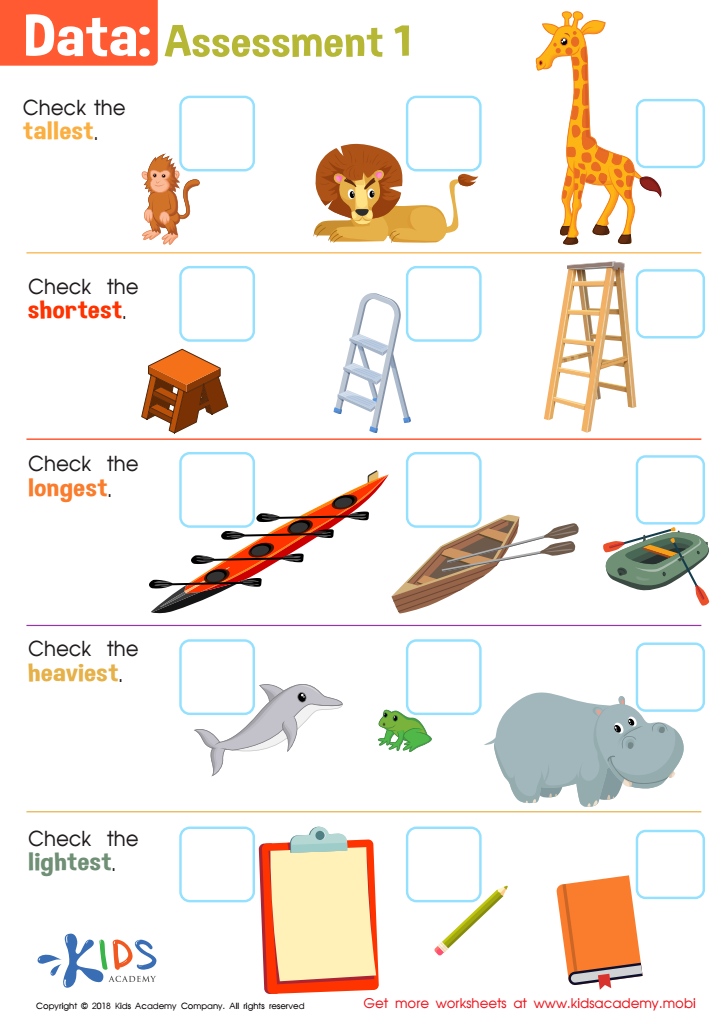
Data: Assessment 1 Worksheet








Drawing conclusions is a vital skill for children aged 4-8 as it underpins their ability to synthesize information and make informed decisions. At this developmental stage, children are eager to understand the world around them and make sense of their experiences. By nurturing the ability to draw conclusions, parents and teachers can help children connect dots between what they see, hear, and learn, fostering critical thinking skills necessary for their academic journeys.
Drawing conclusions encourages children to think beyond the surface and interpret subtle cues in stories, conversations, and their environment. When children practice this skill, they learn how to analyze information, recognize patterns, and apply prior knowledge, thus enhancing their comprehension abilities. Moreover, this practice promotes curiosity and engagement, as children are encouraged to ask questions and explore different perspectives.
Furthermore, drawing conclusions nurtures social-emotional skills by aiding children in understanding emotions and social interactions, ultimately fostering empathy and relationships with peers. When parents and teachers prioritize this skill, they equip young learners with the tools to navigate their world intelligently and compassionately. Empowering children with this ability lays the foundation for lifelong learning and decision-making skills crucial in the modern world.








