Enhance critical thinking Worksheets for Ages 4-8
10 filtered results
-
From - To
Discover our Enhance Critical Thinking Worksheets designed specifically for children ages 4 to 8. These engaging, age-appropriate activities encourage young learners to think analytically, solve problems creatively, and evaluate information effectively. Each worksheet integrates fun themes and vibrant illustrations, making learning enjoyable and interactive. From puzzles and riddles to logic games, our resources promote curiosity and innovation while strengthening cognitive skills. Designed by educators, these worksheets align with early learning standards, ensuring comprehensive development. Foster essential critical thinking skills in your child today and watch them thrive as confident problem solvers! Explore our collection to inspire a lifelong love for learning.
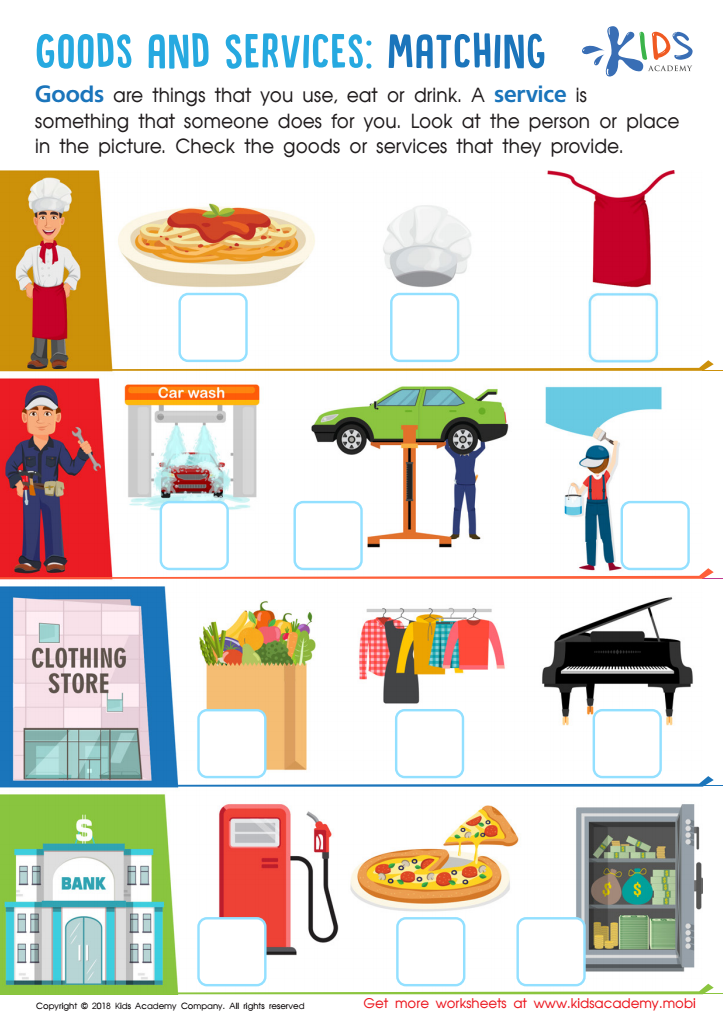
Goods and Services: Matching Worksheet
 Assign to My Students
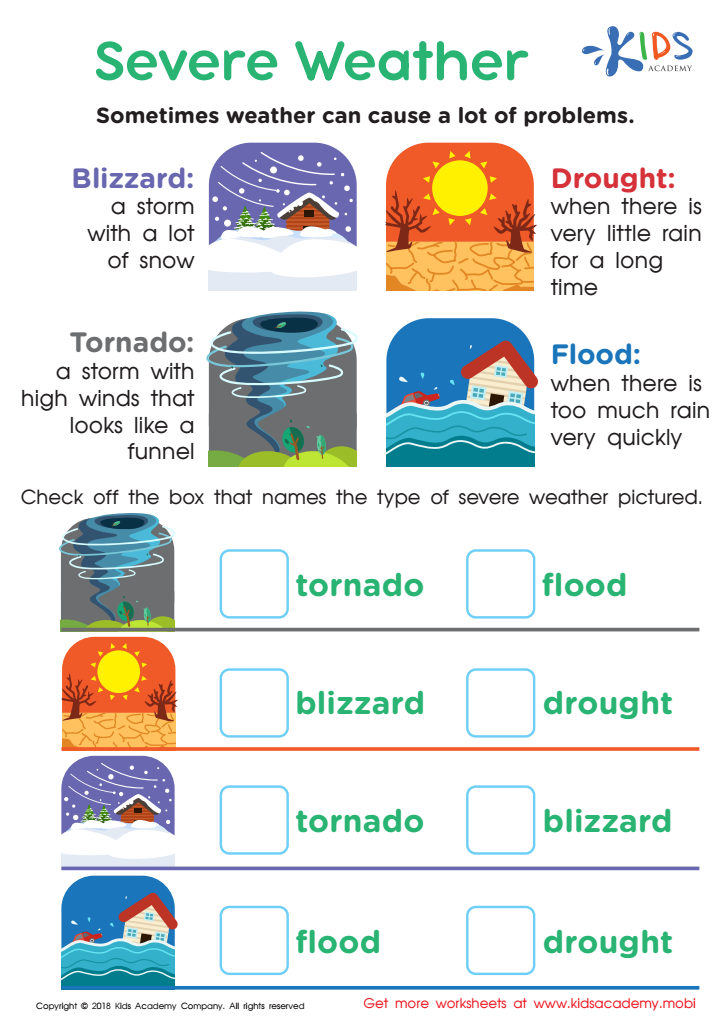
Severe Weather Worksheet
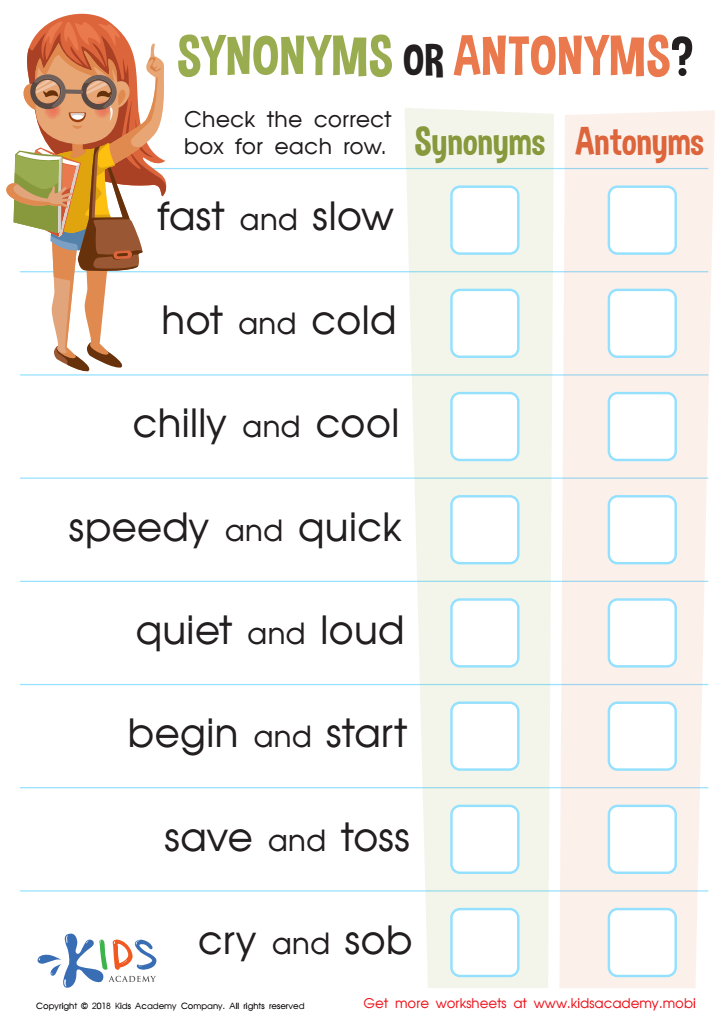
Synonyms or Antonyms: Assessment Worksheet
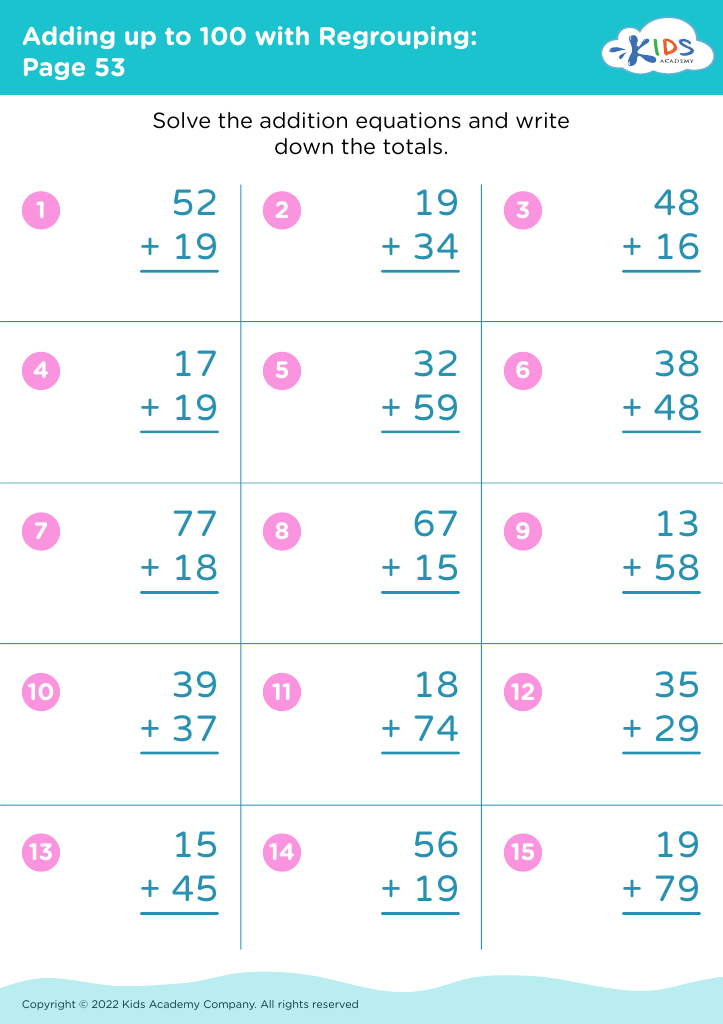
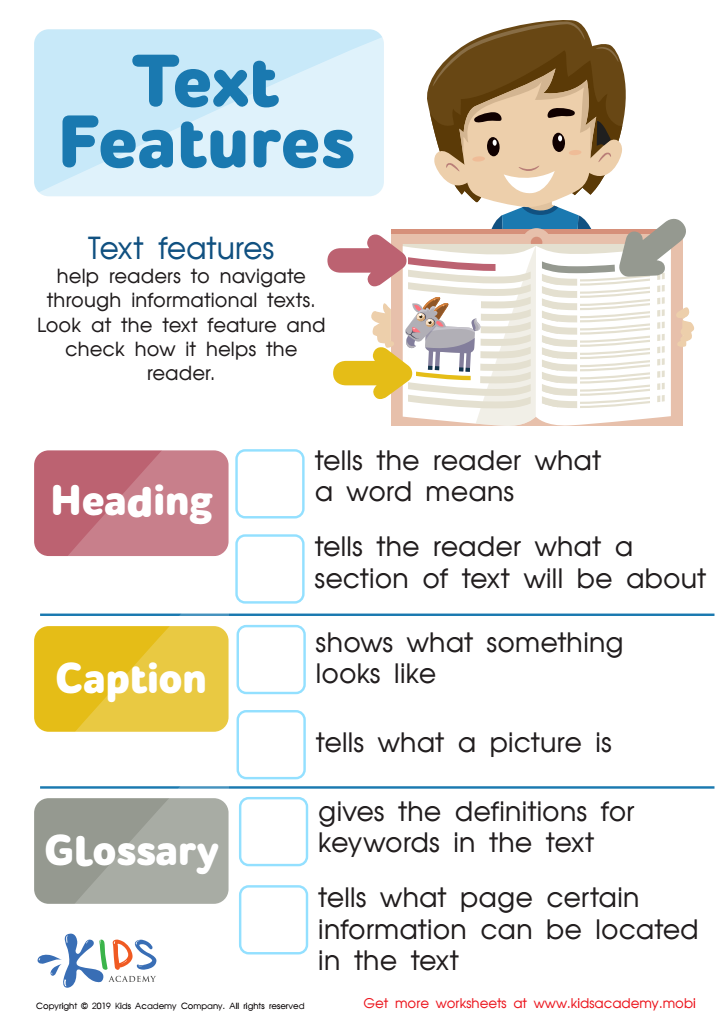
Text Features Worksheet
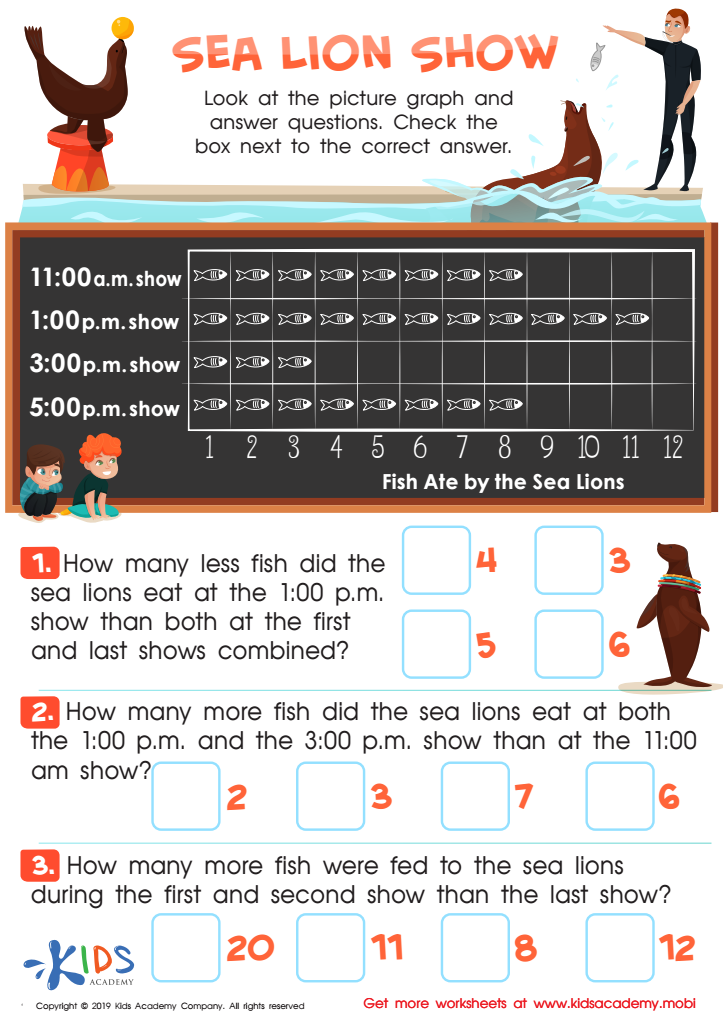
Sea Lion Show Worksheet








Enhancing critical thinking skills in children aged 4-8 is crucial for their intellectual and emotional development. During these formative years, children's brains are highly adaptable, making it an ideal time to foster analytical abilities and problem-solving skills. Critical thinking encourages children to ask questions, explore different perspectives, and make connections between ideas, which fosters curiosity and a love for learning.
For parents and teachers, instilling critical thinking is beneficial as it lays the foundation for lifelong learning and self-directed exploration. Children equipped with critical thinking skills are better prepared to face challenges, make informed decisions, and navigate an increasingly complex world. They learn to approach problems with a mindset that values reasoning over rote memorization.
Additionally, promoting critical thinking can enhance social skills. As children engage in discussions, share ideas, and consider others' viewpoints, they develop empathy and communication skills, essential for collaboration in various environments.
In summary, nurturing critical thinking in young children not only encourages academic success but also helps them grow into thoughtful, independent, and socially responsible individuals. This investment in their cognitive the skills proves beneficial throughout their educational journey and life beyond the classroom.








