Enhance logical thinking Worksheets for Ages 4-8
5 filtered results
-
From - To
Discover our "Enhance Logical Thinking Worksheets for Ages 4-8" designed to boost young minds through engaging activities. Our printable worksheets, tailored for early learners, focus on developing critical thinking, problem-solving, and analytical skills. Each exercise is crafted to stimulate curiosity and improve cognitive abilities, providing a fun and educational way for children to advance their logical reasoning. With a variety of puzzles, patterns, sequencing tasks, and more, these worksheets are perfect for laying a strong foundation for future academic success. Help your child thrive and sharpen their mind with our expert-designed educational resources!
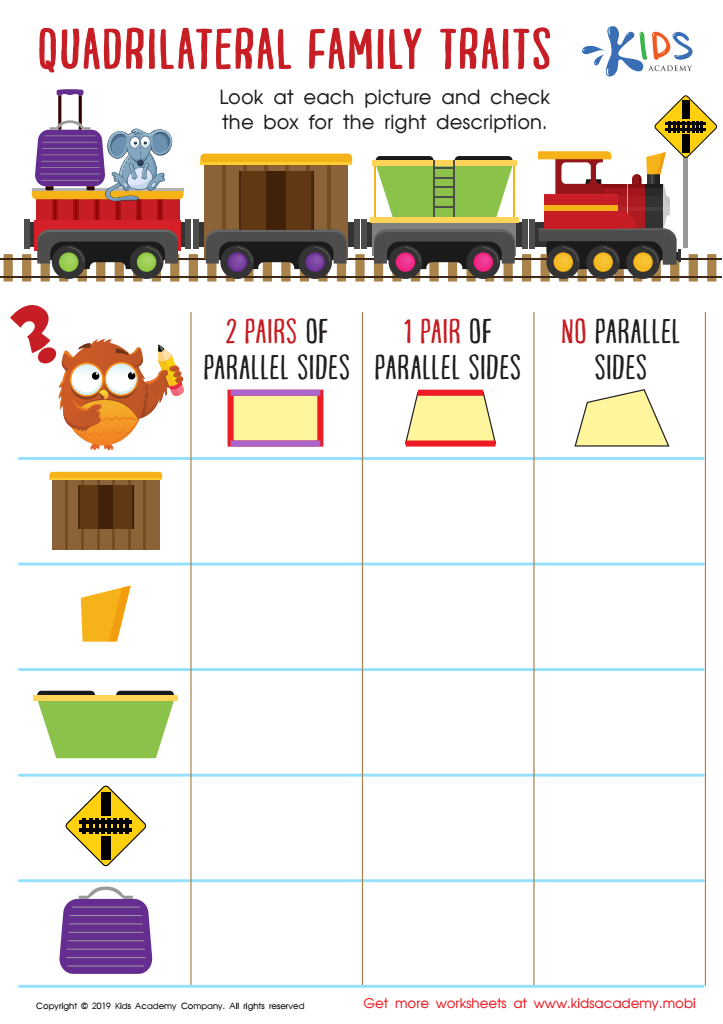
Quadrilateral Family Traits Worksheet
 Assign to My Students
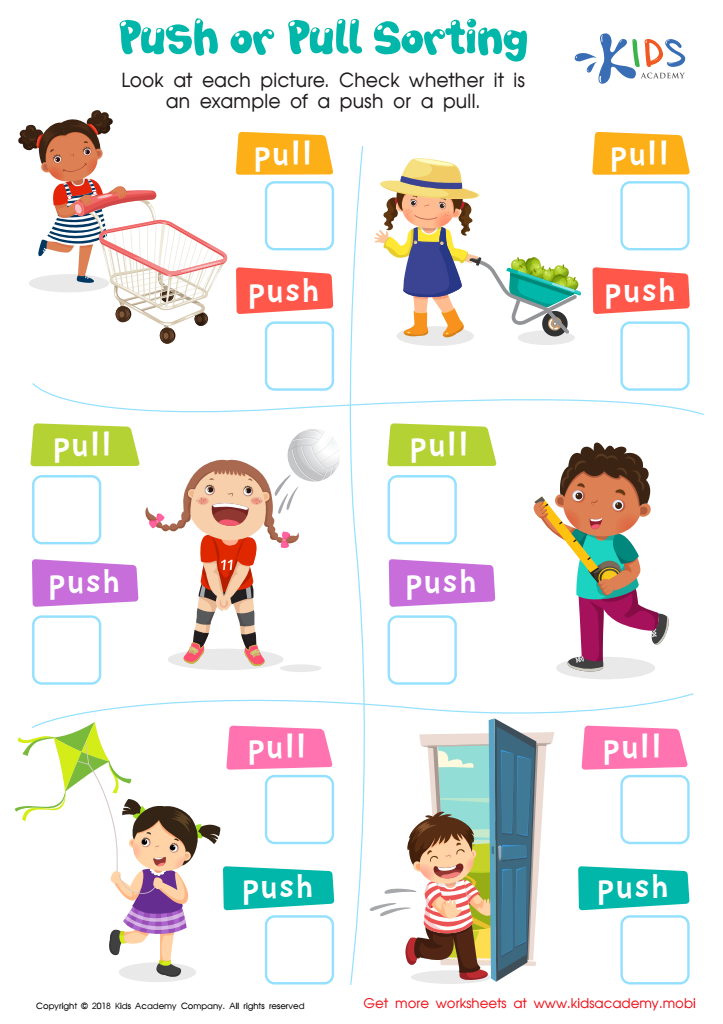
Push or Pull Sorting Worksheet







Enhancing logical thinking in children ages 4-8 is fundamental for their cognitive development and future academic success. At this early age, children's brains are highly adaptable and primed for learning new concepts, making it the ideal period to introduce activities that stimulate logical reasoning.
Logical thinking skills empower children to process information, solve problems, and understand cause-and-effect relationships. As they navigate their environments, these skills help children make sense of complex concepts in subjects like math and science, laying a solid foundation for higher-level thinking required in later grades. With strong logical thinking abilities, children can tackle challenging tasks with greater ease, boosting their confidence and instilling a love for learning.
Moreover, logical thinking promotes critical life skills such as decision-making, planning, and goal-setting. It enables children to analyze situations, consider possible outcomes, and make informed choices. This not only contributes to academic successes but also supports social and emotional development. Through enhanced logical reasoning, children become better equipped to resolve conflicts, understand others' perspectives, and develop empathy.
Investing in the development of logical thinking from an early age sets children on a pathway to academic achievement and well-rounded personal growth. Activities that bolster these skills—like puzzles, games, and hands-on learning experiences—are valuable tools that both parents and teachers should integrate into daily routines.








