Enhance problem-solving skills Worksheets for Ages 4-8
9 filtered results
-
From - To
Unlock your child's potential with our "Enhance Problem-Solving Skills Worksheets" designed specifically for ages 4-8. These engaging worksheets foster critical thinking and logical reasoning through fun puzzles, interactive activities, and relatable scenarios. Tailored to early learners, our resources encourage kids to analyze problems and explore creative solutions while building confidence in their abilities. Perfect for at-home learning or classroom use, these worksheets make problem-solving a delightful adventure. Equip your child with essential skills for academic success and make learning enjoyable today! Explore our collection now and empower your young learners to think critically and creatively!
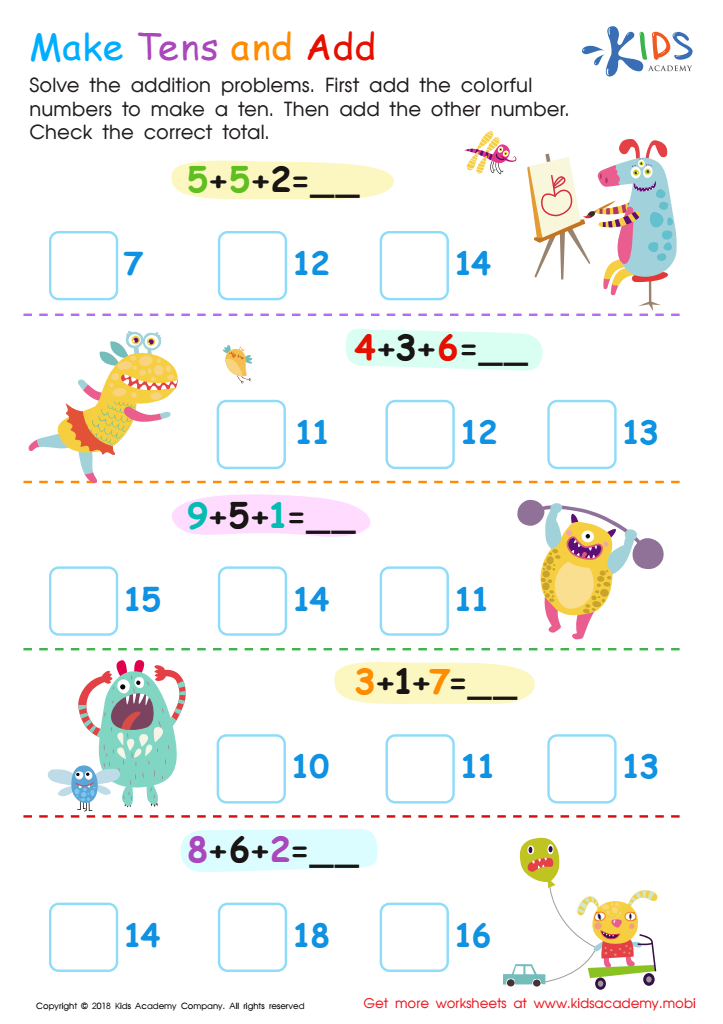
Make Tens and Add Worksheet
 Assign to My Students
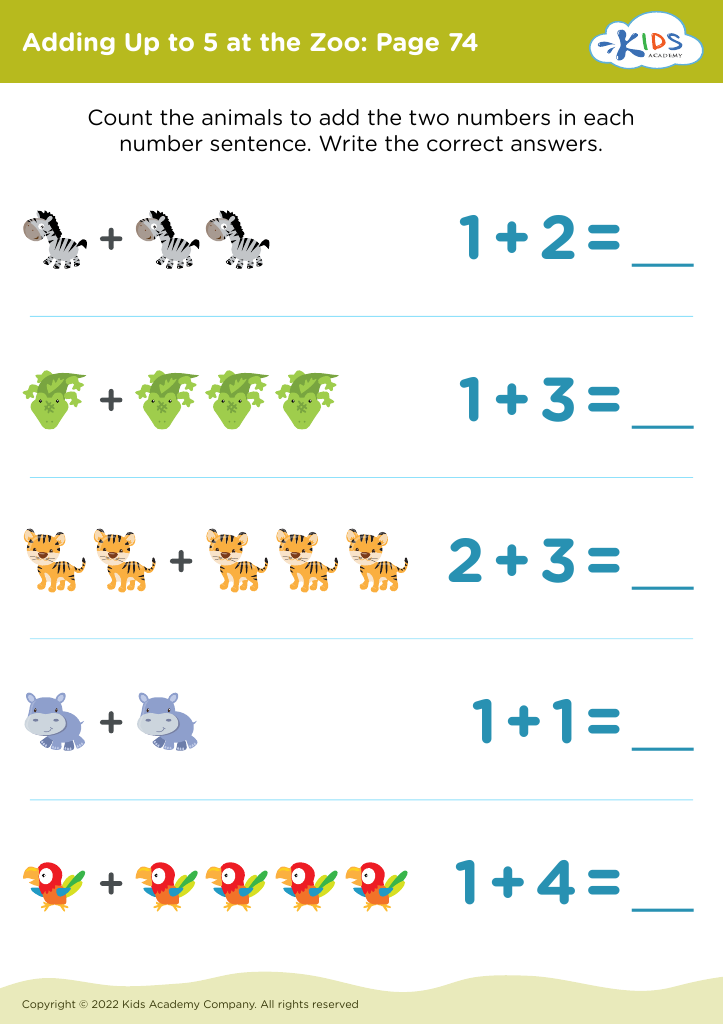
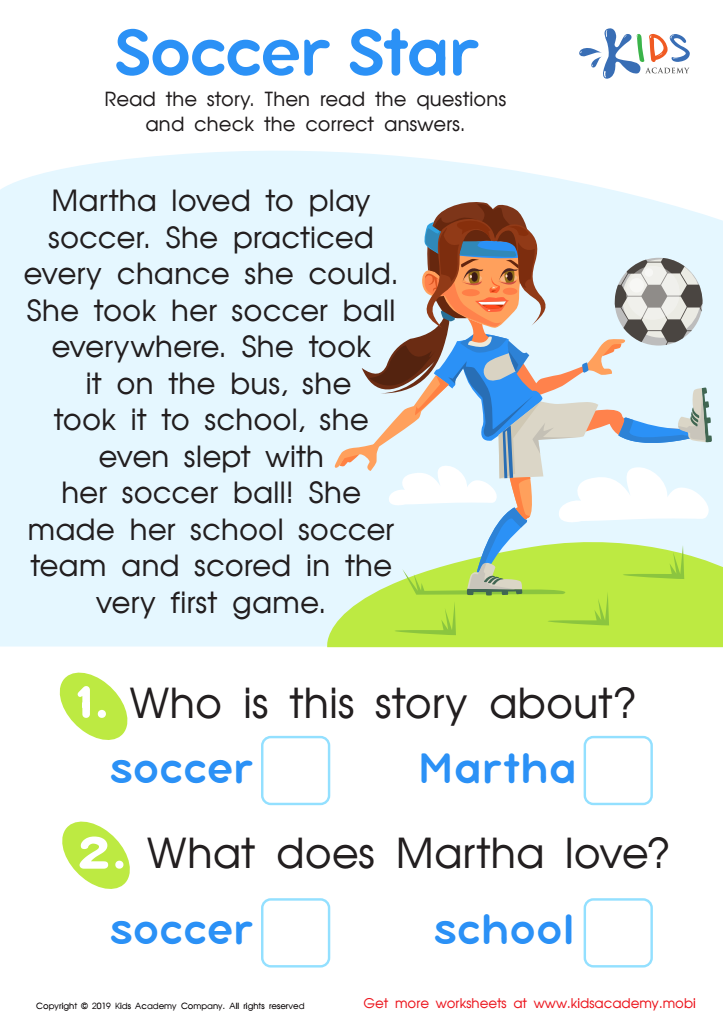
Soccer Star Worksheet
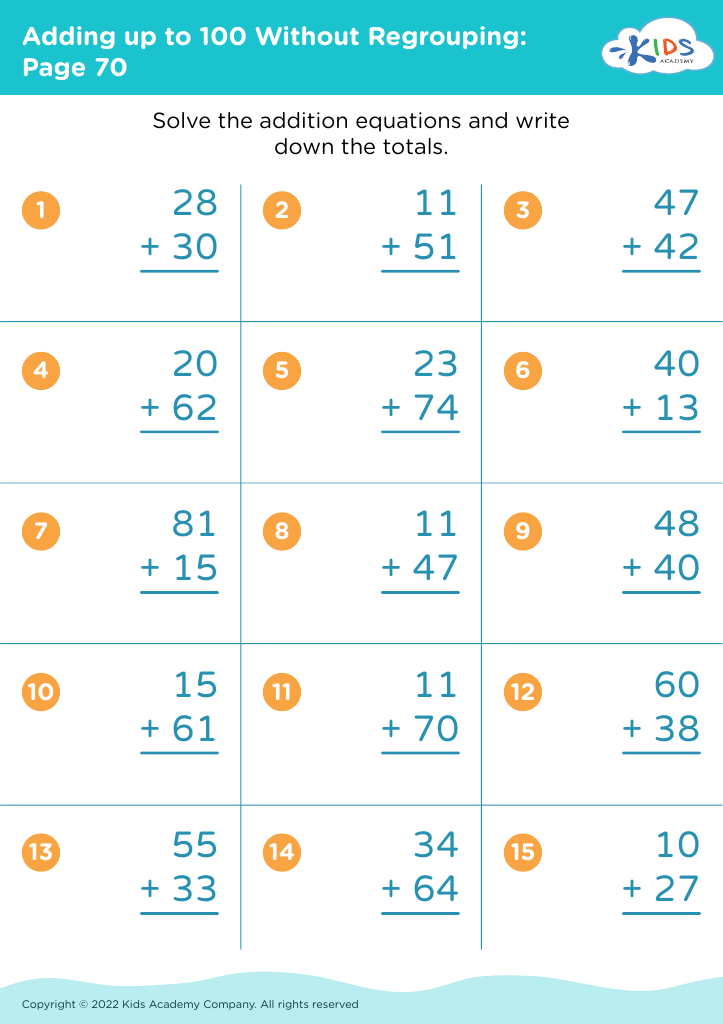








Enhancing problem-solving skills in children aged 4-8 is crucial for their overall development and future success. During these formative years, children are naturally curious and eager to explore their surroundings. By cultivating their problem-solving abilities, parents and teachers empower them to think critically, make decisions, and face challenges with confidence.
Fostering these skills helps children learn how to analyze situations, evaluate options, and develop creative solutions to obstacles. This cognitive development not only enriches their academic performance but also equips them with lifelong skills that will serve them in everyday life. Problem solvers are typically more adaptable, resilient, and better equipped to handle social interactions and conflicts.
Moreover, early problem-solving education instills a growth mindset, encouraging children to see failures as opportunities for learning rather than setbacks. This positive outlook fosters emotional intelligence and social skills, allowing children to collaborate effectively with peers and engage in constructive teamwork.
Finally, supporting problem-solving skills enhances children’s engagement and motivation to learn. When they experience success in solving problems, it instills a sense of accomplishment, further fueling their enthusiasm for exploration and discovery. Therefore, parents and teachers must prioritize the development of these essential skills in young learners.








