
Geographic Understanding Worksheets for Ages 4-8
3 filtered results
Difficulty Level
Grade
Age
-
From - To
Subject
Activity
Standards
Explore our engaging Geographic Understanding Worksheets designed specifically for children aged 4-8. These resources help young learners develop essential mapping and spatial skills through fun and interactive activities. Our worksheets cover various topics, including map recognition, learning about different terrains, and understanding location concepts. Each activity is crafted to enhance comprehension while keeping kids entertained. Perfect for home or classroom use, these worksheets encourage exploration and curiosity about the world around them. Foster a love for geography early with our vibrant, educational materials that ignite imagination and support foundational knowledge. Start your child’s geographic adventure today!
Favorites
With answer key
Interactive
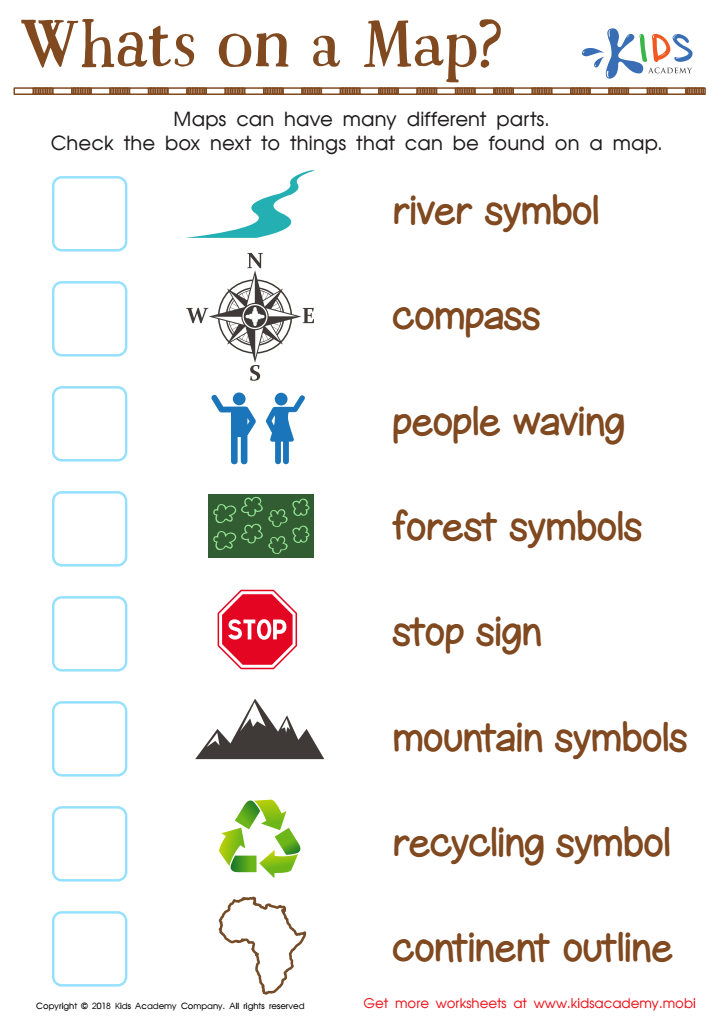
Whats on a Map? Worksheet
Kids often lack map-reading experience due to our digital age, but these skills are essential. This free worksheet reinforces what they'll find on a map and the symbols used to represent them, helping them build reasoning, thinking and problem-solving skills.
 Assign to My Students
Whats on a Map? Worksheet
Worksheet
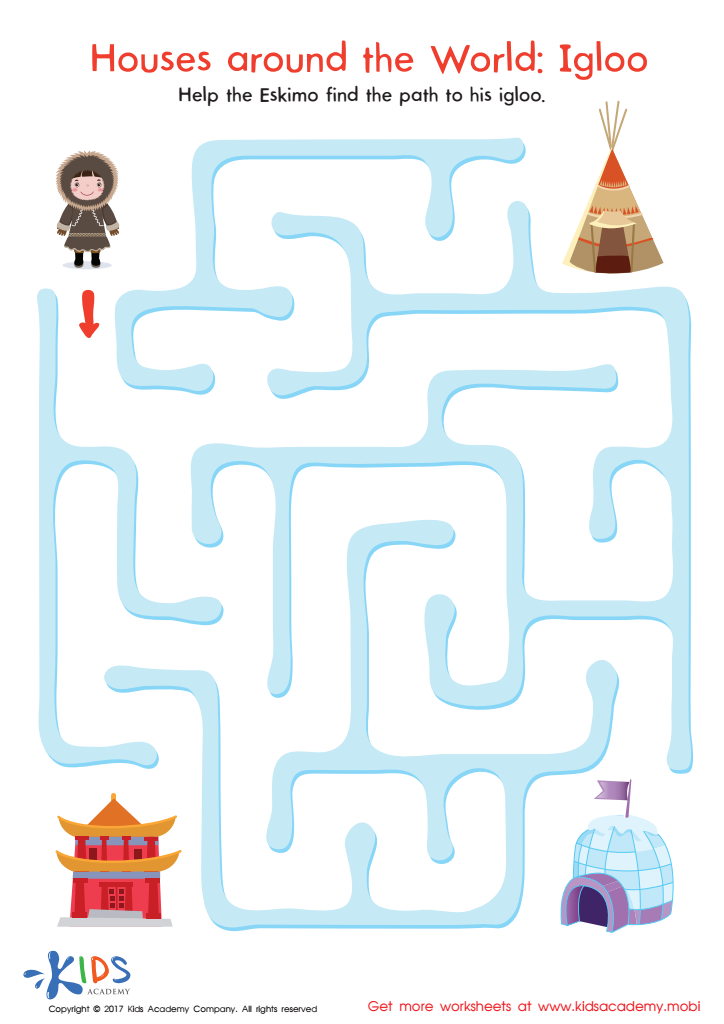
Houses Around the World: Igloo Printable
Print out the igloo maze worksheet and help the Eskimo find his way home. Along the way, you’ll discuss different types of houses. A perfect way to practice thinking skills!
Houses Around the World: Igloo Printable
Worksheet
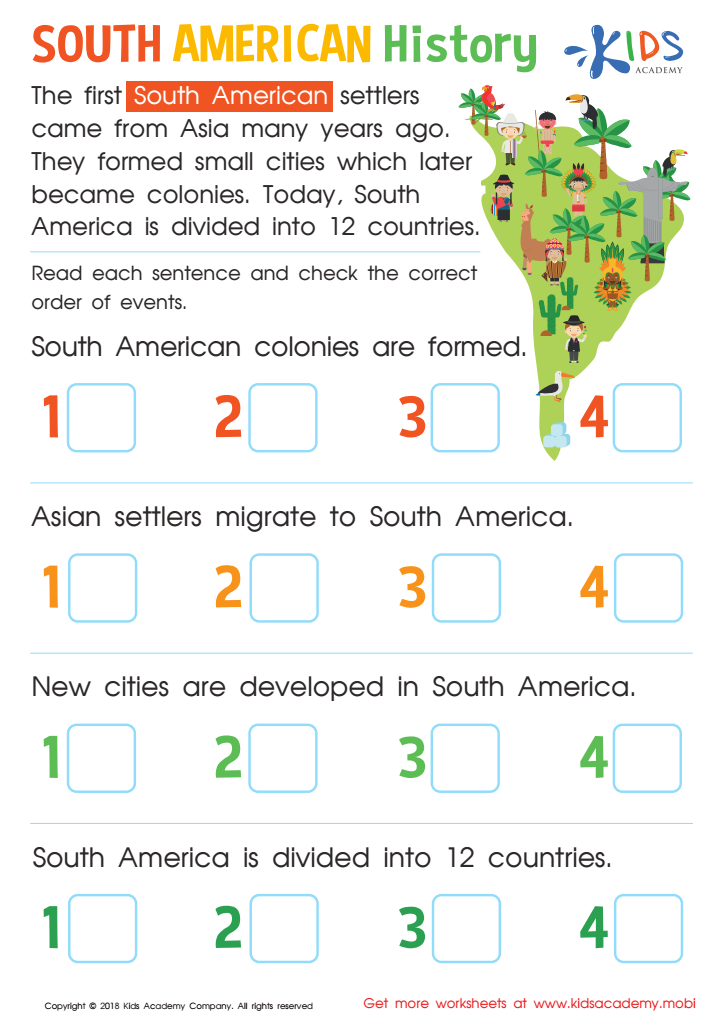
South American History Worksheet
Kids can brush up on South American history with this free worksheet! They'll discover how the first inhabitants arrived from Asia and how this led to the growth of cities and colonies. Comprehension questions will help them sequence and understand the events of South American history.
South American History Worksheet
Worksheet
Join Kids Academy for Free
Who is primarily going to use this learning content?







Geographic understanding is crucial for children aged 4-8 as it lays the foundation for their awareness of the world around them. At this age, children are naturally curious, and engaging them with geography fosters critical thinking and learning about diverse cultures, environments, and ecosystems. This not only enhances their cognitive development but also cultivates empathy and respect for others.
Parents and teachers should recognize that geographic concepts encourage spatial thinking, which is essential for problem-solving skills. Learning about maps, continents, and landmarks helps children develop orientation skills and understand their place in the world. It supports their ability to make connections between different regions and the people who live there.
Incorporating geography into early education allows children to appreciate the natural world and understand global issues, such as climate change and sustainability. Such awareness can inspire future generations to be better stewards of the planet. Additionally, geographic understanding promotes sensory learning, enabling children to relate abstract concepts to their own experiences.
Overall, fostering geographic understanding is vital for nurturing informed, conscientious, and engaged global citizens who can thrive in an increasingly interconnected world.








