Graph interpretation Worksheets for Ages 4-8
5 filtered results
-
From - To
Our engaging Graph Interpretation Worksheets, designed for ages 4-8, help young learners master essential skills in an interactive way. These printable resources allow children to explore different types of graphs such as bar charts, picture graphs, and tally charts, fostering abilities in data representation and analysis. Through fun, age-appropriate activities, these worksheets enhance critical thinking, comparison, and numerical skills. Perfect for both classroom and at-home learning, Kids Academy ensures that early education in data interpretation is accessible and enjoyable, laying a strong foundation for future math success. Unearth the joy of learning with our expertly crafted graph interpretation resources!
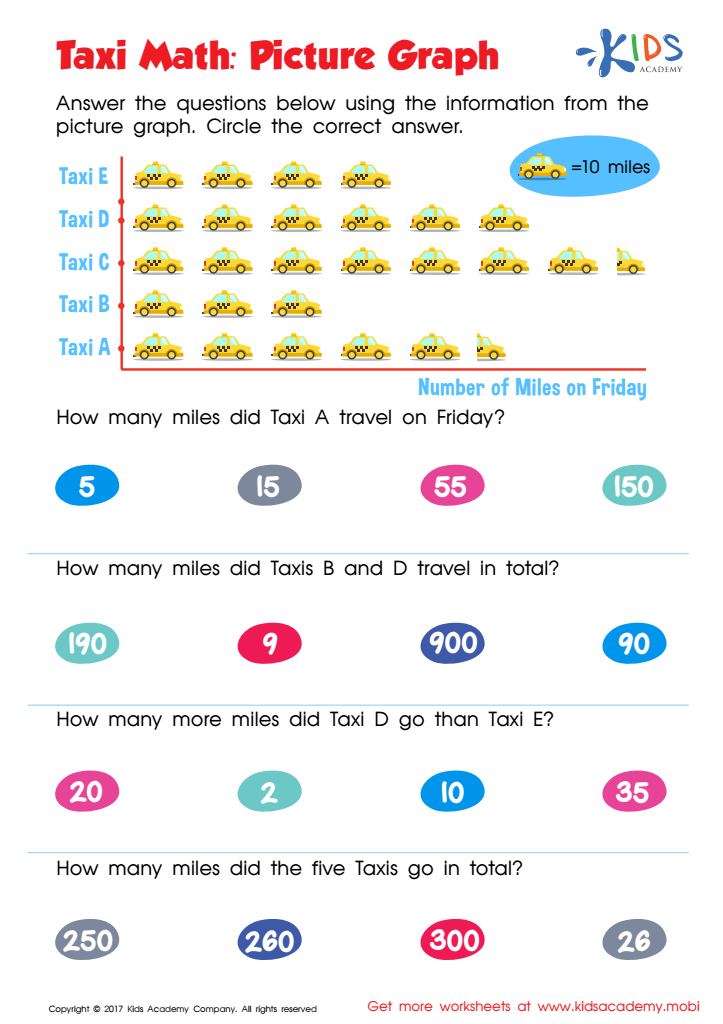
Taxi Math Worksheet
 Assign to My Students
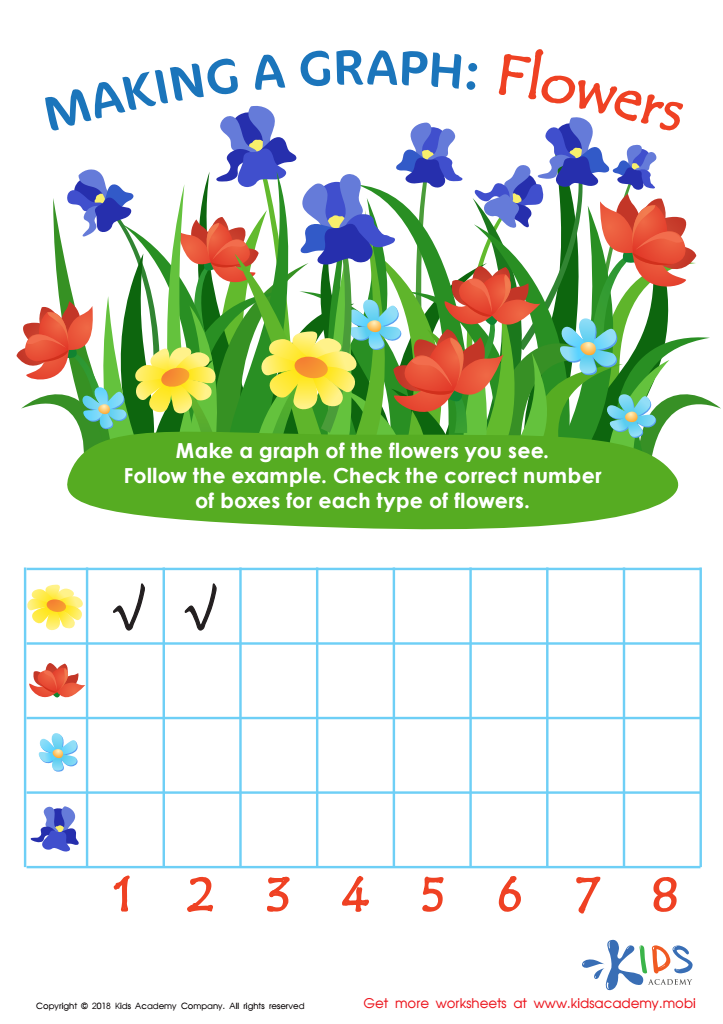
Making a Graph: Flowers Worksheet
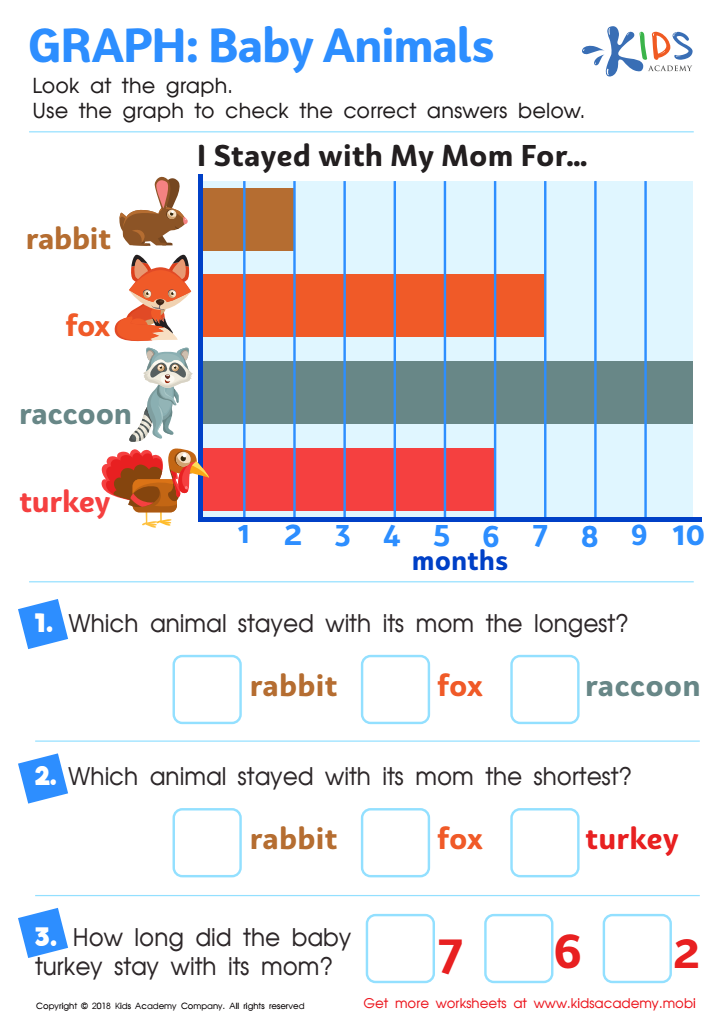
Graph: Baby Animals Worksheet
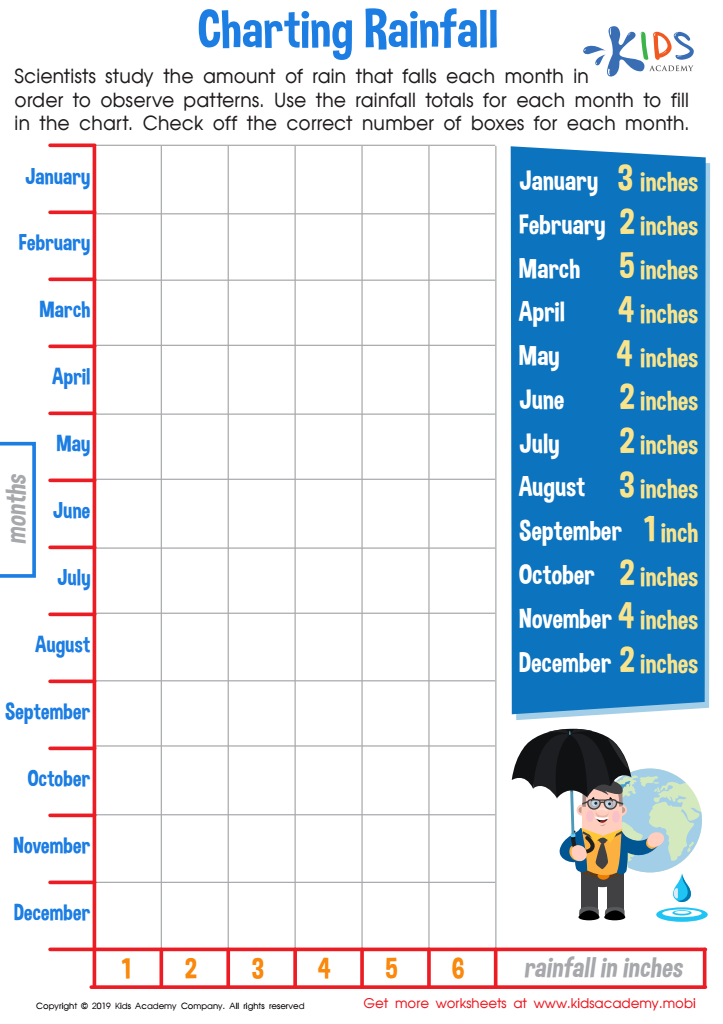
Charting Rainfall Worksheet
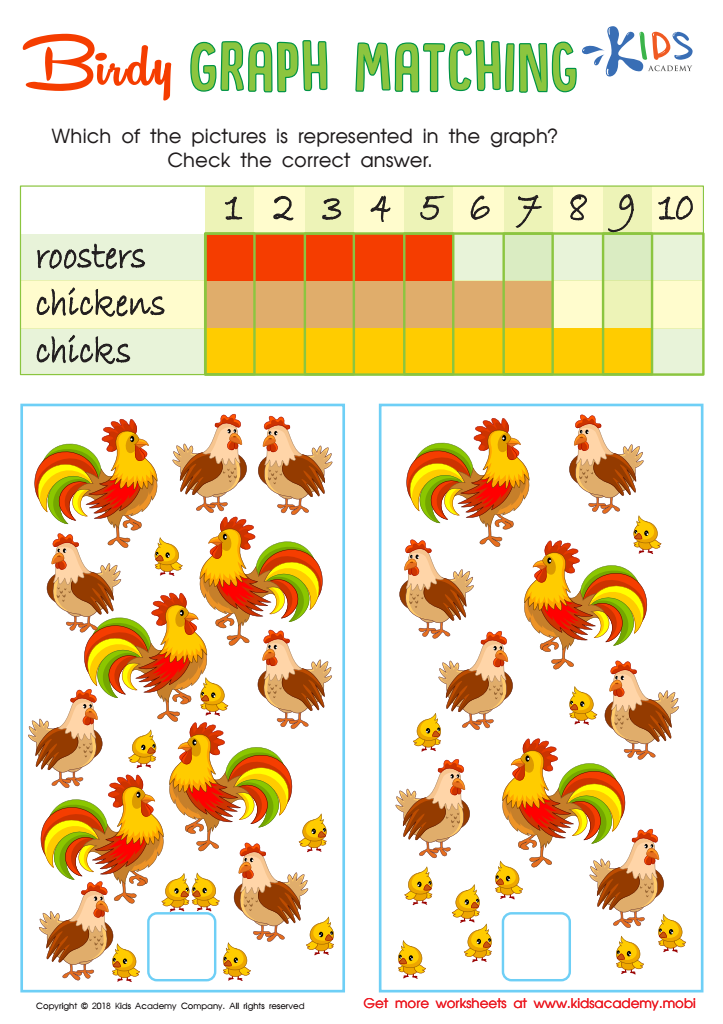
Birdy Graph Matching Worksheet








Parents and teachers should care about graph interpretation for children aged 4-8 because it lays the foundation for essential skills in reasoning, analysis, and problem-solving. Early exposure to graphical data helps young minds visually comprehend abstract information and recognize patterns, an important part of cognitive development. Simplified graphs like bar charts, pie charts, and pictograms can make learning fun and interactive, stimulating curiosity and engagement.
By learning to interpret graphs, kids also enhance their mathematical skills. They practice counting, comparing quantities, and understanding concepts like more, less, equal, and data trends. Graph interpretation is integrated into many subjects, from science to social studies, so familiarity with graphs boosts overall academic performance.
Additionally, modern life is data-driven. Adults frequently encounter data in news, technology, and personal finances. Establishing graph literacy early ensures that children grow up more competent and confident in dealing with data, preparing them for future academic and professional challenges. Furthermore, mastering this skill at an early age fosters critical thinking, helping kids become discerning and informed individuals.
In summary, teaching young children graph interpretation is crucial for nurturing their intellectual growth, fostering a love for learning, and equipping them with vital life skills.








