
Holiday recognition Worksheets for Ages 4-8
3 filtered results
Difficulty Level
Grade
Age
-
From - To
Subject
Activity
Standards
Explore our fun and engaging Holiday Recognition Worksheets designed for children ages 4-8! These worksheets are perfect for introducing young learners to various holidays throughout the year, helping them to identify and celebrate cultural traditions. Each activity encourages creativity, critical thinking, and fine motor skills while providing valuable opportunities to enhance skills in coloring, tracing, and matching. Tailored for early childhood education, our holiday-themed worksheets make learning enjoyable and interactive, sparking curiosity about celebrations around the world. Download now and bring holiday magic into your classroom or home, making every occasion a chance for joyful learning!
Favorites
With answer key
Interactive
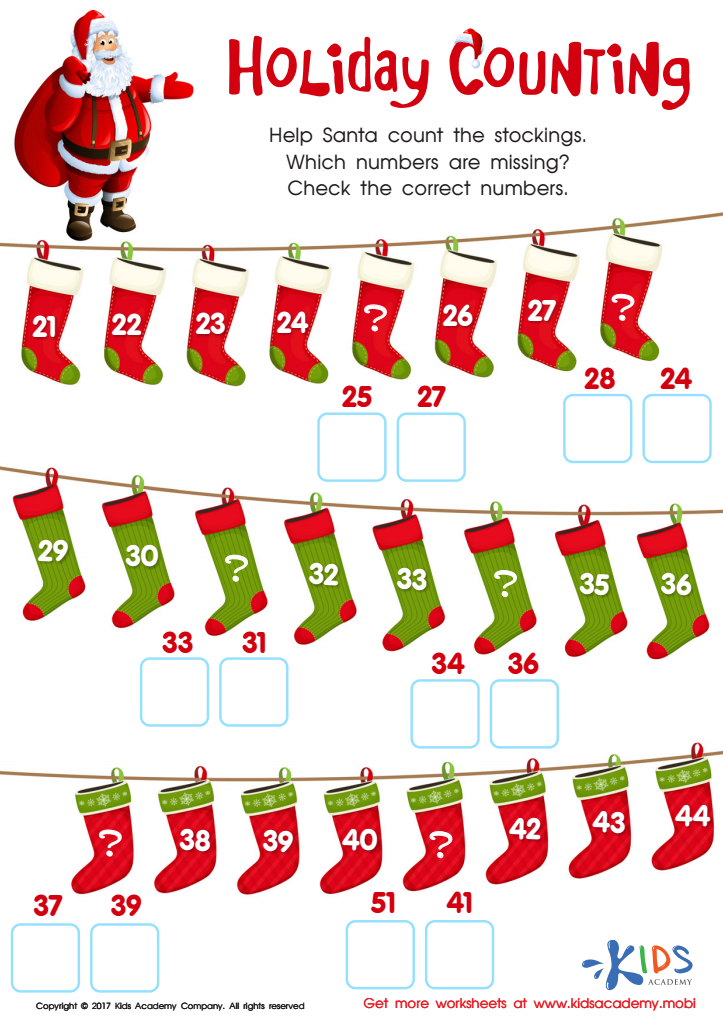
Holiday Counting Worksheet
Let's spread some holiday cheer! Santa needs help counting stockings hung up for gifts - can your little one lend a hand? Find the missing numbers on the worksheet and have them check the boxes for the correct answers. Time to get counting!
 Assign to My Students
Holiday Counting Worksheet
Worksheet
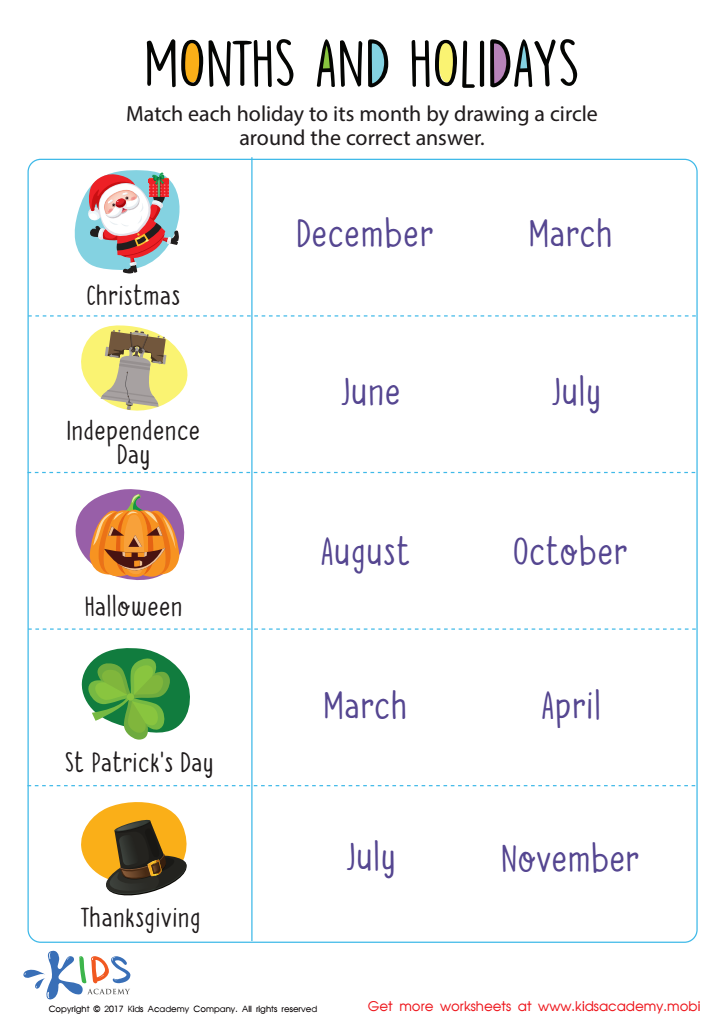
Months and Holidays Worksheet
Kids have fun learning about holidays and the calendar with this PDF worksheet! As they work, they'll connect holiday sights and symbols to their respective months. It's a great way for kids to gain an understanding of the yearly cycle!
Months and Holidays Worksheet
Worksheet
Join Kids Academy for Free
Who is primarily going to use this learning content?






Holiday recognition is crucial for children aged 4-8 as it enhances their social, cultural, and emotional development. At this age, children are beginning to understand the world around them, fostering their sense of belonging and identity. Recognizing various holidays helps expose children to different cultures and traditions, promoting inclusivity and diversity. This exposure broadens their perspectives and fosters empathy towards others who may have different beliefs and practices.
Additionally, holiday celebrations provide a rich opportunity for experiential learning. Through activities, stories, and art projects centered around various holidays, children can engage in hands-on learning that reinforces concepts such as counting, reading, and creative expression. This makes learning more relevant and enjoyable.
Moreover, celebrating holidays creates a sense of community inside the classroom and at home, bringing families together. Educators and parents can facilitate discussions that allow children to share their own traditions, promoting confidence and communication skills.
Ultimately, recognizing holidays helps children develop mutual respect and understanding for their peers and the world, laying a strong foundation for their future social interactions. By supporting holiday recognition, parents and teachers contribute significantly to nurturing well-rounded, culturally aware individuals.








