Identifying story elements Worksheets for Ages 4-8
4 filtered results
-
From - To
Unlock your child's storytelling potential with our "Identifying Story Elements Worksheets for Ages 4-8." Ideal for early learners, these engaging worksheets help young minds identify key parts of a story, such as characters, settings, and plots. Designed to make learning fun through vibrant illustrations and simple activities, this resource enhances reading comprehension and creative thinking. Whether your child is just starting to explore stories or needs a bit more practice, our worksheets are perfect for homeschoolers, parents, and teachers seeking effective educational tools. Foster a love for reading and storytelling today!
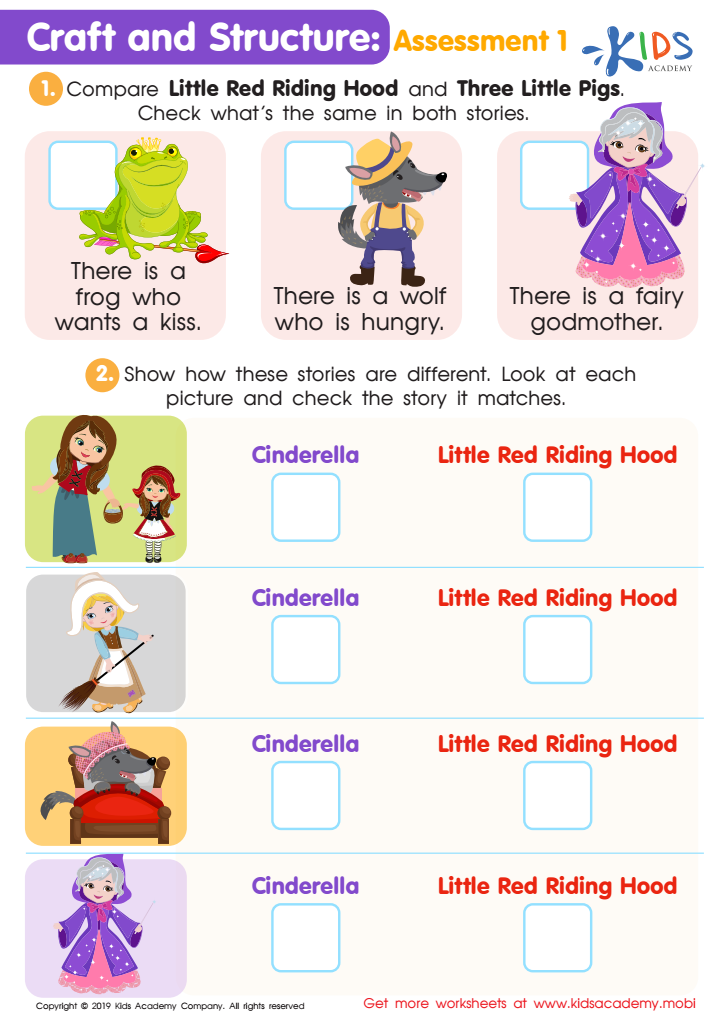
Craft and Structure: Assessment 1 Worksheet
 Assign to My Students
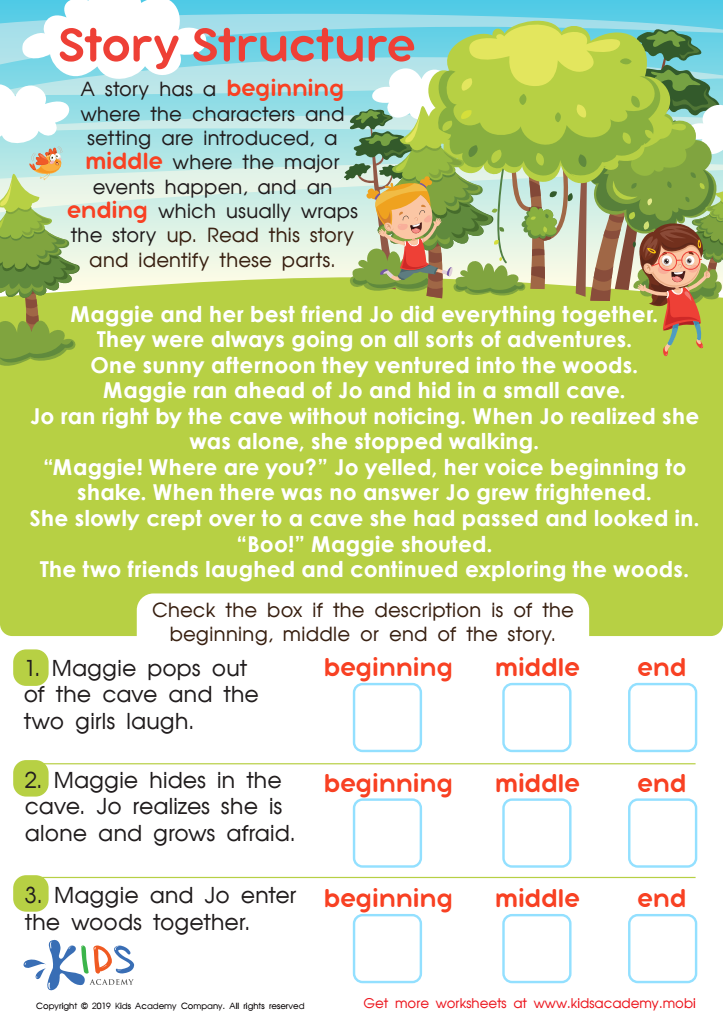
Story Structure Worksheet
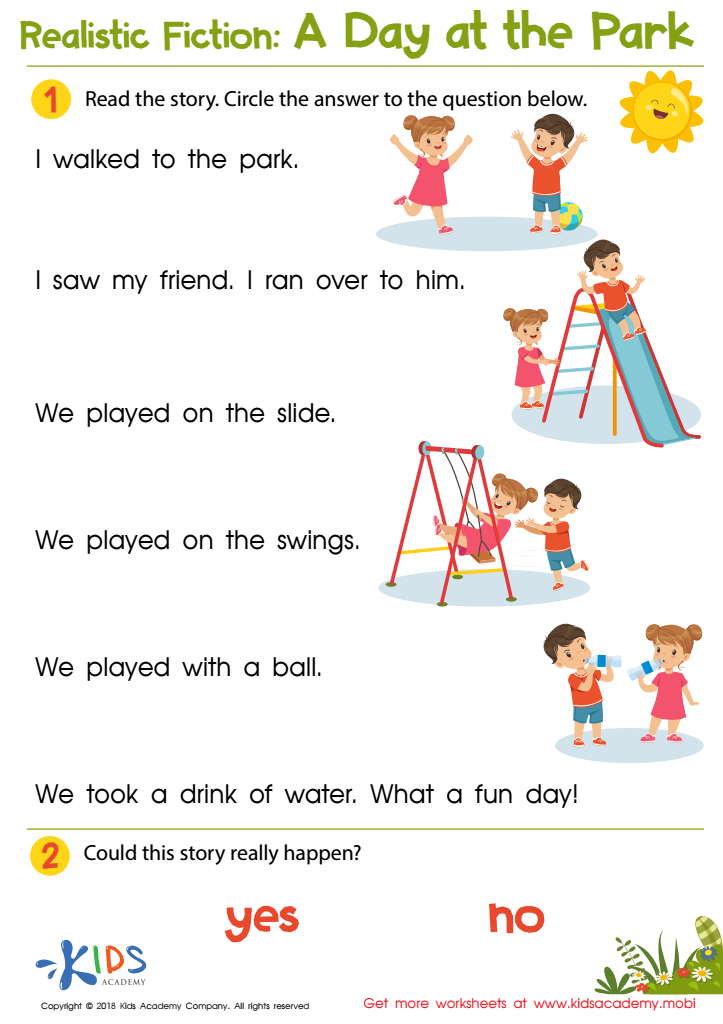
A Day at the Park Worksheet
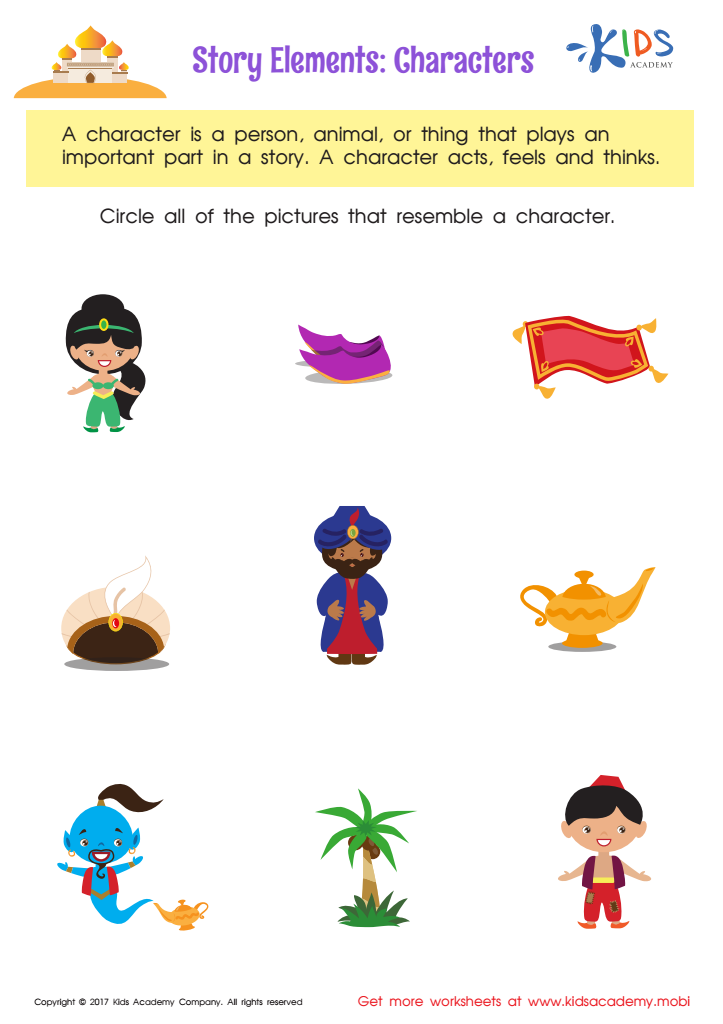
Story Elements Printable








Identifying story elements—such as characters, setting, plot, conflict, and resolution—plays a crucial role in the development of young children, particularly ages 4-8. For parents and teachers, understanding and teaching these elements can enhance children's reading comprehension, critical thinking skills, and creativity. At this developmental stage, children are building foundational literacy skills. Recognizing and discussing story elements helps them to understand and remember what they read or hear. This also aids in expanding their vocabulary and ability to express themselves more coherently.
Moreover, these discussions engage children's imagination and empathy. By identifying characters and their motivations, children learn to see from different perspectives and understand other’s feelings and actions. An awareness of setting helps ground their understanding of the context and the environment where the story takes place, often enriching their own world knowledge.
The structure provided by plot, conflict, and resolution teaches children about narrative flow and cause-effect relationships, which are critical thinking skills applicable beyond reading. Engaging with these elements repeatedly prepares children for more advanced academic tasks and fosters a love for reading that can turn into a lifelong habit. Thus, parents and teachers who focus on identifying and exploring story elements provide a fundamental stepping stone to literary and cognitive development.








