
Improve subtraction skills Worksheets for Ages 4-8
5 filtered results
Difficulty Level
Grade
Age
-
From - To
Subject
Activity
Standards
Enhance your child's mathematical abilities with our "Improve Subtraction Skills Worksheets," designed specifically for ages 4 to 8. These engaging worksheets provide a fun and interactive way for young learners to master subtraction concepts. Featuring colorful visuals and a variety of exercises, your child will practice simple subtraction problems, build confidence, and develop critical thinking skills. Each worksheet is tailored to gradually increase in difficulty, ensuring a comprehensive understanding of subtraction. Perfect for both classroom and home learning, these resources will ignite your child's enthusiasm for math while reinforcing their foundational skills. Discover the joy of learning subtraction with our playful and effective worksheets!
Favorites
With answer key
Interactive
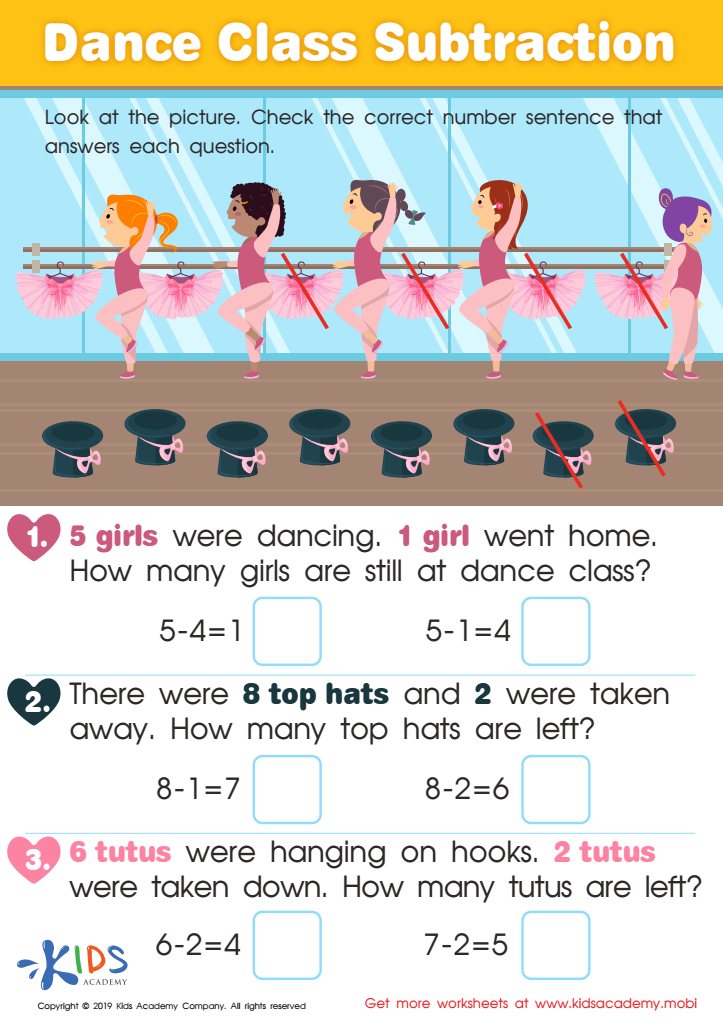
Dance Class Subtraction Worksheet
Dancing is an excellent form of exercise, and some people dance professionally, expressing their feelings through body movements. Help your kids identify the type of dance in the picture and answer the word problems in this worksheet. Encourage them to check the correct number sentence that answers the question.
 Assign to My Students
Dance Class Subtraction Worksheet
Worksheet
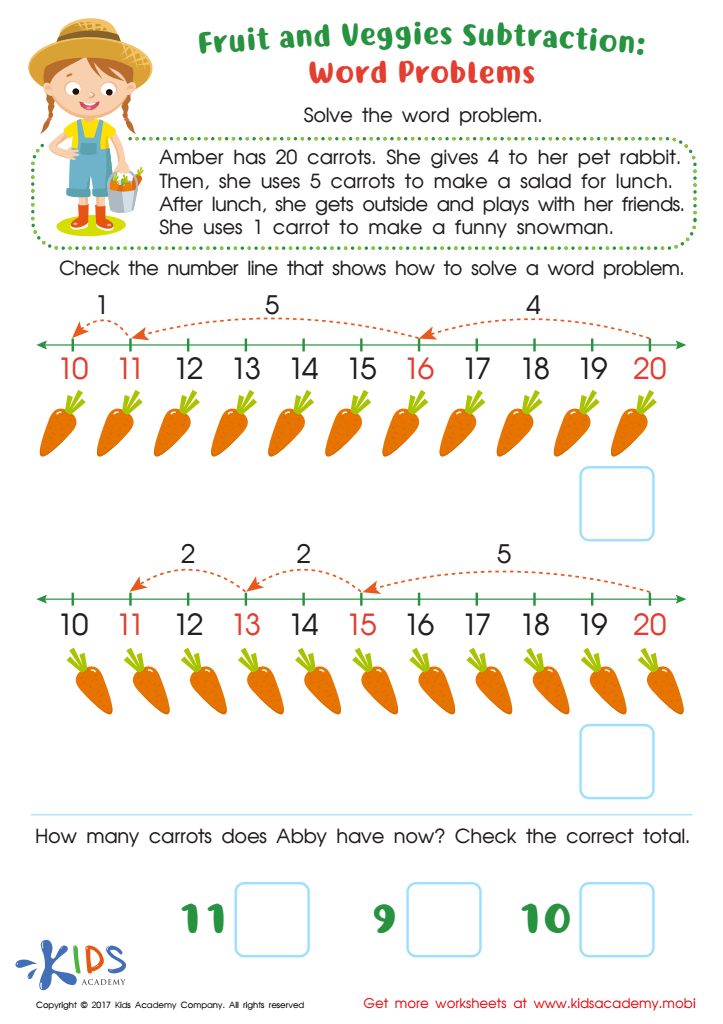
Subtraction Word Problems Printable
Subtraction word problems for 2nd grade help kids boost their sense of numeracy. This worksheet features number lines to help them solve tricky problems in a fun way! Fruits and veggies make it even more enjoyable.
Subtraction Word Problems Printable
Worksheet
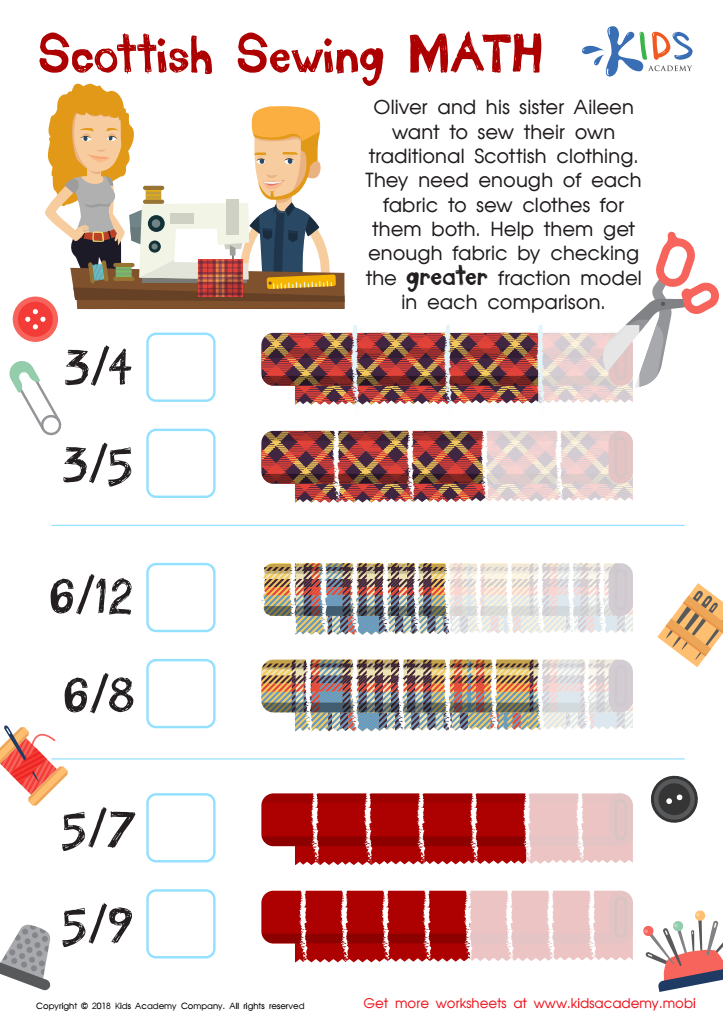
Scottish Sewing Math Worksheet
Ask your kindergartners to help Oliver and Alleen make traditional Scottish clothing by figuring out how much fabric to cut out. Help them learn a bit of geography by explaining Scotland is the home of the Scottish people and their unique traditions. Get the right amount by checking the fraction models. 80 words
Scottish Sewing Math Worksheet
Worksheet
Learning Skills
Improve subtraction skills
Enhance problem-solving abilities
Develop problem-solving abilities
Understand basic math
Promotes critical thinking
Develop comprehension of word problems
Develop mathematical understanding
Enhance problem-solving ability
Practice number sequencing
Understand math symbols
Join Kids Academy for Free
Who is primarily going to use this learning content?




.jpg)

Improving subtraction skills in children aged 4-8 is crucial for several reasons. First, fundamental math skills, like subtraction, serve as the building blocks for more complex mathematical concepts. A strong foundation in subtraction helps children understand tasks like counting backward, solving problems, and engaging with real-world situations, such as giving change or sharing items equitably.
Secondly, mastering subtraction can boost a child’s confidence. Success in math fosters a positive attitude toward learning, encouraging children to tackle challenges head-on. As they gain proficiency, they develop critical thinking skills that extend beyond mathematics, enhancing their overall cognitive abilities.
Additionally, subtraction skills frequently appear in everyday scenarios. Whether it’s calculating how many cookies are left after friend visits or figuring out the remaining time before bedtime, proficiency in subtraction aids children in navigating daily life.
Finally, teachers and parents serve as role models in fostering a love for learning. By prioritizing subtraction skills, they can instill a sense of curiosity and enthusiasm in young learners. Encouraging practice through games and interactive activities keeps the learning process fun and engaging. Overall, nurturing these skills from an early age lays a pathway for future academic success and positive life skills.








