Math fluency development Worksheets for Ages 4-8
3 filtered results
-
From - To
Discover engaging Math Fluency Development Worksheets designed specifically for children aged 4 to 8. Our printable resources are crafted to enhance essential math skills through fun and interactive activities. These worksheets focus on key concepts like addition, subtraction, counting, and number recognition, ensuring a solid foundation in math for young learners. Each worksheet promotes practice and repetition, helping children master these vital skills at their own pace. Ideal for home or classroom use, these resources foster confidence and build a love for math in early learners. Encourage your child's math journey today with our expertly designed worksheets that make learning enjoyable!
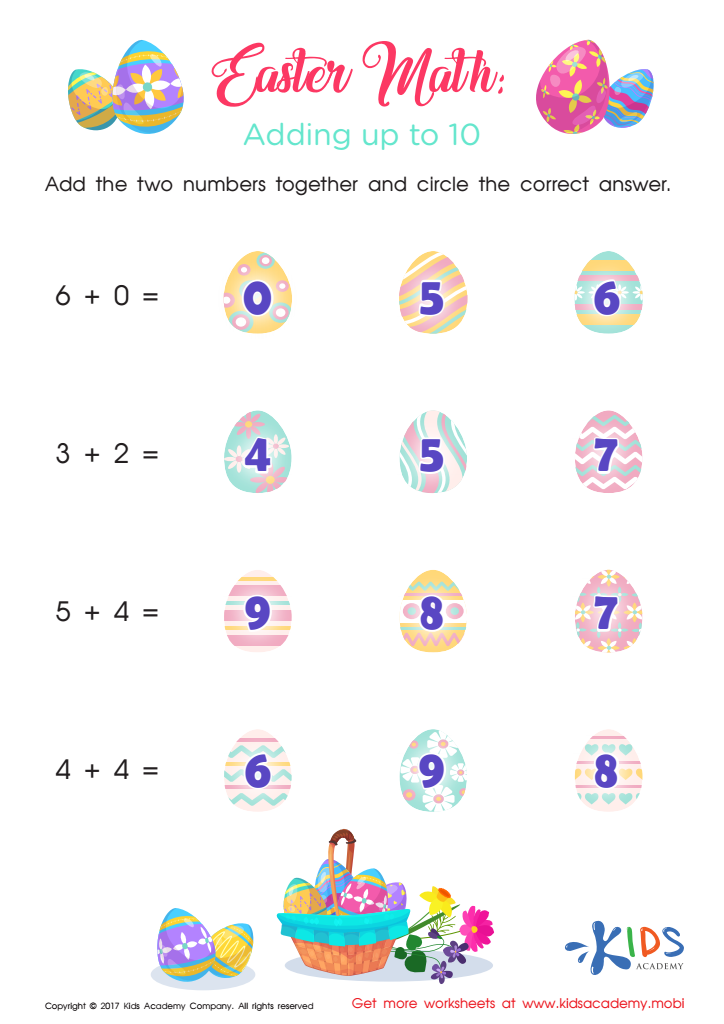
Addition Up To 10 Worksheet
 Assign to My Students
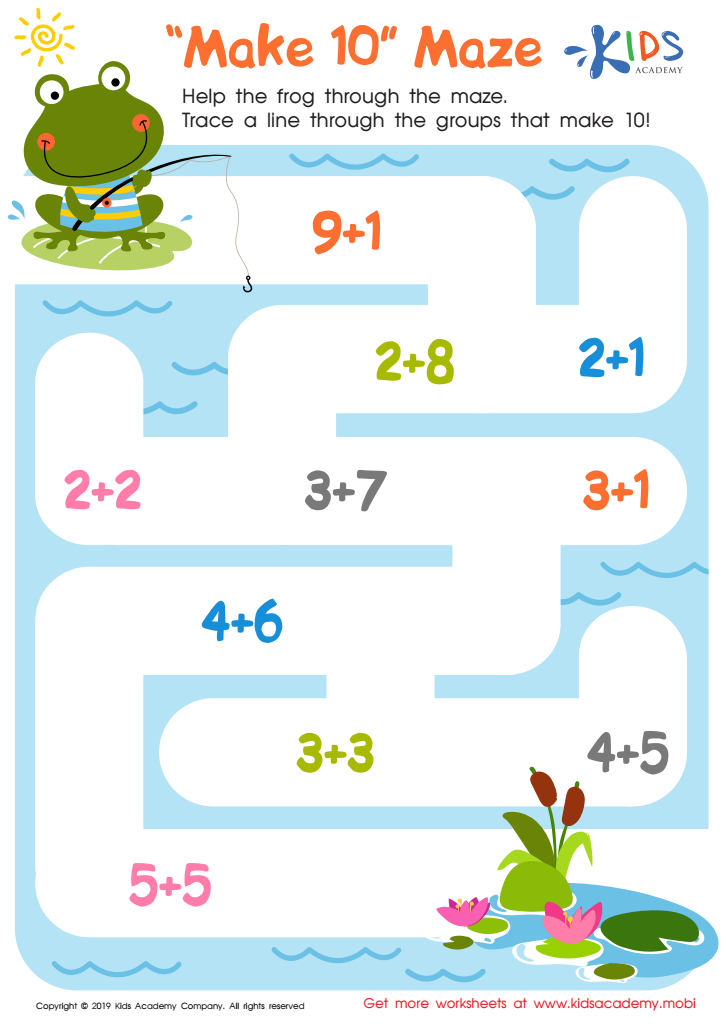
Make 10 Maze Worksheet
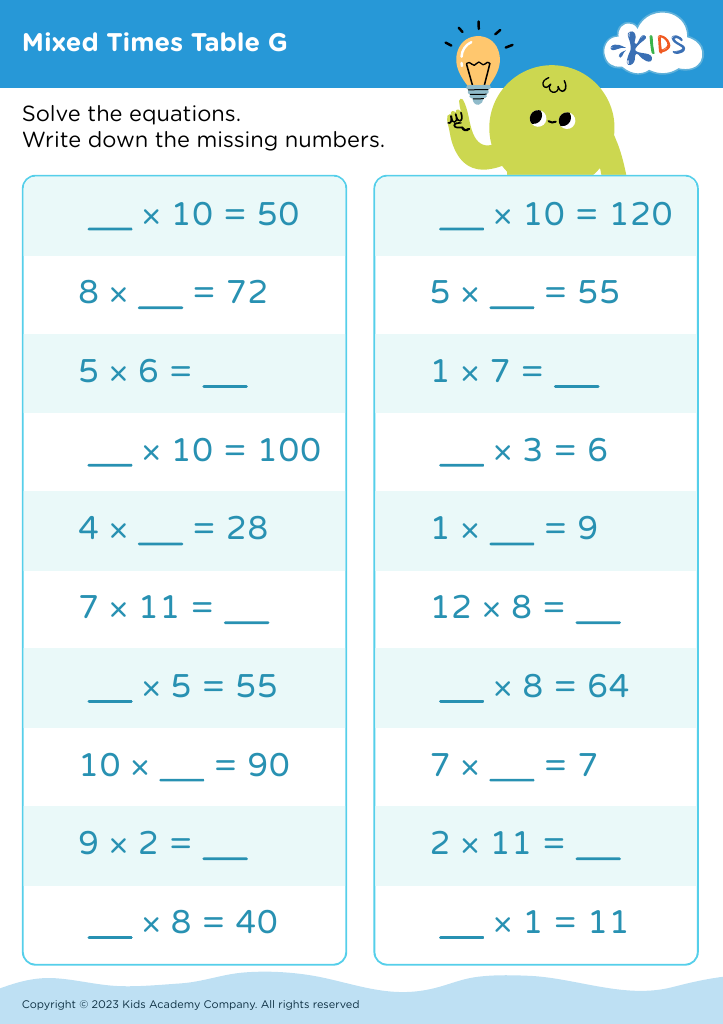







Math fluency development for children aged 4-8 is crucial because it lays the foundation for their future mathematical understanding and problem-solving abilities. During these formative years, children develop essential skills such as number recognition, counting, and basic operations (addition and subtraction). Establishing fluency in these areas helps children combine skills quickly, reducing cognitive load when tackling more complex math problems later on.
Moreover, math fluency is linked to overall academic success. Children who struggle with basic math concepts early on may face challenges in higher-level math as they progress through school, potentially leading to anxiety and disengagement from the subject. By promoting math fluency, parents and teachers provide children with the confidence they need to tackle math challenges, creating a positive cycle of learning and achievement.
Early experiences with math also support critical thinking and logical reasoning—skills that are transferable beyond mathematics into everyday life. In today's technology-driven world, strong numerical skills are vital for understanding data and financial literacy. Therefore, prioritizing math fluency from ages 4-8 not only enhances children's current learning but also equips them with essential skills for life-long success. Investing in this area is an investment in their future academic and personal growth.








