
Mathematical thinking Worksheets for Ages 4-8
7 filtered results
Difficulty Level
Grade
Age
-
From - To
Subject
Activity
Standards
Unlock your child’s mathematical potential with our comprehensive Mathematical Thinking Worksheets for Ages 4-8! Specifically designed to nurture early learning and critical thinking, these engaging activities cover essential math skills like pattern recognition, sorting, counting, and simple arithmetic. Our expertly crafted worksheets are perfect for preschool through early elementary students, providing a fun and educational experience that supports cognitive development. With colorful illustrations and interactive tasks, your child will build a strong foundation in mathematics while enjoying the learning process. Equip your young learner with the tools they need for academic success and a lifelong love for math!
Favorites
With answer key
Interactive
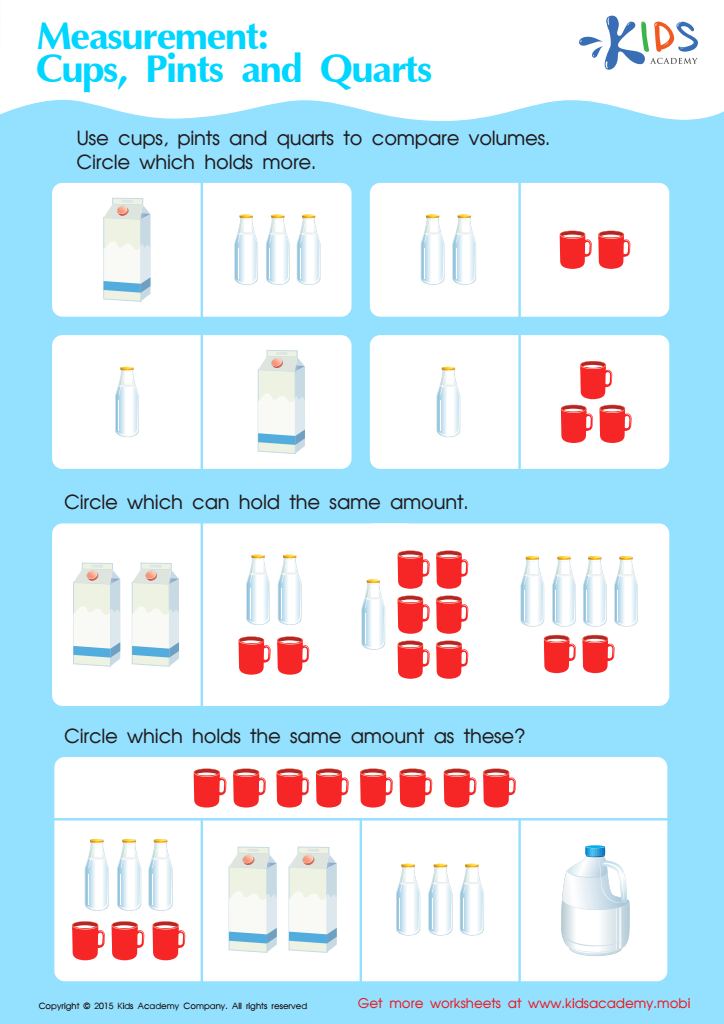
Measurement: Compare Volumes Worksheet
Compare volumes with Kids Academy and have fun! (80 words)
Practice measuring with Kids Academy and have fun! Compare volumes in pictures and circle which holds more. Keep learning with free math worksheets available on our website. Enjoy the process and have fun!
 Assign to My Students
Measurement: Compare Volumes Worksheet
Worksheet
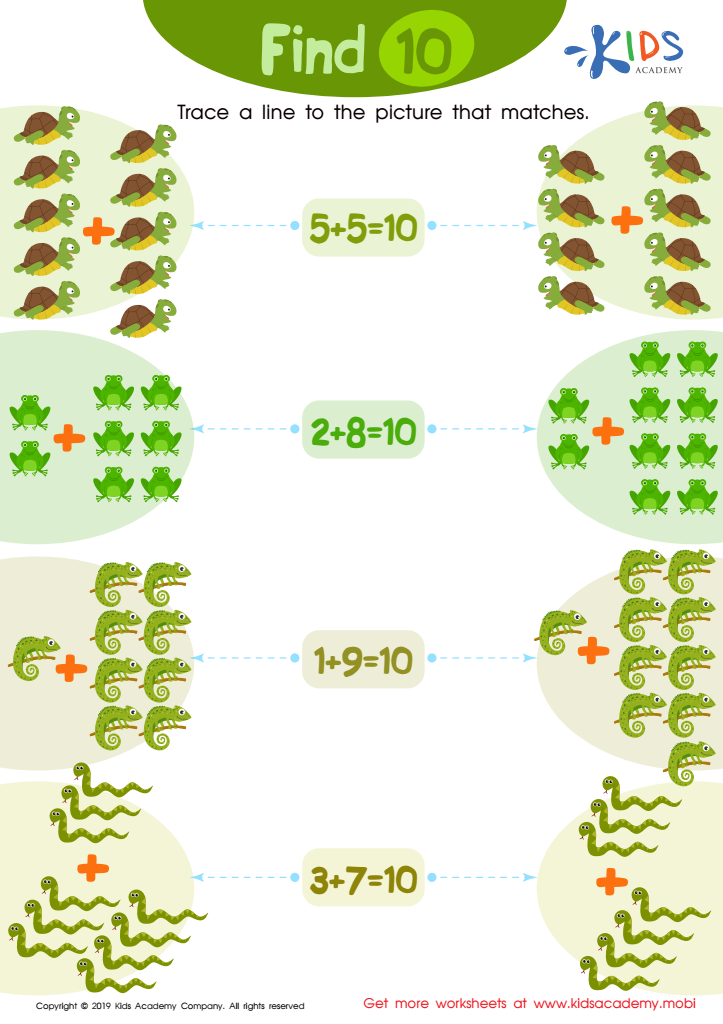
Find 10 Worksheet
Counting can be tricky, but your kids can master it with regular practice. Here's a fun activity to help: count the animals, then trace a line to the pictures that matches. With these tips, math will be an easy walk in the park.
Find 10 Worksheet
Worksheet
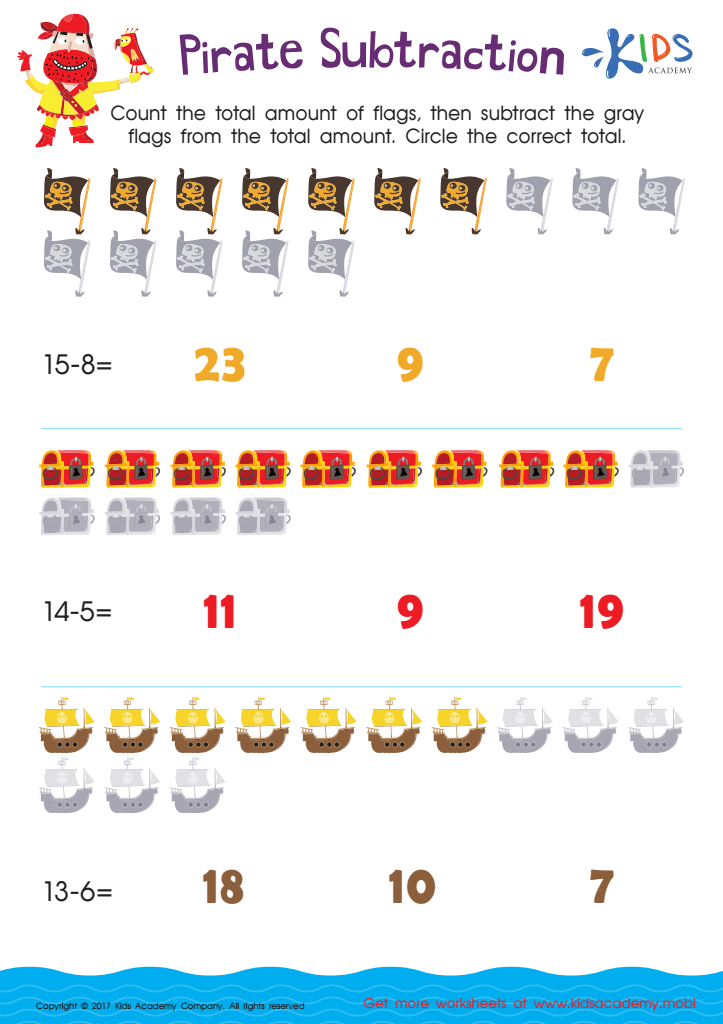
Pirate Subtraction Substraction Worksheet
Ahoy! Learn to subtract with pirate-themed math fun! This worksheet has ships and treasure chests to help your little one understand subtraction using a helpful strategy. Colorful illustrations make it a great learning experience.
Pirate Subtraction Substraction Worksheet
Worksheet
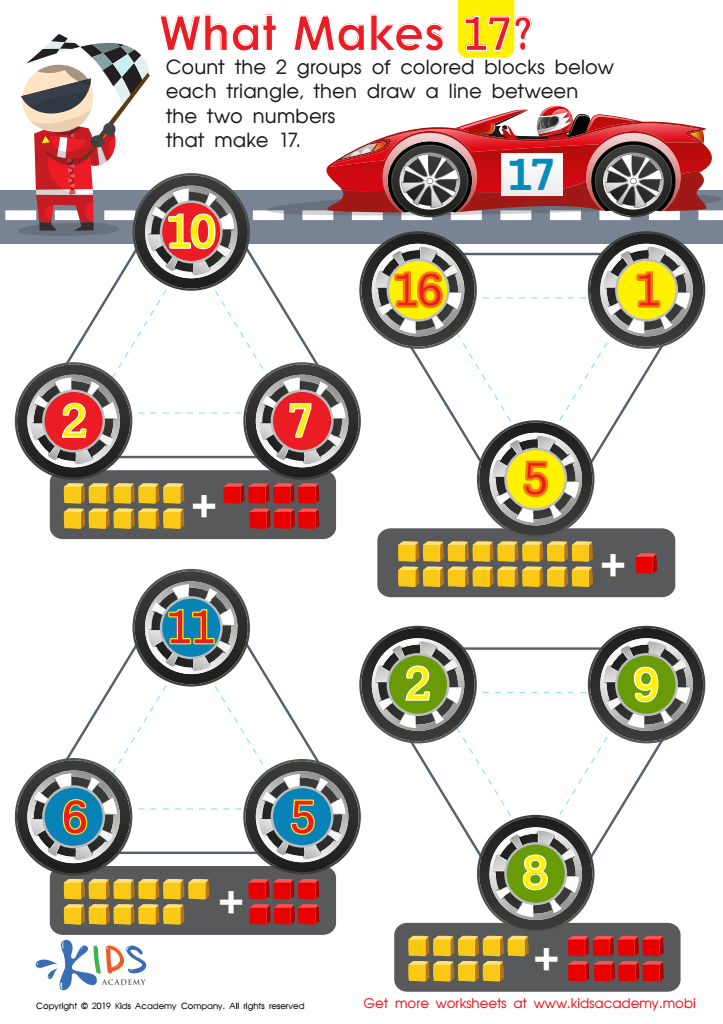
What Makes 17 Worksheet
Practice makes perfect! Let your kindergartners explore addition using this worksheet. Count the blocks in each triangle to reach the same total of 17, and draw a line between the two numbers. Once they get the hang of it, nothing will be too difficult!
What Makes 17 Worksheet
Worksheet
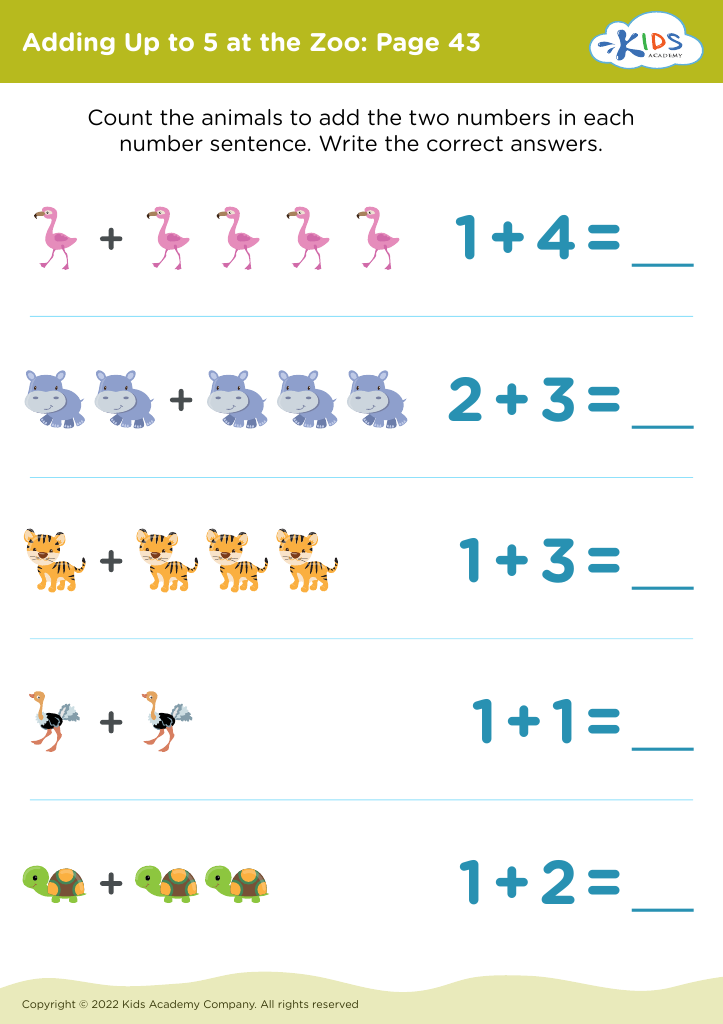
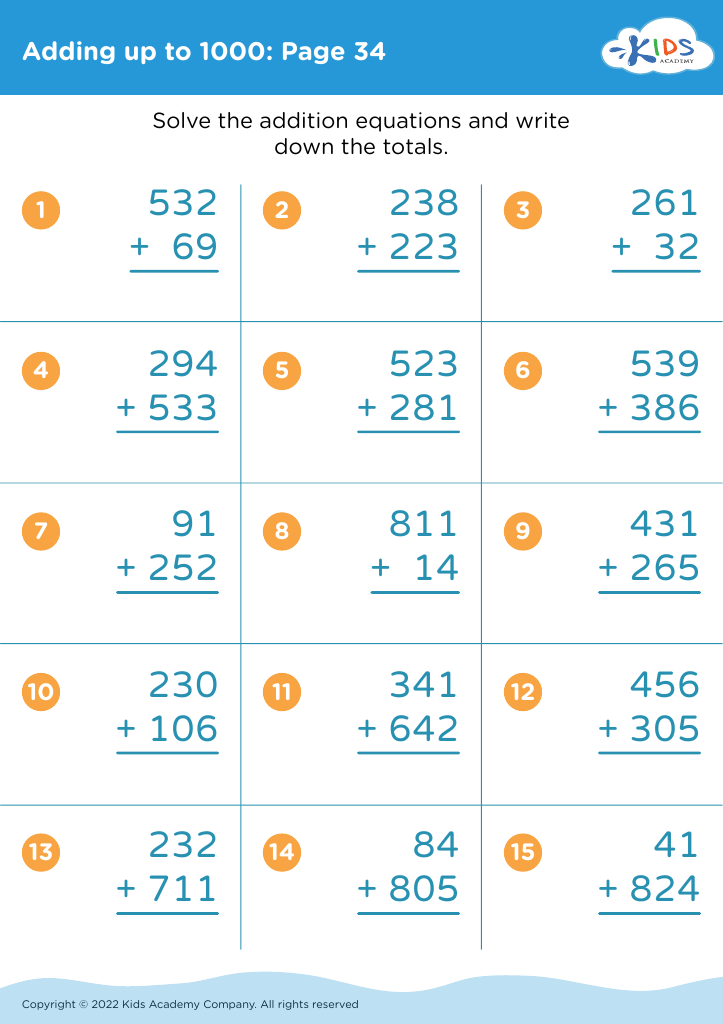
Join Kids Academy for Free
Who is primarily going to use this learning content?








Mathematical thinking from ages 4-8 is critical because it lays the foundation for future learning and problem-solving skills. During these formative years, children are highly receptive and their brains are rapidly developing, making it the perfect time to introduce mathematical concepts. Engaging in activities that stimulate mathematical thinking helps enhance their cognitive abilities, such as logic, reasoning, and spatial awareness.
Parents and teachers should care about fostering mathematical thinking because it promotes confidence and a positive attitude towards math. Early exposure to math concepts, like counting, shapes, patterns, and simple arithmetic, helps build a child's ability to understand and tackle more complex problems in later years. These skills are not only vital for academic success but are also essential in everyday life, from budgeting to time management.
Moreover, nurturing an interest in math early on can reduce math anxiety and shift children's perceptions about math being difficult or intimidating. Interactive and playful learning experiences can make math enjoyable and natural, encouraging a lifelong appreciation for the subject. By prioritizing mathematical thinking, parents and teachers provide children with essential tools to thrive in a world that increasingly relies on STEM (Science, Technology, Engineering, and Mathematics) skills.








