
Money counting skills Worksheets for Ages 4-8
5 filtered results
Difficulty Level
Grade
Age
-
From - To
Subject
Activity
Standards
Enhance your child’s financial literacy with our Money Counting Skills Worksheets, tailored for ages 4-8. These engaging, age-appropriate printables simplify the basics of money recognition, addition, and subtraction using various denominations. Each worksheet is thoughtfully designed to cater to the learning needs of young mathematicians, making money counting fun and interactive. Foster critical thinking and problem-solving skills while boosting confidence in handling real-life money situations. Perfect for parents and educators, our resources provide a strong foundation for lifelong financial competence and numeracy. Start building essential money counting skills today with Kids Academy's expertly crafted worksheets!
Favorites
With answer key
Interactive
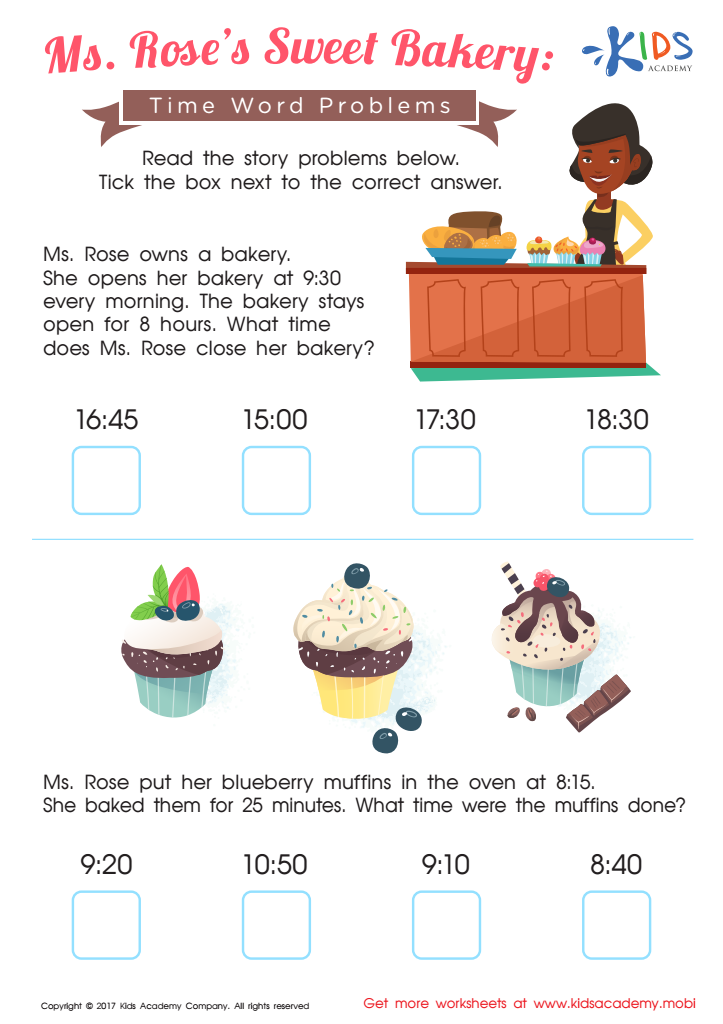
Ms. Roseв's Sweet Bakery Time Worksheet
Help your child understand the 24-hour clock using this fascinating telling time word problems worksheet: Sweet Bakery! Widely known as "military time", this skill isn't taught in school but is important for your kid to master.
 Assign to My Students
Ms. Roseв's Sweet Bakery Time Worksheet
Worksheet
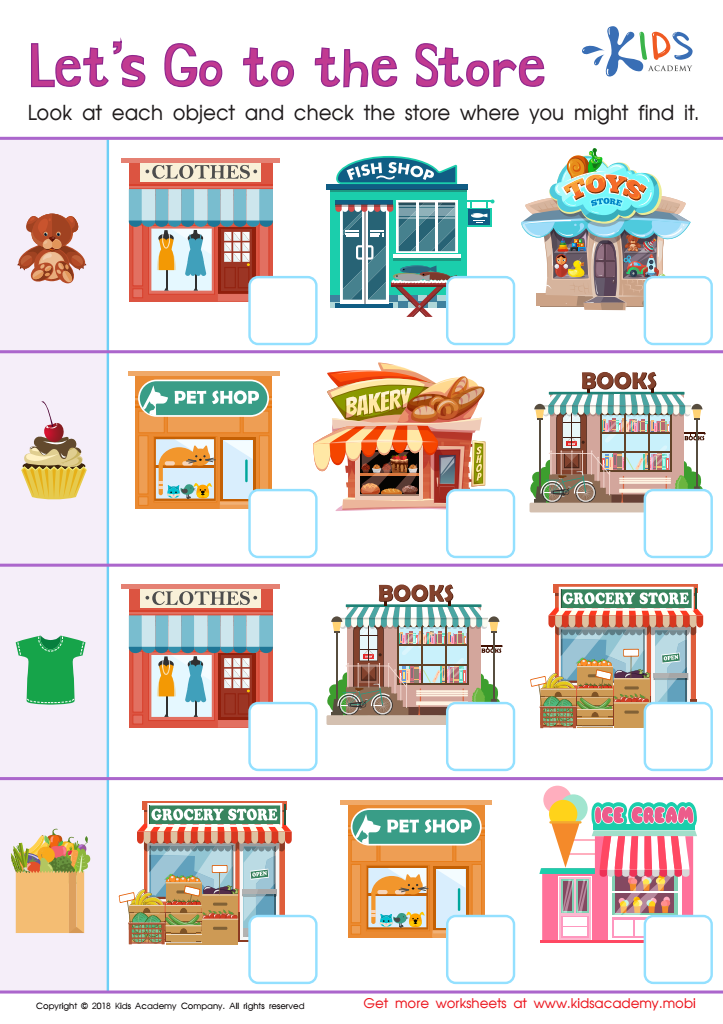
Let's Go to the Store! Worksheet
Take your kids along for errands and shopping. Ask them to identify items on this worksheet and the store where you'd buy them. See how much attention they were paying! Have fun and find out with this fun worksheet.
Let's Go to the Store! Worksheet
Worksheet
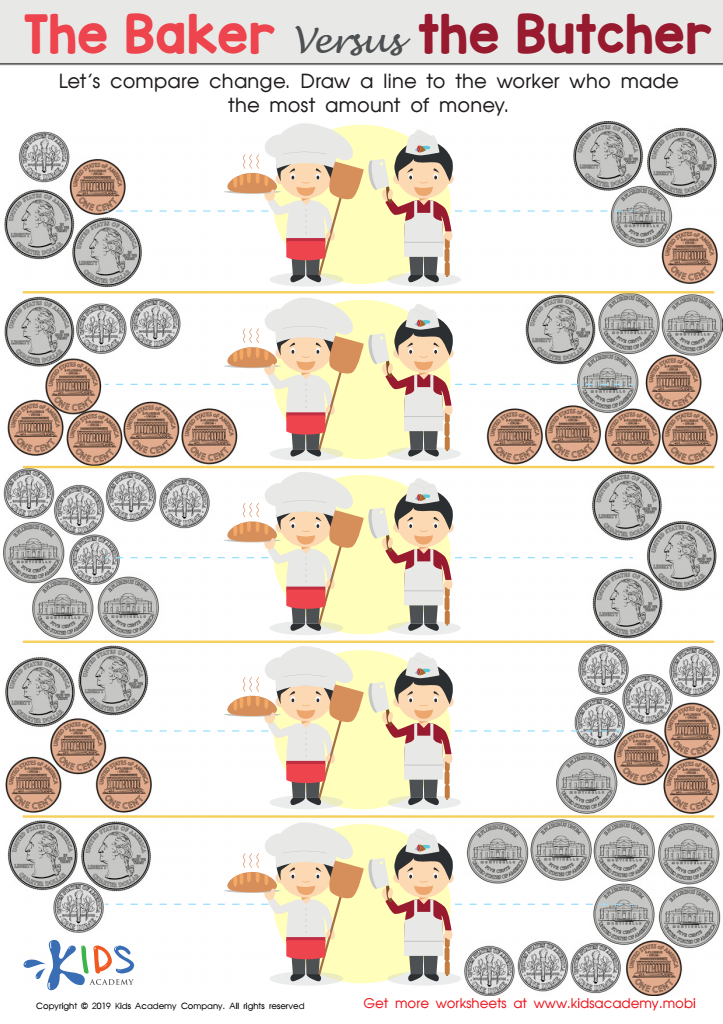
The Baker versus the Butcher Worksheet
At the baker’s and butcher’s, there are plenty of delicious treats and meals! With this worksheet, your kids can see who made more money at the end of the day. Have them trace a line to the worker who made the most amount of money. They’ll have fun while learning the basics of business and money!
The Baker versus the Butcher Worksheet
Worksheet
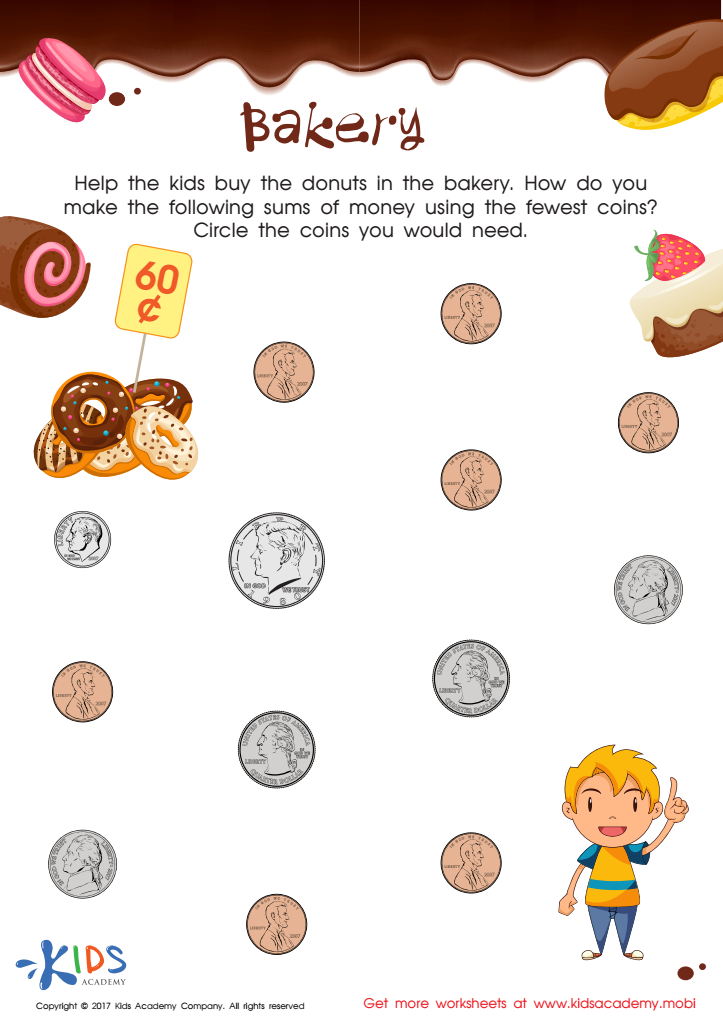
Counting Coins Worksheet
It will challenge them to spend a given amount using the least coins possible. Perfect for 2nd grade.
Help your child learn to count coins with this fun bakery-themed worksheet. It's perfect for 2nd graders and will challenge them to use the least coins possible to spend a set amount. Develop a valuable life skill and have fun while doing it!
Counting Coins Worksheet
Worksheet
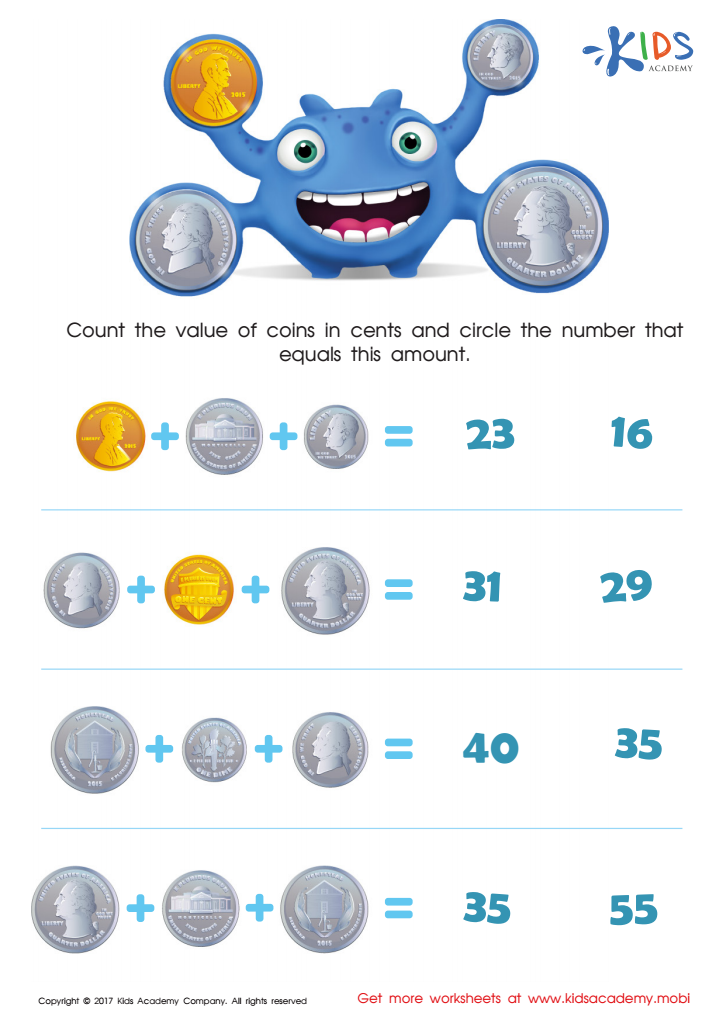
Counting the Coins Money Worksheet
Count coins quickly and work out sums in cents. Remember the value of each coin!
Counting the Coins Money Worksheet
Worksheet
Join Kids Academy for Free
Who is primarily going to use this learning content?








Money counting skills are critical for young children aged 4-8, as these early years form the foundation for future financial literacy and numeracy skills. Mastering money concepts enables children to understand the value of different coins and bills, fostering cognitive development in areas like addition, subtraction, and the ability to compare quantities. Engaging in practical activities such as pretend play with toy money instills a sense of responsibility and the idea that resources are limited, highlighting the importance of making wise choices.
Incorporating money counting into everyday learning prepares children for real-world scenarios, such as purchasing items and making change, which boosts their confidence and independence. Moreover, discussing financial concepts early on encourages good habits around saving and spending, countering impulsive behavior and promoting delayed gratification.
For teachers, integrating money counting in the curriculum enriches mathematical learning and boosts students' engagement through hands-on, tangible experiences. For parents, reinforcing these skills at home can create valuable bonding moments and provide continuity in learning. Ultimately, familiarity with money from an early age sets the stage for better decision-making and financial stability in the future, making it an essential skill for young learners to grasp.








