Picture-word association Worksheets for Ages 4-8
4 filtered results
-
From - To
Discover our engaging picture-word association worksheets designed specifically for children aged 4 to 8! These interactive resources help young learners enhance their vocabulary, improve reading skills, and boost cognitive development through delightful images paired with corresponding words. By connecting visuals with text, kids will cultivate critical thinking and language growth while having fun. Perfect for home or classroom activities, these worksheets promote essential early literacy skills and support diverse learning styles. Encourage your child's love for words and creativity with our colorful and educational picture-word association worksheets, tailored to make learning an enjoyable adventure! Download and start today!
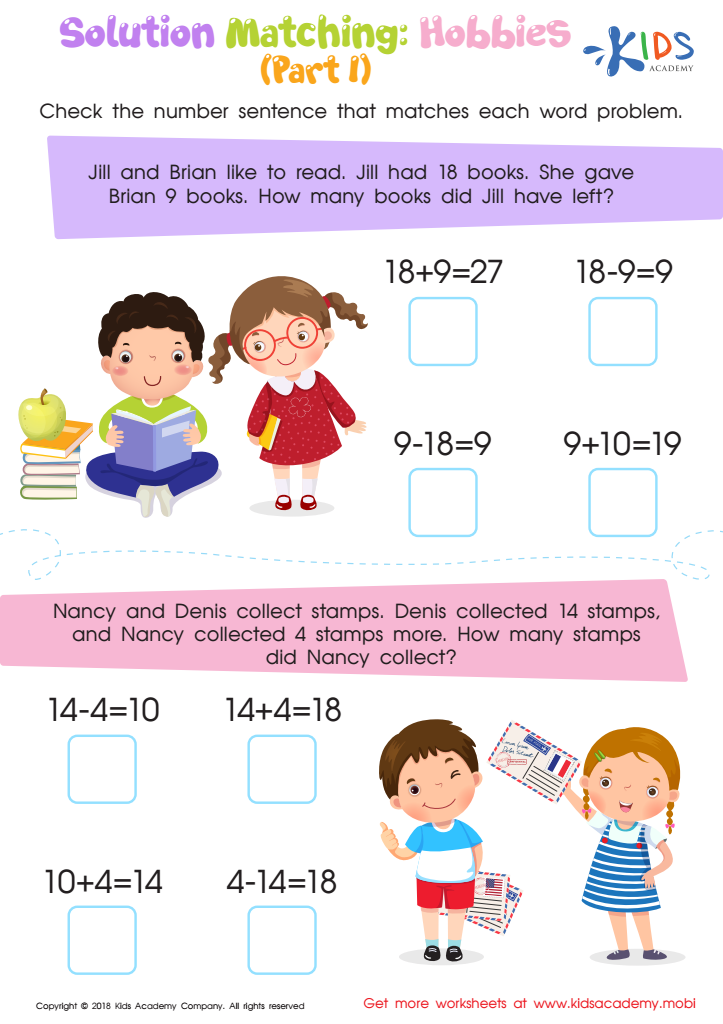
Solution Matching: Hobbies. Part 1 Worksheet
 Assign to My Students
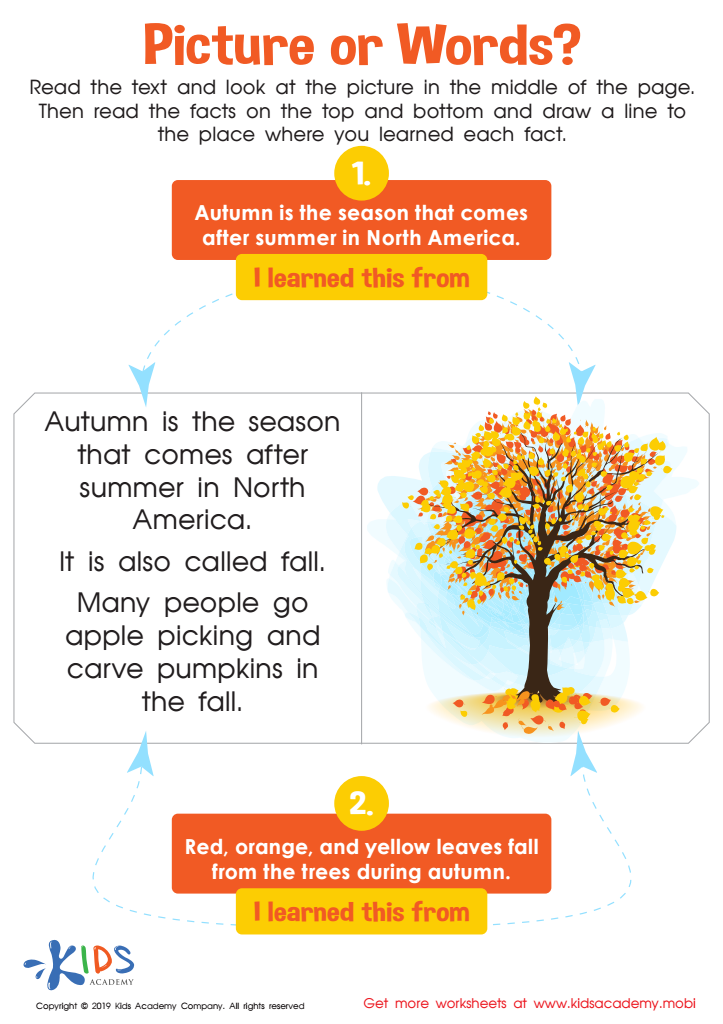
Picture Words Worksheet
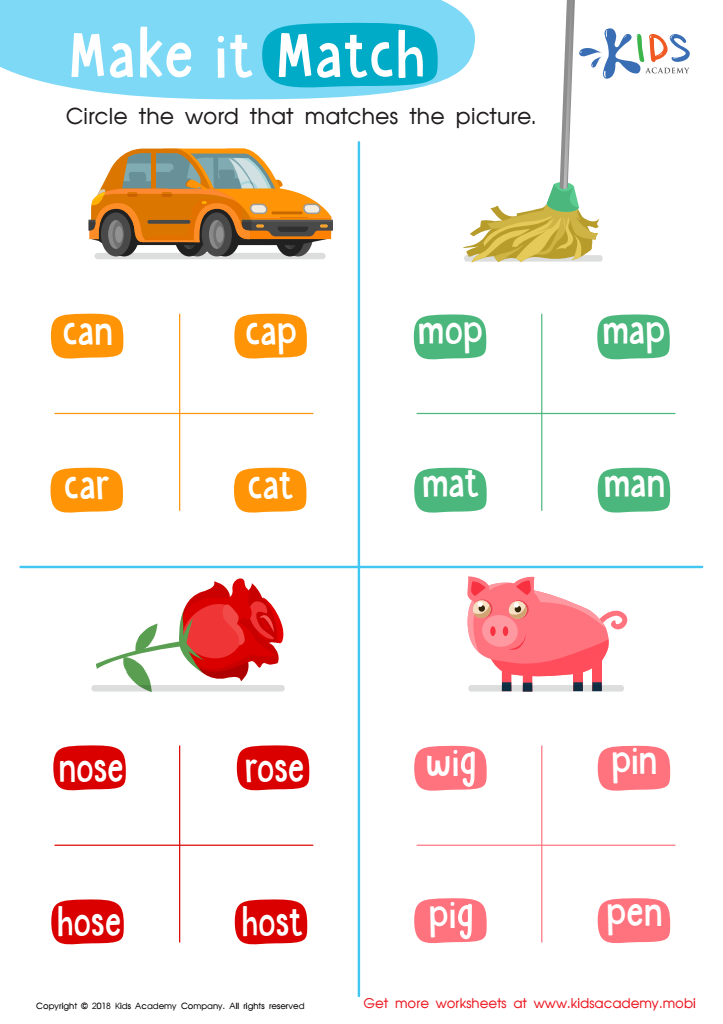
Make It Match Worksheet
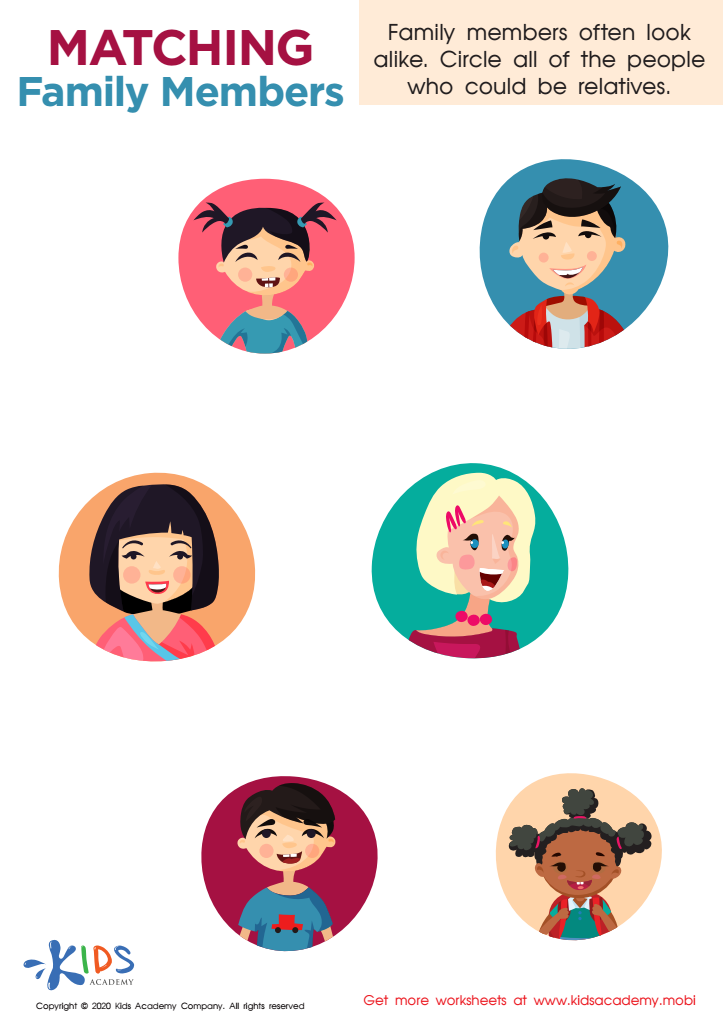
Matching Family Members Worksheet







Picture-word association is a vital literacy tool for children aged 4-8, as it fosters early reading skills and cognitive development. At this stage, children are naturally attuned to visual stimuli, making images powerful tools for learning. By pairing pictures with their corresponding words, children can connect vocabulary meaningfully, enhancing their understanding and retention.
For parents and teachers, utilizing picture-word association supports various areas of development. It enriches language skills, as children learn to identify and articulate words, boosting their vocabulary. This method also aids in developing phonetic awareness, enabling them to sound out words more effectively. Additionally, it encourages imagination and creativity, as children associate words with visual concepts.
Furthermore, engaging children with picture-word activities can promote literacy enjoyment, providing a foundation for a lifelong love of reading. By supporting picture-word association, adults not only build essential literacy skills but also foster confidence and independence in their young learners. Ultimately, prioritizing this method in early education creates well-rounded, eager readers, enhancing overall academic success and personal growth in years to come. Therefore, it is crucial for parents and teachers to incorporate this strategy in their teaching and nurturing approaches.








