Practical application of fractions Worksheets for Ages 4-8
3 filtered results
-
From - To
Unlock the world of fractions with our engaging "Practical Application of Fractions" worksheets designed for children aged 4-8. These resources offer a fun and interactive approach to learning fractions through real-life contexts, helping young learners visualize and comprehend concepts such as halves, thirds, and quarters. With vibrant illustrations and age-appropriate challenges, kids will practice identifying, comparing, and applying fractions in everyday situations. Perfect for at-home learning or classroom use, these worksheets not only build essential math skills but also enhance critical thinking and problem-solving abilities. Dive into the exciting realm of fractions and watch confidence and understanding grow!
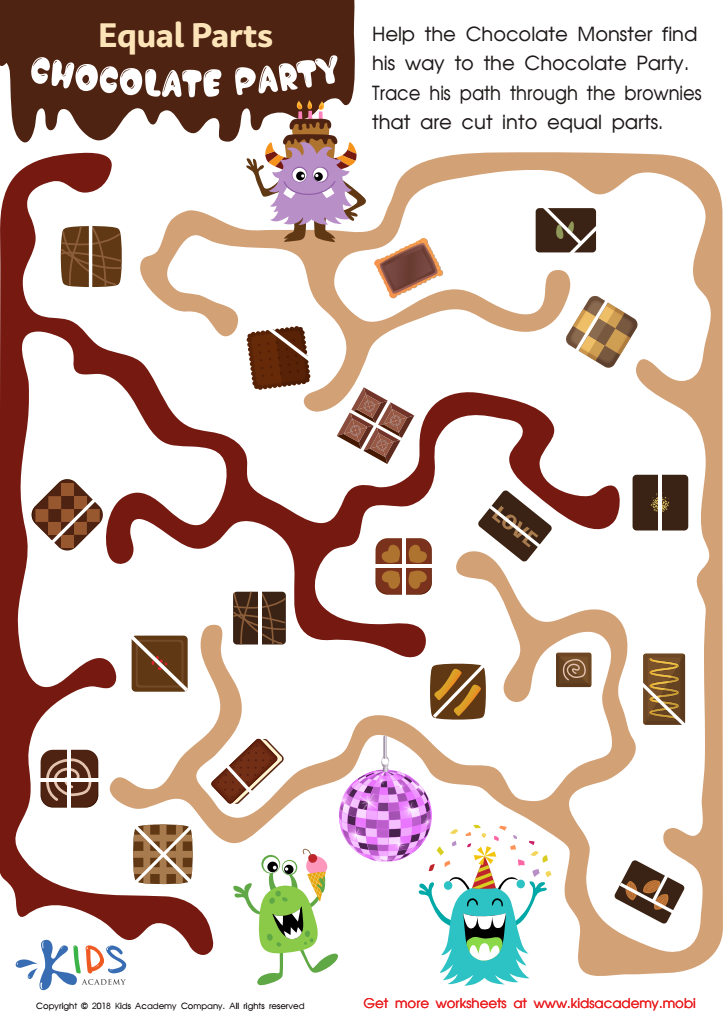
Equal Parts: Chocolate Party Worksheet
 Assign to My Students
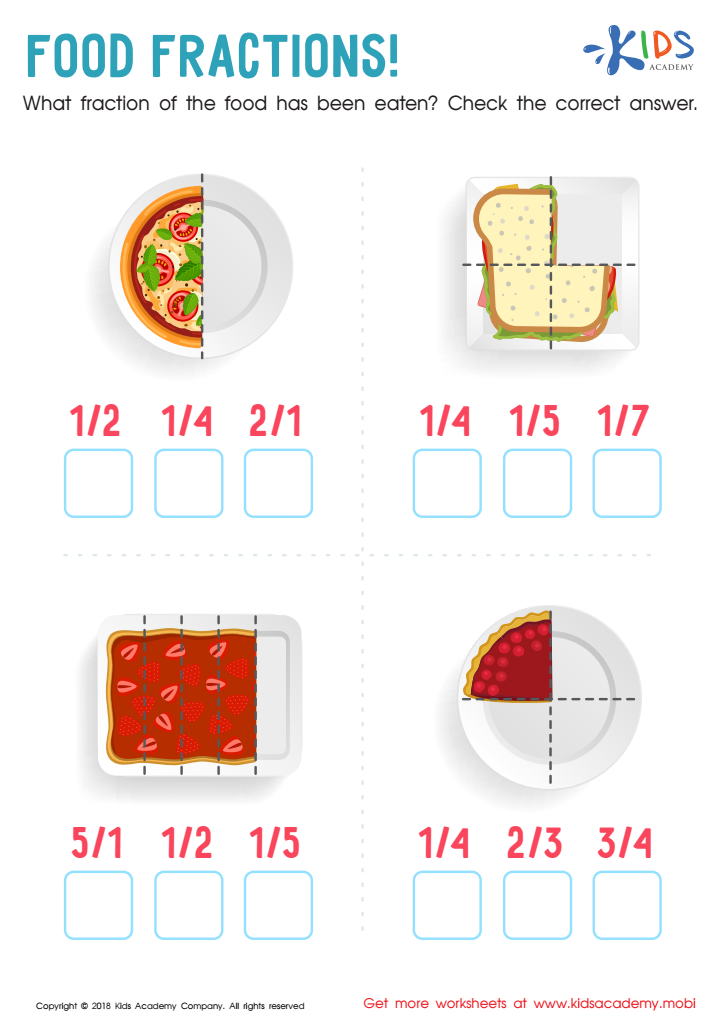
Food Fractions Worksheet


.jpg)





Understanding practical applications of fractions is crucial for children aged 4-8 as it lays a foundational understanding of mathematics. At this age, children are naturally curious, making it an opportune time to introduce fractions through tangible experiences they can relate to. Parents and teachers should care because mastering fractions helps develop critical thinking and problem-solving skills that extend beyond mathematics.
Using everyday examples—like sharing snacks, dividing toys, or measuring ingredients in cooking—makes fractions accessible and enjoyable. For instance, when children cut a pizza into slices, they gain insight into how fractions represent parts of a whole. This hands-on experience enhances comprehension and retention while showing them how math applies to daily life, fostering a love for the subject.
Furthermore, an early grasp of fractions serves as a building block for more complex mathematical concepts intersecting with science and engineering later on. Addressing fractions early instills confidence in children, making them more willing to tackle challenges as they progress through school. Therefore, involving and educating parents and caregivers about practical fraction applications ensures a supportive environment in which children can thrive both academically and socially.








