Problem solving enhancement Worksheets for Ages 4-8
3 filtered results
-
From - To
Discover our Problem Solving Enhancement Worksheets designed for children ages 4-8! These engaging resources support young learners in developing critical thinking skills through fun, interactive activities. Each worksheet encourages creativity, logical reasoning, and independent thought, helping kids tackle challenges with confidence. Our diverse range of exercises covers various problem-solving scenarios, fostering cognitive development and enhancing decision-making abilities. Ideal for use at home or in the classroom, these worksheets are perfect for parents and educators aiming to boost their child's analytical skills in a playful way. Explore our collection and watch your little ones thrive as they become budding problem solvers!
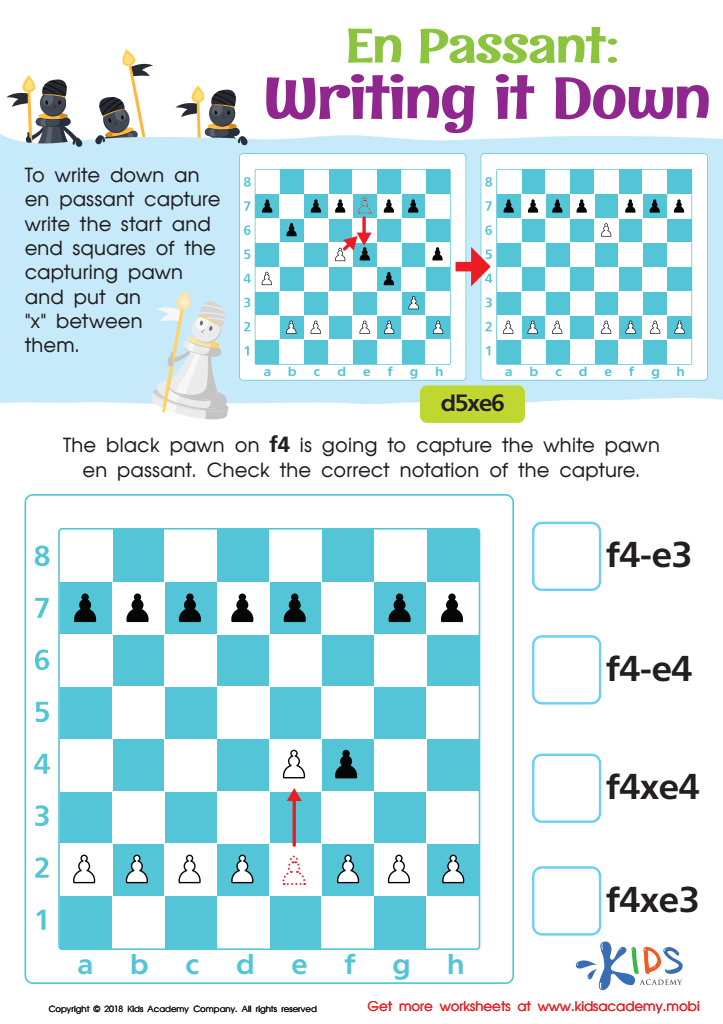
En Passant: Writing it Down Worksheet
 Assign to My Students
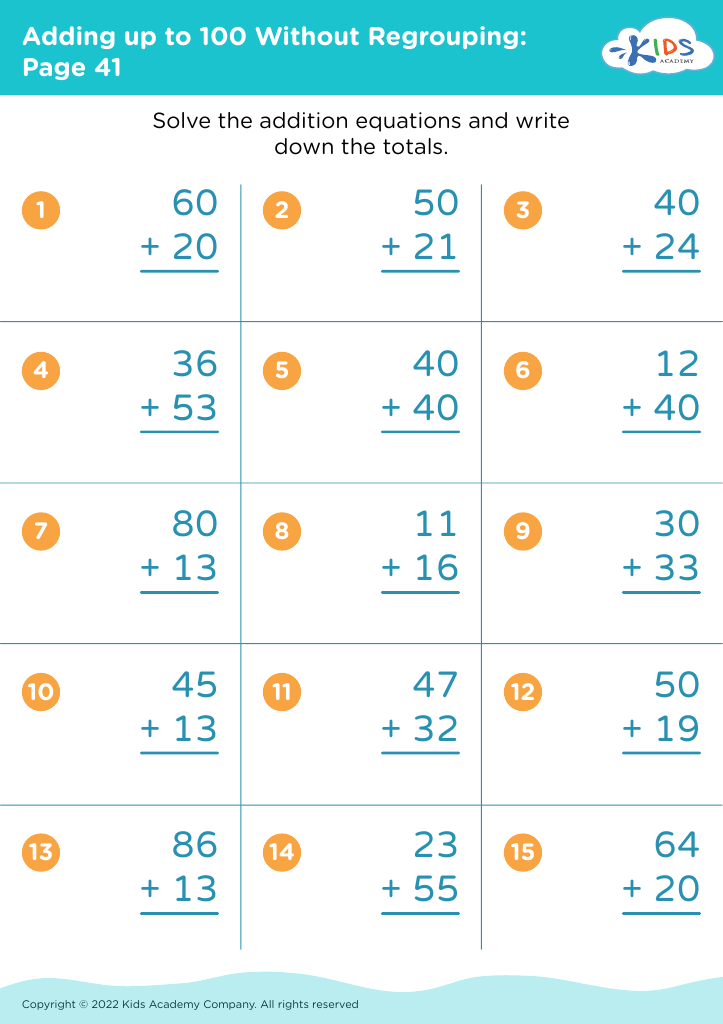

Notation of Checkmate Worksheet








Problem-solving enhancement in children aged 4-8 is crucial for their cognitive and emotional development. During these formative years, children are naturally curious and developing critical thinking skills, making it an ideal time to nurture their ability to solve problems. Engaging young learners in problem-solving activities helps them become independent thinkers and equips them with skills they will use throughout their lives.
Parents and teachers should care about this for several reasons. Firstly, problem-solving fosters resilience. When children learn to tackle challenges, they gain confidence in their abilities, viewing obstacles as opportunities rather than setbacks. This resilience is important for their emotional well-being and academic success. Secondly, collaborative problem-solving experiences encourage teamwork and communication skills, which are essential in an increasingly interconnected world.
Moreover, enhanced problem-solving skills enhance various areas of learning, including mathematics, science, and literacy, as children learn to analyze situations, think critically, and develop inventive solutions. Ultimately, by prioritizing problem-solving enhancement, parents and teachers can lay a strong foundation for lifelong learning, empowering children to navigate the complexities of the world with confidence and competence. Therefore, investing in problem-solving skills at this age is a vital step in preparing children for future challenges.








