Reading analog clocks Worksheets for Ages 4-8
9 filtered results
-
From - To
Help your child learn to tell time with our engaging "Reading Analog Clocks Worksheets" designed for ages 4-8! Perfect for young learners, these activities simplify the clock reading process through fun, easy-to-understand exercises. Each worksheet features colorful analog clock faces and clear instructions that gradually build confidence and mastery. From identifying hours and minutes to understanding time intervals, these printables make learning an educational adventure. Created by experts to support early learning milestones, they’re ideal for both classroom and home use. Visit Kids Academy to download and start boosting your child’s time-telling skills today!
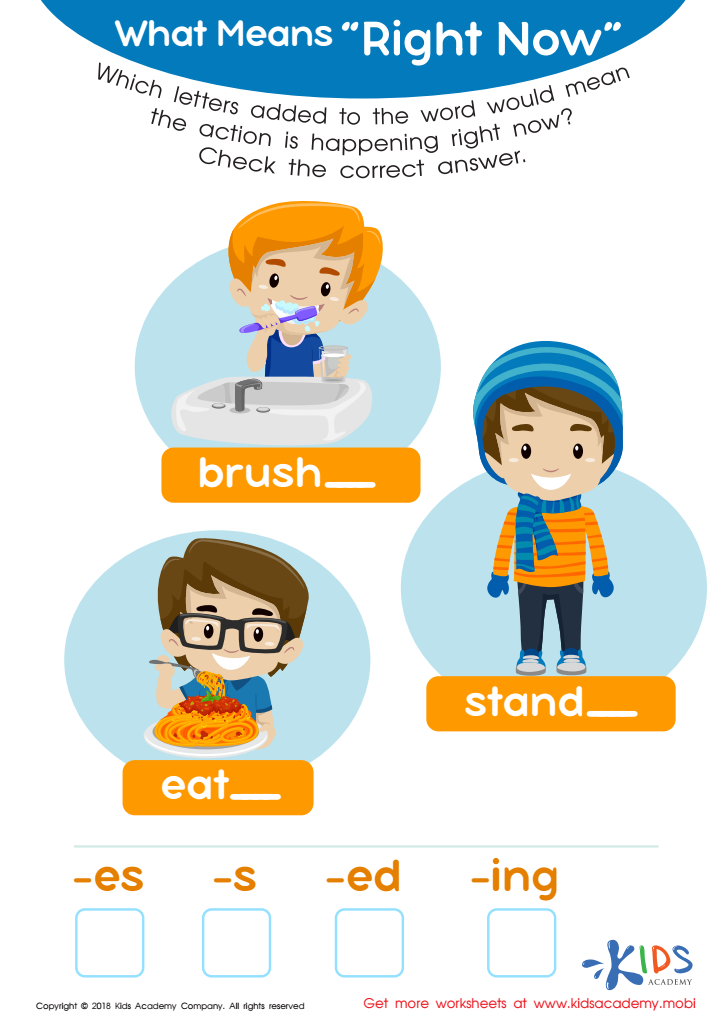
What Means "Right Now" Worksheet
 Assign to My Students
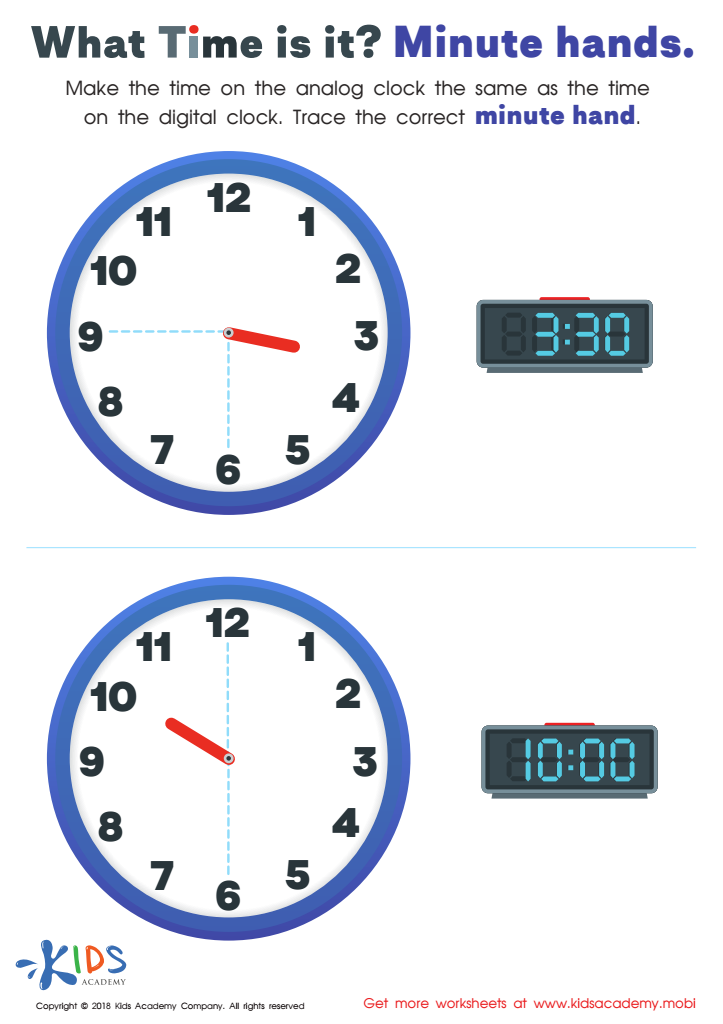
What Time Is it? Minute Hands Worksheet
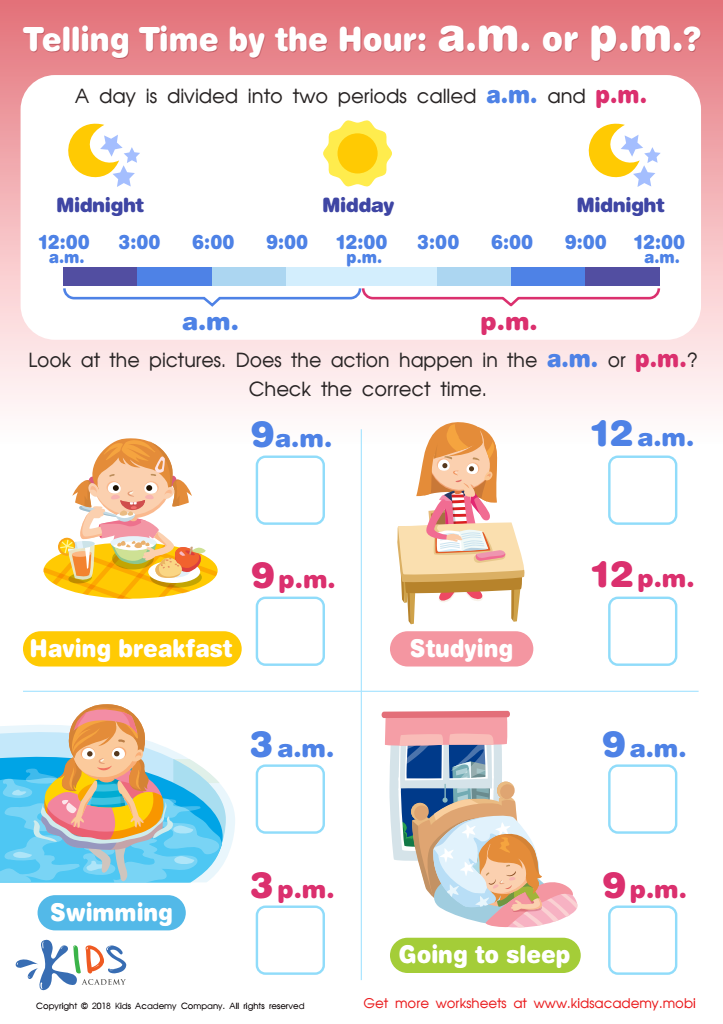
Tilling Time by the Hour: a.m. or p.m.? Worksheet
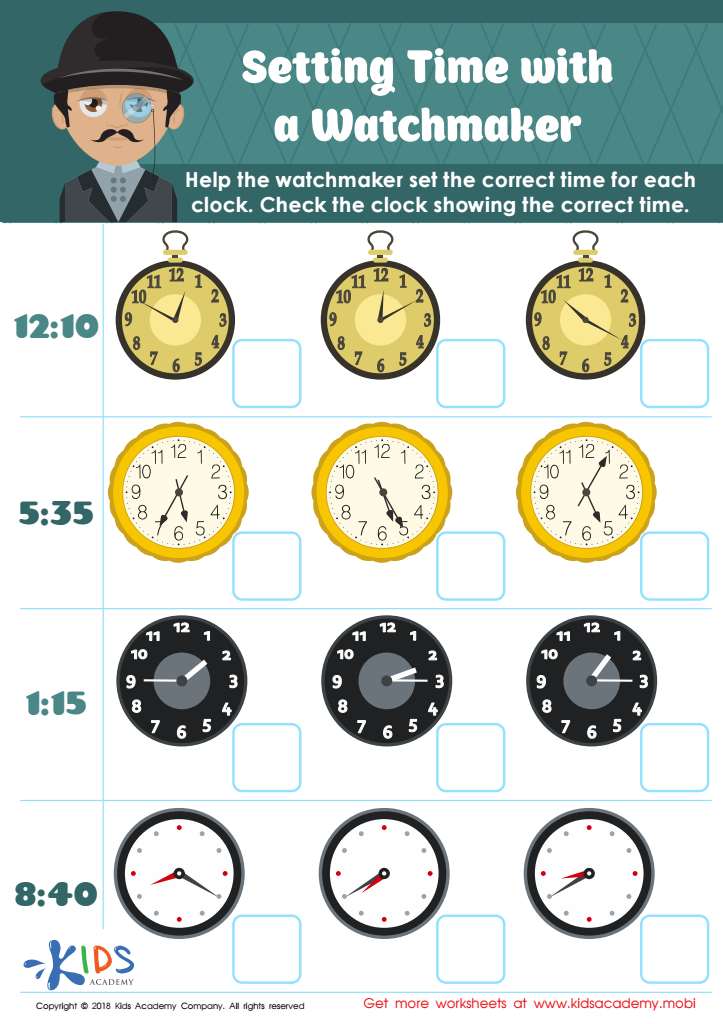
Setting Time with Watchmaker Worksheet
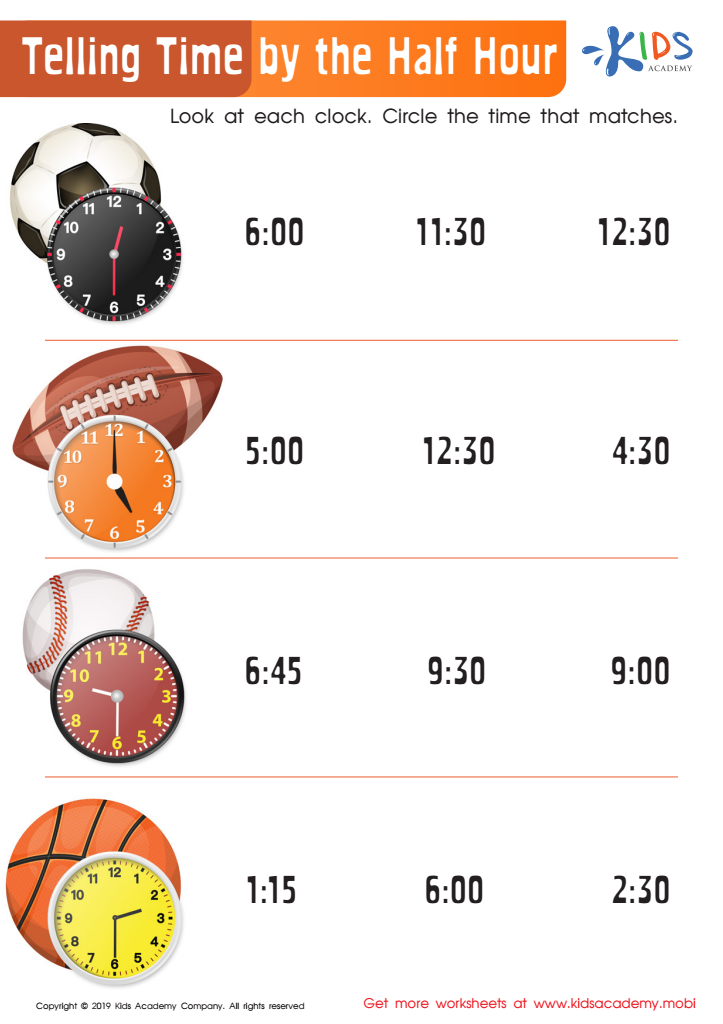
Telling Time by the Half Hour Worksheet







Learning to read analog clocks is an essential skill for young children aged 4-8, and it holds immense value for both parents and teachers. Reading an analog clock helps to develop a child's understanding of time, a concept integral to daily life. It encourages the comprehension of the passage of time, while establishing a foundation for punctuality and time management.
Analog clocks also introduce children to other fundamental mathematical concepts, such as counting by fives, recognizing patterns, and an early grasp of fractions, since the face of the clock divides time into segments akin to fractional parts. These skills lay groundwork for more advanced math topics they will encounter in later schooling years.
Engaging with an analog clock vs. digital encourages cognitive development, motor skills, and visual learning. Children learn to associate the positioning of the clock hands with the concept of hours, quarters, and minutes, thereby fostering spatial intelligence.
For parents and teachers, supporting the learning of this skill is vital because it combines practical life skills with critical academic undertakings. Proficiency in reading analog clocks translates into tangible impacts, aiding children to become more independent, responsible, and efficient. This holistic development is instrumental for their future academic success and situational competence.








