
Rhyme identification Worksheets for Ages 4-8
3 filtered results
Difficulty Level
Grade
Age
-
From - To
Subject
Activity
Standards
Enhance your child's phonemic awareness with our engaging rhyme identification worksheets designed for ages 4-8. These colorful, bite-sized activities are crafted to help young learners recognize and match rhyming words, fostering early reading skills in a fun and interactive way. Each worksheet offers age-appropriate challenges, making learning enjoyable and effective. Perfect for preschool, kindergarten, and early elementary students, our worksheets provide a solid foundation for literacy development. Start your child's rhyming adventure today and watch their confidence soar! Discover a world of words and sounds, tailored just for young, eager minds.
Favorites
With answer key
Interactive
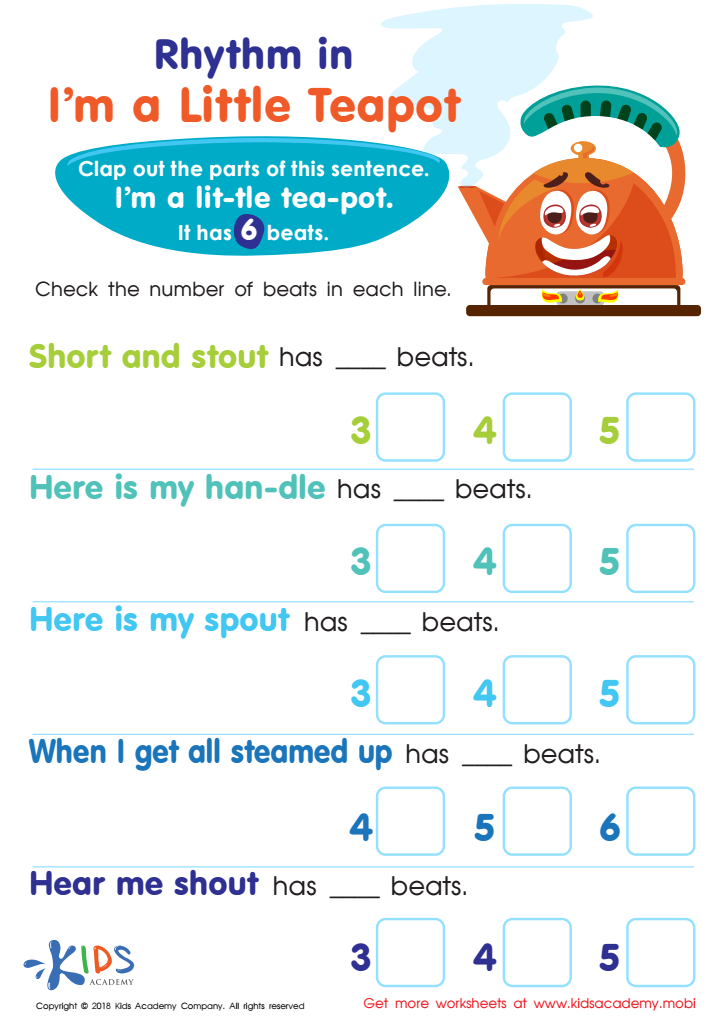
Rhythm in I'm a Little Teapot Worksheet
Clap along and count the beats of this classic children's song! With this worksheet, help your child read and clap out each phrase. Check the boxes for the correct number of syllables in each word. Have fun counting and learning with this cute ELA activity!
 Assign to My Students
Rhythm in I'm a Little Teapot Worksheet
Worksheet
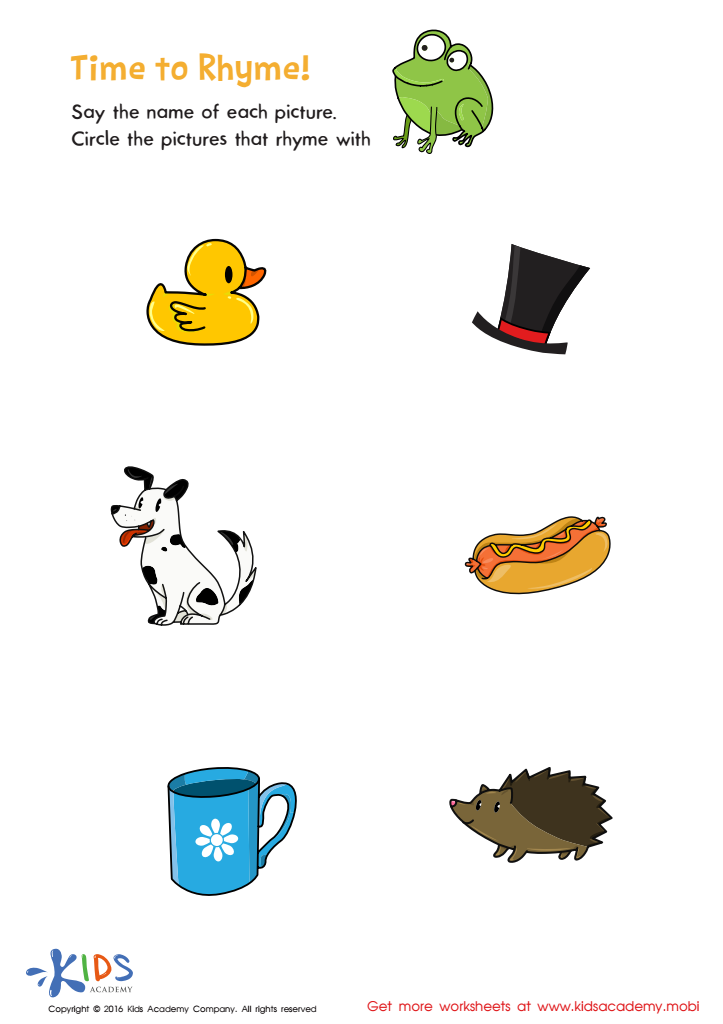
Rhyming Worksheet: Time to Rhyme Rhyming Worksheet
This worksheet offers learning, cognition and creative fun! It recognizes and identifies rhyming words, encourages mental tasks to improve focus and lets your child express their creativity through coloring. Writing the word for each picture adds to the fun and helps them identify rhyming words. Have them circle matching rhyming words for more coloring fun!
Rhyming Worksheet: Time to Rhyme Rhyming Worksheet
Worksheet
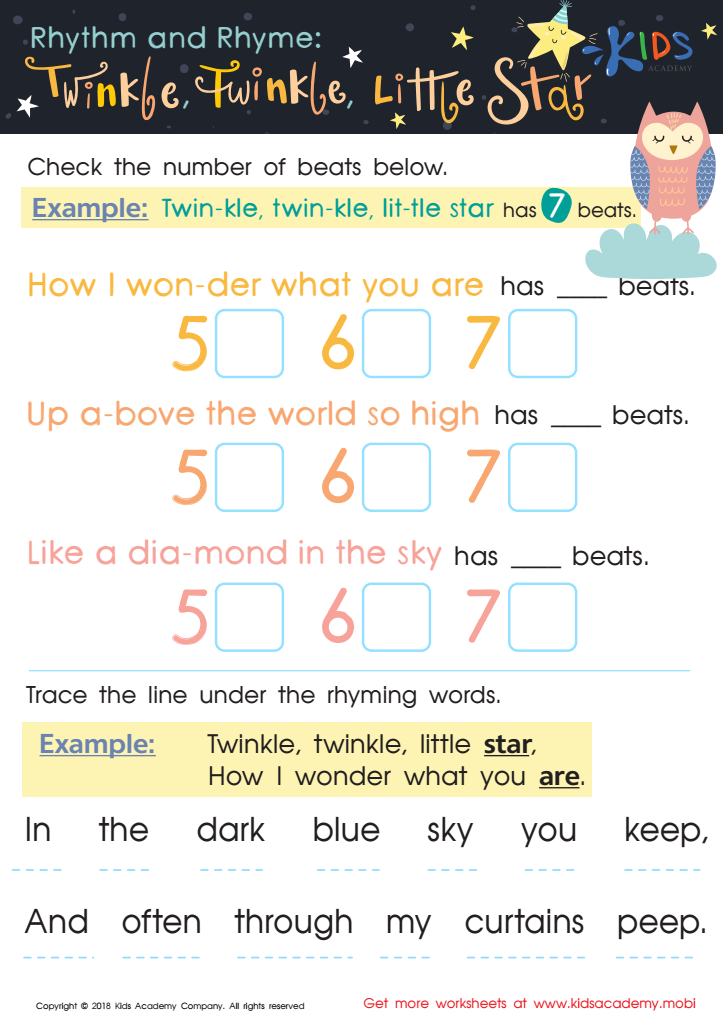
Rhythm and Rhyme: Twinkle, Twinkle, Little Star Worksheet
Kids will love learning about syllables in words with a fun children's song! Use the song Twinkle, Twinkle, Little Star to explain that each word has at least one beat. Have them clap out the beats in each word and check the boxes on this cute worksheet to identify the syllables.
Rhythm and Rhyme: Twinkle, Twinkle, Little Star Worksheet
Worksheet
Join Kids Academy for Free
Who is primarily going to use this learning content?







Rhyme identification is a fundamental skill for young children, ages 4-8, as it lays the groundwork for their early reading and language development. When children identify and generate rhymes, they enhance their phonemic awareness—the ability to hear, recognize, and manipulate the sounds within words. This skill is essential for decoding words during reading, enabling children to recognize patterns and predict word structures.
Moreover, rhyming activities support vocabulary development and offer a playful, engaging way to introduce new words and concepts. When children hear and create rhyming words, they expand their language repertoire and begin to understand word families and relationships, which strengthens their overall linguistic comprehension.
Rhymes also aid memory retention and recall, thanks to their repetitive and rhythmic nature. For instance, children are more likely to remember nursery rhymes or songs because the rhymes make them easier to recall. This memory boost is beneficial not only for reading but also for other academic and social activities.
In addition, engaging in rhyming games and songs fosters a love for language and reading. Children who enjoy these playful activities are more likely to develop a positive attitude toward literacy, leading to greater motivation and success in their ongoing education. Thus, parents and teachers should nurture rhyme identification to give children a strong foundation in reading and communication skills.








